Hello!

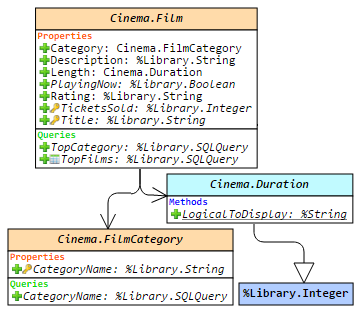
This article is a small overview of a tool that helps to understand classes and their structure inside the InterSystems products: from IRIS to Caché, Ensemble, HealthShare.

In short, it visualizes a class or an entire package, shows the relations between classes and provides all the possible information to developers and team leads without making them go to Studio and examine the code there.

If you are learning InterSystems products, reviewing projects a lot or just interested in something new in InterSystems Technology solutions — you are more than welcome to read the overview of ObjectScript Class Explorer!

23 38
4 6.2K

There are often questions surrounding the ideal Apache HTTPD Web Server configuration for HealthShare. The contents of this article will outline the initial recommended web server configuration for any HealthShare product.

As a starting point, Apache HTTPD version 2.4.x (64-bit) is recommended. Earlier versions such as 2.2.x are available, however version 2.2 is not recommended for performance and scalability of HealthShare.

19 1
15 11.5K

I recently had to refresh my knowledge of the HealthShare EMPI module and since I've been tinkering with IRIS's vector storage and search functionalities for a while I just had to add 1 + 1.

For those of you who are not familiar with EMPI functionality here's a little introduction:

Enterprise Master Patient Index

In general, all EMPIs work in a very similar way, ingesting information, normalizing it and comparing it with the data already present in their system. Well, in the case of HealthShare's EMPI, this process is known as NICE:

18 0
1 170

GraphQL is a standard for declaring data structures and methods of data access that serves as a middleware layer between the client and the server. If you’ve never heard about GraphQL, here is a couple of useful online resources: here, here and here.

In this article, I will tell you how you can use GraphQL in your projects based on InterSystems technologies.

17 24
10 2.8K

I joined InterSystems less than a year ago. Diving into ObjectScript and IRIS was exciting, but also full of small surprises that tripped me up at the beginning. In this article I collect the most common mistakes I, and many new colleagues, make, explain why they happen, and show concrete examples and practical fixes. My goal is to help other new developers save time and avoid the same bumps in the road.

15 11
2 270
Article
· Sep 7, 2016 5m read
Running HealthShare XSLTs from Terminal

HealthShare uses a lot of XSLTs. These are used to convert IHE medical documents to SDA (internal HealthShare format) and back to IHE formats, to create summary reports, and to deal with IHE profiles (e.g., patient information query, document provide and register). Customers may customize the XSLTs to customize reports or for other reasons.

For debugging and development, it is very convenient to be able to run an XSLT from Terminal.

14 1
4 1.6K

I am regularly contacted by customers about memory sizing when they get alerts that free memory is below a threshold, or they observe that free memory has dropped suddenly. Is there a problem? Will their application stop working because it has run out of memory for running system and application processes? Nearly always, the answer is no, there is nothing to worry about. But that simple answer is usually not enough. What's going on?

13 2
7 198

What is JWT?

JWT (JSON Web Token) is an open standard (RFC 7519) that offers a lightweight, compact, and self-contained method for securely transmitting information between two parties. It is commonly used in web applications for authentication, authorization, and information exchange.

A JWT is typically composed of three parts:

1. JOSE (JSON Object Signing and Encryption) Header
2. Payload
3. Signature

13 3
8 428
Article
· Feb 23, 2024 5m read
Using an Azure bot to access IRIS

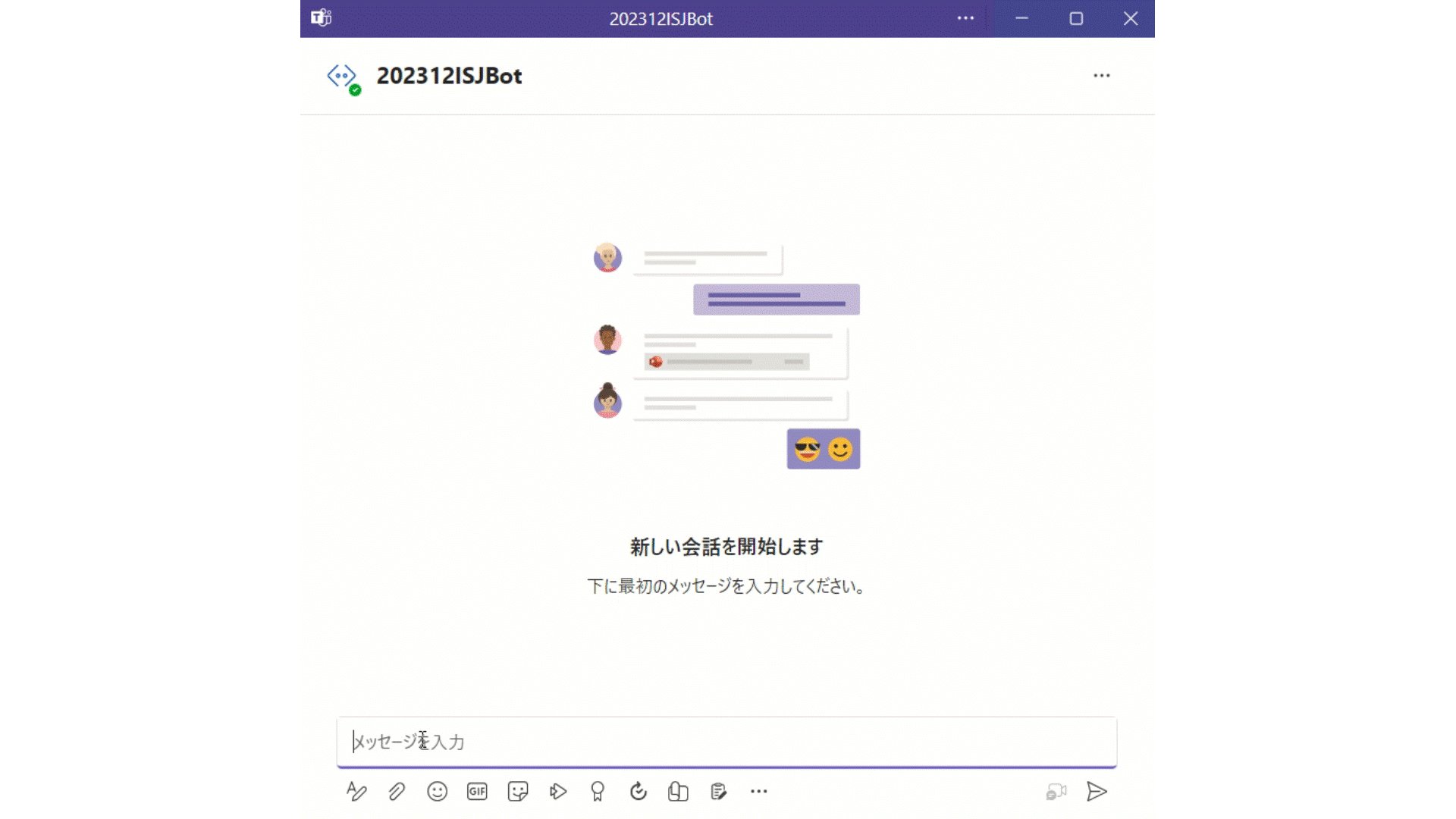
I have challenged to create a bot application using Azure Bot that can retrieve and post data to IRIS for Health.

A patient's data has already been registered in the FHIR repository of IRIS for Health.

The patient's MRN is 1001. His name is Taro Yamada. (in Japanese :山田 太郎)

This bot can post new pulse oximeter readings as an observation resource linked to the patient.

13 2
2 499
Article
· Feb 7 4m read
IRIS %Status and Exceptions

You may encounter errors during any point of program execution, and there are several ways to raise and handle these exceptions. In this article, we'll explore how exceptions are handled efficiently in IRIS.

One of the most commonly used return types is %Status, which is used by methods to indicate success or failure. Let's begin by discussing %Status values.

Working with %Status

12 0
6 384

++Update: August 2, 2018

This article provides a reference architecture as a sample for providing robust performing and highly available applications based on InterSystems Technologies that are applicable to Caché, Ensemble, HealthShare, TrakCare, and associated embedded technologies such as DeepSee, iKnow, Zen and Zen Mojo.

Azure has two different deployment models for creating and working with resources: Azure Classic and Azure Resource Manager. The information detailed in this article is based on the Azure Resource Manager model (ARM).

12 4
0 12.5K
Article
· Nov 29, 2022 6m read
What's HL7v2?!

HL7 (Health Level 7) is a set of technical specifications for computerized exchanges of clinical, financial and administrative data between hospital information systems (HIS). These specifications are variously integrated into the corpus of formal American (ANSI) and international (ISO) standards.

The L7 of HL7 indicates that it is a standard that operates at layer 7, in other words at the application layer, of the OSI model. This means that HL7 does not have to take into account exchange security considerations, or those of message transport (this being ensured by lower-level layers such as SSL/TLS for security or TCP for the transport of data for example). To be more precise, layer 7 supports communications for end-user processes and applications and the presentation of data for user-facing software applications. As the highest layer of the OSI model, and the closest to the end user, layer 7 provides application-specific functions such as identifying communication partners and the quality of service between them, determining resource availability, considering privacy and user authentication, and synchronizing communication, as well as connecting the application to the lower levels of the OSI model.

Returning to the HL7 standard, the HL7 version 2 standard (also known as Pipehat) was originally created in 1989 but is still being used and updated regularly, resulting in versions 2.1, 2.2, 2.3, 2.3.1, 2.4, 2.5, 2.5.1, 2.6, 2.7, 2.7.1, 2.8, 2.8.1, 2.8.2 and 2.9. The v2.x standards are backward compatible (e.g., a message based on version 2.3 will be understood by an application that supports version 2.6) and in higher versions, you will see some fields are left just for it.

Despite it being more than 30 years old, HL7v2 remains the most widely used healthcare interface standard by a large margin according to the HL7.org portal that tells that:

12 4
1 1.7K

The Istio Service Mesh is commonly used to monitor communication between services in applications. The "battle-tested" sidecar mode is its most common implementation. It will add a sidecar container to each pod you have in your namespace that has Istio sidecar injection enabled.

11 3
2 329

Starting out with ObjectScript, it is really exciting, but it can also feel a little unusual if you're used to other languages. Many beginners trip over the same hurdles, so here are a few "gotchas" you'll want to watch out for. (Also few friendly tips to avoid them)


NAMING THINGS RANDOMLY

We have all been guilty of naming something Test1 or MyClass just to move on quickly. But once your project grows, these names become a nightmare.

11 15
2 297
Article
· Feb 13 4m read
Bulk FHIR Step by Step

FHIR repositories, applications and servers typically serve clinical data in small quantities, whether to return data about a patient, their medications, vaccines, allergies, among other information. However, it is common for a large amount of data in FHIR/JSON format to be requested to be used to load into Data Lakes, identifying study cohorts, population health, or transferring data from one EHR to another. To meet these business scenarios that require large extractions and loads of data, it is recommended to use the FHIR Bulk Data Access feature provided by HL7 institution.

10 0
5 430

I wanted to share a little tidbit which is in the Studio documentation (http://docs.intersystems.com/cache20152/csp/docbook/DocBook.UI.Page.cls?...) but many people who have been using the InterSystems Studio for a long time missed the addition of this *very* useful feature, and every time I mention this to an audience I see at least one face light up because of how excited they are to learn about it!

Within Studio, the Output pane (View -> Output) is actually misnamed. It is actually an Input/Output window which can be used to run Caché ObjectScript commands!

10 7
0 1.6K
Article
· Aug 26, 2016 8m read
Enterprise Monitor and HealthShare

Enterprise Monitor is a component of Ensemble and can help organizations monitor multiple productions running on different namespaces within the same instance or namespaces running on multiple instances.

Documentation can be found at:

http://docs.intersystems.com/ens20161/csp/docbook/DocBook.UI.Page.cls?KEY=EMONITOR_all#EMONITOR_enterprise

In Ensemble 2016.1 there were changes made to make this utility work with HealthShare environments.

This article will:

  • Show how to set up Enterprise Monitor for HealthShare sites
  • Show some features of Enterprise Monitor
  • Show some features of Enterprise Message Viewer

For this article, I used the following version of HealthShare:

Cache for Windows (x86-64) 2016.1 (Build 656U) Fri Mar 11 2016 17:42:42 EST [HealthShare Modules:Core:14.02.2415 + Linkage Engine:14.02.2415 + Patient Index:14.02.2415 + Clinical Viewer:14.02.2415 + Active Analytics:14.02.2415]

10 2
0 1.6K

Hi Community,

This is my first post in the developer community - would appreciate any feedback!

For testing or demo purposes, you may want to send emails from your Interoperability Production. In this post then I will walk you through connecting an InterSystems IRIS Production to Gmail so you can use it to send emails alerts.

10 6
4 855

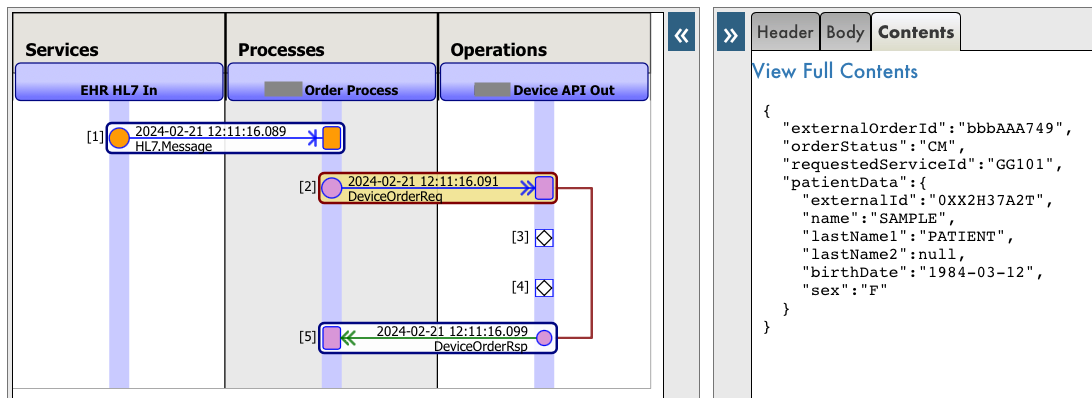
When using InterSystems IRIS as an interoperability engine, we all know and love how easy it is to use the Message Viewer to review message traces and see exactly what's going on in your production. When a system is handling millions of messages per day, you may not know exactly where to begin your investigation though.

Over my years supporting IRIS productions, I often find myself investigating things like...

10 2
5 429

Fun or No Fun - how serious is it?


Large language models are stirring up some phenomena in recent months. So inevitably I was playing ChatGPT too over last weekend, to probe whether it would be a complimentary to some BERT based "traditional" AI chatbots I was knocking up, or rather would it simply sweep them away.

9 3
1 1.1K
Article
· Jul 8, 2024 2m read
Configuring IRIS autostart on Linux

For practical reasons, it may be desirable that after a Linux server restart, the IRIS instance is automatically started.

Below you will find the steps to follow to automate the startup of IRIS during a reboot of the Linux server, via systemd :

1. Create an iris.service file in /etc/systemd/system/iris.service containing the following information

9 17
5 918

Who hasn't been developing a beautiful example using a Docker IRIS image and had the image generation process fail in the Dockerfile because the license under which the image was created doesn't contain certain privileges?

In my case, what I was deploying in Docker is a small application that uses the Vector data type. With the Community version, this isn't a problem because it already includes Vector Search and vector storage. However, when I changed the IRIS image to a conventional IRIS (the latest-cd), I found that when I built the image, including the classes it had generated, it returned this error:

9 2
1 177

Updated Jan 19th, 2023.

Hi all,

I want to share a quick little method you can use to enable ssl with a self signed certificate on your local development instance of IRIS/HealthShare. This enables you to test https-specific features such as OAuth without a huge lift.

1. Install OpenSSL

Windows     : Download from https://www.openssl.org or other built OpenSSL Binary. 

Debian Linux: $ sudo apt-get -y install openssl

RHEL        : $ sudo yum install openssl
9 7
9 2.3K