New
Hi everyone,
I am sending SDA messages to an EDGE with PDFs (stream) on it. I need to know the size of those message to estimate how much of a HD was used in the last 24 hours, for example.
Do you know to do it?
Thanks in advance
.png)
InterSystems IRIS for Health™ is the world’s first and only data platform engineered specifically for the rapid development of healthcare applications to manage the world’s most critical data. It includes powerful out-of-the-box features: transaction processing and analytics, an extensible healthcare data model, FHIR-based solution development, support for healthcare interoperability standards, and more. All enabling developers to realize value and build breakthrough applications, fast. Learn more.
Hi everyone,
I am sending SDA messages to an EDGE with PDFs (stream) on it. I need to know the size of those message to estimate how much of a HD was used in the last 24 hours, for example.
Do you know to do it?
Thanks in advance
Hi Community,
Enjoy the new video on InterSystems Developers YouTube:
⏯ Using Agentic AI with FHIR - Part 1 @ Ready 2026@ Ready 2026
If you start with InterSystems ObjectScript, you will meet the XECUTE command.
And beginners may ask: Where and Why may I need to use this ?
The official documentation has a rich collection of code snippets. No practical case.
Just recently, I met a use case that I'd like to share with you.
When you build an IRIS container with Docker, then, in most cases,
you run the initialization script
iris session iris < iris.script
This means you open a terminal session and feed your input line-by-line from the script.
And that's fine and easy if you call methods, or functions, or commands.
Over time, while I was working with Interoperability on the IRIS Data Platform, I developed rules for organizing a project code into packages and classes. That is what is called a Naming Convention, usually. In this topic, I want to organize and share these rules. I hope it can be helpful for somebody.
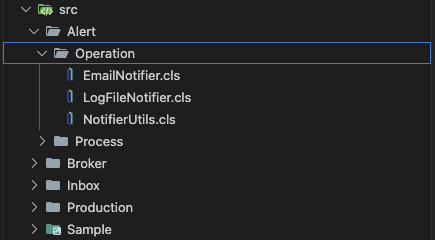
Disclaimer: This guide is a good fit for Interoperability projects. When you have integrations, data flows, when you use IRIS for ETL processes, etc. Overall, when your code is combined with Productions.
Hi Community,
Data Transformation Language (DTL) is one of those tools that appears deceptively simple at first—drag a source field, drop it on a target, and you are done. However, once you start working on real-world integration projects, you quickly realize that raw field mapping only gets you so far. The true challenge begins when you need to validate field lengths, clean up incoming strings, strip unwanted characters from IDs, or produce timestamps in a specific format required by a downstream system.

One of the most visible additions in 4.0.0 is PollingBusinessService.
Before this release, creating a scheduled Python business service meant dealing
directly with the low-level inbound adapter pattern. In 4.0.0, a scheduled
Python entry point can be written directly as a PollingBusinessService and
the framework uses the default IRIS inbound adapter behind the scenes.
Hi everyone,
I am testing an OAuth2 setup on InterSystems IRIS 2026.1 (Community Edition), based on a workshop with separate Auth Server and Resource Server instances (https://community.intersystems.com/post/learn-how-use-oauth2-openid-con…).
On the Resource Server, when I try to use Dynamic Registration and Save in OAuth 2.0 Client Configuration, I get this error:
ERROR #8881: Dynamic client registration endpoint is not configured.
What I already checked:
IRIS Health (Community) 2026.1.0.235.2 failing to start - any tips on how to reset things without doing a full reinstall?
We use Ensemble 2018 for our production servers, and have local instances for developers running fine. We are gearing up for the move to Iris, and are using the Community edition of Iris Health to check that our existing productions all work OK.
I installed IRIS Health in mid-May alongside my existing Ensemble instance, and have it configured to auto-start when my laptop boots.
I'm approaching the need to send notifications through a Microsoft Exchange or Gmail servers. however my last foray into this, I was blocked due to an issue inside my SSL certificate is what I thought after the attempt.
So my attention will be on trying to match the cryptography in the SSL certificate I produce compared to the mail server I'm trying to use.
Has anyone else had an issue with this approach? My other option is Amazon SNS potentially. I do have a functional MS Teams channel for alerts, and can make different notification channels as well.
Any help or insights are appreciated.
Our organization is going to implement an Identity provisioning service using SCIM standard (1.1), I am just wondering if Intersystems System IRIS for health has SCIM adapter or any class that already built for SCIM standard...
Thanks,
Hoi
On save the ClassMethod:
ClassMethod create() [ Language = python ] {
print("python")
}
it has received the error :
In the upcoming 2026.2 release (now available as a preview) we are adding support for a specific case of a FHIR Read.
This is for the Binary Resource - when GETting a Binary Resource that has some MIME type, and the request Accept header also has the same MIME type, the content returned will not be the FHIR Resource (JSON) itself, but rather the actual binary content. See from the FHIR docs.
Hi Community,
Stay ahead with content relevant to your role and goals with the InterSystems Learning Services newsletter!
See how to customize your journey! 👇

If you're running IRIS behind IIS and get this error when trying to open the Lite Terminal in the vscode-objectscript extension:
WebSocket error: Error: Unexpected server response: 101
check your IRIS Web Gateway log. If you see:
level=SEVERE event=WebGateway.WebSocketError
This Web Server does not support WebSockets
the fix is to enable the WebSocket Protocol IIS feature, which is not installed by default.
Hi Community,
Enjoy the new video on InterSystems Developers YouTube:
One of the latest features I'm really looking forward to in v2026.2 (now available as preview) is the "FHIR Explorer".
This new capability, part of InterSystems' FHIR Server, allows users to explore FHIR data via a friendly and intuitive UI, that builds (possibly complex) FHIR Search URLs, runs it against your FHIR Server (actually any FHIR server...), and displays the results.
Here's a simple flow:

Healthcare is a system that pays claims first and asks questions later.
It's called "pay and chase." You write the check. Then you hire people to chase the fraud.
Chase works about 3% of the time.
We decided to build something that doesn't chase. Something that stops the payment before it leaves the door.
That was the easy part.
InterSystems IRIS for Health processes FHIR claims in real time. Every hospital, every clinic, every transaction passes through it.
We built a hook. A piece of software that doesn't block the claim — but reads it. Analyzes it. Decides if it should wait.
Hi Guys,
I've export Production from live namespace and trying to import it to TEST namespace from Management portal and I've updated Test from Live issue is I'm unable to deploy top test because some queries using legacy tables that they don't exits anymore even in our Live system, so is there a way to copy the production between the systems and skipping the compiling process on Deployment ?
Thanks
InterSystems Reports version 25.3 is now available from the InterSystems Software Distribution site in the Components section. The software is labeled InterSystems Reports Designer and InterSystems Reports Server and is available for Mac OSX, Windows and Linux operating systems.
Don't let the minor release number fool you - there is a lot packed in this release. It includes a refreshed user interface - cleaner lines and fresher colors in "Light mode" and the ability to go back to "Classic mode" in your User Profile.
As part of a focus we are putting on improving the speed of ingestion of FHIR payloads, in v2026.2 (available as of now as a Developer Preview), we are introducing an option to skip structure validation of resources. This could save for example 25% of the time, which in large scale ingestions, could be significant.
Hi,
Just thought I'd share quite a handy hook that has helped me out when developing on Health Connect Cloud with VS Code and GitBash. When developing on Health Connect Cloud, if changes are made directly on the server such as routing rules or component deployments, they aren't automatically included in source control, therefore you must export from the server into your local files and push to your remote repo. I'm sure there are easier methods to deal with that which I'm in the process of testing, but as a quick solution I thought it would be handy have a pre-commit hook which triggers a reminder in GitBash - see below.
.png)
Hi all,
I've been researching the capability within IRIS for Health OAuth2 machine-to-machine authentication. IRIS is the client in this case.
Specifically, the idea is to build JWT claims, sign with a private key and then send a POST request as a client assertion to receive a bearer token. The bearer token would then be used in a subsequent request.
I've learnt one way to do this (described below) . Leaving out any concern about attaching the client_assertion, token caching etc. and focusing on just creating a signed-JWT.
Hi Community,
It's time to announce the winners of the InterSystems Programming Contest: AI Agents for FHIR!
A big thank you to our 18 fellow members who built
This competition received impressive submissions, each reflecting innovation and creative thinking. With so many strong entries, selecting the best was a true challenge.

Let's meet the winners and look at their projects:
Hi Community,
We're excited to invite you to the upcoming webinar in German:
👉 InterSystems TechTalk #17 | ChatFHIR: FHIR Access with MCP and AI Hub 👈
🗓️ Date & Time: Wednesday, June 17th, 11 am CEST
Every clinic visit starts the same way: a patient sits in a waiting room holding a clipboard, answering the same questions they'll be asked again ten minutes later — while the clinician walks in cold, with no idea whether the next case is a sore throat or a heart attack in progress.
That gap: between what the patient knows and what the clinician sees — is what Triage Park closes. It's our entry for the InterSystems Programming Contest: AI Agents for FHIR.
Using the SOAP wizard many moons ago, I had setup a process to get Patient Demographics, and the current Visit Location from Epic for processing HL7 DFT Charge Messages.
Within the past week we have had two cases where the Outbound SOAP Adapter has been throwing Errors (Exceptions) where in this case
NO-PATIENT-FOUND details: No patient found with the provided ID and ID type.
The error is not being sent back in the Response to the Business Process that sent the call. The Response comes back blank.
A vector-search knowledge base of past clinical assessments, running on InterSystems IRIS, gives the LLM a deterministic calibration signal — making its triage reasoning faster, more structured, and clinically defensible.
The LLM answered correctly. But would it answer the same way for the next patient with the same profile? Same conditions, same medications, same symptoms — would the risk score drift? Would the priority shift from "emergency" to "urgent"? Would the follow-up tasks be different?
When installing InterSystems IRIS on Windows, you may see the following option in the installer wizard if IIS has already been installed and enabled (Enable IIS).

Note: Depending on your installation type, you may not see this exact installer screen. In that case, proceed with installation as normal, and then configure the IIS settings on the server where the Web Gateway is installed.
If you choose to configure the local IIS web server for the instance, the installer wires IIS and the InterSystems Web Gateway together for you.
Amazon SQS (Simple Queue Service) is a managed message queue service that provides a simple, durable, and scalable mechanism for exchanging messages between applications. It is particularly well suited for event-driven integration patterns and loosely coupled architectures.
Bear in mind that the AWS SQS adapter is based on InterSystems PEX Network and requires the Java External Server to be enabled.

When using Amazon SQS you can either take the role of a Consumer or a Publisher.