22 Followers · 542 Posts

Fast Healthcare Interoperability Resources (FHIR, pronounced "fire") is a draft standard describing data formats and elements (known as "resources") and an application programming interface (API) for exchanging electronic health records

Official site

Announcement Vishal Pallerla · Sep 1, 2025

#InterSystems Demo Games entry


⏯️ Health Evolve: Transforming Unstructured Data

Did you know that 80% of healthcare data is stuck in unstructured formats such as fax? If you take a walk down to Mass General in Boston, you'll literally see a state-of-the-art MRI machine next to a fax machine. Healthcare keeps building incredible new technology but can't let go of legacy technology. We call this the "legacy modernization paradox". This short film follows a care manager at Blue Plan who spends her days doing chart reviews, reading faxes line-by-line, struggling to provide her members the care they need. Everything changes when Blue Plan pilots InterSystems Health Evolve, a solution that transforms her faxes into machine-readable FHIR data ready for AI and analysis. To access our fully working Text-to-FHIR prototype, visit HealthEvolve.de.

Presenters:
🗣 @Vishal Pallerla, Sales Architect, InterSystems
🗣 @Erica Song, Sales Engineer, InterSystems
🗣 @Louis Kabelka, Sales Engineer, InterSystems
🗣 Zelong Wang, Sales Engineer, InterSystems
🗣 John Murtha, Health Plan Executive, InterSystems

1
1 185
Article Laura Blázquez García · Feb 23, 2025 4m read

When we create a FHIR repository in IRIS, we have an endpoint to access information, create new resources, etc. But there are some resources in FHIR that probably we wont have in our repository, for example, Binary resource (this resource returns a document, like PDF for example).

I have created an example that when a Binary resource is requested, FHIR endpoint returns a response, like it exists in the repository. 

First of all, we need a Namespace and a FHIR endpoint. After this, we need to configure an Interoperability production that will be connected to the FHIR endpoint.

7
8 579
Announcement Ben Spead · Jul 7, 2021

Hello Developers!

Have you ever had to convert HL7v2 messages to FHIR (Fast Healthcare Interoperability Resources) and found the process complicated and confusing? InterSystems is rolling out a new cloud based SaaS offering called InterSystems FHIR Transformation Service, which makes the process easy.  We are excited to announce an Early Access Preview Program for our new offering, and we would love to have you kick the tires and let us know what you think!  All you need is a free AWS account, with an S3 bucket to drop in your HL7v2 messages, and another S3 bucket to get your FHIR output. 

5
0 958
Announcement Alberto Fuentes · Aug 15, 2025

#InterSystems Demo Games entry


⏯️ MyVitals: Connecting Wearable Health Data to EHRs with InterSystems

MyVitals is a Personal Health Device Hub that bridges the gap between wearable health devices and clinical workflows. In this demo, we show how healthcare organizations can enroll patients, collect real-time data from personal devices via mobile apps, and seamlessly integrate that information into EHR systems using FHIR, HL7, and InterSystems technology. Built on IRIS for Health and FHIR repositories, MyVitals turns disconnected wearable data into actionable clinical insights—securely, efficiently, and at scale.

Presenters:
🗣 @Alberto Fuentes, Sales Engineer, InterSystems
🗣 @Pierre-Yves Duquesnoy, Senior Sales Engineer, InterSystems
🗣 @Luis Angel Pérez Ramos, Sales Engineer, InterSystems

0
2 126
Article Nigel Salm · Aug 11, 2021 3m read

I have attached a document that describes the product I have developed called NiPaRobotica Pharmacy. This is an interface I developed that accepts Pharmacy Dispense Requests and converts the line items on the order into dispense dialogues which it sends to pharmacy robots. I deployed the interface into 3 Hospital pharmacies two of which had 6 robots that were arranged in such a way that the dispense chutes channelled medications to desks by the pharmacists sitting in windows serving 1200 patients a day. The robots cut the average waiting time from 2 hours down to one hour.

2
1 527
Announcement Tani Frankel · Sep 1, 2025

#InterSystems Demo Games entry


⏯️ Being READY to Tackle Healthcare Enterprise Challenges in a Few Clicks

Managed Cloud Solutions to Help Streamline Your Health Services.

This demo showcases composing several InterSystems Managed Cloud Services to solve various use-cases.

The video is actually built of 6 short chapters (each ~2.5 minutes long) showing each part of the story, demoing a different service.

You can watch each "chapter" individually if you're interested in a specific service, but there is value in viewing the whole composition and observing the full flow.

  • 0:00 Health Connect Cloud - Medical Device MQTT - HL7v2 for Hospital Operation Systems
  • 2:29 FHIR Server & FHIR Transformation Service - HL7v2 to FHIR & Repository for Regulation & Exchange
  • 5:21 FHIR SQL Builder - Providing standard relational access to FHIR data
  • 7:22 "FHIR IntelliChat" (see note below) - Natural human language chat with FHIR Server
  • 9:37 OMOP Solution - FHIR to OMOP transformation & OMOP database with OHDSI tools compliance
  • 12:54 InterSystems Data Studio for Health - Creating a multi data/app sources fabric

[Note the "FHIR IntelliChat" part is not an actual formal InterSystems service, it is just a demonstration of a possibility (based on this solution by @José Pereira)]

Presenters:
🗣 @Tani Frankel, Sales Engineer Manager, InterSystems
🗣 @Keren Skubach, Senior Sales Engineer, InterSystems
🗣 @Ariel Glikman, Sales Engineer, InterSystems

0
0 98
Article Andre Ribera · Nov 15, 2024 2m read

I have a large tree outside my window. Here in Phoenix, Arizona, USA it's still warm and sunny so our plants are still covered in lush foliage despite so many other places in the full throws of Autumn. My desk is oriented such that I can look out at the tree throughout the day. Part of the reason I like having my desk facing the tree is because I need the break from staring at the computer screens but the other reason is because I need reminders from nature from time to time.

2
6 449
Article Evgeny Shvarov · Mar 27, 2023 1m read

Hi folks!

Recently I was in need to setup a local FHIR server using IRIS For Health and I think I found the easiest and simplest way ever.

Just run in terminal these two lines below :

docker run --rm --name my-iris -d --publish 9091:1972 --publish 9092:52773 intersystemsdc/irishealth-community

and

docker exec -it my-iris iris session iris -U "USER" '##class(%ZPM.PackageManager).Shell("install fhir-server")'

And you'll have FHIR server running locally at http://localhost:9092/fhir/r4.

That's it!

The FHIR server will use the latest build of InterSystems IRIS for Health Community Edition and will deploy FHIR server from this app via IPM package in  FHIRSERVER namespace.

This is for Mac, so please add in comments how it works in Windows.

This is a very short article as it is really easy to setup a local FHIR server with InterSystems IRIS for Health and IPM Package Manager.

6
0 952
Article Mihoko Iijima · Feb 23, 2024 5m read

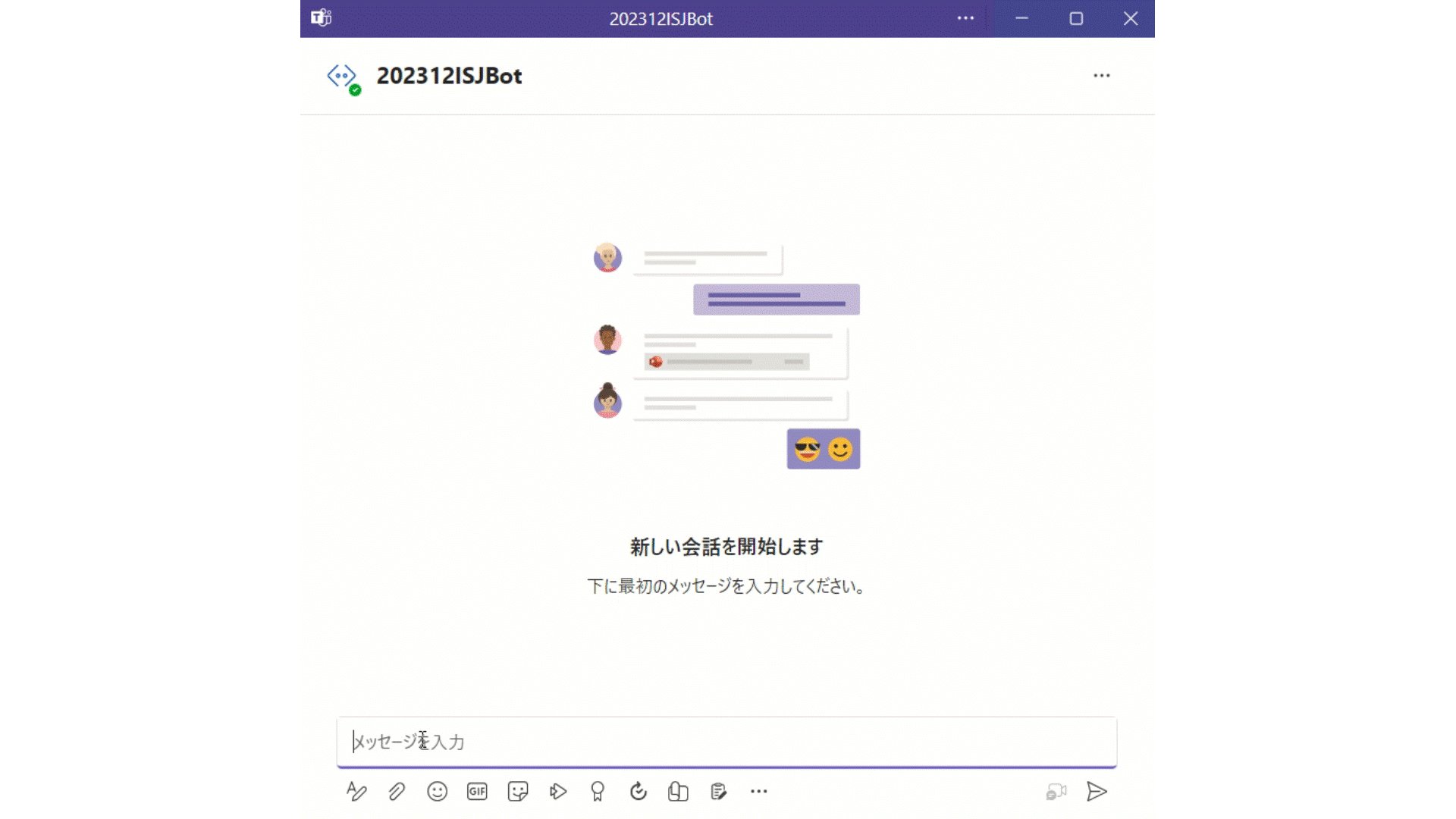
I have challenged to create a bot application using Azure Bot that can retrieve and post data to IRIS for Health.

A patient's data has already been registered in the FHIR repository of IRIS for Health.

The patient's MRN is 1001. His name is Taro Yamada. (in Japanese :山田 太郎)

This bot can post new pulse oximeter readings as an observation resource linked to the patient.

2
2 570
Article sween · Jul 29, 2021 6m read

We are ridiculously good at mastering data. The data is clean, multi-sourced, related and we only publish it with resulting levels of decay that guarantee the data is current. We chose the HL7 Reference Information Model (RIM) to land the data, and enable exchange of the data through Fast Healthcare Interoperability Resources (FHIR®).

We are also a high performing, full stack team, and like to keep our operational resources on task, so managing the underlying infrastructure to host the FHIR® data repository for purposes of ingestion and consumption is not in the cards for us.

2
1 918
Article Bob Schat · Feb 10, 2022 7m read

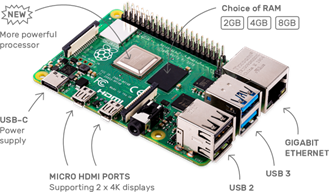
The InterSystems Iris Fhirserver running on a Raspberry Pi Raspberry running as a FHIRserver

Raspberry running as FHIRserver

About a year ago I wrote some articles about the installation of the HAPI FHIRserver on a Raspberry Pi. At that time, I only knew the basics of the FHIR standard, little about the technology behind FHIR-servers and not much more about the Raspberry. By trying, failing, giving up and trying again I learned a lot.

7
4 1098
Article Ariel Glikman · Jan 13, 2025 3m read

You may have noticed that to configure a mirror for InterSystems IRIS for Health and HealthShare® Health Connect there is a special requirement. I wanted to go through it step by step in this article.

This assumes you have already configured the second failover member and confirmed a successful failover member status in the mirror monitor:

Step 1: Enable HS_Services user (on backup and primary

Step 2: Switch to Namespace HSSYS and go to Interoperability > Configure > Credentials.

5
6 605
Article Muhammad Waseem · Jul 26, 2021 2m read

Healthcare interoperability is instrumental in improving patient care, decreasing healthcare provider costs, and providing a more accurate picture to providers. However, with so many different systems, data is formatted in many different ways. There are many standards that have been created to try to solve this problem, including HL7v2, HL7v3, and CDA but each one has its drawbacks.

FHIR, or Fast Healthcare Interoperability Resources, is a new format for healthcare data that aims at solving these problems.

2
1 3048
Article Toshihiko Minamoto · Feb 17, 2022 16m read

Hello, developers!

In this series, I will not show you how to use IRIS for Health, but rather how to use SUSHI, a tool for creating FHIR profiles, as an associated technology.

With the right tools, the profile information (specifications, limitations, extensions, etc.) of a FHIR project can be well organized and published.

Before we begin, what is SUSHI? I will briefly explain it.

What is FHIR?

FHIR is an acronym for Fast Healthcare Interoperability Resources and is defined as a standard for healthcare information exchange that can be implemented in a short period.

0
0 3308
Article Nicole Sun · Apr 17, 2025 6m read

Over the past couple of months, I have been working on the SMART on FHIR EHR Launch to test the capabilities of IRIS for Health using two open-source apps from CSIRO: SMART-EHR-Launcher and SMART Forms App. This journey has been incredibly interesting, and I’m truly grateful for the opportunity to work on this task and explore more of IRIS for Health’s potential.

After successfully demonstrating the seamless launch of multiple external SMART apps at the HL7 AU FHIR Connectathon, I’m excited to share what I’ve learned with the community.

1
2 476
Article Evgeny Shvarov · Mar 11, 2025 1m read

Hi colleagues!

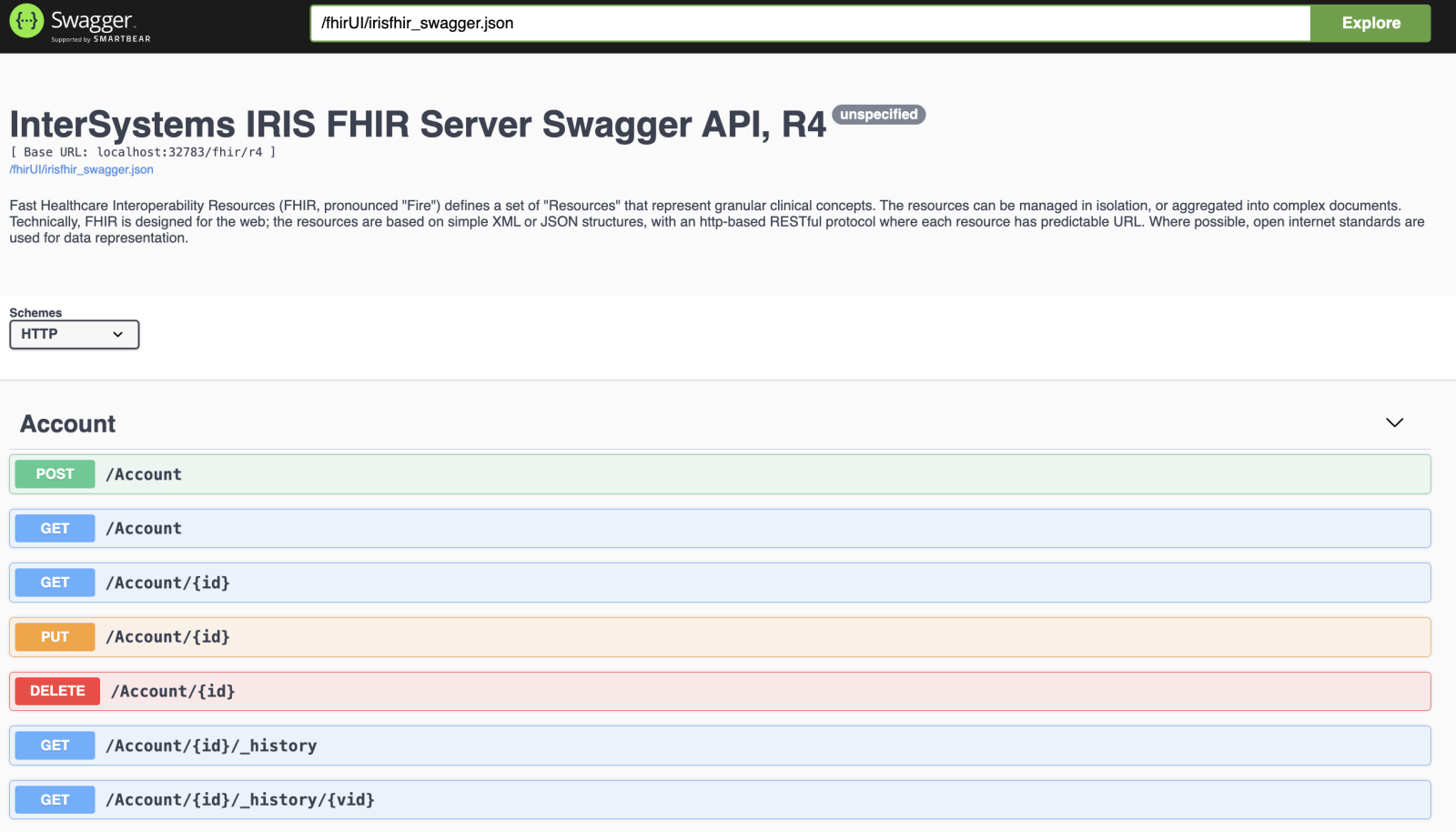
Often, while developing a frontend app or any other communication vs REST API, it is worth having a Swagger UI - a test UI for the REST API that follows Open API 2.0 spec. Usually, it is quite a handful as it lets have quick manual tests vs REST API and its responses and the data inside.

Recently I've introduced the Swagger support to the InterSystems IRIS FHIR template for FHIR R4 API:

How to get it working.

0
3 372
Announcement Anastasia Dyubaylo · Dec 21, 2023

Hi Developers,

We have exciting news! The new InterSystems online programming contest dedicated to all things health-related will start very soon! 

🏆 InterSystems FHIR and Digital Health Interoperability Contest 🏆

Duration: January 15 - February 4, 2024

Prize pool: $14,000


10
1 1716
Article Alberto Fuentes · Feb 13 10m read

10:47 AM — Jose Garcia's creatinine test results arrive at the hospital FHIR server. 2.1 mg/dL — a 35% increase from last month.

What happens next?

  • Most systems: ❌ The result sits in a queue until a clinician reviews it manually — hours or days later.
  • This system: 👍 An AI agent evaluates the trend, consults clinical guidelines, and generates evidence-based recommendations — in seconds, automatically.

No chatbot. No manual prompts. No black-box reasoning.

This is event-driven clinical decision support with full explainability:

image

Triggered automatically by FHIR events ✅ Multi-agent reasoning (context, guidelines, recommendations) ✅ Complete audit trail in SQL (every decision, every evidence source) ✅ FHIR-native outputs (DiagnosticReport published to server)

Built with:

  • InterSystems IRIS for Health — Orchestration, FHIR, persistence, vector search
  • CrewAI — Multi-agent framework for structured reasoning

You'll learn: 🖋️ How to orchestrate agentic AI workflows within production-grade interoperability systems — and why explainability matters more than accuracy alone.

2
2 178
Article Yuri Marx · Feb 13, 2025 4m read

FHIR repositories, applications and servers typically serve clinical data in small quantities, whether to return data about a patient, their medications, vaccines, allergies, among other information. However, it is common for a large amount of data in FHIR/JSON format to be requested to be used to load into Data Lakes, identifying study cohorts, population health, or transferring data from one EHR to another. To meet these business scenarios that require large extractions and loads of data, it is recommended to use the FHIR Bulk Data Access feature provided by HL7 institution.

0
6 570
Announcement Patrick Jamieson · Mar 15, 2021

Hi developers,

We have received quite a lot of interest in using SQL on FHIR data. As you know, FHIR data is encoded in the form of a complex directed graph, and thus you can not easily query it with traditional SQL queries or business intelligence tools. Some customers have noticed that the "FHIR search tables" in IRIS for Health have flattened part of the FHIR graph, and have tried to use them for analytics. This is an undocumented and unsupported part of IRIS for Health, and can change without notice.

1
0 454
Article Daryl Flaming · Jan 31, 2025 9m read

My main goal of this article was to prove the use of InterSystems IRIS for Health for REST FHIR interoperability between multiple applications. In this use case, some initiating application makes a REST call to IRIS for Health (which is merely a passthrough for REST calls) to retrieve FHIR data from an Oracle Health R4 FHIR repository. Ideally, it simplifies the syntax for calling the Oracle Health APIs.

0
2 365
Article Zhong Li · Jan 23, 2023 11m read

Fun or No Fun - how serious is it?


Large language models are stirring up some phenomena in recent months. So inevitably I was playing ChatGPT too over last weekend, to probe whether it would be a complimentary to some BERT based "traditional" AI chatbots I was knocking up, or rather would it simply sweep them away. 
A thought comes to mind while playing. By going slightly theoretical or philosophical, eventually interoperability standards such as HL7 and FHIR etc are kind of "languages", right? HL7 has its own grammar, rules, vocabulary and even dialects - every system speaks its own tone.

3
1 1187
Article sween · Dec 3, 2021 4m read

image Want a commercial grade FHIR® Implementation included in your micro service ecosystem and barely have enough time to fill out your Health plan elections?

Here is a quick way to invite the InterSystems® FHIR®Accelerator Service to your Kubernetes Microservice party for immediate use. The solution uses Nginx proxy ninja moves to get the job done. Though rustic and bound to create some technical arguments, I am pretty happy with the results until this community tells me otherwise, so FHIR® away as they say but it would be great if you heard me out first.

0
1 631