I'm trying to learn M programing for an Epic db class prerequisite. They said to download the IRIS Studio software to do the testing. I'm having a very difficult time finding information the language. I'm trying to run some examples that Epic has provided (like in below) but the compiler complains that it isn't valid. Of course, it doesn't tell you why it isn't valid.
I'm calling to a API that it is retrieving the content of a file as Content of response. I'm catching the binary but I need to convert this Stream to a Base64 string.
I'm trying to convert a %Stream.GlobaBinary to a Base64 string using the following code, but it doesn't work.
I've installed Ensemble 2018 then enabled IIS from Win features, then realized that CSPGateway doesn't exit so I downloaded and installed CSPGateway-2018 from WRC.
I have to send some events for a government WebService that I already imported the WSDL and XSD's and It worked fine and I'm able to build the message and connect into the service, but It has been rejected with the message that the XML is wrong and the only diference between the Caché SOAP message to all the examples that the government gave us is the header:
This is how the Government is expecting the message:
I am trying to setup a OAuth2.0 configuration to connect to a server within our Network using OAuth2.0. My previous attempt worked, however forgot to capture the steps before I had whipped the System so please bear with me.
I have an SSL/TLS Client configuration setup as we use the setup for our LDAP configuration.
When I go through the following steps within the Terminal, I am getting the following error...
With ObjectScript, i want to test if Reference 1516 exists in the global. In the InterSystems portal, i can do it with SQL (SELECT count(*) FROM DataTest where Reference = '1516'), but can we do the same in ObjectScript without SQL and manipulating the global directly ?
in addition to HL7 V2 interfaces mediated via TCP/IP, we have been implementing more and more HS.FHIRServer.Interop.Service based services that are addressed via port 57772. We would like to secure access to the Management Portal now and have come up with a procedure that I would like to discuss.
So as asked, I am not talking about KILL - KILL as stated in the docs:
This command removes the variable. If there are no further references to the object, this command also removes the object from memory,
I want to remove the object from memory even if it is still referenced in memory - I understand that cache is not a low-level programming language, But i was hoping there is a way.
Notice that have a RegisteredObject and it is a single reference, It is different than the UnSwizzles suggested in other posts.
We're getting a string sent to us by a client that was compressed using a java deflater (the zlib algorithm) and when trying to use $System.Util.Decompress() I get an "illegal value" error. I gather from other community posts that this is because the raw compressed string is missing the customized wrapper Iris automatically adds. I know this has been a longstanding issue for a while...just wanted to check if there'd been any updates to this functionality, or successful workarounds for decompressing raw zlib compressed data. Thanks in advance!
I was wondering if there is a way to modify the results you get in the code assist in Visual Studio Code. Ideally even per class or package.
For example: the code below is for a custom component of a framework. From all the options listed I'm only interested in my own property "Title" and I don't want to see any %-methods or auto-generated methods like "TitleSet" and "TitleGet".
I am trying to locate a method that would allow me to differentiate between InterSystems preinstalled/system namespaces and "our own" namespaces. I am interested both in Cache and Iris answers if they are different. Yes, I can list what to disregard, like if not HSLIB or if not DOCBOOK but hoping for a more universal and elegant answer.
Is there any way to disable all operation ( or services) in a production entirely?
For example when restoring from one HealthShare environment to another we may need to get the configs (IP, port, ssl etc ) updated before staring the operation. We set the production autostart to disabled but still need to disable the operation one by one if we want to start production without operations enabled.
Starting a FHIR repository project with IRIS for Health, what are the pros and cons to use R5 instead of R4 ? What is the effort to migrate from R4 to R5 the FHIR repo ? What are the risks or disadvantages to use R5 ?
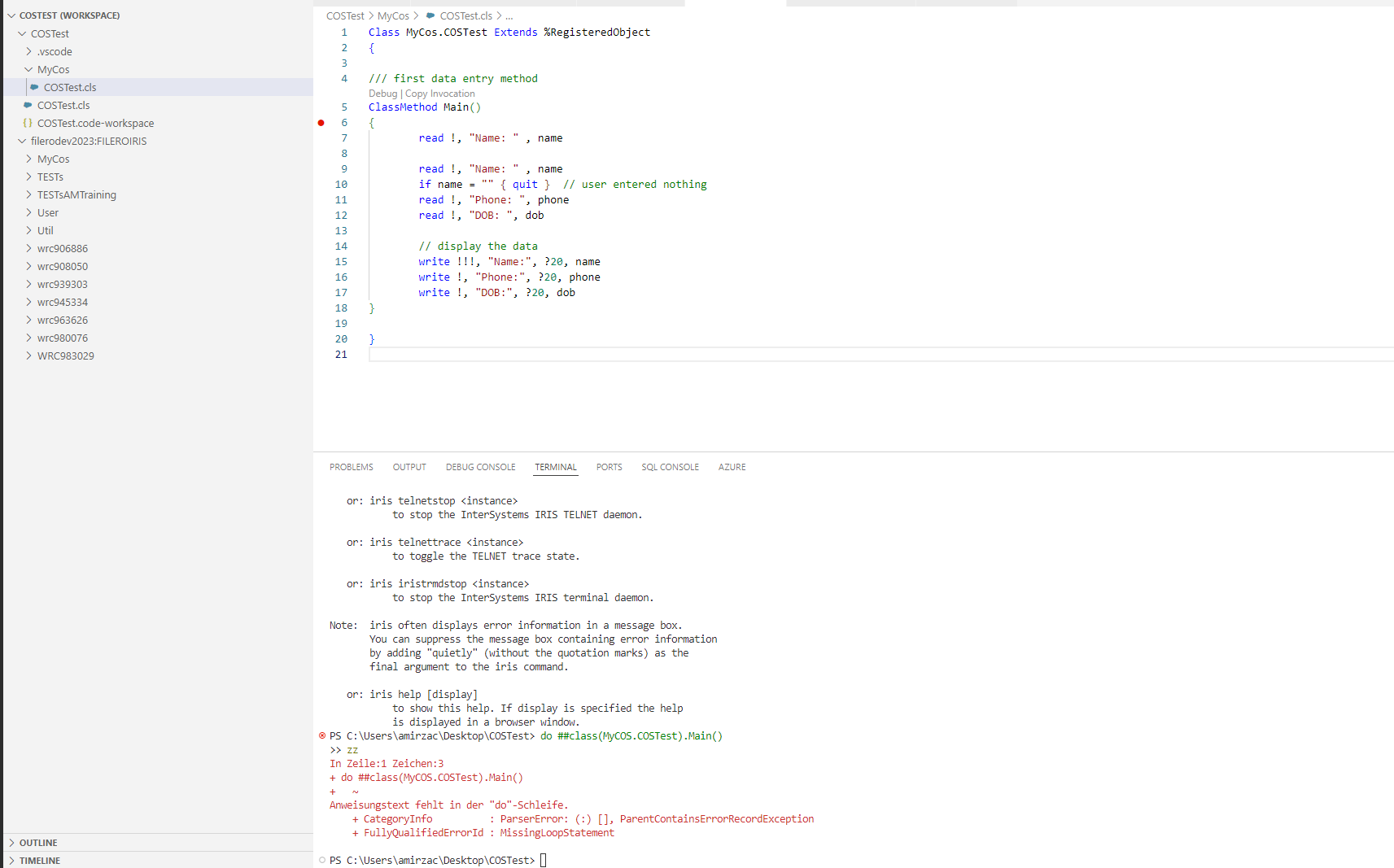
Hello all !!! I have a question: i heard it is possible to write Object Script code for Intersystems in VSCode. How it is possible to connect the InterSystems terminal to VSCode terminal ? I heard there should be a special docker. Currently i am trying to run a simple code which will communicate with the user through the terminal but it throws an error. thank you in advance for the answer !
I am attempting to configure an inbound service that utilizes the EnsLib.SOAP.GenericService class. This service receives HL7-v3 content wrapped in SOAP requests. Despite reading the documentation on configuring SOAP services, I am still confused.
In my current configuration item "Fr_Centrak_RTLS", I have ‘Enable Standard Requests’ checked, ‘Pool Size’ set to 0, and the port is unspecified.
I have the JSON message below. I am struggling with parsing the data in the OtherProcedures section. That section can be null, or have from one to many other procedures. Any help is greatly appreciated. I have tried using/setting an iterator to go thru the data but not having any success with that.
I'm currently working on a business operation that employs a retry mechanism with a FailureTimeout = -1. So, this BO attempts to resend the message at the end of a RetryInterval of n seconds (n is configurable).
 Month
Month
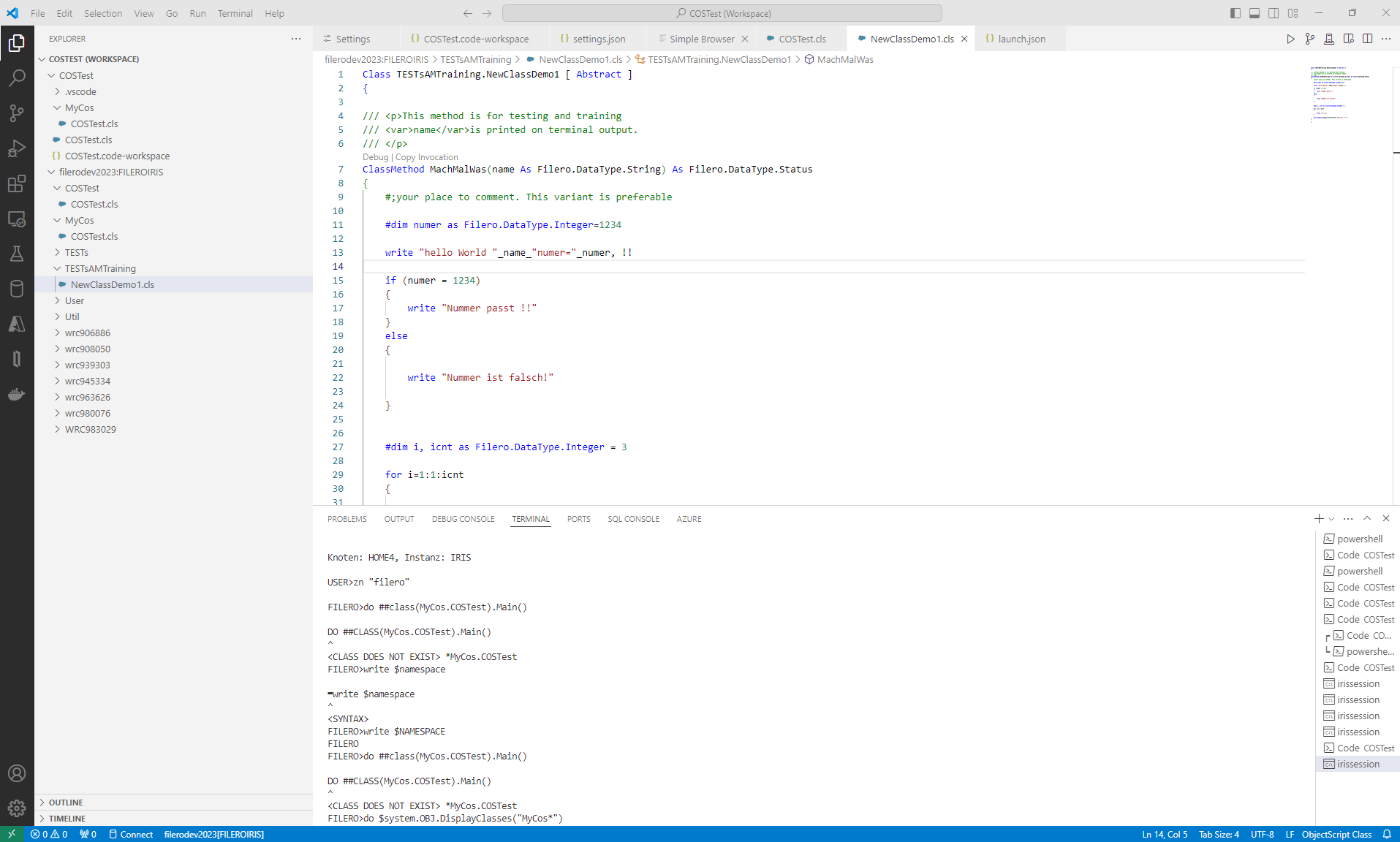 Hello all, i am new to IRIS in combination with VSCode, can anyone guide why this error appears ? Any suggestions are welcome. Thank you in advance.
.png)
.png)