#OAuth2

2 Followers · 108 Posts

Articles and Questions regarding OAuth2 Authentication.

Question TAZ.R · Jul 16, 2025

Hello Community,

I’m working on an InterSystems IRIS production that needs to call an external API using OAuth client credentials (client_id and client_secret). For security reasons, I must pass these credentials via environment variables in my Docker container.

In the IRIS terminal, I can successfully retrieve these environment variables using $System.Util.GetEnviron("api-clientid") and $System.Util.GetEnviron("api-clientsecret"). However, inside my Business Operation class (OnMessage method), these environment variables return empty strings.

13
1 169
Article Daniel Kutac · Aug 10, 2016 22m read

Created by Daniel Kutac, Sales Engineer, InterSystems

Warning: if you get confused by URLs used: the original series used screens from machine called dk-gs2016. The new screenshots are taken from a different machine. You can safely treat url WIN-U9J96QBJSAG as if it was dk-gs2016.

Part 2. Authorization server, OpenID Connect server

In the previous part of this short series, we have learned about simple use case – acting as an OAUTH[1] client. Now, it’s time to bring our experience to a whole new level.

12
4 5820
Question Olivier Caudron · Jul 23, 2024

Hi

I'm trying to use JWT authentication on a REST application in IRIS. The login API are correctly "injected" into the application. Login works fine with Postman and other REST clients, and subsequent calls to my REST API using the bearer token work fine (correctly authenticated). So far, so good.

The problem is that it doesn't work with Axios, so I can only test it, I cannot integrate it into my application.

9
0 543
Question Fabrizio Campari · Dec 24, 2024

Hi!   

I'm trying to set up a Clinical Viewer demo env with HealthShare 2024.2. 
I've done the standard installation following the doc : 

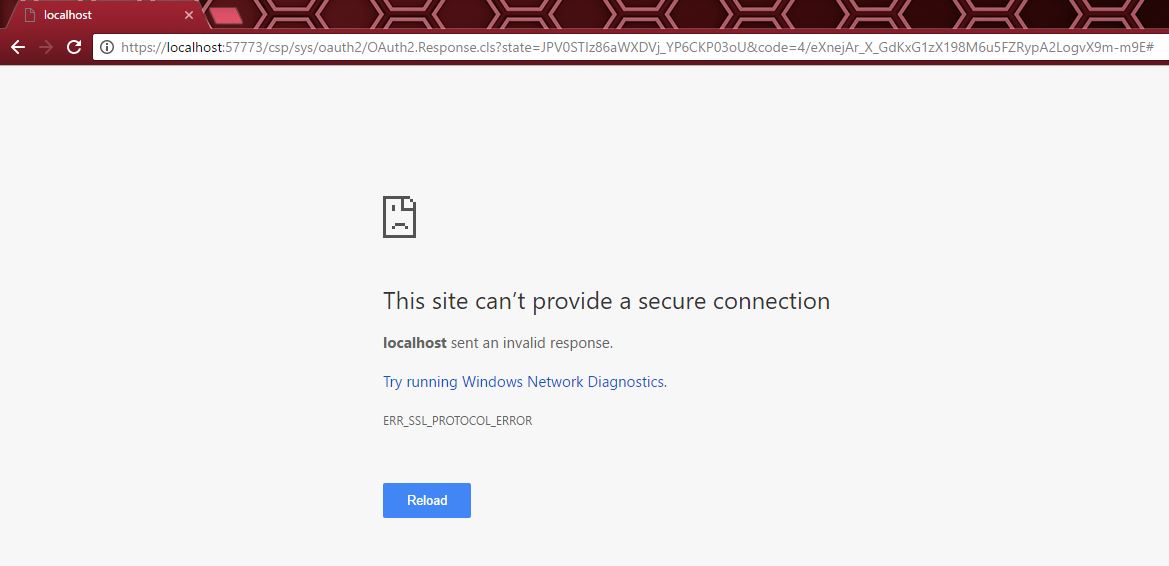
Everything works until I get to the point where I have to enable federated SSO (UCR demo - Federated SSO). Once it is activated, I can no longer access the instance through the portal, and the browser displays the following error:

Checking the messages.log, I see that every time I try to enable federated SSO and access the portal, I encounter the following error:

12/24/24-10:51:55:639 (98515) 2 [Utility.

9
0 350
Article David Hockenbroch · Apr 2, 2024 9m read

One of the most common kinds of integration we are asked to do is emailing. One of the most typical email services our customers use is Microsoft’s Office 365. After setting up the right configuration on the Microsoft side, we can email from IRIS with two HTTP requests. By the end of this article, we will be able to send an email with an attachment through our Microsoft 365 service!

Microsoft’s REST API, called Graph, allows you to do a lot of things within Microsoft’s various apps, and it is precisely what we will employ to send our email.

9
7 920
Question Anup Thakkar · Nov 29, 2023

Hello,

I have created a service in Node.js which interacts with IRIS using APIs. The current implementation uses basic auth. I want to implement OAuth 2, to make the communication between the node.js service and IRIS secure. I want my service to act as client and IRIS as Authorization and Resource server. I don't know how to do that. Anyone who has implemented OAuth using IRIS can you help me out or point me in the right direction on about how to implement it? 

Thank you for your help :)

6
0 410
Question Mary George · Sep 28, 2022

Hi, 

I am trying to configure OAuth2 server to connect to Cerner Auth server to get FHIR API access token but I am getting the error "Discovery response not valid".

I can get the access token back okay from Cerner endpoint used in the OAuth configuration below via Postman and Manually sending the request via HTTP Operation from HealthShare, so the URLs I am using looks correct but the OAuth configuration is not working.   

Not sure if this is issue from Cerner side or HealthShare side. I tried enabling debugging but nothing useful.  

6
0 704
Question George Hodder · Feb 2, 2018

Hi.. I have an issue where we are using OAuth2.0 with the ZAUTHENTICATE routine.  Once our token is validated we are using a users lan id (passed on the ID token) to find a software defined username in a Cache Global.

That is all working fine in ZAUTHENTICATE.. I am setting the software defined username in the Properties("Comment") array and wanting to reference it in the Rest Service Dispatch class.

I am finding that Properties array is not resident in the dispatch

6
0 981
Question Mike Yackanich · May 27, 2021

Hi all,

I'm performing a migration of some services from one instance to another, and I noticed that the technique defined within the InterSystems Server Migration Guide does not include OAuth client configurations. The recommended technique is to use the ##class(Security.System).ExportAll() and ##class(Security.System).ImportAll() methods.

Is there a way to migrate OAuth client configurations, or do those have to be re-created manually?

5
0 549
Question Colin Nagle · Oct 24, 2024

I have an API set up in IRIS which is secured using an IRIS authentication service, so there is a bearer token being passed down in the request header.

I've already set  Parameter HandleCorsRequest = 1; on the spec class and All the endpoints I am have (a mix of GET, POST, PATCH and DELETE) are working from postman without issue, the problem is when consuming from the web front-end and the preflight checks the browser instigates. Most of the endpoints work in the browser, but some are triggering the preflight (OPTIONS) check causing the CORS issue.

5
0 381
Question Klaus Richarz · Jun 22, 2020

Hi!

we are evaluating IRIS Data Platform as an OAuth2 Authorization Server with the use of the official Docker image. We currently struggle with the OAuth2 setup, as we are required to use https:// for the /oauth2/authorize and /oauth2/token endpoints, but the Docker container exposes only http:// in its default configuration. We have tried to find any hints in the docs but were not successful. Any help is appreciated.

Thanks

Klaus & Lukas

5
0 567
Question Soufiane Amroun · Jan 15, 2018

Hi community ,

i work actually on the access token generation method , i want know where the generated access token are saved ?

My [OAuth2.AccessToken]  tabe is empty , it's logical?

thank's for helping .

Best regards

5
0 895
Question Oliver Wilms · Nov 19, 2024

I need to create a JWT to connect to EPIC FHIRserver sandbox.

https://fhir.epic.com/Documentation?docId=oauth2&section=BackendOAuth2G…

You will generate a one-time use JSON Web Token (JWT) to authenticate your app to the authorization server and obtain an access token that can be used to authenticate your app's web service calls. There are several libraries for creating JWTs. See jwt.io for some examples.

The header and payload are then base64 URL encoded, combined with a period separating them, and cryptographically signed using the private key to generate a signature.

5
0 312
Article Muhammad Waseem · Nov 29, 2021 3m read

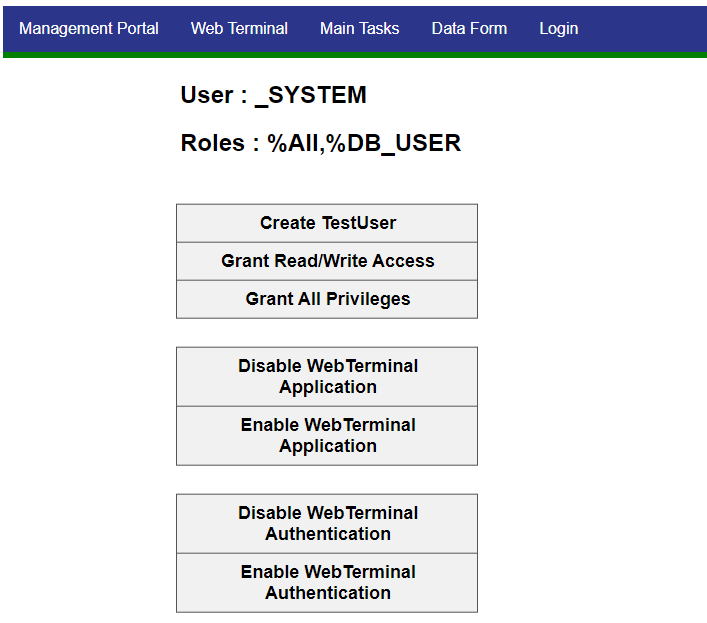
In this article I will explain how to Authenticate, Authorize and Audit by code by using CSP Web Application along with Enabling /Disabling and Authenticate/Unauthenticate any Web Application.

Application Layout
 

5
3 1594
Question Michael Davidovich · Mar 21, 2024

Hello,

I have my server setup a resource server.  When a user calls our API they submit a bearer token as authorization and in our dispatch class AccessCheck() we validate the JWT using ##class(%SYS.OAuth2.Validation).ValidateJWT()

If I include a scope to check in that method I get the error Scope check may only be done on requesting client and I'm not sure what this means. The method works without include the scope and will let me know if I have an unsigned token or an expired token.  

I noticed that the implementation of the method calls Set token=##class(OAuth2.AccessToken).

5
0 398
Article Ashok Kumar T · Feb 17, 2025 6m read

What is JWT?

JWT (JSON Web Token) is an open standard (RFC 7519) that offers a lightweight, compact, and self-contained method for securely transmitting information between two parties. It is commonly used in web applications for authentication, authorization, and information exchange.

A JWT is typically composed of three parts:

1. JOSE (JSON Object Signing and Encryption) Header
2. Payload
3. Signature

These parts are encoded in Base64Url format and concatenated with dots (.) separating them.

4
9 690
Question Sebastian Thiele · Sep 1, 2020

Hi all,

a HealthConnect customer of ours came across with a question to use an external service via REST and OpenID within one of his HealthConnect  (2020.1) productions. The overal idea is to send data to the external system after receiving a baerer token to use for the communication between HealthConnect and this system.

Since I´ve never done such thing before I have an idea to solve this task but looking for a best practise way to do so. Using the RESt-Api of the external system is not the question here.

4
0 622
Question Scott Roth · Dec 1, 2023

Trying to setup my first OAuth 2 client to authenticate against Epic's Interconnect instance that is hosting FHIR/Web Service API's. Epic's documentation says the JWT request has to be sent as a POST request..

Does 

GetAuthorizationCodeEndpoint

and 

GetImplicitEndpoint

automatically put the request into a POST request, or do I need to format a %Net.HttpRequest to POST?

Thanks

Scott

4
0 390
Question Yani Idoughi · Aug 1, 2017

Hi, 

I am a beginner on intersystems technologies ! and i want implements Oauth2 for our projects ( Angular 2 + Caché REST  Backend). 

i read the article that the link  is below : 

https://community.intersystems.com/post/cach%C3%A9-open-authorization-framework-oauth-20-implementation-part-1

But : i need to create  all servers ( Auth and Resource ) on Caché and dont' to use google server.

Also, i need   to be able to consume Oauth from my web services as caché REST application (whitout csp ui) .

An Idea  Please ?

Thank you

Yani

4
0 984
Question Ricardo Paiva · Oct 5, 2016

I am using OAuth2 Cache framework, acting as a client to an authorization server. My setup is based on this excellent previous post [Caché Open Authorization Framework (OAuth 2.0) implementation – part 1].

I'm facing ‘Authorization Server Error: Error Processing Response - No match between server name 'googleapis.com' and SSL certificate values google.com…’

It looks like I should set SSLCheckServerIdentity to false but I can’t figure out how. Has anyone had the same issue?

4
0 1446
Question Neil Thaiss · Jan 18, 2021

Hi,

I am very much a newbe on the subject of JWT, so please except my ignorance.

The Trust I am currently working for wish to create a framework whereby they can create REST API Services, within HealthConnect, and grant access to these using JSON Web Token Authorisation and Bearer Tokens. This would be similar to the way the Trust currently connects to other REST API's, i.e.: DocMan Connect and GOV.UK Notify.

Can anyone offer any advice / sample code and / or point me into the direct of suitable documentation to achieve this?

4
0 1279
Question Michael Davidovich · Jun 2, 2023

This is a bit of an IRIS question but also and OAuth 2.0 questions:

I am using %OAuth2.JWT.JWTToObject() to "validate" a JWT.  My questions:

- While I am checking claims with the returned body, does the return status of the method "count" as a validation step? In other words, if I weren't checking claims and $$$OK was returned from that method call (passing in the token and public keys), I could feel confident that this token came from the expected auth server?

4
0 400
Question Claudio Vieira · Feb 3, 2023

Hi,

I use Caché COS and I'm having trouble doing a POP3 on the Microsoft email server using OAuth 2.0 authentication.

I'm using the following program to accomplish this task:

QGPOP ; Recebe e-mail da Microsoft Office 365
  Set server=##class(%Net.POP3).%New()
  Set server.port=995
  Set server.StoreAttachToFile=1
  Set server.AttachDir="D:\HOME\CNTIRET"
  Set servername="outlook.office365.com"
  Set user="importacao@ferrolene.com.br",pass="xxxxxx"
  Set AccessToken="exxxxxxxxxxxxxxxxxxxxxxxxxxxxxxxxxxxxxxxx"
  set server.SSLConfiguration="Transnovag"
  Set status=server.

4
1 1230
Article Shintaro Kaminaka · Mar 4, 2021 7m read

Hello, developers!

In this article, I will show you how to configure FHIR repository + OAuth2 authorization server/resource server on IRIS for Health following the previous article.

In Part 1, we introduced the preliminary preparations, configuring the OAuth2 authorization server, and obtaining the access token.
Part 2 will show you how to build an FHIR repository and configure an OAuth2 client/resource server.

3
3 1561
Article Kate Lau · Jan 5 3m read

Hi, now I would like to continuous on the topic that we talk about previously

Using Postman for testing the OAuth2.0 of the InterSystems FHIR repository - Part1


Question 1: Where is my client_id and client_secret come form?

Short answer: Authentication Server.


If you don't have an Authentication Server, you may set up one as following


Provide the hostname (the host must support Https), at least 1 grand type (we choose client credential here), and SSL/TSL configuration


Input the scopes (here we input user/*.read and user/*.

3
2 136
Question Stephen Wilson · Aug 13, 2019

I have an OAuth 2.0 development environment where Caché is serving all three roles as the Authorization Server, Client and Resource Server based on a great 3-part series on OAuth 2.0 by @Daniel Kutac. I have a simple password grant type where an x-www-form-urlencoded body (as described in this post) is sent as a POST to the token endpoint at https://localhost:57773/oauth2/token and a response body with a HTTP Response 200 header is returned. The response body looks something like this.

3
0 2839
Article Daniel Kutac · May 3, 2017 1m read

It's almost a year since I have published a series of articles explaining how to configure Cache instance as a client / resource server / authorization server. By that time, the implementation of OAuth 2.0 was still a pre-release software.

With the advent of Cache version 2017.1 a lot has changed. OAuth 2.0 implementation is fully completed and supported. Numerous new features were added (e.g. dynamic client registration)  - see release notes here for full details - and configuration pages have been redesigned to a great extent as well.

3
0 586