Hey Developers,
New "Coding Talk" video was specially recorded by @Yuri.Gomesfor the InterSystems IRIS AI Programming Contest:

InterSystems IRIS is a Complete Data Platform
InterSystems IRIS gives you everything you need to capture, share, understand, and act upon your organization’s most valuable asset – your data.
As a complete platform, InterSystems IRIS eliminates the need to integrate multiple development technologies. Applications require less code, fewer system resources, and less maintenance.
Hey Developers,
New "Coding Talk" video was specially recorded by @Yuri.Gomesfor the InterSystems IRIS AI Programming Contest:
As you probably know, InterSystems IRIS has a mechanism for auto-generating methods. So, when you create an index in a class, you create methods that make your work easier. There is also a good article on Community that describes such methods.
Take, for example, IndexNameOpen(val), where IndexName is the name of the corresponding index. This method returns an object in which the value of this index corresponds to the value of val.
But this method is available only for unique indexes.
I want to map global ^myUnitTests(ID)={Start}_"^"_{JOB} where {Start} and {JOB} are two properties and ID is determined by $Increment(^myUnitTests).
I defined this class but it will not compile:
Hi,
Business Rules can define a context object, whose properties are exposed and used in the expressions of the rules. For example, my context object is an object with 3 properties. PropA, PropB and PropC.
When constructing my rules, I can call a custom function, and I have one I built myself called 'myFunction' which takes arguments and I pass in properties of my context object. (I can pass in the value of the context object's PropA, B or C).
Hello,
I am using a class based on %UnitTest.TestProduction to test Health Connect production.
I read in Class Reference IRIS for UNIX 2020.1:
Note: This class is not intended to be used in InterSystems IRIS instances.
Why should this not be used in IRIS? I have not seen any difference using this with HealthConnect 2017 or IRIS 2020.1
Pyodbc supports calling stored procedure , but if the IRIS Stored Procedure ROWSPEC has a column with datatype specified as %Date or %Time, Pyodbc fails to fetch it and throws this error.
"
pyodbc.Error: (' 2201', '[ 2201] [Cache ODBC][State : 22018 ][Native Code 22005]\r\nERROR #388: Unknown error, code 22005 (22005) (SQLGetData)')
"
on printing the cursor execute description, pyodbc reads the column as <int>.
and if the ROWSPEC datatype specification was removed, it fetches successfully.
i'm using the driver "InterSystems IRIS ODBC35" 2019.2.0.107
Hello Community members, am newbie here
Already learning and working through Studio & Terminal and since am from C# background and trying to use VS Code for ObjectScript coding, appreciate you help, unable to edit files, please see below snapshot
.png)
Hi All,
With this article, I would like to show you how easily and dynamically System Alerting and Monitoring (or SAM for short) can be configured. The use case could be that of a fast and agile CI/CD provisioning pipeline where you want to run your unit-tests but also stress-tests and you would want to quickly be able to see if those tests are successful or how they are stressing the systems and your application (the InterSystems IRIS backend SAM API is extendable for your APM implementation).
Hi guys,
I released the Sapphire - Auto ML UI to IntegratedML in first version. This week we will release more features. At moment you can create your models.
New features to the next 3 days: model training, csv import, model validate and model performance report.
Enjoy!
I try to run a small test routine (guessing a random number) in WebTerminal but the result looks broken.
in IRISterminal:
.png)
in WebTerminal:
.png)
I think it relates to backspace.
Is there some special setting required?
The code:
a
s q=".......... guess [0..9]: "
f i=1:1 d b if p w ! w $c(9),"thank you",! q
q
b
w !,i,$c(9),q
f r v#1 q:(v?.1n) w " !no number",$c(8,8,8,8,8,8,8,8,8,8,8,8)
w " "
s r=$R(10),p=$s(v="":1,v=r:"!",v>r:"<",1:">")
s x=q,$e(x,r+1)="*",$e(x,v+1)=$s(v=r:"!",v>r:"<",1:">")
q:p w $c(13),$c(9),x s p=v=r q
Hey Community,
We're pleased to invite all the developers to the upcoming InterSystems IRIS 2020.1 Tech Talk: Speed Under Pressure on July 14 at 10:00 AM EDT!
In this InterSystems IRIS 2020.1 Tech Talk, we'll learn about the open source Ingestion Speed Test. We will explain:
After this Tech Talk, you'll be able to use the Ingestion Speed Test on InterSystems Open Exchange for your own testing and benchmarking.
Hey Developers!
Join our next competition in creating open-source solutions using InterSystems IRIS Data Platform! Please welcome:
➡️ InterSystems IRIS AI Programming Contest ⬅️
Duration: June 29 – July 19, 2020.

What is the best option to consume rss data and store in the DocDB?
Imagine you want to see what InterSystems can give you in terms of data analytics. You studied the theory and now you want some practice. Fortunately, InterSystems provides a project that contains some good examples: Samples BI. Start with the README file, skipping anything associated with Docker, and go straight to the step-by-step installation. Launch a virtual instance, install IRIS there, follow the instructions for installing Samples BI, and then impress the boss with beautiful charts and tables. So far so good.
Inevitably, though, you’ll need to make changes.
I got a resultset, and some columns might be a JSON_OBJECT. Is there a way (based on metadata) to determine that the column was formed from JSON_OBJECT function?
set rs = ##class(%SQL.Statement).%ExecDirect(,"SELECT 1 colA, JSON_OBJECT('id':1) col2")
do rs.%Display()
I do not want to try parsing json.
Currently , I am using objectscript in Iris. If I switch the code from objectscript to Java means what are all the steps I need to do?
Hi,
Could someone help me in identifying all characters in a column is whole number 0 or greater
CASE WHEN '123' %MATCHES '[0-9]*' then 'VALID' else 'INVALID' end
The above statement is finding only for first character.
Thanks
Hello.
We're trying to create a script that compiles everything on a certain namespace, for that we are depending on CompileAll. However it seems that this method doesn't check for a dependency tree even when using flags like: curb.
Due to its apparent alphabetical nature, classes that come first but depend upon classes that come later fail to compile because their object still doesn't exists. Example:
Suppose we have to compile a class in which its name starts with A and it has a Parameter which contains an expression that calls for B.
I was trying the %JSON.Adapter backport to cache and try it also in IRIS and i found a kind of an issue regarding to export and object to json that is an inheritance of %ListOfObjects
If we have a list of elementtype of and object and then we try to export this to a json we get this json instead of a correct json.
exported json:
"ElementType":"test.element",
"Size":"1"
}
Json that we want:
{
"field1":"testField1",
"field2":"testField2"
}
]
Test classes:
Hey Developers,
We're pleased to invite you to the upcoming "Development of Interoperability Business Hosts with PEX in Java/.Net" webinar by InterSystems Russia on July 16 at 10:00 (UTC+3, Moscow time)!
I would like to know if there is a way of having a callback or something similar, on persistent classes that is always called after the execution of the operation (failed or successfull).
%OnOpen is executed prior to the action, and there is no post callback
%OnAfterDelete and %OnAfterSave are executed after a successfull operation
I know that 1-1 relationships are not officialy supported by intersystems cache/iris so I want to know the best way to store data with this kind of data model.
Currently I have two classes that where implemented some time ago:
Table A with a relationship type one on table B
Table B with a relationship type one on table A
To compile I have a double compile with qualifyer U.
What is the best way to implement a data model with 1-1 relationships?
Thank you
Hi,
We are using IRIS, and have some systems that we send data to that cannot accept messages with certain fields larger than a particular size.
Is there any way to utilize the schema to truncate any fields that are larger than the entered data?
I've tried just setting the max lengths and doing the transform, but it puts in the entire string, and can't find a topic for it.
There are a large number of fields that need to be truncated, so it would be ideal to get it to respect the hl7 schema maximum lengths.
ie for the XPN name fields, each name may not be larger than 20 characters.
Hey Developers,
We invite you to review the InterSystems Caché or IRIS on the Gartner Peer Insights and get two $25 VISA Cards - one from Gartner Peer Insights and one from InterSystems!
We had this promotion in 2018-2019, and now it's so good to announce it also for 2020!
See the rules below.
Hi Developers,
The new video from Global Summit 2019 is available on InterSystems Developers YouTube:
Hi, how do I add the POST body content to my Net.HttpRequest (It's not a key value pair, I am posting my own JSON to the remote server because it needs JSON in the body):
set httpRequest=##class(%Net.HttpRequest).%New()
Hi, folks!
Do you know the option/mode when I can feed multiline code into a terminal?
E.g.
for i=1:1:100 {

/// do one line

///do something else}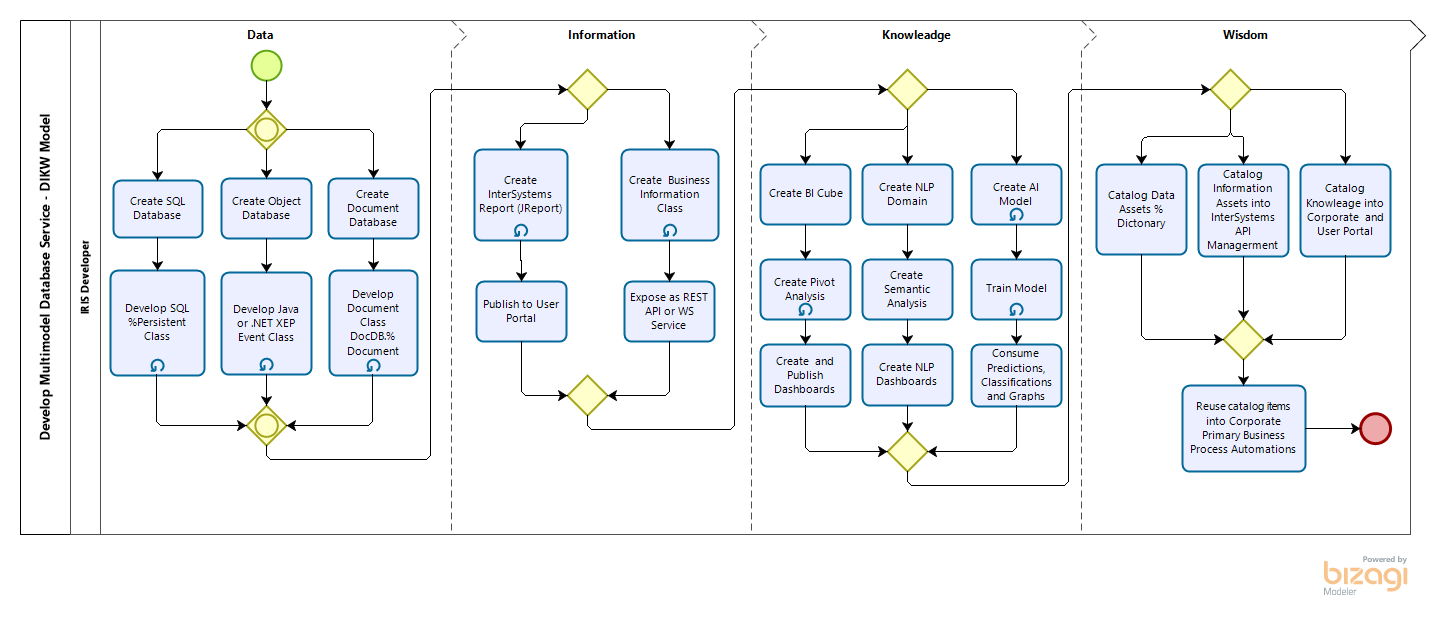
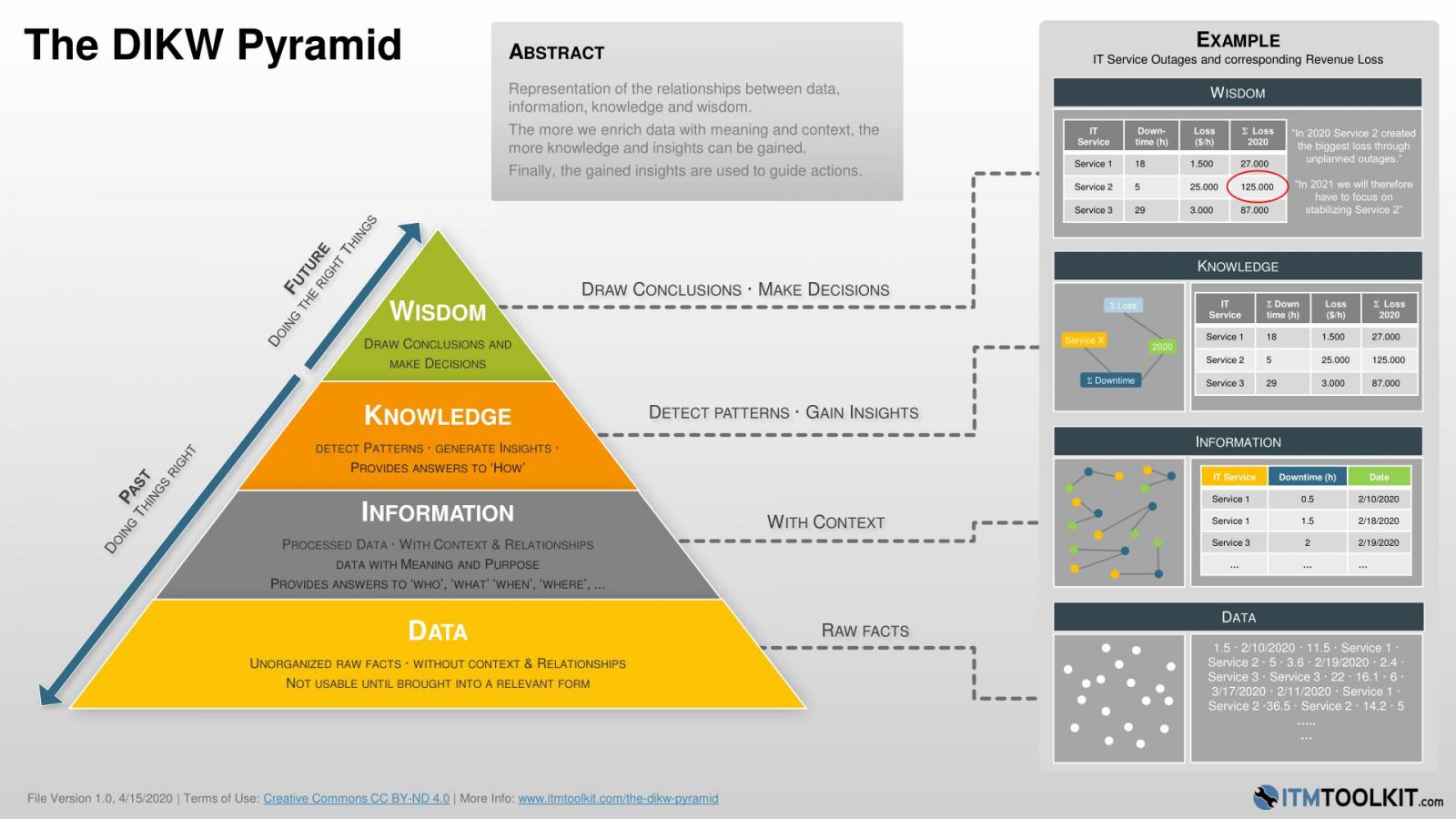
The InterSystems IRIS has functions that allows create DIWK digital services. A few products have the ability to transform data into wisdom, according to the following pyramid.
With IRIS we build data in many formats and purposes (SQL, Document and Object). Using InterSystems IRIS Reports (JReport) or creating business classes exposed as REST or WS services to deliver to applications and people for consume. So knowleage can be also produced from data and information creating BI and AI projects (with IntegratedML or ML Toolkit).
Hi Developers!
Here in Developers Community, we have posts, which are categorized by tags. Tags - are specific topics, which relate to InterSystems products, InterSystems services, or any concept related to software development, deployment, or maintenance etc.
Tag is a helpful thing because it gives the option to follow/subscribe to the tag, filter the search by the tag, understand how popular or not unpopular the topic and more.
And we have a problem!
Actually two problems. The tags for the post are selected by the author of the post, and we have the following issues: the author chooses wrong tags for a post, and the post lacks proper tags.
And we think this problem could be solved with AI/ML approach and so we suggest you solve it during the InterSystems IRIS AI Contest.
Hi, someone have connected Iris to a Bucket ? like aws, huawei, etc.
I try to use private Bucket as storage for files, and Iris as database & API interface to manage this files, but al SDKs are in another languages, no one have founded on COS.
I have tested some examples, but with bad results
Set request = ##class(%Net.HttpRequest).%New()
Set request.Server = "."
Set request.Port = "443"
Set request.Https = $$$YES
Set request.SSLConfiguration="default"
Set request.