#Best Practices

37 Followers · 307 Posts

Best Practices recommendations on how to develop, test, deploy and manage solutions on InterSystems Data Platforms better. 

InterSystems staff + admins Hide everywhere
Hidden post for admin
Article Evgeny Shvarov · Mar 20, 2020 3m read

Hi colleagues!

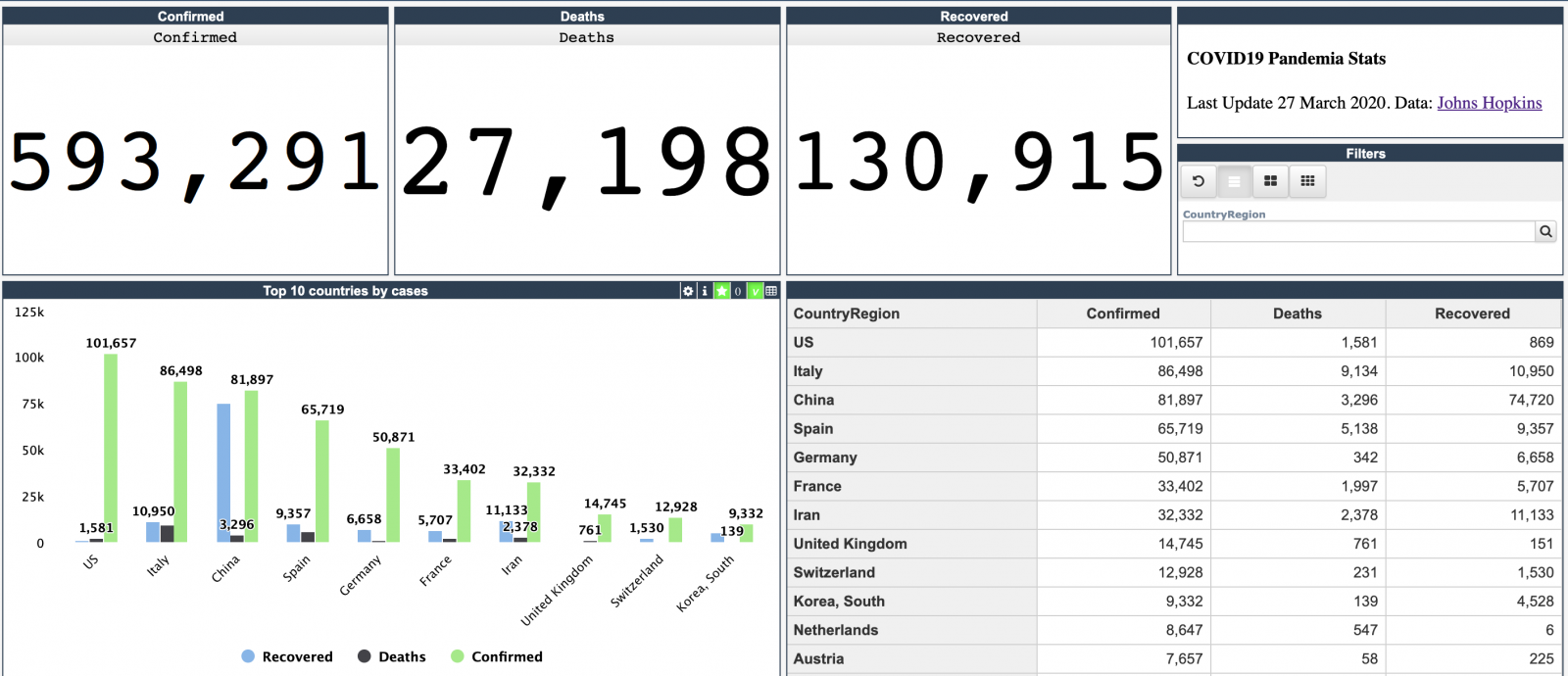
Every day Johns Hopkins University publishes new data on coronavirus COVID-19 pandemic status.

I built a simple InterSystems IRIS Analytics dashboard using InterSystems IRIS Community Edition in docker deployed on GCP Kubernetes which shows key measures of the disease outbreak.

This dashboard is an example of how information from CSV could be analyzed with IRIS Analytics and deployed to GCP Kubernetes in a form of InterSystems IRIS Community Edition.

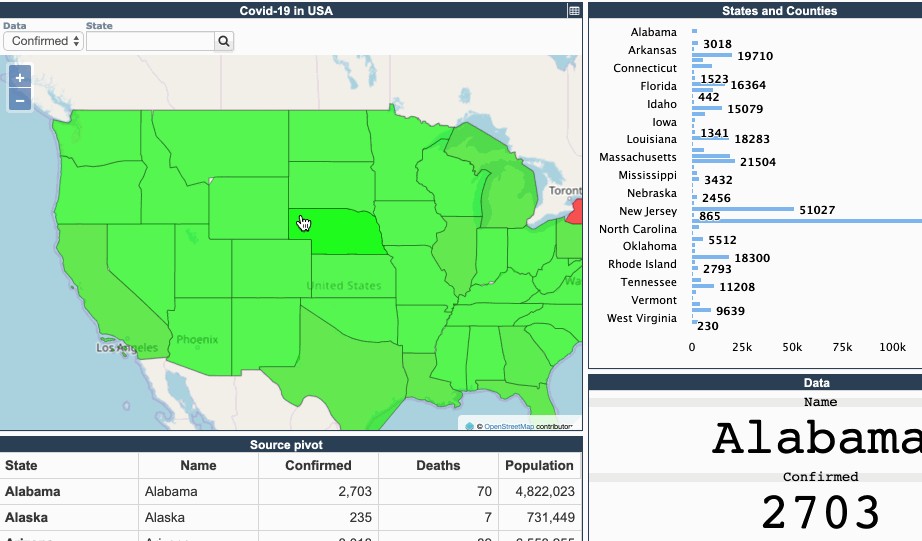
Added the interactive map of the USA:

13
3 1118
Article Ray Fucillo · Sep 2, 2020 7m read

While the integrity of Caché and InterSystems IRIS databases is completely protected from the consequences of system failure, physical storage devices do fail in ways that corrupt the data they store.  For that reason, many sites choose to run regular database integrity checks, particularly in coordination with backups to validate that a given backup could be relied upon in a disaster.  Integrity check may also be acutely needed by the system administrator in response to a disaster involving storage corruption.  Integrity check must read every block of the globals being checked (if not already

8
9 2361
Article Zhong Li · Jan 27, 2020 7m read

Keywords: Python, JDBC, SQL, IRIS, Jupyter Notebook, Pandas, Numpy, and Machine Learning 

1. Purpose

This is another 5-minute simple note on invoking the IRIS JDBC driver via Python 3 within i.e. a Jupyter Notebook, to read from and write data  into an IRIS database instance via SQL syntax, for demo purpose. 

1
2 3103
Article Bob Kuszewski · Jun 19, 2020 5m read

Migrate from Java Business Host to PEX

With the release PEX in InterSystems IRIS 2020.1 and InterSystems IRIS for Health 2020.1, customers have a better way to build Java into productions than the Java Business Host. PEX provides a complete set of APIs for building interoperability components and is available in both Java and .NET. The Java Business Host has been deprecated and will be retired in a future release.

Advantages of PEX

4
1 974
Article Eduard Lebedyuk · Feb 5, 2016 11m read

Class Queries in InterSystems IRIS (and Cache, Ensemble, HealthShare) is a useful tool that separates SQL queries from Object Script code. Basically, it works like this: suppose that you want to use the same SQL query with different arguments in several different places.In this case you can avoid code duplication by declaring the query body as a class query and then calling this query by name. This approach is also convenient for custom queries, in which the task of obtaining the next row is defined by a developer. Sounds interesting? Then read on!

17
7 7675
Article Steven Hobbs · Oct 8, 2019 7m read

$LIST string format and %DynamicArray and %DynamicObject classes

IRIS, and previously Cache, contain several different ways to create a sequence containing a mixture of data values.  A data sequence that has been available for many years is the $LIST string.  Another more recent data sequence is the %DynamicArray class, which along with the %DynamicObject class, is part of the IRIS support for JSON string representation.  These two sequences involve very different tradeoffs.

$LIST String Format

4
10 3357
Article Mikhail Khomenko · May 15, 2017 12m read

Prometheus is one of the monitoring systems adapted for collecting time series data.

Its installation and initial configuration are relatively easy. The system has a built-in graphic subsystem called PromDashfor visualizing data, but developers recommend using a free third-party product called Grafana. Prometheus can monitor a lot of things (hardware, containers, various DBMS's), but in this article, I would like to take a look at the monitoring of a Caché instance (to be exact, it will be an Ensemble instance, but the metrics will be from Caché). If you are interested – read along.

9
5 4539
Article Michael Smart · Oct 7, 2016 4m read

One useful feature of our REST framework is the ability for a dispatch class to identify request prefixes and forward them to another dispatch class. This approach of modularizing your URL map will improve code readability, enable you to easily maintain separate versions of an interface, and provide a means to protect API calls that only certain users will be allowed to access.

Overview

1
0 3984
Article Chris Stewart · Apr 17, 2017 4m read

So, one day you're working away at WidgetsDirect, the leading supplier of widget and widget accessories, when your boss asks you to develop the new customer facing portal to allow the client base to access the next generation of Widgets..... and he wants you to use Angular 1.x to read into the department's Caché server.   

There's only one problem:  You've never used Angular, and don't know how to make it talk to Caché.

This guide is going to walk through the process of setting up a full Angular stack which communicates with a Caché backend using JSON over REST.  

Part 1 - Setup

23
3 5145
Article Mikhail Khomenko · Apr 20, 2020 14m read

This article is a continuation of Deploying InterSystems IRIS solution on GKE Using GitHub Actions, in which, with the help of GitHub Actions pipeline, our zpm-registry was deployed in a Google Kubernetes cluster created by Terraform. In order not to repeat, we’ll take as a starting point that:

1
1 753
Article Bob Binstock · May 16, 2018 6m read

InterSystems supports use of the InterSystems IRIS Docker images it provides on Linux only. Rather than executing containers as native processes, as on Linux platforms, Docker for Windows creates a Linux VM running under Hyper-V, the Windows virtualizer, to host containers. These additional layers add complexity that prevents InterSystems from supporting Docker for Windows at this time.

12
6 4483
Article Mikhail Khomenko · Mar 12, 2020 23m read

Imagine you want to see what InterSystems can give you in terms of data analytics. You studied the theory and now you want some practice. Fortunately, InterSystems provides a project that contains some good examples: Samples BI. Start with the README file, skipping anything associated with Docker, and go straight to the step-by-step installation. Launch a virtual instance, install IRIS there, follow the instructions for installing Samples BI, and then impress the boss with beautiful charts and tables. So far so good. 

Inevitably, though, you’ll need to make changes.

1
1 1288
Article Mikhail Khomenko · Feb 11, 2020 17m read

In an earlier article (hope, you’ve read it), we took a look at the CircleCI deployment system, which integrates perfectly with GitHub. Why then would we want to look any further? Well, GitHub has its own CI/CD platform called GitHub Actions, which is worth exploring. With GitHub Actions, you don’t need to rely on some external, albeit cool, service.

In this article we’re going to try using GitHub Actions to deploy the server part of  InterSystems Package Manager, ZPM-registry, on Google Kubernetes Engine (GKE).

1
1 1090
Article Bernd Mueller · Jan 30, 2018 13m read

Some time ago I got a WRC case transferred where a customer asks for the availability of a raw DEFLATE compression/decompression function built-in Caché.

When we talk about DEFLATE we need to talk about Zlib as well, since Zlib is the de-facto standard free compression/decompression library developed in the mid-90s.

Zlib works on particular DEFLATE compression/decompression algorithm and the idea of encapsulation within a wrapper (gzip, zlib, etc.).
https://en.wikipedia.org/wiki/Zlib

6
2 2827
Article Mikhail Khomenko · Dec 23, 2019 12m read

Last time we deployed a simple IRIS application to the Google Cloud. Now we’re going to deploy the same project to Amazon Web Services using its Elastic Kubernetes Service (EKS).

We assume you’ve already forked the IRIS project to your own private repository. It’s called <username>/my-objectscript-rest-docker-template in this article. <root_repo_dir> is its root directory.

Before getting started, install the AWS command-line interface and, for Kubernetes cluster creation, eksctl, a simple CLI utility. For AWS you can try to use aws2, but you’ll need to set aws2 usage in kube config file as described here.

1
3 1667
Article Eduard Lebedyuk · Mar 4, 2016 7m read

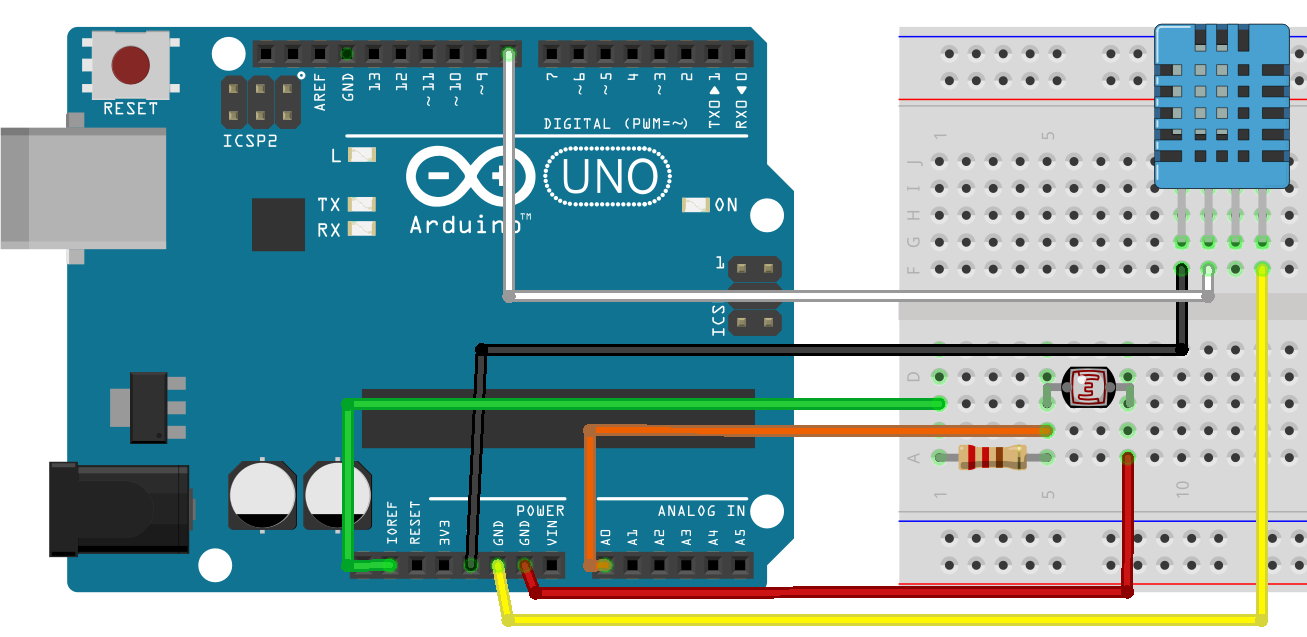
It was InterSystems hackathon time and our team, consisting of Artem Viznyuk and me had Arduino board (one) and various parts of it (in overabundance). And so like that our course of action was set - like all other Arduino beginners, we decided to build a weather station. But with data persistent storage in Caché and visualization in DeepSee!

8
0 1855
Article Henry Pereira · Sep 16, 2019 6m read

In an ever-changing world, companies must innovate to stay competitive. This ensures that they’ll make decisions with agility and safety, aiming for future results with greater accuracy.
Business Intelligence (BI) tools help companies make intelligent decisions instead of relying on trial and error. These intelligent decisions can make the difference between success and failure in the marketplace.
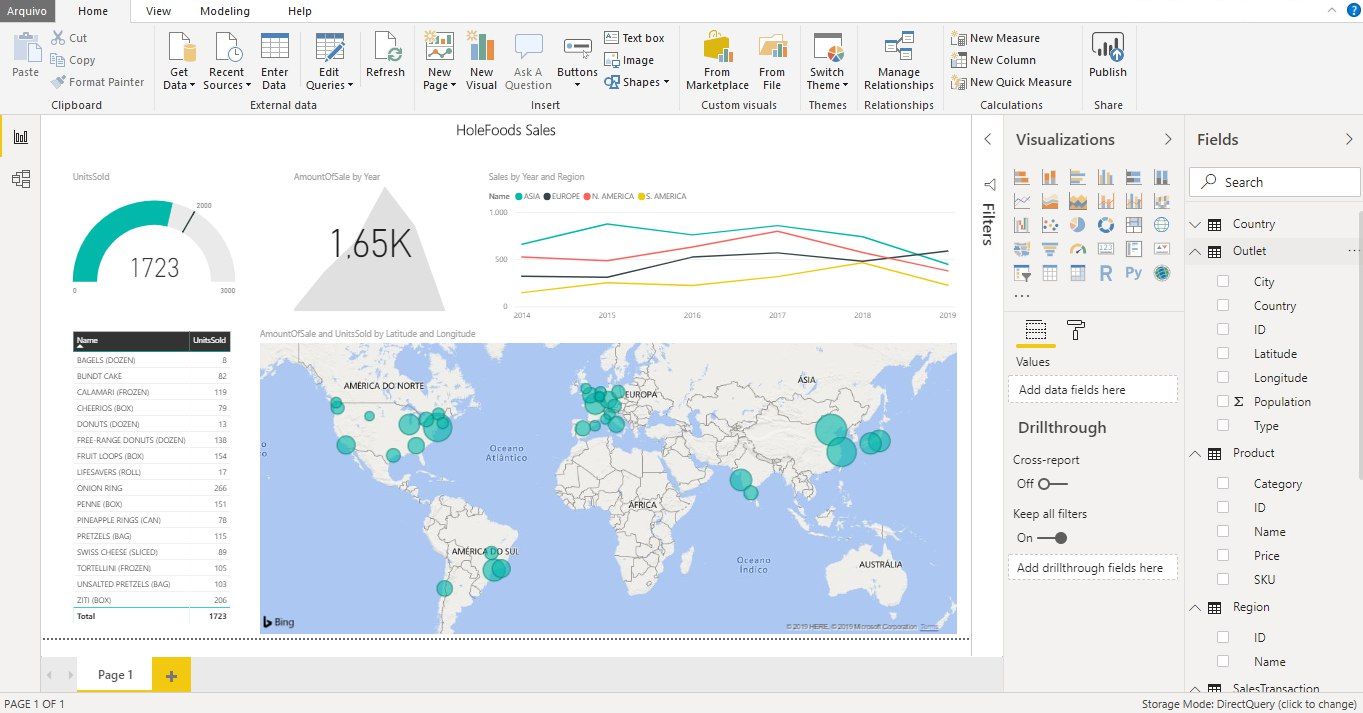
Microsoft Power BI is one of the industry’s leading business intelligence tools. With just a few clicks, Power BI makes it easy for managers and analysts to explore a company’s data. This is important because when data is easy to access and visualize, it’s much more like it’ll be used to make business decisions. 


8
2 3130
Article Mikhail Khomenko · Nov 18, 2019 9m read

Most of us are more or less familiar with Docker. Those who use it like it for the way it lets us easily deploy almost any application, play with it, break something and then restore the application with a simple restart of the Docker container.InterSystems also likes Docker.The InterSystems OpenExchange projectcontains a number of examples that run InterSystems IRIS images in Docker containers that are easy to download and run. You’ll also find other useful components, such as the Visual Studio IRIS plugin.It’s easy enough to run IRIS in Docker with additional code for specific use cases, but

1
4 1038
Article Murray Oldfield · Feb 20, 2017 3m read

Note (October 2022): yape has been deprecated and replaced by YASPE, there is no more development on yape.

Note (June 2019): A lot has changed, for the latest details go here

Note (Sept 2018): There have been big changes since this post first appeared, I suggest using the Docker Container version, the project and details for running as a container are still in the same place  published on GitHub so you can download, run - and modify if you need to.

5
2 2036
Article Murray Oldfield · Apr 1, 2016 2m read

Previously I showed you how to run pButtons to start collecting performance metrics that we are looking at in this series of posts.

##Update: May 2020.

Since this post was written several years ago, we have moved from Caché to IRIS. See the comments for an updated link to the documentation for pButtons (Caché) and SystemPerformance (IRIS). Also, a note on how to update your systems to the latest versions of the performance tools.

2
0 1734
Article Eduard Lebedyuk · Jul 16, 2019 4m read

When I describe InterSystems IRIS to more technically-minded people, I always start with how it is a multimodel DBMS at its core.

In my opinion that is its main advantage (on the DBMS side). And the data is stored only once. You just choose the access API you want to use.

  • You want some sort of summary for your data? Use SQL!
  • Do you want to work extensively with one record? Use objects!
  • Want to access or set one value and you know the key? Use globals!
1
5 1681
Article Allyson Gerace · Feb 6, 2019 13m read

This is the first in a pair of articles on SQL indices.

Part 1 - Know your indices

What is an index, anyway?

Picture the last time you went to a library. Typically they have books sorted by subject matter (and then author and title), and each shelf has an end-plate with a code describing the subject of its books. If you wanted to collect books of a certain subject, instead of walking across every aisle and reading the inside cover of every book, you could head straight for the bookshelf labelled with your desired subject matter and choose your books.

2
6 2274
Article Daniel Kutac · Feb 11, 2019 4m read

Hi guys,

Couple days ago, a customer approached me with the wish to enhance their existing legacy application, that uses SOAP (Web)Services so it shares the same authorization with their new application API based on REST. As their new application uses OAuth2, the challenge was clear; how to pass access token with SOAP request to the server.

After spending some time on Google, it turned out, that one of possible ways of doing so was adding an extra header element to the SOAP envelope and then making sure the WebService implementation does what is needed to validate the access token.

1
3 12153
Article Murray Oldfield · Jun 5, 2019 2m read

If a picture is worth a thousand words, what's a video worth? Certainly more than typing a post.

Please check out my "Coding talks" on InterSystems Developers YouTube:

1. Analysing InterSystems IRIS System Performance with Yape. Part 1: Installing Yape

Running Yape in a container.

2. Yape Container SQLite iostat InterSystems

Extracting and plotting pButtons data including timeframes and iostat.

3
2 1677
Article Mikhail Khomenko · Jan 13, 2020 16m read

Last time we launched an IRIS application in the Google Cloud using its GKE service.

And, although creating a cluster manually (or through gcloud) is easy, the modern Infrastructure-as-Code (IaC) approach advises that the description of the Kubernetes cluster should be stored in the repository as code as well. How to write this code is determined by the tool that’s used for IaC.

In the case of Google Cloud, there are several options, among them Deployment Manager and Terraform. Opinions are divided as to which is better: if you want to learn more, read this Reddit thread Opinions on Terraform vs. Deployment Manager? and the Medium article Comparing GCP Deployment Manager and Terraform

1
2 1563