Hi I'm trying to setup STUNNEL between my pc and the cache database on the server, I'm trying to define port 1972 on my pc with out any luck.
has anyone done this?
thanks
Paul
Hi I'm trying to setup STUNNEL between my pc and the cache database on the server, I'm trying to define port 1972 on my pc with out any luck.
has anyone done this?
thanks
Paul
The Command extension enables the execution of Multi-Line Commands from Terminal prompt.
Installation & Execution
Import %ZML.xml to Namespace %SYS
Optionally you may add this line to your %ZLANGC00.mac for a simplified use:
ZMLzmlotherwise, just call it from the terminal command prompt
USER>do ^%zml
at the prompt USER:zml:1>
- enter commands as usual
- trigger execution by an empty line
- stop multi-line option with a single '.' (dot) at first position
USER>zml
Entering multi line mode. Run with empty line. Stop with single "."
USER:zml:1> for i=1:1:20 {
USER:zml:2> write i
USER:zml:3> write ": "
USER:zml:4> if $x>70 write !
USER:zml:5> }
USER:zml:6> 1: 2: 3: 4: 5: 6: 7: 8: 9: 10: 11: 12: 13: 14: 15: 16: 17:
18: 19: 20:
USER:zml:1> .
USER>
Hello,
I work on a dashboard. I understand basic html. I like to draw two boxes in different colors on the background. There will be multiple small boxes inside or over the boxes in the background. I defined the large boxes as <div> and the smaller boxes also as <div> inside the larger <div>. So far so good.
How can I draw lines with arrows between the smaller boxes?
Each small box represents a process that gets a number in a circle and a status indicator: green = okay, red = not okay.
We have code with the line
Set archiveFilePath=##class(Ens.Director).GetItemSettingValue("ReadPDFFileService","Adapter","ArchivePath",.status)
When we have this archivePath set as a System Default setting rather than Production definition setting i.e. shows in blue rather than black in the restore default screen it doesn't get the setting value. We want to get this value nomatter what way it is set.
Running 2016 Healthshare
Hi Developers,
Please welcome the new video, specially recorded by @Zhong.Lifor the InterSystems IRIS AI Programming Contest:
Hi, I am doing a stream read so that I can do some inserts to the table however other language read is not supported, any idea what I need to do to achieve this?
Thanks
Hi guys,
Do you have any objectscript sample to list persistent classes with name, type, primary key and foreign keys using %Dictionary?
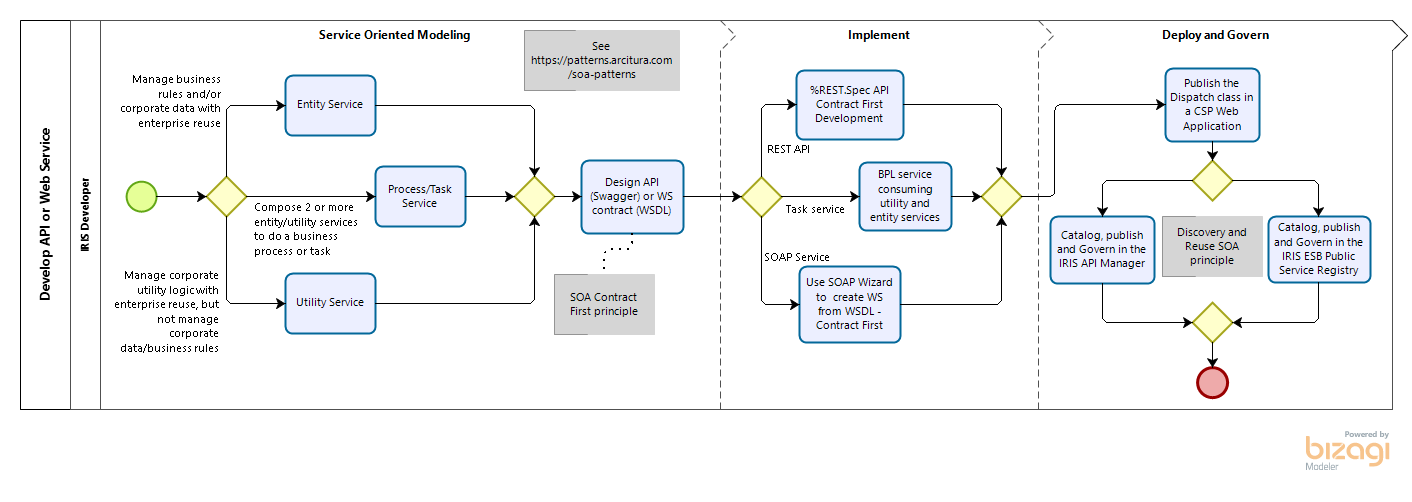
Using SOAP Web Services or REST API Resources, if you want to deliver strategic digital assets for your organization, SOA aproach is an excellent option. The InterSystems IRIS supports like a charm the SOA principles with Contract First technique to model services aligned with the business, and create the services from the service contracts (Open API or WSDL).
Is there any way to execute many SQL commands at once as an (anonymous)block?
for example in PostgreSQL there is
DO $$

BEGIN

--here is Inserts/Updates/Deletes

END $$
Or in Oracle
BEGIN

END;
Thanks for the answers!
Hi Community!
Enjoy watching the new video on InterSystems Developers YouTube and learn more about IntegratedML feature:
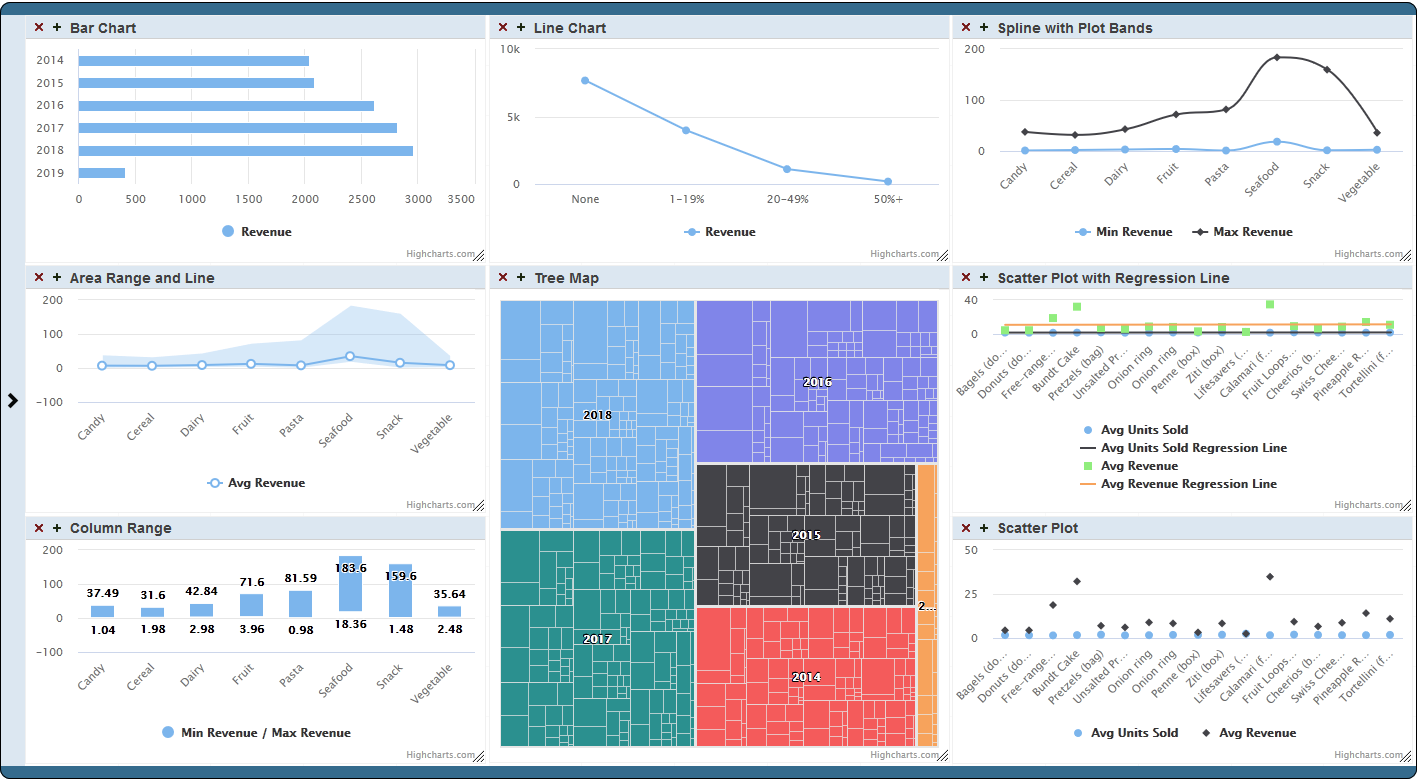
Now available on Open Exchange is a library of third party charts available to use within DeepSee/InterSystems IRIS BI dashboards. To start, simply download and install, select the new portlet as the widget type, then select the chart type that you desire. If you don't find the type of chart you are looking for, you can easily extend the portlet to implement your desired chart type. These new chart types can be used within existing dashboards or you can create new dashboards using them.
Inter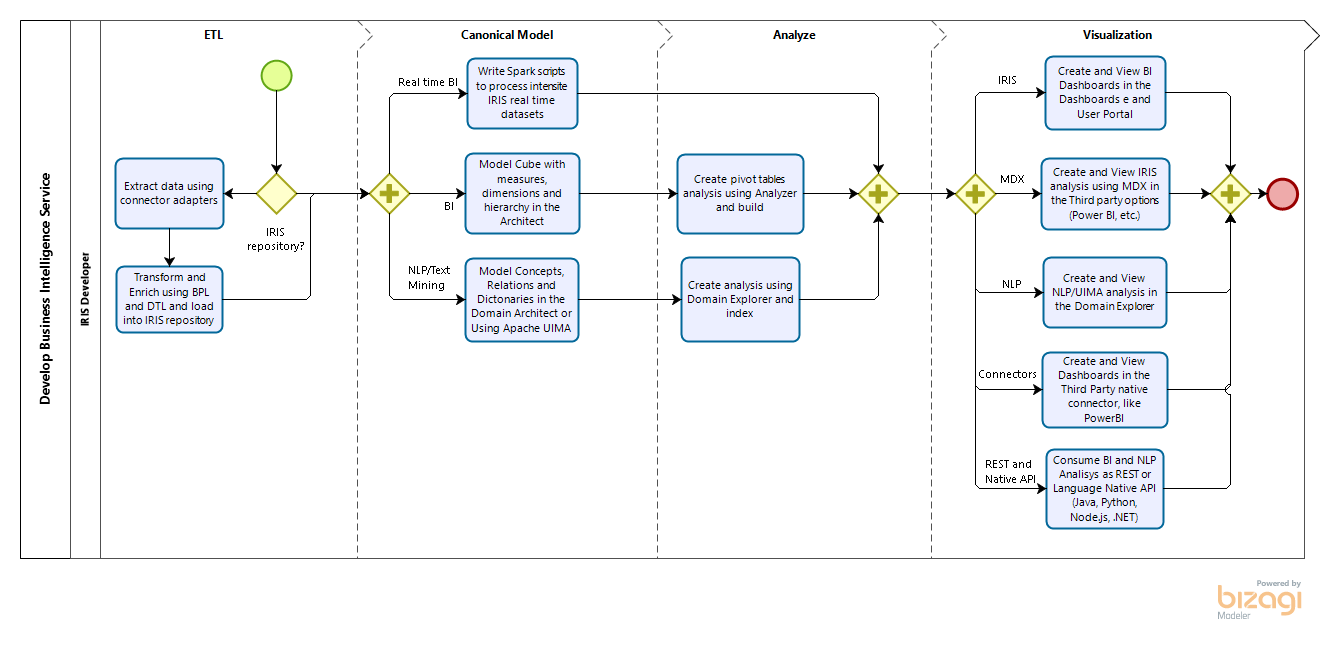
Intersystems IRIS is a complete platform to get insights from SQL and NoSQL data. It is possible get data from Interoperability adapters or using a set of IRIS tables as data sources and model BI or NLP Cubes, covering all type of data (other tools are limited to SQL). There are the option to enable intensive analytics processing using Spark too. So you can model your analysis using IRIS web analyzers (many tools use desktop tools) and than visualize and produce insights using IRIS Dashboards and IRIS User Portal or your third party options, using open options like MDX and REST.
How do I compile a file through the command line?
I am generating a very basic csp page in a bash shell, it is generating fine and displays what I want to see as long as I go into studio and compile it . This defeats my purpose of having the page and I am having no luck figuring out what I am doing wrong. I think the issue has to do with the file not being included when I compile from command line.
Ver is 2017 running RHEL 7
From command line I see
TST 3f2>DO $SYSTEM.OBJ.Compile("csp.vvmaccessnewrds","h")
Compilation started on 06/24/2020 09:47:26 with qualifiers 'h'
Compiling class csp.
Hello Guys, can you help me with a issue? I think it is a beginning question, but here goes, how do I add a new business host to production programmatically? for example a new business service or business process.
I've been looking at the documentation for the classes Ens.Config.Production, Ens.Config.Item and Ens.Director and I haven't found any method to add, maybe the name is a little bit different.
The idea is to create a class that will "deploy" or "configurate" a new project components in a pre-existing production.
Best,
Fernando.
just wondered if there was a way to pass functions for execution to another function so that events can occur before and after?
like :
d ..MethodA(
   ..Method1("var"),
   ..Method2(0),
   ...
)
edit:
I managed to get it working with execute but is there a cleaner (easier way)?
ClassMethod WriteSegment(Functions... As %String) As %Status
{
     w "Start",!
     f Fn=1:1:Functions {
          x Functions(Fn)
     }
     w "End",!
     Q $$$OK
}

ClassMethod WriteSomething(Arg As %String) As %Status
{
     w Arg,!
     Q $$$OK
}

ClassMethod Testing() As %Status
{
     d ..WriteSegment(
          "d ..WriteSomething(""Hi"")",
          "d ..WriteSomething(""Bye"")"
     )
     Q $$$OK
}Hi,
i am using Healthshare 2017.2 version with Trakcare 2018. how to generate & print barcode from cache object scripting in this version?
Hi,
A major project will be launched by the AUTO division of CFAO and many flows will have to be redeveloped in InterSystems IRIS version.
We are therefore looking for a full-time resource dedicated to this project.
(at least 1 year).
Get the latest releases and news from Learning Services with the June newsletter, hot off the presses! This month, read about:
....and, as always, much more!
Read more and subscribe to get Learning Services news once a month in your inbox.
How do you allow accented chracters to flow through the engine without erroring out? I read something about adding a "!" in MSH-18 to accept the default coding, but now it gives me an error about "No translation table found". Does InterSystems have anything out of the box to account for accented letters? Does this need to be coded?
I am trying to set a varaible/property within JavaScript and use the value in my method. The alert method below returns "0". Do I have the syntax wrong?
/// Storage for current table row
Property currentTableRow As %ZEN.Datatype.string [ InitialExpression = 0 ];
set ..currentTableRow = "1"
&js<
alert(zenPage.currentTableRow);
>
Hi:
We added a column to a table as follows
Property SentTime As Ens.DataType.UTC;
And the code to populate this
if pStatus = "SENT" //set SentTime which is used in the Tableau Report
{
Set doc.SentTime = $$$timeUTC
}
For Historical records of type "Rejected" the Sent time is appearing though as 1840-12-31 00:00:00, we don't know why. Current docs work fine with this column just historical seems to display the default instead of blank/null.
Hey Developers,
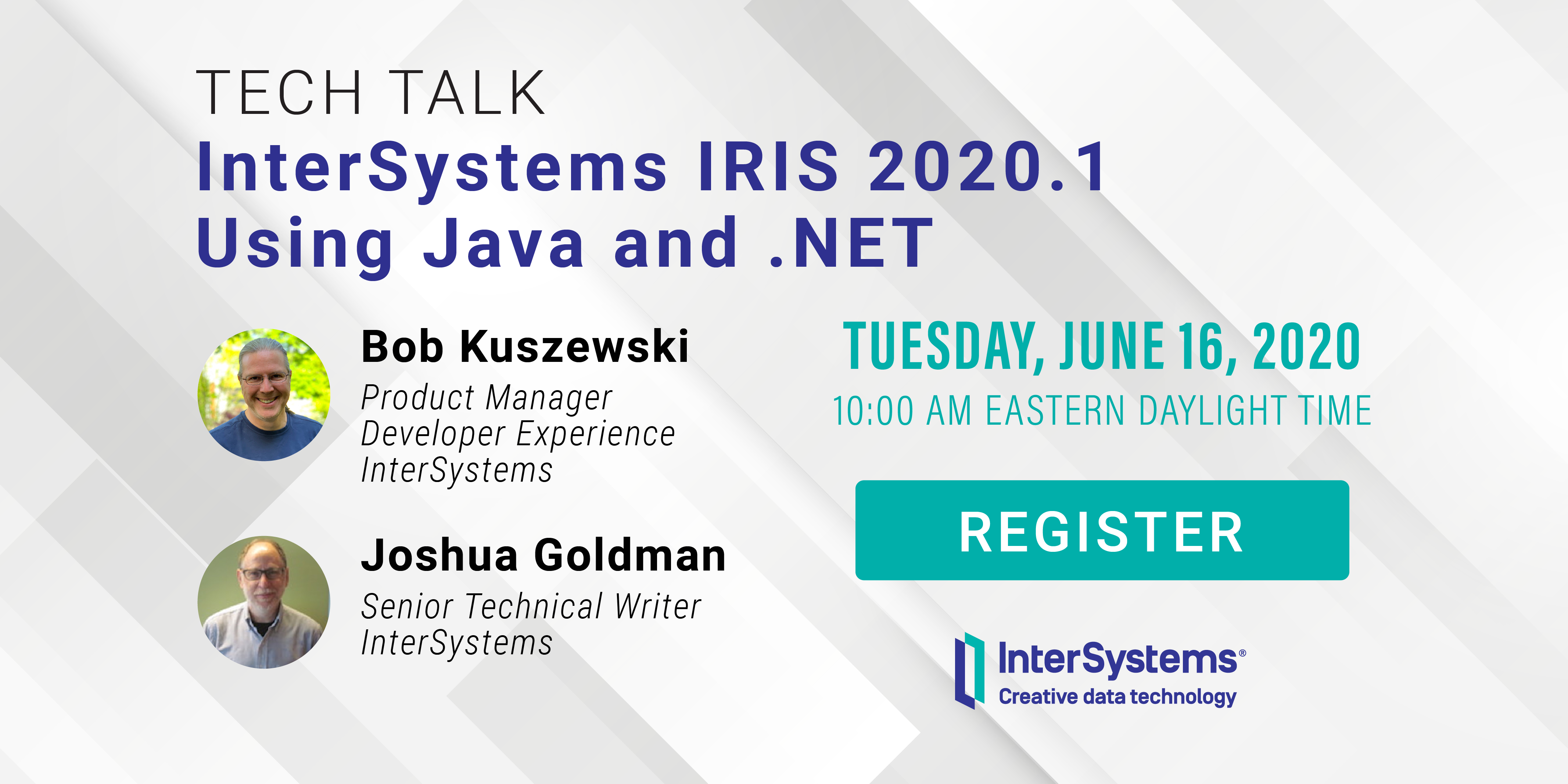
We're pleased to invite you to join the nextInterSystems IRIS 2020.1 Tech Talk: Using Java and .NETon June 16 at 10:00 AM EDT!
In this installment of InterSystems IRIS 2020.1 Tech Talks, we put the spotlight on extending InterSystems IRIS with your own custom Java and .NET code. We will demo how to create a custom interoperability component with the new Productions Extensions (PEX) feature. Following that, we’ll demo how to call Java or .NET code from any ObjectScript code.
Hi Developers,
Please welcome the new coding talk on InterSystems Developers YouTube:
⏯ How to Generate Modules for InterSystems Package Manager (ZPM)
Hi,
call my web service (%SOAP from caché 2012 v) from XmlHttpRequest client generate cors policy error,
.png)
Any one help me how i can allow origin in headers requeste.
Thank you.
Hello,
I am having a problem with SQL Select, the command in portal is OK, show all items, but when I use a CacheDataAdapter in VB .NET show the message 'Incorrect list format 0>=0'. What could be this message? Because is the same SQL command.
Best Regards.
Hi!
we are evaluating IRIS Data Platform as an OAuth2 Authorization Server with the use of the official Docker image. We currently struggle with the OAuth2 setup, as we are required to use https:// for the /oauth2/authorize and /oauth2/token endpoints, but the Docker container exposes only http:// in its default configuration. We have tried to find any hints in the docs but were not successful. Any help is appreciated.
Thanks
Klaus & Lukas
Hi all
Does anyone have an easy way of reading the cdata in the xml response returned buy a Webservice?
At the moment I have a XML class and then I use read.Correlate() to read through that XML bit.
However, depending on the message I have different things in the CData and I don't want to create a class for each one of these.
The API returns the cddata as KeyValueOfstringstring.
My idea would be to send to my method the cdata as a parameter which is the KeyValueOfstringstring part of the response message and then deal with it...
Any help would be appreciated...
Best Regards
I've got a class that extends FTP.PassthroughService and utilizes the FTP.InboundAdapter. In Business Service, I have the FilePath set as /tmp and the subdirectory level = 1. How can I access the current file path (/tmp/subdir1) when there are files in /tmp/subdir1/test.txt for example? The ..Adapter.FilePath only returns the FilePath setting in the Business Service/Adapter but not the subdirectory level. Of note, it is a SFTP connection. I can access the %Net.SSH.SFTP from ..Adapter.FTP.%sftpSession but don't see how to retrieve the current directory of the file being processed.
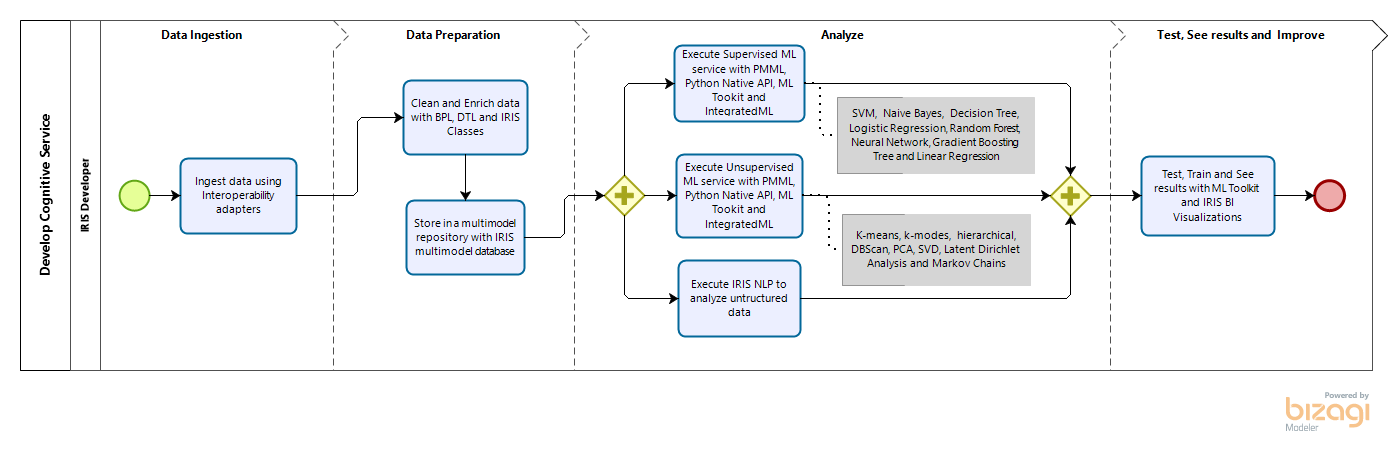
The Intersystems IRIS is a great platform to develop, run and consume Data Science services. IRIS can ingest data from any type, format, protocol and time using adapters. These datasets can be prepared with BPL, DTL and Object Script and stored as SQL or NoSQL data. Finally, it can be consumed by open ML algorithms inside IRIS and visualized in the IRIS dashboards. See more in: https://docs.intersystems.com/irislatest/csp/docbook/Doc.View.cls?KEY=PAGE_data_science.
.png)