Hello - basic question. Looking for sample code to parse inbound ACK messages. Messages are coming in a SOAP envelope. The ACKs will have MSH/MSA/ERR segments (other segments for QBP messages down the road). Looking at common, established way(s) to parse the messages HS would be a great help to get started on this. Thanks in advance.
I am relativly new to this, so excuse me if i am asking a dumb question
HL7 schema is 2.4
When a HL7 message comes in and in the PID segment on spot 4 the word "Relation" is written, i want to filter out those messages through a Router Rule.
I have come up with several rules (when conditions), here are some examples.
HL7.{PID:4} CONTAINS "Relation"
or
HL7.{PID:AlternatePatientIDPID(1).ID} CONTAINS "Relation"
I have tried a lot of different Rules, but no luck yet.
But every time i test a massege what contains the word Relation in de PID segment on spot 4 it states ".....
Hello Caché-Community,
where can I download the current ODBC Drivers for InterSystems Caché.
The links in the following post don't work anymore:
https://community.intersystems.com/post/odbc-drivers
Best regards
Florian Hansmann
Hi Community, you can still register for Virtual Summit.
 Bonus for registrants: free certification exam attempt. Registrants get one free attempt at a certification exam. (Take exam before December 31.) Don't wait. Register today.
If one of your packages on OEX receives a review you don't get notified by OEX only on YOUR package.
So @Evgeny Shvarov suggested publishing my monthly summary of my reviews here in DC.
It reflects my experience with the status I found at the time of my review.
Hi,
I am getting below error while starting local IRIS for health instance.png)
below is the error in windows application event log
Thanks
In specifying a "WHEN" condition statement, I don't seem to be able call a function directly from this declaration, as the generator seems to get confused
In the graphical editor:
%request.GetValue("MRN"))=123453
(%request.GetValue("MRN"))=123453)
In the DTL directly:
Is there a way to ensure a certain global(s) are always in buffer ?!
Is there a method call to check if a global is in buffer ?
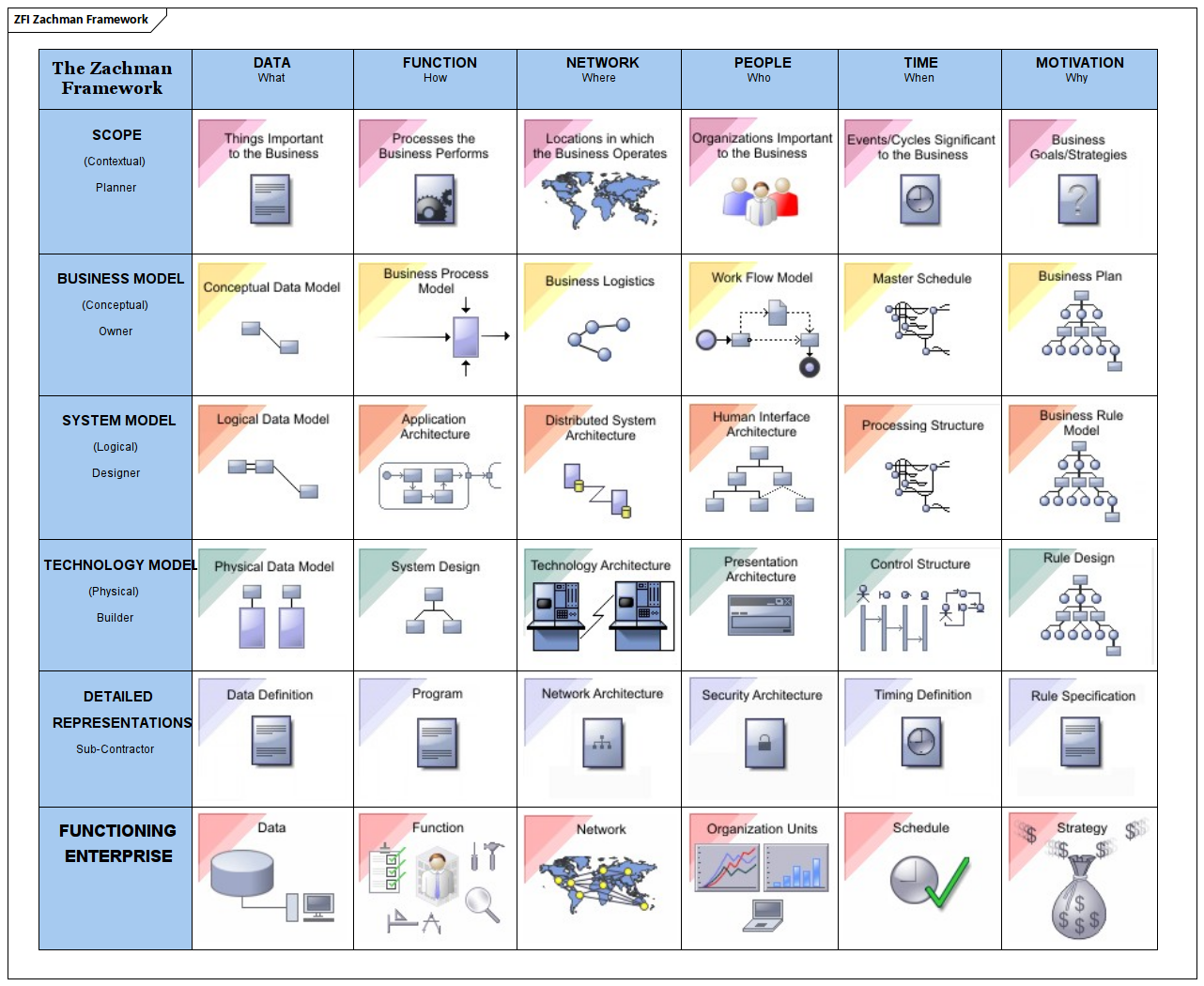
The Zachman Framework™ is an ontology - a theory of the existence of a structured set of essential components of an object for which explicit expressions is necessary and perhaps even mandatory for creating, operating, and changing the object (the object being an Enterprise, a department, a value chain, a “sliver,” a solution, a project, an airplane, a building, a product, a profession or whatever or whatever). Source: https://www.zachman.com/about-the-zachman-framework.
InterSystems is very pleased to announce the 2021.1 release of InterSystems IRIS Data Platform, InterSystems IRIS for Health and HealthShare Health Connect, which are now Generally Available to our customers and partners.
The enhancements in this release offer developers more freedom to build fast and robust applications in their language of choice, both server-side and client-side. This release also enables users to consume large amounts of information more effectively through new and faster analytics capabilities.
Hello everybody
I'm trying to send a XML file in a form-data like this, but is not working. Can anyone help me with the code?
.png)
This is my code:
Set HttpRequest = ##class(%Net.HttpRequest).%New()
Set RootMIMEPart = ##class(%Net.MIMEPart).%New()
Set BinaryMIMEPart = ##class(%Net.MIMEPart).%New()
Set stream = ##class(%FileBinaryStream).%New()
Set stream.Filename = pRequest.file
Do stream.LinkToFile(pRequest.file)
Set BinaryMIMEPart.Body = stream
// I already used "application/x-www-form-urlencoded", "application/xml", "application/x-object" in Content-Type
Do BinaryMIMEPart.
I have a workstation with a CACHE instance up and running.
On that same workstation there is also an instance of IRIS (fresh install). I would like to migrate manually the CACHE database to IRIS (ideally, all globals, routines and classes).
What I tried is to copy C:\InterSystems\Cache\mgr\CACHE.DAT to C:\InterSystems\IRIS\mgr\IRIS.DAT (after shutting down both instances) but it does not work.
I got the following message : (112) The service for the IRIS instance did not start.
Is there a better way ? (eg: using Portal or some API from command line).
Hi
How to install the WebGateway package without interactive mode ?
I need to install this package in apache container
Hello,
I dont know how to activate the production in this version, In cache was from install wizard but now i dont know
16:49:24.153:Ens.Director: Production 'REGINUSPKG.HubProduction' starting... 16:49:24.154:...PKG.HubProduction: ERROR <HSErr>ConfigurationNotActivated: Production cannot start - it needs to be activated
Thanks!
Hi all.
I'm trying to create a route rule that can call to a web service according to a parameter of a message.
My first attempt is the following:
.png)
I have a common class with all information, BuscarHuecoRequest, and check what is the value of property "CodigoProveedor".
The table T_PROVEEDOR contains the list of code with the code of the provider, if is F, calls to WSF, if is C, calls to WSC, etc... Using a transformation to convert the values to this provider.
Happy #VSummit21 week!!
CCR users should check out the following Virtual Summit '21 session by @Jean Millette:
Drinking Our Own Champagne: InterSystems AppServices Move from Zen Reports to InterSystems Reports
- Find out how we use the CCR application to make changes to the CCR application (for reports)
- Find out how we moved from Zen Reports to InterSystems Reports for the CCR application
Feel free to ask questions on the content.
Nice work Jean!!
Hello all,
I receive an embedded PDF link as part of a JSON message. The %Get method is currently used to extract the data items from the JSON message, however we have come across a problem when trying to extract a data item which is an embedded PDF file as the string is too long. Does anyone have any suggestions as to what would be the appropriate method to use to extract this particular data item?
Thanks
Hi,
I've started active use ISC VS Code extensions about a half year ago, seem to be used to use, and started to enjoy them :)
The documentation promises the
-
- integration with server-side source control etc
We were happy enough not to use, while used Studio Source Control menu to run some internal code checkup procedures. Is there any functional equivalent for this in VS Code: can I add custom menu items that should be backed with ObjectScript code to be started on server?
In this article, we will run an InterSystems IRIS cluster using docker and Merge CPF files - a new feature allowing you to configure servers with ease.
On UNIX® and Linux, you can modify the default iris.cpf using a declarative CPF merge file. A merge file is a partial CPF that sets the desired values for any number of parameters upon instance startup. The CPF merge operation works only once for each instance.
Our cluster architecture is very simple, it would consist of one Node1 (master node) and two Data Nodes (check all available roles). Unfortunately, docker-compose cannot deploy to several servers (although it can deploy to remote hosts), so this is useful for local development of sharding-aware data models, tests, and such. For a productive InterSystems IRIS Cluster deployment, you should use either ICM or IKO.
I have a website where I offer shipping services. I need to implement UPS API in my website. I already did all the basic tasks such as create my UPS developer account, download the packages... Now I want to start with the project but I don't have no idea about how to start. UPS doesn't give any instruction or example about that.
P.S: I have knowledge in the basic language such as HTML, JavaScript, PHP, CSS and MySQL...
Please can someone help me with that?
Good morning -
As we're starting to create more custom message classes to represent out JSON-based integrations, I was pondering how to implicitly grant SELECT privileges to a specific Security Role so they can utilize Message Viewer to search through the message history.
So if all of our custom JSON message classes are under OurParentPkg.Messages.REST.* (e.g., OurParentPkg.Messages.REST.AddPatientRequest and OurParentPkg.Messages.REST.AddPatientResponse), is there a method to ensure that our analysts can be granted the SELECT permission to anything created under OurParentPkg.Messages.
Hi,
I wonder if anyone tackled the following problem-
Sending a mail with an embedded image is straight forward using %Net.SMTP
S status=Message.AttachFile(Dir,FileName)
D Message.TextData.Write("..<img src=""cid:xyz.png"">..")
Outlook displays such an Email as expected- with the image in the body of the mail.
Gmail displays the image as an attached file.
There are a lot of suggestions online about this, but none is working for me.
Did anyone face and solved this issue?
Regards,
Nael Naseraldeen
Does Intersystems specifically Ensemble support a Single Sign On architecture? Currently we are using Delegated sign on using LDAP and TLS, however our CIO would like us to move toward a single sign on, so when you sign into your PC it would automatically pass the credentials to Ensemble.
Thanks
Scott
I wrote a step by step tutorial in the qewd-howtos repository how you can write state of the art multi-page web apps with Node.js using a QEWD-Up WebSocket/REST api back-end integrated with a mainstream web framework like NuxtJS & Vue.js. In particular with the latest NuxtJS/Vue.js frameworks, writing web applications becomes fun again, allowing you to write your applications very efficiently, hiding all boilerplate code from you.
The tutorial should be very easy to try out on your development machine and consists of two parts:
- instructions for creating a basic Node.
First of all thanks for your help and time
We would need to find inside PID:3 which one meets the following condition:
PID 3.4.1 = "CAC" and PID 3.5 = "JHN"
We have been investigating how could we do it
We have achieved to get single fields in a call request as follows:
request.GetValueAt("ORCgrp(1).ORC:OrderingProvider(1).IDNumber")
##class(Ens.Util.Time).ConvertDateTime(request.GetValueAt("PID:DateTimeofBirth"),"%Y%m%d","%Y-%m-%d")
However, how would you recommend us to look for a specific field in PID meets a specific criteria?
How would you find inside PID if there are PID 3.4.
Hey Developers,
Planning to attend the Focus Sessions of InterSystems Virtual Summit 2021? Don't miss the session dedicated to InterSystems Developer Community, Open Exchange & Global Masters!
⚡️ "Win. Win. Win with InterSystems Developer Ecosystem" VSummit21 session ⚡️
🎁 Note: All session attendees get a special prize.
Speakers:
🗣 @Anastasia Dyubaylo, Community Manager, InterSystems
🗣 @Lena Evsikova, Product Owner of InterSystems Open Exchange
🗣 @Olga Zavrazhnova, Customer Advocacy Manager, InterSystems
Does InterSystems have any best practices for deploying IRIS into Kubernetes? For example one question we have is should IRIS have a dedicated AKS cluster or can it be added to an existing cluster?
David
Hello all,
I'm trying to setup the JDBC Gateway Server so customers can connect to IRIS remotely using JDBC and not ODBC. But I'm facing a problem connecting, as our system department tells me IRIS is using the loopback address (127.0.0.1) and that makes remote systems cannot connect to port 53773 (the default port for that).
So, I would like to change this 127.0.0.1 host for the hostname but I cannot see where to do it:
.png)
Anyone with experience here to help me? :-)
Thanks a lot
I have created FHIR server and now, I want to make an SDA file from the HL7 ADT message, and then make FHIR from SDA.
At the moment I am trying to write a documentation file for a project and intend to use LaTeX for it.
Has anyone already had experience with this? I haven't found syntax highlighting with the LaTeX packages I know yet.
I found a request on Pygment but it was from 2016 and there was no reply on it since then.
Does anyone know a simple way for syntax highlighting COS in LaTeX?
Thanks for your input!
Martin