Hi All,
I want to implement SOAP authentication and Security. Please let me know what are all the best ways to Implement it.
Advance thanks,
Authentication in Computing is the process or action of verifying the identity of a user or process.
Hi All,
I want to implement SOAP authentication and Security. Please let me know what are all the best ways to Implement it.
Advance thanks,
Hello,
I'm new to Iris for Health and I'm trying to get some experience using it. I've subscribed to the Intersystems Iris for Health software in AWS marketplace. I successfully spun up the EC2 instance with the default security group. The try-iris instance is healthy and successfully starts within EC2. I've also successfully changed the default password too.
However, I'm unable to authenticate into the management portal. The portal launches okay though I keep getting an access denied. I'm also unable to authenticate into a session from the EC2 instance.
I am looking for a solution with Ensemble to talk to a old NTLM based SOAP Service. Does anyone has done this before?
We have the webservice calls working via SOAPUI but we are looking how we can make it work with Ensemble.
Is there a ready to use Outbound Adapter for NTLM ?
Thx.
Hi!
I have a qeustion if it possible to let Ensemble manage user rights from AD-user group?
What i want is to let external user have access to certain CPS-pages to read information. But not let them have access to Ensemble it self. And instead to set up individual accounts in Ensemble for each one of them i rather want to have dem in an AD-securitygroup.
Is that possible and also limit them only to choosen CSP-pages?
I'm not a administrator of our platform, i'm just develope productions so i would be greatful for information i could bring to our tech-guys and ask them to set it tup, if possible.
Hi,
Does anyone have any experience with getting, unfortunately, an older version of Cache to authenticate via SMTP to send email? I have verified that the settings are set up properly on the mailbox as I have successfully sent an email from a LAMP server, which comes from the same IP address.
If you have any thoughts, I would greatly appreciate it.
This is the error I receive
ERROR #6034: SMTP server connection failed during MAIL FROM command: <READ>zSend+105^%Net.SMTP.1.
when I run the following.
s server=##class(%Net.SMTP).%New()
s server.smtpserver="smtp.office365.com"
s server.
Hi,
I have a problem with CSP Application Authentication, when the user input you correct password, however the message "Invalid password" returns.
This error returns just Cache password user type, for user delegated don't.
this error is momentary also, if you wait a moment, it stops.
Without installing Kerberos has anyone Authenticated a SQL JDBC connection? Currently we are using local SQL Accounts to sign onto External SQL Databases, but we are being told that we need to switch to Service accounts that live on a Active Directory Domain.
I wrote with a little help a ZAUTHENICATE to do the Authentication for Ensemble, can I use something like that to connect to an External SQL Database using a Service Account on a Active Directory Domain?
Thanks
Scott
I need to offer new users on our system a temporary password that is valid for only 48 hours. This is different than a 60-day password expiration window for existing users' passwords (where a password needs to be changed every 60 days), and is different than a "user expiration date", where you can set a date where the user's account expires and is disabled on that date, and different than the inactivity expiration date where a user becomes active if his account is not used within, say, 30 days.
I am setting up a new Caché instance and I have managed to configure it where Caché username/password is required to initiate the Caché session:
csdfalsdkfjf@fra23e234sco:/opt/labmed/test/test81/proc$ csession cache1
Node: frxxco, Instance: CACHE1
Username:
I cannot find the setting in the management console that allows for unauthenticated login to a Caché session. Any help is much appreciated.
I am working on an ZAUTHENTICATE.mac to move us from local cache users to Delegated Authentication against LDAP.
I have created a user role within my instance of Ensemble that matches the AD Group that I will be assigning everyone in my group to. Is there a way to query the list of available Roles within Ensemble, and if one of my AD groups matches that role, set the role for that user?
How would I compare the AD Group against the Role listing?
Thanks
Scott
As many of you, our partners, are more widely using modern UI frameworks to create client front-end, you may have encountered a question, "So how do I secure my data when I just finished developing all new fancy browser based client experience?"
The answer is easy. Use a standard, proven OAuth2 and OpenID!
"OK, but how can I do it? I have never done it before."
No problem, just have a look here, if your client is Angular (not AngularJS) based, there is a demo project available for you to review and get inspired!
Hi community
i'm working on the validation user method , i found this following code in the \HSIE\%SYS\Classes\%OAuth2\Server\Validate.cls
ClassMethod ValidateUser(username As %String, password As %String, scope As %ArrayOfDataTypes, properties As %OAuth2.Server.Properties, Output sc As %Status) As %Boolean
{
    // Check if user is defined.
    // We use local Cache user list as the shipped default.
If '##class(Security.Users).Exists(username,.user,.Hi guys,
I have accidentally clicked the remember password option in my Ensemble studio. So it is now not asking for username and password and even the authentication popup is not showing every time i open the studio.
Is there anyway to remove the remember password option for the cache studio.
Thanks,
Hi, Community!
Suppose If you develop a client js application which works with Caché server via REST API (CSP Gateway).
What are the options for Authentication and working with Caché session then?
Hi everyone! My company has a Zen ERP application with CSP delegated authentication. Now, we're developing a separated BI application, using Angular, which consumes DeepSee REST API services. Both applications access the same Caché database.
How to implement single sign-on strategy in order to allow an already authenticated ERP user to access DeepSee REST services? Has anyone already implemented something like that?
Thanks in advanced.
Hello all,
In my ZEN login page, I found a way to bypass the submit button and force a user to click on the Sign In button, thus forcing the code to call my OnSubmit(), like this:
<!--ondefault="return true;"--><!-- this removes the ability to use "return" to login - forces button click to login -->
<text name="CacheUserName" />
<password name="CachePassword" />
<!-- the submit button is special, and submits automatically without checking first -->
<!
Unless I'm mistaken, 2017.1 doesn't appear to support RFC 7523 (JSON Web Token Profile for OAuth 2.0 Client Authentication and Authorization Grants). Is that coming in 2017.2?
In order to support it in 2017.1, I'd have to override the OAuth 2.0 token endpoint to cater for the additional grant types - what's the best way to do this?
Thanks.
It's almost a year since I have published a series of articles explaining how to configure Cache instance as a client / resource server / authorization server. By that time, the implementation of OAuth 2.0 was still a pre-release software.
With the advent of Cache version 2017.1 a lot has changed. OAuth 2.0 implementation is fully completed and supported. Numerous new features were added (e.g. dynamic client registration) - see release notes here for full details - and configuration pages have been redesigned to a great extent as well.
Created by Daniel Kutac, Sales Engineer, InterSystems
Part 3. Appendix
In the previous part of our series we have learned about configuring InterSystems IRIS to act as an OAUTH client as well as authorization and authentication server (by means of OpenID Connect). In this final part of our series we are going to describe classes implementing InterSystems IRIS OAuth 2.0 framework. We will also discuss use cases for selected methods of API classes.
The API classes implementing OAuth 2.0 can be separated into three different groups according to their purpose. All classes are implemented in %SYS namespace. Some of them are public (via % package), some not and should not be called by developers directly.
We are building a bunch of rest based services using Ens 2016.2 to serve our browser based application (Angular 4).
Two questions:
1. The initial authentication seems only work if credentials are placed in the url parameters. Trying to use the Authorization header instead, the client code immediately complains about Access-Control-Allow-
2. After initial authentication, what is the proper way to send subsequent rest calls without having to include credential every time?
I have Parameter UseSession As Integer = 1 in my service class, but what else do I need to do?
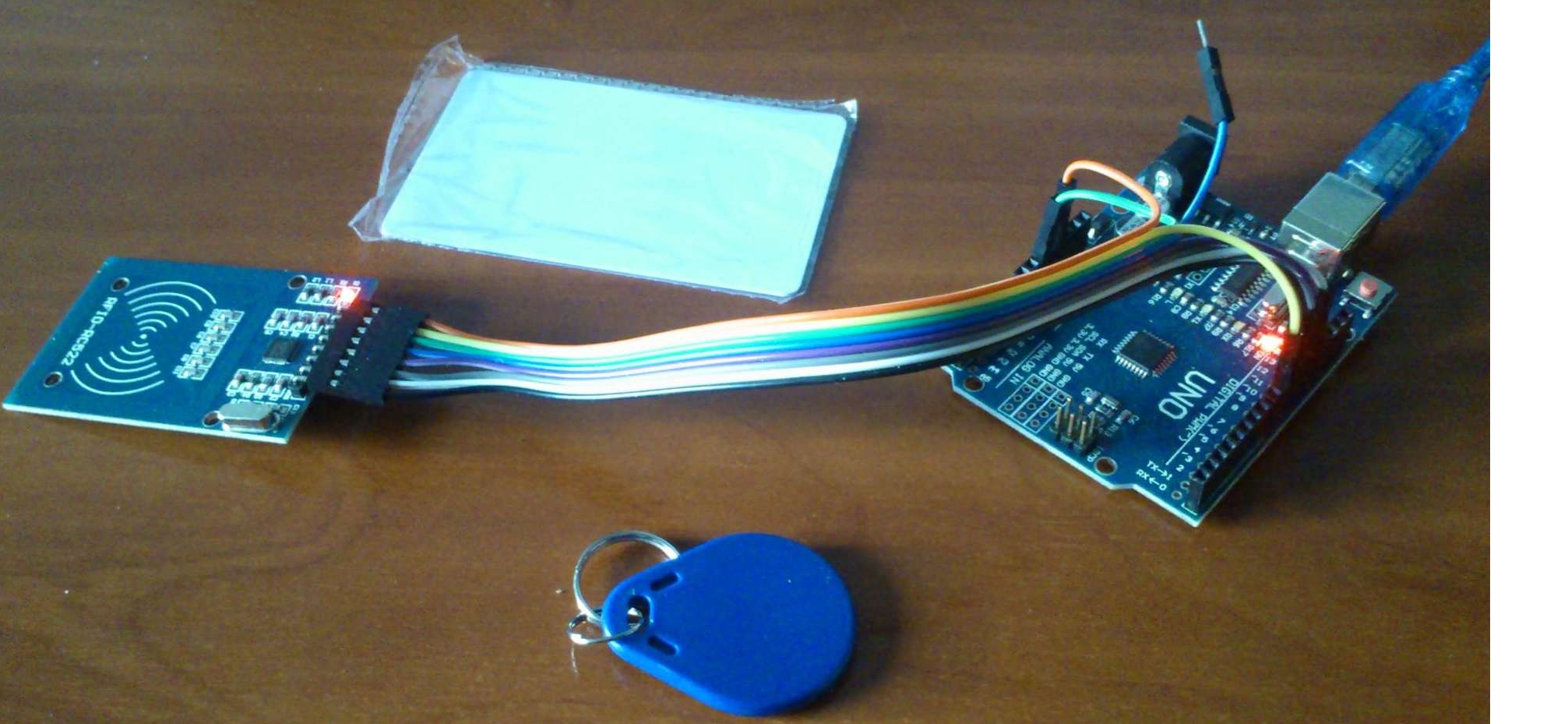 In the previous article, I had just started working with Arduino, and got a meteorological station to show as a result. In this article, let's go further: we will set up authentication via RFID cards and Arduino against the InterSystems Caché application.
I use Cache Instance. I'm trying to implement OAuth 2.0 in Cache instance.
Is it possible to use Cache instance as Client and Server?
And What is the Difference between CLIENT and AUTHSERVER instance?
Why is it used? I want to know which instance use which type of application?
Hopefully this is a simple questions to respond to. Can you do Delegated Authentication for SOAP web service calls. I ask as I am not seeing this work as expected. I have this authentication turned on and enabled in for he CSP Web Application yet I keep getting a "Security Token could not be Authenticated. And a global I was setting to capture some of the available data is not being loaded.
Imagine that your .NET project uses the Caché DBMS and you need a fully-functional and reliable authorization system. Writing such a system from scratch would not make much sense, and you will clearly want to use something that already exists in .NET, e.g. ASP.NET Identity. By default, however, this framework supports only its native DBMS – MS SQL. Our task was to create an adaptor that would let us quickly and easily port Identity to the InterSystems Caché DBMS. This work resulted in creation of the ASP.NET Identity Caché Provider.
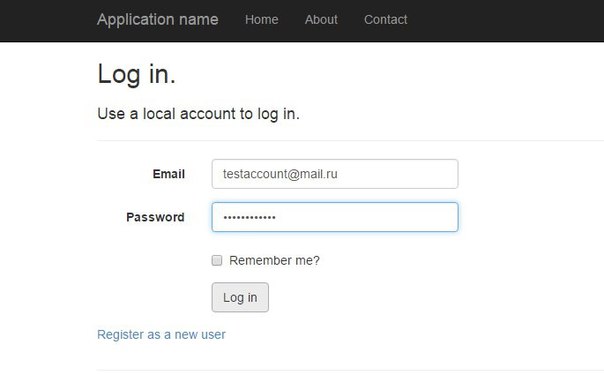
MSSQL is the default data provider for ASP.
Hi -
I know that when specifying Caché password rules (i.e. what constitutes a valid password definition) that the "Pattern Matching" logic is what is getting leveraged under the covers to enforce the "A Password Must conform to X" rule. I was hoping that people could share some more sophisticated pattern matching rules. (in particular, I was wondering what a rule that would require non-repeating mixture of letter, numbers, & punctuation of an overall minimal size)
Is this available anywhere (for Health Connect)? I've found a few presentations but they are aimed at entry level.
We're looking at supporting more and more FHIR, REST plus OAuth interfaces in future. I've built some of this into older versions of HealthShare and Ensemble but it's desirable to move to supported versions.
We would be using Healthshare as a facade to other systems.
If a user simply closes a tab (running a web application), is there any good way to ensure that the license is released AND the login cookie is destroyed?
I found that if the tab is simply closed without first logging out of the application, then 1) the license hangs around forever, and 2) if the user then opens a tab, he is already logged in.
For #2, I understand that there might be some grace period to allow the user to log in automatically again using the same session Id (where is that documentation again?) but what about destroying the license? Who/what is supposed to clean that up?
Hello everyone,
I'm trying to authenticate a user(Health Share clinician) from a Java Application.
I 'm already connected to Caché and able to run SQL commands.
My question is: How can I authenticate a user using only SQL? In fact, what I want is verify if the users exists in the base and if the given password is the same used in Health Share.
There is a column 'password' in Security.users table but I'm not able to see its content, even so, I don't know which hash function to use to compare with.
Hi,
We are trying to implement a client side data provider as a component (ZEN) that will use JQuery to do rest calls to a desired URL, in this case, a %CSP.Rest service implemented by ourselves.
This component will be used within our application that is authenticated with a correct user configured on Caché management portal and therefore using one license unit. As we are using a Ajax call from client side this connection creates a new session that will use a new license.