Hey Developers,
Watch this video to learn about automating the provisioning and management of FHIR services:
⏯ Automating Provisioning and Management of FHIR Services @ Ready 2025
Application Programming Interface (API) is a set of subroutine definitions, protocols, and tools for building application software. In general terms, it is a set of clearly defined methods of communication between various software components.
Hey Developers,
Watch this video to learn about automating the provisioning and management of FHIR services:
⏯ Automating Provisioning and Management of FHIR Services @ Ready 2025
Hello all,
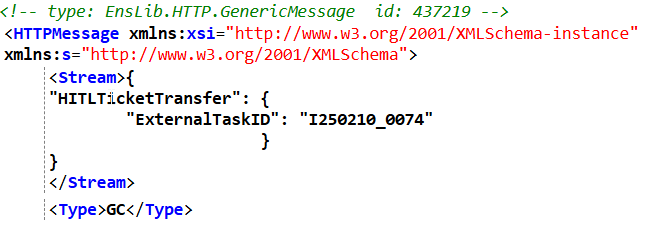
I have a EnsLib.HTTP.GenericMessage inbound from a webhook with a GC stream.
My router is defined as the following:
![]()
If you have ever dug through a large IRIS namespace looking for where a particular string, method call, or pattern was used, you know the pain: there was no built-in way to do a grep-style search across your server-side ObjectScript code from VS Code — at least not without jumping through some hoops.
That is what ObjectScript Search fixes.
Try it today with a simple install from the VS Code Marketplace. If you don't like it, uninstalling is just as easy. But I think you will like it — it is a huge quality-of-life improvement for anyone doing ObjectScript development in VS Code.
InterSystems continues to push AI capabilities forward natively in IRIS — vector search, MCP support, and Agentic AI capabilities. That roadmap is important, and there is no intention of stepping back from it.
But the AI landscape is also evolving in a way that makes ecosystem integration increasingly essential. Tools like Dify — an open-source, production-grade LLM orchestration platform — have become a serious part of enterprise AI stacks.
I created iris-budget app for the InterSystems Full Stack Contest in 2026. By full stack, we mean a frontend web or mobile application that inserts, updates, or deletes data in InterSystems IRIS via REST API, Native API, ODBC/JDBC, or Embedded Python.
My app uses multiple REST APIs to add a new category or retrieve a list of categories of expenses and income.
I inherited /csp/coffee from module.xml in iris-fullstack-template.
For this project, I created a swagger file called "budget.json.
InterSystems IRIS allows you to build REST APIs using ObjectScript classes and the %CSP.REST framework. This enables the development of modern services to expose data for web apps, mobile apps, or system integrations.
In this article, you'll learn how to create a basic REST API in InterSystems IRIS, including:
GET and POST methodsA full demonstration using Docker
This is an excellent candidate for a developer community post (like Dev.to, Medium, or the InterSystems Community). It bridges the gap between high-level architecture and hands-on implementation.
Here is the summarized article format.
As applications scale, handling heavy computational tasks synchronously becomes a bottleneck. Whether it's processing large data sets, sending high-volume emails, or managing API integrations, a decoupled architecture is essential.
In the previous article, we examined how we can use the %CSP.Request and %CSP.Response classes to test a REST API without having the API fully set up and accessible across a network with an authentication mechanism. In this article, we will build on that foundation to perform some simple unit testing of one of our REST API methods.
The unit testing framework requires a couple of setup steps before we can use it. First, we have to ensure that the unit testing portion of the management portal is enabled so we can review the results of our tests.
Hi,
I want to consume an API that provides HL7 messages. To achieve this, I have thought of the following workflow:
I have created a business service that periodically triggers a business process. The trigger request is forwarded to a business operation. There, a %Net.HttpRequest is assembled from scratch and then sent to the API endpoint. The corresponding HttpResponse then contains several HL7 messages encoded in UTF-8 in the message body. To further process the HL7 messages, the operation sends the HttpResponse back to the business process as EnsLib.HTTP.GenericMessage.
The third developer previews of InterSystems IRIS® data platform, InterSystems IRIS® for Health, and HealthShare® Health Connect 2026.1 have been posted to the WRC developer preview site. Containers can be found on our container registry and are tagged latest-preview.
These developer previews includes the dropping of Mac Intel support starting from 2026.1.0, and the adding back of Windows Server 2019 support to 2026.1.0.
Initial documentation can be found at these links below:
Currently in the health connect code, we are using Epic FHIR API Patient.Create, code return 200 or 201 status values, we process the message based on this return values.
Now I need to use Epic FHIR Patient.$match API, need to check FHIR Error code 4101 for this API. I looked for FHIR statndard return code, but this this seems not standard code, please advice how can I check 4101 value?
Job Title: InterSystems Developer / Specialist (IRIS / HealthShare)
Location: New York City, NY (Hybrid / Remote)
Duration: Contract (2+ years)
Experience: Min. 8 Years
We are looking for an experienced InterSystems Developer / Specialist with expertise in InterSystems IRIS / HealthShare to support healthcare integration and interoperability initiatives. The ideal candidate should have hands-on experience in ObjectScript development, healthcare data standards, and integration protocols supporting EHR/HIE
A question that quickly arises when configuring IAM (aka Kong Gateway) is how many routes should be created to reach all the business objects in an IRIS API.
A common mistake is to create one route per business object, unnecessarily multiplying the number of routes.
This article is intended as a beginner level article for people that want to learn how to use OAuth2 in their web applications natively.
There is an accompanying video/demo that may be helpful here:
and you can reproduce this locally with the Open Exchange application attached.
OAuth (Open Authorization) 2.0 is a standard way to let one application call another application’s API without sharing a username and password.
There are numerous excellent tools available for testing your REST APIs, especially when they are live. Postman, various web browser extensions, and even custom ObjectScript written with %Net.HttpRequest objects can get the job done. However, it is often difficult to test just the REST API without inadvertently involving the authentication scheme, the web application configuration, or even network connectivity. Those are a lot of hoops to jump through just to test the code within your dispatch class. The good news is that if we take our time to understand the inner workings of the %CSP.REST class, we will find an alternative option suited for testing only the contents of the dispatch class. We can set up the request and response objects to invoke the methods directly.
What is JWT?
JWT (JSON Web Token) is an open standard (RFC 7519) that offers a lightweight, compact, and self-contained method for securely transmitting information between two parties. It is commonly used in web applications for authentication, authorization, and information exchange.
A JWT is typically composed of three parts:
1. JOSE (JSON Object Signing and Encryption) Header
2. Payload
3. Signature
These parts are encoded in Base64Url format and concatenated with dots (.) separating them.
The demo is based on the raw class descriptions.
The data classes used are Address, Person, Employee, Company
For a more attractive demo, a JSONtoString method by ID was added.

I'm a huge sci-fi fan, but while I'm fully onboard the Star Wars train (apologies to my fellow Trekkies!), but I've always appreciated the classic episodes of Star Trek from my childhood. The diverse crew of the USS Enterprise, each masterminding their unique roles, is a perfect metaphor for understanding AI agents and their power in projects like Facilis. So, let's embark on an intergalactic mission, leveraging AI as our ship's crew and boldly go where no man has gone before!
Developing and testing REST APIs in InterSystems IRIS often requires a significant amount of boilerplate code. While ObjectScript provides powerful tools for building APIs, writing consistent and repeatable tests can be time‑consuming. This is where IrisOASTestGen comes in.
IrisOASTestGen is a utility designed to generate the structure of test classes and the supporting utility code directly from an OpenAPI 2.0 specification.
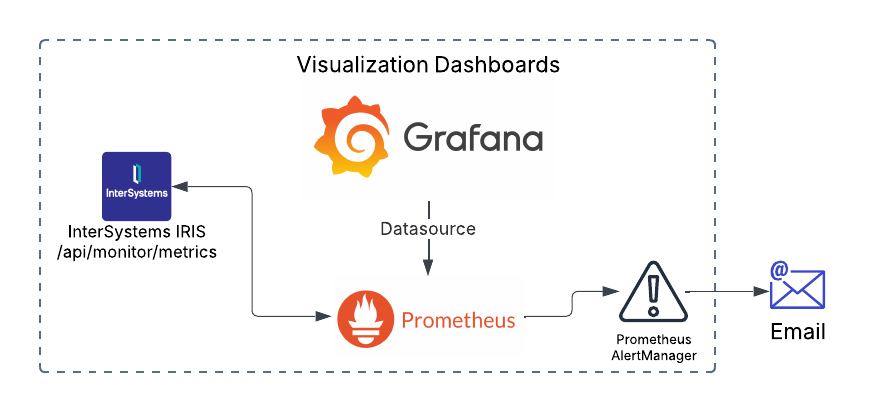
Monitoring your IRIS deployment is crucial. With the deprecation of System Alert and Monitoring (SAM), a modern, scalable solution is necessary for real-time insights, early issue detection, and operational efficiency. This guide covers setting up Prometheus and Grafana in Kubernetes to monitor InterSystems IRIS effectively.
This guide assumes you already have an IRIS cluster deployed using the InterSystems Kubernetes Operator (IKO), which simplifies deployment, integration and mangement.
When I was younger (a question about exactly how much younger is outside the scope of this article), the word “token” meant fun. You see, just a couple of times a year, I would get to go to an arcade and play some amusing video games with my friends.
These days, tokens signify security. JSON Web Token (JWT) Authentication has become one of the most popular standards for securing REST APIs. Fortunately for IRIS users, we have a straightforward way to set up applications to be protected this way. Yet, the idea is still similar to my old arcade days.
Hi,
I need a simple function for formatting a string, like in Python or C#. That's easy:
Class Very.Very.Long.Class.Name
{
ClassMethod Format(fmt As %String, args...) As %String [ Language = python ]
{
return fmt.format(*args)
}
}
To simplify calls, I want to wrap the function into a macro:
ROUTINE StringUtil [Type=INC]
#define FMT(%fmt,%a0) ##class(Very.Very.Long.Class.Name).Format(%fmt,%a0)
/// #define FMT(%fmt,%a0,%a1) ##class(Very.Very.Long.Class.Introduction
In today's rapidly evolving threat landscape, organizations deploying mission-critical applications must implement robust security architectures that protect sensitive data while maintaining high availability and performance. This is especially crucial for enterprises utilizing advanced database management systems like InterSystems IRIS, which often powers applications handling highly sensitive healthcare, financial, or personal data.
.png)
As AI-driven automation becomes an essential part of modern information systems, integrating AI capabilities into existing platforms should be seamless and efficient. The IRIS Agent project showcases how generative AI can work effortlessly with InterSystems IRIS, leveraging its powerful interoperability framework—without the need to learn Python or build separate AI workflows from scratch.
This project explores how ChatGPT and Anthropic Claude, two of the most advanced AI models, can interact with IRIS using Custom GPTs and the Model Context Protocol (MCP).
Supply Chain refers to a set of processes and activities performed by the company's business areas and its suppliers and partners (stakeholders), from the acquisition of raw materials, through production, to delivery to the end consumer. It can be better managed using SCM solutions with the orchestration of the InterSystems IRIS:
The previous article introduced IrisOASTestGen, a tool designed to generate REST API test code for InterSystems IRIS based on OpenAPI 2.0 specifications. It demonstrated how to scaffold test cases using the default templates bundled with OpenAPI Generator.
This follow-up focuses on the next natural step: customizing the generated test code. By extending the code generation logic with Mustache templates, it becomes possible to express richer semantics, implement CRUD-aware tests, and create more meaningful test suites.
How to set up RAG for OpenAI agents using IRIS Vector DB in Python
In this article, I’ll walk you through an example of using InterSystems IRIS Vector DB to store embeddings and integrate them with an OpenAI agent.
To demonstrate this, we’ll create an OpenAI agent with knowledge of InterSystems technology. We’ll achieve this by storing embeddings of some InterSystems documentation in IRIS and then using IRIS vector search to retrieve relevant content—enabling a Retrieval-Augmented Generation (RAG) workflow.
Note: Section 1 details how process text into embeddings.
Welcome to the monthly recap of updates and releases to VS Code and InterSystems-related extensions that are relevant to IRIS developers.
We'll break down the updates that are relevant to InterSystems developers with tips on how they can be applied to your day-to-day projects.
Don't forget, if you're migrating from InterSystems Studio to VS Code, or want to deepen your knowledge, check out the VS Code training courses from George James Software: georgejames.com/vscode-training.
VS Code version 1.106
In this article I will be discussing the use of an alternative LLM for generative IA. OpenIA is commonly used, in this article I will show you how to use it and the advantages of using Ollama
In the generative AI usage model that we are used to, we have the following flow:
Hola amigo! 😊 Cómo estás hoy,
I would like to share a small part of my learnings from my first ever official project: POS/EDC machine integration with our billing system. This was an exciting challenge where I got hands-on experience working with APIs and vendors.
How does a Payment Machine actually work?
It's simple, start by initiating/creating a transaction, then retrieve its payment status.
Here, initiate/create refers to POST method and Retrieve refers to GET.