I didn't know about ObjectScript until I started my new job. Objectscript isn't actually a young programming language. Compared to C++, Java and Python, the community isn't as active, but we're keen to make this place more vibrant, aren't we?
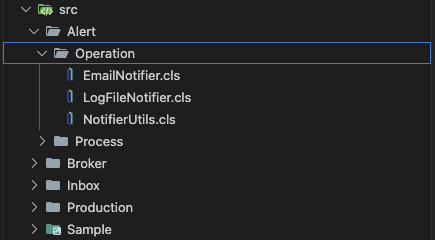
I've noticed that some of my colleagues are finding it tricky to get their heads around the class relationships in these huge projects. There aren't any easy-to-use modern class diagram tool for ObjectScript.
We are accessing an InterSystems Cacha database from Microsoft SQL Server using a linked server over ODBC (ODBC35). Queries are executed using OPENQUERY.
There are numerous excellent tools available for testing your REST APIs, especially when they are live. Postman, various web browser extensions, and even custom ObjectScript written with %Net.HttpRequest objects can get the job done. However, it is often difficult to test just the REST API without inadvertently involving the authentication scheme, the web application configuration, or even network connectivity. Those are a lot of hoops to jump through just to test the code within your dispatch class. The good news is that if we take our time to understand the inner workings of the %CSP.REST class, we will find an alternative option suited for testing only the contents of the dispatch class. We can set up the request and response objects to invoke the methods directly.
We have an existing process (running in FIFO order), all business hosts having pool size=1.
Currently we are reading records from a file (one record at a time) then that record goes to business process for further processing and finally through the business operation. As of now we are using synchronous call in our existing code. Before processing the last record we are using hang of 50 seconds because we need to initiate a batch once the processing of last record is finished.
I have a Photo that is stored as an VARBINARY within MS SQL. I would like to Select the data into a EnsLib.SQL.Snapshot, is that possible? I would take it out of the Snapshot and send it to a %Stream so it can be written out to a file.
https://www.youtube.com/embed/rmLd7NH6AbY [This is an embedded link, but you cannot view embedded content directly on the site because you have declined the cookies necessary to access it. To view embedded content, you would need to accept all cookies in your Cookies Settings]
Hello community! I have a small challenge for you :)
One of customers is sending quite a lot of messages between interoperability components, which mix standard request content and streams representing serialized JSON objects. As these JSON streams can be quite long (but not too long, just couple hundreds of characters) they would appreciate if the JSON content of stream was displayed in a nice-to-read way, using syntax highlighting by message trace view.
We are currently performing technical work, and during this time, you may experience issues with the Developer Community portal, Developer Community AI, and search functionality:
🔹 Ask DC AI is temporarily unavailable 🔹 Search may take longer than usual or may not return results 🔹 You may experience problems with logging into the Developer Community and Open Exchange
We’re working to restore full functionality as quickly as possible. Thank you for your patience and understanding.
I am currently setting up InterSystems API Manager (IAM) 3.4.3.11 using Docker. The installation is successful, the license is active, and I can access the Manager (port 8002).
I am now trying to secure the Administration Portal using basic-auth. I've found some documentation stating that I should:
We are implementing delegated auth between Kong Gateway and IRIS. Kong is correctly configured to forward JWT authenticated requests with consumer headers (X-Consumer-Username, etc.) to IRIS, but the ZAUTHENTICATE routine (deployed in the %SYS namespace) never executes, leaving ZW ^ZAUTHLOG empty despite successful header delivery.
If you want to generate JWT from x509 cert/key, any operation (including reading) on %SYS.X509Credentials requires U on %Admin_Secure resource.%Admin_Secure is required because %SYS.X509Credentials is persistent, and it's implemented th
Defining my first REST API within InterSystems using iris-rest-Api-template as a basis and I am seeing if someone could provide me some guidance to see if I can make it work.
Right now we have a script that successfully replaces the database for our IRIS development server with the latest snapshot from IRIS production, this process takes under 1 minute.
What containers are and why they make sense with IRIS 2.1 Containers and images in a nutshell 2.2 Why containers are useful for developers 2.3 Why IRIS works well with Docker
Prerequisites
Installing the InterSystems IRIS image 4.1 Using Docker Hub 4.2 Pulling the image
Running the InterSystems IRIS image 5.1 Starting an IRIS container 5.2 Checking container status 5.3 Executing code in the container terminal 5.4 Accessing the IRIS Management Portal 5.5 Connecting the container to VS Code 5.6 Stopping or removing the container 5.7 Setting a specific password with a bind mount 5.8 Using durable %SYS volumes 5.8.1 What gets stored with durable %SYS 5.8.2 How to enable durable %SYS
Using Docker Compose 6.1 Docker Compose example 6.2 Running Docker Compose
Using a Dockerfile to run custom source code 7.1 Dockerfile example 7.2 Docker Compose example 7.3 Understanding layers, image tagging and build vs. run time 7.4 Source code and init script 7.5 Building the image with Dockerfile 7.6 Running instructions in the containerized IRIS terminal
If one of your packages on OEX receives a review, you get notified by OEX only of YOUR own package. The rating reflects the experience of the reviewer with the status found at the time of review. It is kind of a snapshot and might have changed meanwhile. Reviews by other members of the community are marked by * in the last column.