InterSystems Official
· Mar 27, 2025 4m read
2025.1 Modernizing Interoperability User Experience

The Interoperability user interface now includes modernized user experiences for the DTL Editor and Production Configuration applications that are available for opt-in in all interoperability products. You can switch between the modernized and standard views. All other Interoperability screens remain in the Standard user interface. Please note that changes are limited to these two applications and we identify below the functionality that is currently available.

21 23
4 759

Monitoring your IRIS deployment is crucial. With the deprecation of System Alert and Monitoring (SAM), a modern, scalable solution is necessary for real-time insights, early issue detection, and operational efficiency. This guide covers setting up Prometheus and Grafana in Kubernetes to monitor InterSystems IRIS effectively.

This guide assumes you already have an IRIS cluster deployed using the InterSystems Kubernetes Operator (IKO), which simplifies deployment, integration and mangement.

27 11
14 777

Unlike the movie mentioned in the image (for those who don't know, Matrix, 1999), the choice between Dynamic SQL and Embedded SQL is not a choice between truth and fantasy, but it is still a decision to be made. Below, I will try to make your choice easier.

If your need is interactions between the client and the application (and consequently the database), Dynamic SQL may be more appropriate, as it "adapts" very easily to these query changes. However, this dynamism has a cost: with each new query, it is remodeled, which can have a higher cost to execute. Below is a simple example of a Python code snippet.

69 16
5 573

Hey Community,

It's time for the first programming contest of the year, and there's a surprise so read on! Please welcome:

🏆 InterSystems AI Programming Contest: Vector Search, GenAI, and AI Agents 🏆

Duration: March 17 - April 6, 2025

Prize pool: $12,000 + a chance to be invited to the Global Summit 2025!

8 10
0 640

Introduction

The InterSystems IRIS Data Platform has long been known for its performance, interoperability, and flexibility across programming languages. For years, developers could use IRIS with Python, Java, JavaScript, and .NET — but Go (or Golang) developers were left waiting.

Golang Logo

That wait is finally over.

The new go-irisnative driver brings GoLang support to InterSystems IRIS, implementing the standard database/sql API. This means Go developers can now use familiar database tooling, connection pooling, and query interfaces to build applications powered by IRIS.


Why GoLang Support Matters

GoLang is a language designed for simplicity, concurrency, and performance — ideal for cloud-native and microservices-based architectures. It powers some of the world’s most scalable systems, including Kubernetes, Docker, and Terraform.

Bringing IRIS into the Go ecosystem enables:

  • Lightweight, high-performance services using IRIS as the backend.
  • Native concurrency for parallel query execution or background processing.
  • Seamless integration with containerized and distributed systems.
  • Idiomatic database access through Go’s database/sql interface.

This integration makes IRIS a perfect fit for modern, cloud-ready Go applications.

12 25
0 339

Motivation

I didn't know about ObjectScript until I started my new job. Objectscript isn't actually a young programming language. Compared to C++, Java and Python, the community isn't as active, but we're keen to make this place more vibrant, aren't we?

I've noticed that some of my colleagues are finding it tricky to get their heads around the class relationships in these huge projects. There aren't any easy-to-use modern class diagram tool for ObjectScript.

Related Work

I have tried relavant works:

15 12
5 596

Introduction

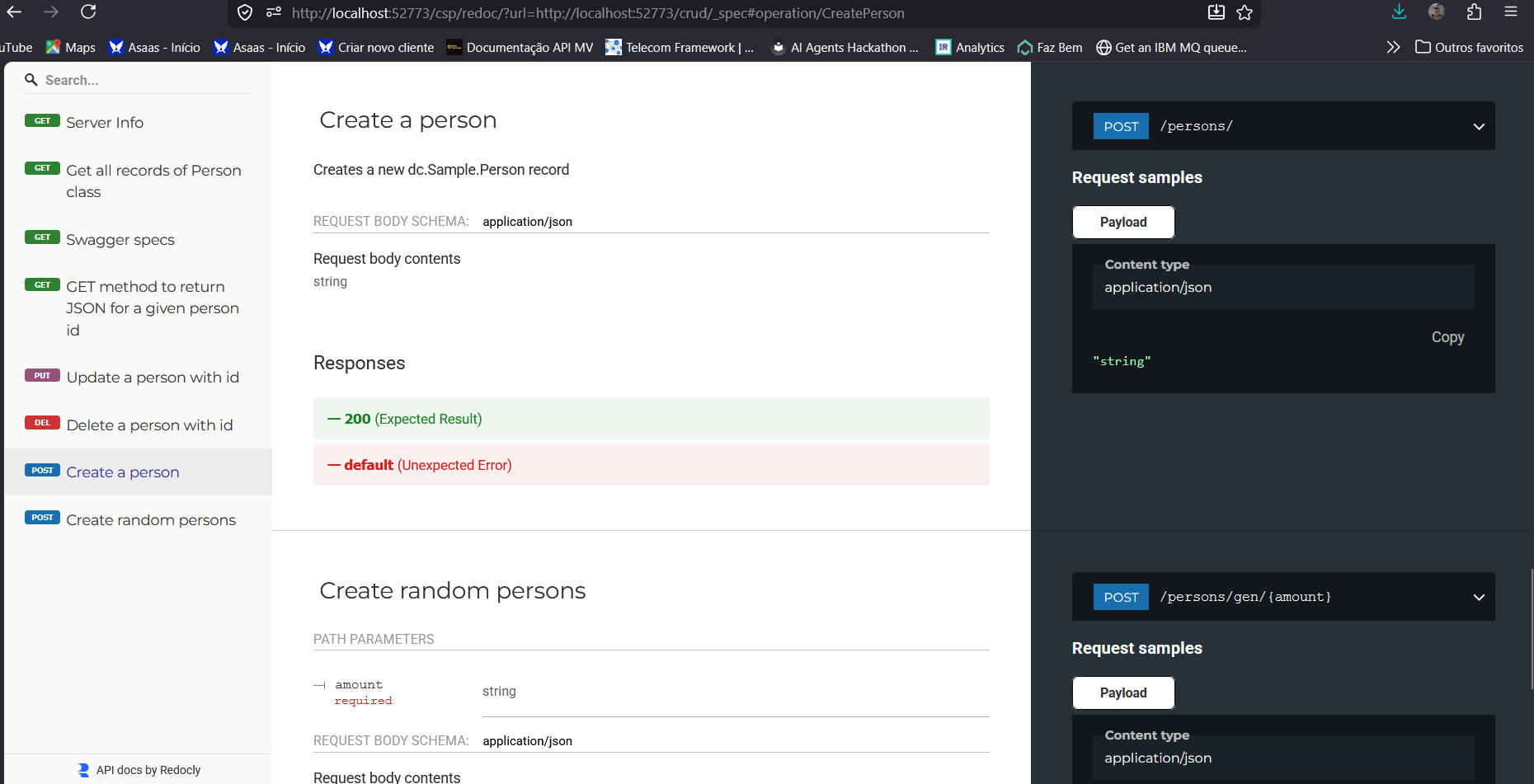
A REST API (Representational State Transfer) is an interface that allows different applications to communicate with each other through the HTTP protocol, using standard operations such as GET, POST, PUT, and DELETE. REST APIs are widely used in software development to expose services accessible by other applications, enabling integration between different systems.

76 6
5 636
Article
· Apr 16, 2025 5m read
Thoughts on Coding with GenAI

Thirteen years ago, I attained dual undergraduate degrees in electrical engineering and math, then promptly started full-time at InterSystems using neither. One of my most memorable and stomach-churning academic experiences was in Stats II. On an exam, I was solving a moderately difficult confidence interval problem. I was running out of time, so (being an engineer) I wrote out the definite integral on the exam paper, punched it into my graphing calculator, wrote an arrow with “calculator” over it, then wrote the result.

23 13
2 489

Introduction

As AI-driven automation becomes an essential part of modern information systems, integrating AI capabilities into existing platforms should be seamless and efficient. The IRIS Agent project showcases how generative AI can work effortlessly with InterSystems IRIS, leveraging its powerful interoperability framework—without the need to learn Python or build separate AI workflows from scratch.

15 10
3 507

Using embedded Python while building your InterSystems-based solution can add very powerful and deep capabilities to your toolbox.

I'd like to share one sample use-case I encountered - enabling a CDC (Change Data Capture) for a mongoDB Collection - capturing those changes, digesting them through an Interoperability flow, and eventually updating an EMR via a REST API.

11 2
2 600

Starting out with ObjectScript, it is really exciting, but it can also feel a little unusual if you're used to other languages. Many beginners trip over the same hurdles, so here are a few "gotchas" you'll want to watch out for. (Also few friendly tips to avoid them)


NAMING THINGS RANDOMLY

We have all been guilty of naming something Test1 or MyClass just to move on quickly. But once your project grows, these names become a nightmare.

11 15
2 319

I’m pleased to announce the release of tree-sitter-objectscript, a new open-source tree-sitter grammar that brings first-class ObjectScript support to modern editors. If you caught the preview at READY ’25, you’ll be glad to know it’s now up on Github:

https://github.com/intersystems/tree-sitter-objectscript

14 12
4 358

In this tutorial, I will discuss how can you connect your IRIS data platform to sql server db .

Prereq:

5 4
3 512

What is TLS?

TLS, the successor to SSL, stands for Transport Layer Security and provides security (i.e. encryption and authentication) over a TCP/IP connection. If you have ever noticed the "s" on "https" URLs, you have recognized an HTTP connection "secured" by SSL/TLS. In the past, only login/authorization pages on the web would use TLS, but in today's hostile internet environment, best practice indicates that we should secure all connections with TLS.

16 1
6 552

Not sure there are many that connect to MS SQL to execute queries, stored procedures, etc, but our Healthsystem has many different MS SQL based databases we use within the Interoperability environment for various reasons.

With the push to moving from on-prem to the Cloud we ran into some difficulties with our SQL Gateway connections and knowing how to config them to use Microsoft Entra for Active Directory Authentication.

5 0
1 567

Hi,

We’re launching an Early Access Program for an upcoming Table Partitioning feature that will help IRIS customers manage very large tables, and distribute row data and associated indices across databases and storage tiers. Table Partitioning cuts deep into the core of IRIS relational data management, so we want to make sure we get things right through working with a few engaged customers who can provide feedback on the initial deliverables, and fine-tune as needed.

8 12
1 324

Table of Contents

  1. Purpose of the article
  2. What containers are and why they make sense with IRIS
     2.1 Containers and images in a nutshell
     2.2 Why containers are useful for developers
     2.3 Why IRIS works well with Docker
  3. Prerequisites
  4. Installing the InterSystems IRIS image
     4.1 Using Docker Hub
     4.2 Pulling the image
  5. Running the InterSystems IRIS image
     5.1 Starting an IRIS container
     5.2 Checking container status
     5.3 Executing code in the container terminal
     5.4 Accessing the IRIS Management Portal
     5.5 Connecting the container to VS Code
     5.6 Stopping or removing the container
     5.7 Setting a specific password with a bind mount
     5.8 Using durable %SYS volumes
      5.8.1 What gets stored with durable %SYS
      5.8.2 How to enable durable %SYS
  6. Using Docker Compose
     6.1 Docker Compose example
     6.2 Running Docker Compose
  7. Using a Dockerfile to run custom source code
     7.1 Dockerfile example
     7.2 Docker Compose example
     7.3 Understanding layers, image tagging and build vs. run time
     7.4 Source code and init script
     7.5 Building the image with Dockerfile
     7.6 Running instructions in the containerized IRIS terminal
  8. Conclusion and what’s next

16 9
10 379

The InterSystems IRIS data platform underlies all InterSystems applications, as well as thousands of customer and partner applications across Healthcare, Financial Services, Supply Chain, and other ecosystems. It is a converged platform, providing transactional-analytical data management, integrated interoperability, and data integration, as well as integrated analytics and AI. It supports the InterSystems Smart Data Fabric approach to managing diverse and distributed data.

11 3
5 489

Hi colleagues!

Yet another time I figured that there is no super-simple way to display error from %Status variable, but I need it relatively often in a terminal.

Yes, I know about $$$ Macro, but they are not superhelpful in a terminal.

My usual behavior is to try to remember by heart or copy from somewhere the formula:

USER>w $System.Status.DisplayError(st)

3 15
1 244

What is JWT?

JWT (JSON Web Token) is an open standard (RFC 7519) that offers a lightweight, compact, and self-contained method for securely transmitting information between two parties. It is commonly used in web applications for authentication, authorization, and information exchange.

A JWT is typically composed of three parts:

1. JOSE (JSON Object Signing and Encryption) Header
2. Payload
3. Signature

13 3
9 482