Our Pharmacy team would like us to convert...
¼ test character and ½ test character and ¾ test character andto more like
1/4 test character and 1/2 test character and 3/4 test character andIs this possible?
.png)
InterSystems IRIS for Health™ is the world’s first and only data platform engineered specifically for the rapid development of healthcare applications to manage the world’s most critical data. It includes powerful out-of-the-box features: transaction processing and analytics, an extensible healthcare data model, FHIR-based solution development, support for healthcare interoperability standards, and more. All enabling developers to realize value and build breakthrough applications, fast. Learn more.
Our Pharmacy team would like us to convert...
¼ test character and ½ test character and ¾ test character andto more like
1/4 test character and 1/2 test character and 3/4 test character andIs this possible?
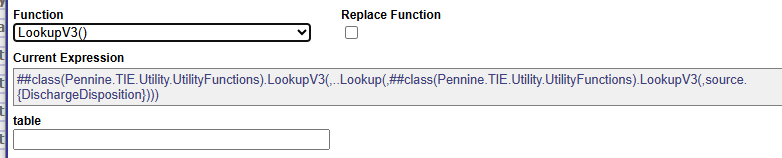
Currently have an extension of the ..lookup function as a custom version of the lookup. Is there any easy way to get it to display it as a list of the lookup tables
ClassMethod LookupV3(table As %String = "",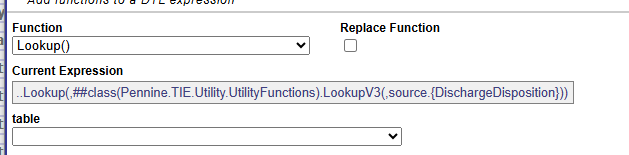
and the one i'm trying with
Working with files often starts off simple. open the file, read, and process. That approach works perfectly well, until the file happens to be an Excel file.
A Common Assumption
At first, an Excel file (.xlsx) looks like just another data file, rows, columns and values. nothing unusual. So it's natural to assume it can be read the same way as a .txt ot .csv file. But that's where things start to break.
Why Excel files behave differently
The key difference is how the data is stored:
-> .txt / .csv - plain text, line-by-line.
-> .
Hi Community,
Preparing for InterSystems Certification exams requires more than reading documentation. It calls for focused practice aligned with real exam objectives.If you are planning to validate your expertise in HL7, SQL, System Administration, or Development, structured preparation can make a significant difference.
The platform offers a large pool of practice questions mapped to certification domains, along with detailed answer explanations that point back to relevant documentation.
Hi Community,
Enjoy the new video on InterSystems Developers YouTube:
⏯ Data on the Move - Securing InterSystems IRIS Connections with TLS @ Ready 2025
RabbitMQ is a message broker that allows producers (those who send a data message) and consumers (those who receive a data message) to establish asynchronous, real-time, and high-performance massive data flows. RabbitMQ supports AMQP (Advanced Message Queuing Protocol), an open standard application layer protocol.
The main reasons to employ RabbitMQ include the following:
My team is trying to decide on the best Git strategy for a group of related but separate projects/environments.
One side prefers one repo per project/environment/namespace for cleaner separation. The other side prefers one repo with multiple project folders so shared code and releases are easier to manage in one place.
The challenge is that these projects are separate enough that boundaries matter but related enough that some utilities and common logic may need to be reused. We also want the setup to be easy for developers to understand and not become a deployment nightmare later.
v2026.1 was just released as GA, and one of the features I'm looking forward to using is the DTL Explainer feature.
This allows you to take a Data Transformation, and with a click of a button get a human-readable description of the transformation (which you can also use as the basis for the DTL Description).
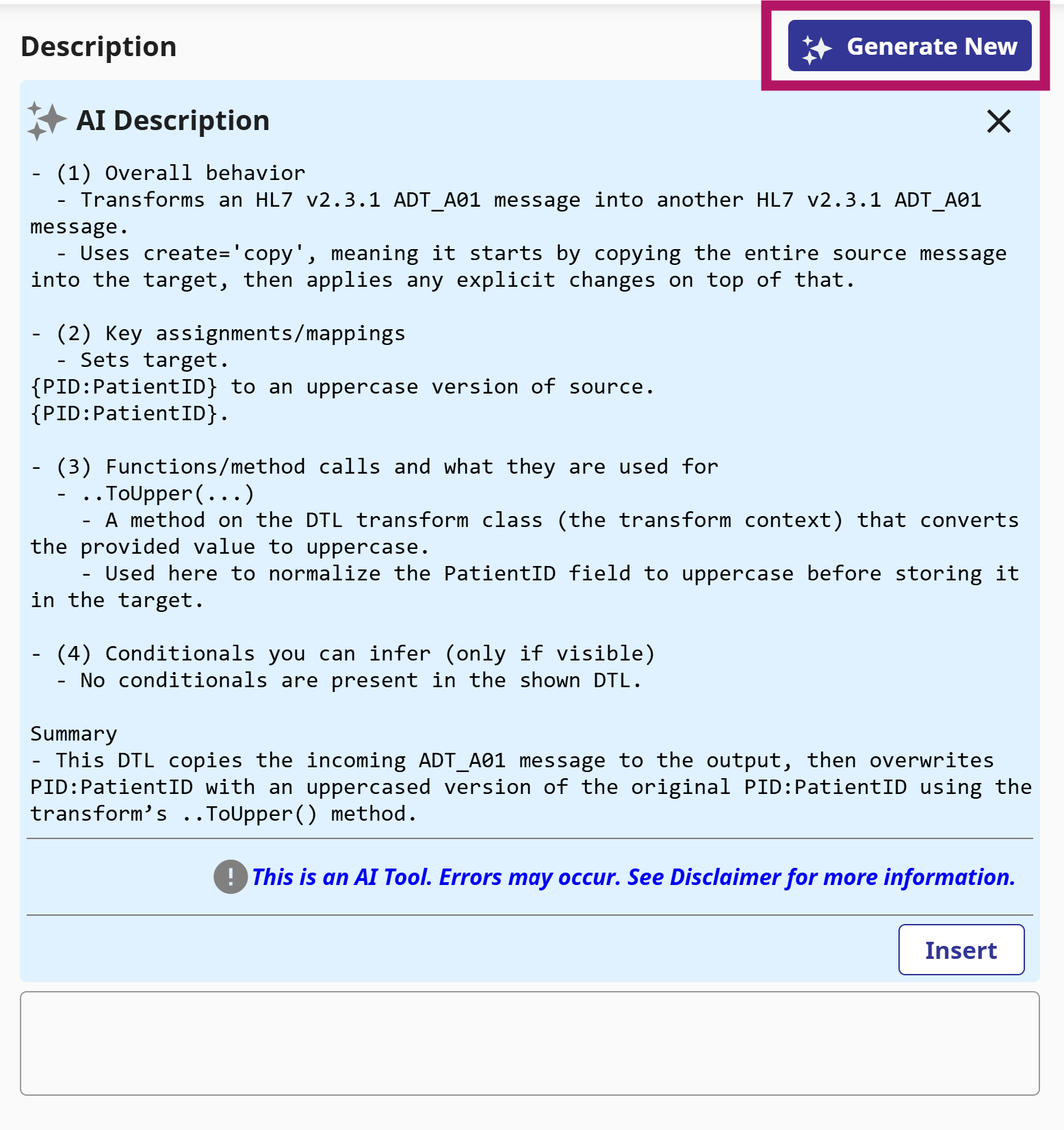
For complex DTLs, especially ones you didn't write yourself, or you did but a long time ago, this will allow you to get a clear quick understanding of what it's doing.
Hi Guys,
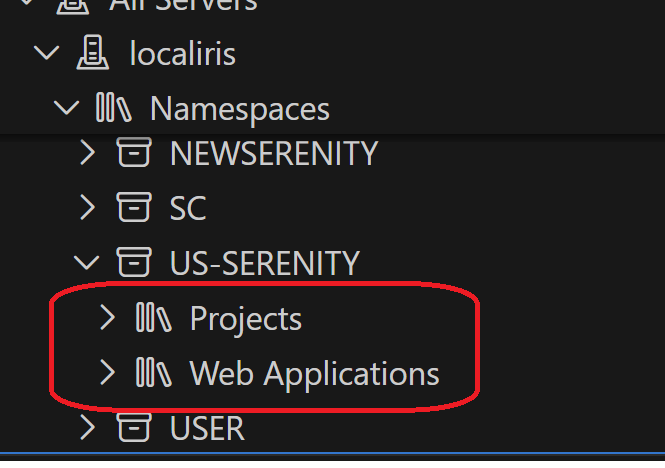
I've connected VS Code to my IRIS server and can see projects & web application option but not Classes tab, how can I add it, and with the old Studio we do have the Inspector tab where we can check properties, Storage, methods, are these available in VS code?
also does any changes or new classes created via VS code automatically reflected in my IRIS namespace ?
Thanks
Since our previous announcement, we have introduced several incremental improvements to the client‑side editing experience in VS Code. These updates focus on preserving developer‑authored formatting when synchronizing with the server.
Client‑side *.cls files previously lost certain formatting details during compilation, including keyword casing (e.g., classmethod → ClassMethod), normalization of blank lines between class members, and removal of line breaks within parameter lists.
The 2023.1.7 maintenance releases of InterSystems IRIS® data platform,InterSystems IRIS® for HealthTM, and HealthShare® Health Connect are now Generally Available (GA).
Please share your feedback through the Ideas Portal using the category Post-Release Feedback so we can build a better product together.
You can find the detailed change lists & upgrade checklists on these pages:
There are many EAPs available now. Check out this page and register to those you are interested.
IrisTest is a light weight, powerful, user-friendly tool designed to simplify unit test report generation. It includes an interactive shell and API to facilitate communication, allowing developers to easily manage and generate reports for their test runs in various formats. Whether you're debugging or creating detailed reports for analysis, IrisTest makes the process smooth and efficient!
The 2026.1 release of InterSystems IRIS® data platform, InterSystems IRIS® for HealthTM, and HealthShare® Health Connect is now Generally Available (GA). This is an Extended Maintenance (EM) release.
The Interoperability user interface project has continued from 2025.1 and has incorporated many of the items that you – our customers and partners – have suggested and observed. We are continuing to invest in feedback and updating this important user experience. In the latest release, 2026.1 for IRIS, IRIS for Health, Health Connect and Health Connect Cloud, the BPL Editor and Message Viewer/Visual Trace applications are now available for opt-in!
NOTE:
If you're building solutions on IRIS and want to use Git, that's great! Just use VSCode with a local git repo and push your changes out to the server - it's that easy.
But what if:
Hi Guys,
I get a Quit argument not allowed error in an if block how can I fix this?
I thought I knew how to return a Response from a Business Process back to the Source Config Name, but I guess not.
I am working on a Proof of Concept, that the Request Message Class would determine a "Route" within a Business Process to make a FHIR call (search, read) to our External FHIR repository, and return back the HS.FHIR.DTL.vR4.Model.Resource.xxxxxxx as a Response to the Source Config Name.
I have the FHIR part working, however now that I have the data in the form of HS.FHIR.DTL.vR4.Model.Resource.
So I would like to start a production with a service that has an SQL trigger for after and INSERT. Then I would like it to start a process. Could someone help me in the direction of a solution, please and thanks.
I have created the following Task to kick off a Ens.BusinessService to execute a SQL query and process the results
Class OSU.Workday.TerminationsTask Extends %SYS.Task.Definition
{

Parameter TaskName As STRING = "OSU - Workday Termination Update";

Method OnTask() As %Status
{
    #Dim sc as %Status
    #Dim ex as %Exception.AbstractException

    set sc = $$$OK

    try{
        // create the service
        #Dim tService As OSU.DataSource.Workday.TermService
Set tServiceConfigName = "OSU.DataSource.Workday.Hello, I am working with @Alberto Fuentes https://openexchange.intersystems.com/package/workshop-iris-oauth2.
I wonder how do I get a token to send to the resserver?
I tried calling "token_endpoint" : "https://webserver/authserver/oauth2/token"
The response was "error":"invalid_request","error_description":"Unknown grant_type"
I wonder what needs to be in the request body? Is it a GET or POST?
As you all probably know, Health Connect / IRIS for Health natively supports DICOM messaging, and many of you will have used it daily. Well, I recently discovered a rather insidious little issue that our beloved @Alberto Fuentes gave me the solution.
We (I) will call this phenomenon the Creosote effect (those of you who know Monty Python will understand the reference, for the rest you can see the sketch here )
Mr.
Hi,
I'm pretty sure I'm not the first one to encounter this, so please share your solution
I'm trying to load a package with 2 dependencies, one of them has 5 dependencies..
is there a better tool / script / wizard for that?
How many times have we migrated an IRIS Instance to another machine, maybe even another version, and after a few days realized we forgot that one SSL Configuration critical for a Business Operations to work? Or maybe a credential, or a lonely class in a package by itself?
The simple solution is to make a checklist¹. A checklist of the entities we have to move. But simple checklists on Word documents are often forgotten, or just ignored.
I have a json object coming in on a service with a field that has "NaN" as its value.
"ReferralInOutOfNetworkCd": "NaN",
In my DTL, I do a straight copy. yet what goes outbound is NaN, without being wrapped in double quotes
"consulting_provider_network_ordering_rd":NaN,
Has anyone experience this? If so, did you find a way to fix or work around it?
Introduction
The recent addition of FIFO groups allows First-In, First-Out (FIFO) message processing to be maintained in an interoperability production even when a Pool Size is greater than 1, enabling higher performance without sacrificing correctness. This feature first appears in InterSystems IRIS® data platform, InterSystems IRIS® for Health, and InterSystems Health Connect™ in version 2025.3.
First-In, First-Out message processing is critical in many integration scenarios, especially in healthcare. Traditionally, FIFO ordering is enforced by configuring each business host to process only one message at a time (Pool Size = 1). While effective, this approach can limit throughput and underutilize system resources. FIFO groups preserve FIFO ordering where needed without requiring a Pool Size of 1.
| Alert Id | Product & Versions Affected | Risk Category & Score | Explicit Requirements |
| DP-449126 | InterSystems IRIS® data platform InterSystems IRIS® for Health InterSystems Health Connect™ versions 2024.1.0 – 2024.1.5, 2024.2.0, 2024.3.0, 2025.1.0 – 2025.1.3, 2025.2.0, 2025.3.0 |
Data Integrity: Low Risk | Database updates executed as part of custom logic for CSP session events may not be journaled. |
Hello Community!
We're pleased to invite you to the upcoming webinar in Hebrew:
👉Getting Started with OAuth 2.0 on InterSystems👈
📅 Date & time: March 25th, 3:00 PM IDT
I created a new repo called ipm-module-budget from https://github.com/intersystems-community/intersystems-iris-dev-template template.
I cloned the repo to an EC2 instance in AWS. When I try to build image, I see this error:
#8 22.09 [IRISAPP|ipm-module-budget] Reload START (/home/irisowner/dev/)Segmentation fault (core dumped) #8 ERROR: process "/bin/sh -c pip3 install -r requirements.txt && iris start IRIS && \tiris session IRIS < iris.scri pt && iris stop IRIS quietly" did not complete successfully: exit code: 139
| Alert Id | Product & Versions Affected | Risk Category & Score | Explicit Requirements |
| DP-448888 |
Products: Versions: |
Operational: High Risk | ≥ 2 TB of database cache is used |
In the versions specified above, an instance may fail to start or may hang during operation if the database cache is greater than or equal to 2,097,152 MB (2 TB).
Hi Community,
We're super excited to share that we’ve just launched a new free, interactive tutorial designed especially for those who are new to InterSystems IRIS and looking for a clear, practical introduction to its core concepts.
🧑🏫 Data Models of InterSystems IRIS 🧑💻