#Best Practices

37 Followers · 307 Posts

Best Practices recommendations on how to develop, test, deploy and manage solutions on InterSystems Data Platforms better. 

InterSystems staff + admins Hide everywhere
Hidden post for admin
Article Peter Steiwer · Mar 6, 2020 2m read

InterSystems IRIS Business Intelligence allows you to keep your cubes up to date in multiple ways. This article will cover building vs synchronizing. There are also ways to manually keep cubes up to date, but these are very special cases and almost always cubes are kept current by building or synchronizing.

What is Building?

1
0 743
Article Sergey Mikhailenko · Jan 18, 2022 5m read

It is becoming more and more common to see beautiful badges in the README.MD file with useful information about the current project in the repositories of GitHub, GitLab and others. For instance:

The project is being developed The quality of the code, which also provides its own badge, which immediately shows the status of code validation of the project. If you insert a line into the README.MD file

4
3 806
Article Murray Oldfield · Jun 17, 2016 2m read

Myself and the other Technology Architects often have to explain to customers and vendors Caché IO requirements and the way that Caché applications will use storage systems. The following tables are useful when explaining typical Caché IO profile and requirements for a transactional database application with customers and vendors.  The original tables were created by Mark Bolinsky.

In future posts I will be discussing more about storage IO so am also posting these tables now as a reference for those articles. 


A list of other posts in this series is here
 

7
2 3157
Article David Loveluck · Aug 27, 2019 28m read

Since Caché 2017 the SQL engine has included new set of statistics. These record the number of times a query is executed and the time it takes to run.

This is a gold mine for anyone monitoring and trying to optimize the performance of an application that includes many SQL statements but it isn’t as easy to access the data as some people want.

This article and the associated sample code explains how to use this information and how to routinely extract a summary of daily statistics and keep a historic record of the SQL performance of your application.

What is recorded?

7
6 1718
Article Peter Steiwer · Nov 26, 2019 3m read

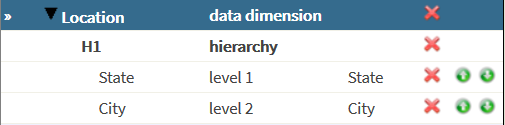
When designing a hierarchy in DeepSee, a child member must have only one parent member. In the case where a child corresponds to two parents, the results can become unreliable. In the case where two similar members exist, their keys must be changed so that they are unique. We will take a look at two examples to see when this happens and how to prevent it.

Example 1

There are a handful of states with a city named Boston. In my sample data, I have records from both Boston, MA and Boston, NY. My dimension is defined as:

1
1 945
Article Murray Oldfield · Nov 29, 2016 20m read

This post provides guidelines for configuration, system sizing and capacity planning when deploying IRIS and IRIS on a VMware ESXi. This post is based on and replaces the earlier IRIS-era guidance and reflects current VMware and InterSystems recommendations.

Last update Jan 2026. These guidelines are a best effort, remember requirements and capabilities of VMware and IRIS can change.

1
6 7363
Article Daniel Kutac · Aug 10, 2016 22m read

Created by Daniel Kutac, Sales Engineer, InterSystems

Warning: if you get confused by URLs used: the original series used screens from machine called dk-gs2016. The new screenshots are taken from a different machine. You can safely treat url WIN-U9J96QBJSAG as if it was dk-gs2016.

Part 2. Authorization server, OpenID Connect server

12
4 5797
Article Eduard Lebedyuk · Nov 19, 2020 3m read

In this article, we will run an InterSystems IRIS cluster using docker and Merge CPF files - a new feature allowing you to configure servers with ease.

On UNIX® and Linux, you can modify the default iris.cpf using a declarative CPF merge file. A merge file is a partial CPF that sets the desired values for any number of parameters upon instance startup. The CPF merge operation works only once for each instance.

Our cluster architecture is very simple, it would consist of one Node1 (master node) and two Data Nodes (check all available roles). Unfortunately, docker-compose cannot deploy to several servers (although it can deploy to remote hosts), so this is useful for local development of sharding-aware data models,  tests, and such. For a productive InterSystems IRIS Cluster deployment, you should use either ICM or IKO.

3
1 826
Article Timothy Leavitt · Jun 4, 2020 3m read

Over the past year or so, my team (Application Services at InterSystems - tasked with building and maintaining many of our internal applications, and providing tools and best practices for other departmental applications) has embarked on a journey toward building Angular/REST-based user interfaces to existing applications originally built using CSP and/or Zen. This has presented an interesting challenge that may be familiar to many of you - building out new REST APIs to existing data models and business logic.

34
7 1823
Article Murray Oldfield · May 22, 2018 9m read

This post provides useful links and an overview of best practice configuration for low latency storage IO by creating LVM Physical Extent (PE) stripes for database disks on InterSystems Data Platforms; InterSystems IRIS, Caché, and Ensemble.

4
1 4914
Article Dmitry Maslennikov · Jul 13, 2019 6m read

I wanted to write it as a comment to article of @Evgeny Shvarov . But it happens to be so long, so, decided to post it separately.

Image result for docker clean all images

I would like to add a bit of clarification about how docker uses disk space and how to clean it.  I use macOS, so, everything below, is mostly for macOS, but docker commands suit any platform.

6
3 7248
Article Simon Sha · Mar 19, 2021 2m read

cAdvisor (short for container Advisor) analyzes and exposes resource usage and performance data from running containers. cAdvisor exposes Prometheus metrics out of the box. 

https://prometheus.io/docs/guides/cadvisor/

Prometheus is integrated in SAM. This makes it possible to leverage the cAdvisor metrics and expose them via Prometheus and Grafana.

Since cAdvisor listens on port 8080, which conflicts with the Nginx port, you can choose to change the Nginx port to accommodate that.

Configuration Steps:

1. Change nginx port.

modify nghix.conf:

    server {
        listen 9991; 

2
0 1508
Article Lorenzo Scalese · Apr 15, 2021 6m read

Hi Developers,

Writing a script for the application deployment can be very interesting to ensure rapid deployment without forgetting anything. config-api is a library to help developers to write configuration scripts based on a JSON document.

Implemented features :

  • Set system settings.
  • Set security settings.
  • Enable services.
  • Configure namespaces, databases, mapping.
  • Export existing configuration.
  • All features are exposed with a RESTful API.
19
0 1014
Article Chris Stewart · Apr 21, 2017 3m read

So, one day you're working away at WidgetsDirect, the leading supplier of widget and widget accessories, when your boss asks you to develop the new customer facing portal to allow the client base to access the next generation of Widgets..... and he wants you to use Angular 1.x to read into the department's Caché server.   

There's only one problem:  You've never used Angular, and don't know how to make it talk to Caché.

This guide is going to walk through the process of setting up a full Angular stack which communicates with a Caché backend using JSON over REST.  

11
5 7030
Article John Murray · Mar 3, 2016 2m read

The purpose of this post is to raise the profile of a powerful mechanism that has long been available to us, and to open a discussion about ways in which it can be used or abused.

You can read more detail about the mechanism here. To summarize, your class definition can use the Projection keyword to reference one or more projection classes. A projection class can implement methods that get invoked at key points in the lifecycle of your class.

A projection class must extend %Projection.AbstractProjection and will typically implement at least one or the following methods:

18
1 1704
Article Michael Braam · Jun 2, 2021 3m read

InterSystems SAM is a great tool to monitor your InterSystems IRIS and InterSystems IRIS For Health clusters on prem or in a cloud environment. This article describes how you can implement a customized alert handler. This is currently an undocumented and most likely an unknown feature of InterSystems SAM. With future releases it will be probably made easier to leverage this useful concept.

In the interest of shortness, I will only mention InterSystems IRIS in this article, but the following applies to InterSystems IRIS and InterSystems IRIS For Health. 

2
1 911
Article Erik Hemdal · Oct 31, 2016 8m read

Here are a few examples of conversions and operations you might need, along with links to documentation where you can learn more.

At the time I wrote this, Eastern Daylight Time was in effect for my Caché system.

How Caché keeps the time and date

Caché has a simple time format, with a longer range of recognized dates compared to some other technologies.

The current time is maintained in a special variable $HOROLOG ($H):

USER>WRITE $H64146,54027USER>

The first integer is the count of days since December 31, 1840. The second integer is the count of seconds since midnight of the current day.

4
1 15049
Article Eduard Lebedyuk · Aug 7, 2020 5m read

In this article, I will show how you can easily containerize  .Net/Java Gateways.

For our example, we will develop an Integration with Apache Kafka.

And to interoperate with Java/.Net code we will use PEX .

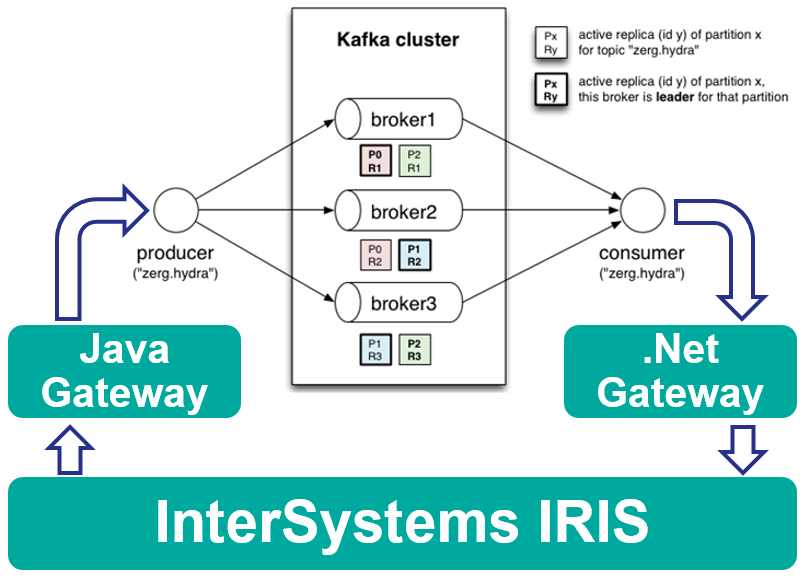
Architecture

Our solution will run completely in docker and look like this:

Java Gateway

First of all, let's develop Java Operation to send messages into Kafka. The code can be written in your IDE of choice and it can look like this.

In short:

7
1 1458
Article Jose-Tomas Salvador · Apr 8, 2020 6m read

This time I want to talk about something not specific to InterSystems IRIS, but that I think is important if you want to work with Docker and your server at work is a PC or laptop with Windows 10 Pro or Enterprise.

As you likely know, containers technology comes basically from Linux world and, nowadays, is on Linux hosts were it shows maximum potential. Those who use Windows on a normal basis see that both, Microsoft and Docker, have done important efforts during these last years that allow us to run containers based on Linux images on our Windows system in a really easy way... but it's something not supported for production systems and, this is the big problem, is not reliable if we want to keep persistent data outside of containers, in the host system,... mostly due to the big differences between Windows and Linux file systems. In the end, Docker for Windows itself uses a small linux virtual machine (MobiLinux) to run the containers... it does it transparently for the windows user... and it works perfectly well if, as I said, you don't require that your databases survive longer than the container...

Well,...let's get to the point,... the point is that many times, to avoid issues and simplify, we need a full Linux system and, if our server is based on Windows, the only way of having it is through a virtual machine. At least till WSL2 in Windows is released, but that will be another story and sure it'll take a bit of time to become robust enough.

In this article, I'll tell you, step by step, how to install an environment where you'll be able to work, if you need it, with Docker containers on an Ubuntu system in your Windows server. Let's go...

11
3 29865
Article Katherine Reid · Dec 6, 2016 7m read

When using Studio, ODBC or a terminal connection to Caché or Ensemble, you may have wondered how to secure the connection. One option is to add TLS (aka SSL) to your connection. The Caché client applications - TELNET, ODBC and Studio - all understand how to add TLS to the connection. They just need to be configured to do it.

Configuring these clients is easier in 2015.1 and later. I'm going to be discussing this new method. If you're already using the old, legacy method, it will continue to work, but I would recommend you consider switching to the new one.

Background

7
4 6238
Article Phillip Booth · Jan 30, 2020 3m read

Over the last couple of weeks the Solution Architecture team has been working to finish off our 2019 workload: this included open-sourcing the Readmission Demo that was brought to HIMSS last year, so we could make it available to anyone looking for an interactive-way of exploring the tooling provided by IRIS.

2
2 1483
Article Bob Binstock · Apr 26, 2021 9m read

Like hardware hosts, virtual hosts in public and private clouds can develop resource bottlenecks as workloads increase. If you are using and managing InterSystems IRIS instances deployed in public or private clouds, you may have encountered a situation in which addressing performance or other issues requires increasing the capacity of an instance's host (that is, vertically scaling).

1
0 547
Article Evgeny Shvarov · Feb 24, 2020 9m read

Hi Developers!

Many of you publish your InterSystems ObjectScript libraries on Open Exchange and Github.

But what do you do to ease the usage and collaboration to your project for developers?

In this article, I want to introduce the way how to introduce an easy way to launch and contribute to any ObjectScript project just by copying a standard set of files to your repository.

Let's go!

21
6 2499
Article Eduard Lebedyuk · May 21, 2018 10m read

Managed File Transfer (MFT) feature of InterSystems IRIS enables easy inclusion of a third-party file transfer service directly into an InterSystems IRIS production. Currently, DropBox, Box, and Kiteworks cloud disks are available.

In this article, I'd like to describe how to add more cloud storage platforms.

Here's what we're going to talk about:

  • What is MFT
  • Reference: Dropbox
    • Connection
    • Interoperability
    • Direct access
  • Interfaces you need to implement
    • Connection
    • Logic
  • Installation
5
0 748
Article Eduard Lebedyuk · Mar 24, 2017 9m read

In my previous article, we reviewed possible use-cases for macros, so let’s now proceed to a more comprehensive example of macros usability. In this article we will design and build a logging system.

Logging system

Logging system is a useful tool for monitoring the work of an application that saves a lot of time during debugging and monitoring. Our system would consist of two parts:

  • Storage class (for log records)
  • Set of macros that automatically add a new record to the log
6
10 3509
Article Tony Pepper · May 25, 2016 5m read

New Tool Available

Please see PerfTools IO Test Suite for a later version of the Random Read IO tool.

Purpose

This tool is used to generate random read Input/Output (IO) from within the database. The goal of this tool is to drive as many jobs as possible to achieve target IOPS and ensure acceptable disk response times are sustained. Results gathered from the IO tests will vary from configuration to configuration based on the IO sub-system. Before running these tests ensure corresponding operating system and storage level monitoring are configured to capture IO performance metrics for later analysis.

17
3 3973