Is there any way to extend the lookup table to have more than one value against a key?
Hi,
I installed Cache2015. I went to %SYS namespace and d ^JOBEXAM it shows around 12 background jobs running. Can i know what is the purpose of that jobs?
Thanks, Selvakumar
I use zf(-2) to spawn a external a Java application in a *nix instance.
I would like to kill this process after some conditions met.
I would like to leverage $zf("kill ... ") but this requires its the pid of this child process.
So is there a way to acquire the pid for the child process when I create it ?
If not, how is the suggested way to kill this process?
Thanks.
I could launch a external process via $zf(-2).
However, this child process need to refer some shared libraries in RUNTIME,so I have to set up the proper paths to the environment variable LD_LIBRARY_PATH, is anyone know how to do this?
Thank for your help.
Hi all,
I have started using the UPS in my application for shipment and cancellation.
I have the WSDL from the UPS.
I have imported the WSDL via Studio->Tools->addins and finish the process to get the Package implemeted in my studio.
Now the SOAP method contains a URL which is for their live system so i manually changed the URL with their Testing URL.
They are also providing the sample shipment numbers which we can use to test the cancellation process.
I am trying that shipment number to void(cancel) the shipment by call the method.
And i am facing the error as below,
<ZSOAP>zInvokeClient+205^%SOAP.
In part 1, part 2, and part 3 parts of this series we set up three user types. In part 4 we saw how to secure model elements and DeepSee items. In this last part of the tutorial we conclude with some remarks on DeepSee security and troubleshooting tips. In particular, we see how pivot tables in User Portal can be "hidden".



In part 1 we started working on a security model for DeepSee and create a user type having privileges typical of end users. In this part we are going to create a second user type with ability to edit and create DeepSee pivot tables and dashboards.

This is probably a very naive question but :
Is it possible to create a Windows executable file from a Cache MUMPS (COS) routine, such that the routine can be run directly from Windows ?
If so, could some kind soul direct me to a source of information that describes the process.
I am using the free Intersystems Cache installation (CachePCkit V2017.1) on Windows 10 for my own use & personal development.
Thanks
Hi,
Our ensemble instance has grown significantly since it was first implemented in 2014, and the old interfaces diagram is no longer useful. We started with a few HL7v2 ADT and demographic interfaces, but our use of Ensemble* has grown to include document interfaces, orders and results, ITK and inbound and outbound interfaces from other organisations.
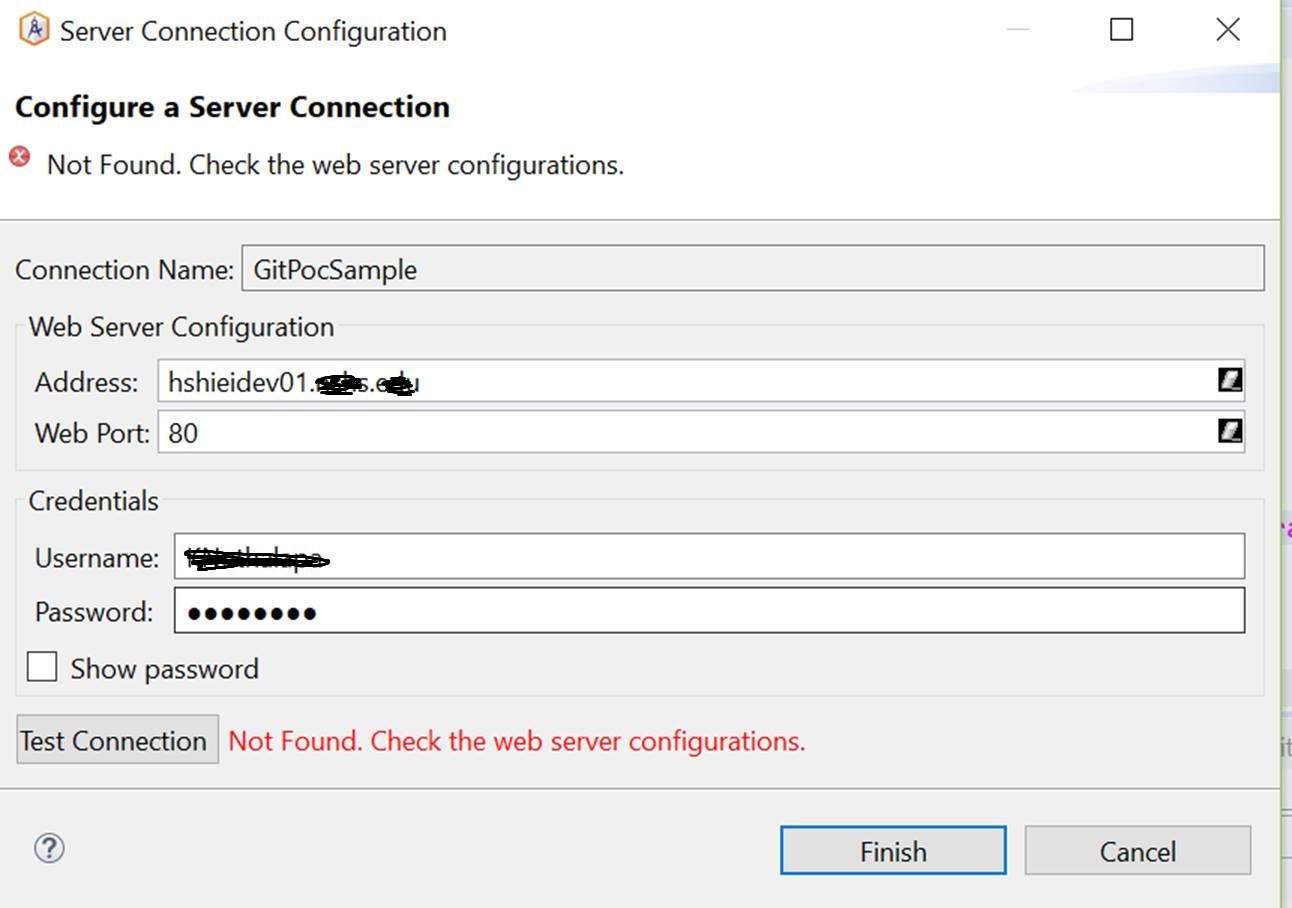 Working fine in localhost. While connecting to remote server getting the above error. Tried with Web Port 1972 and 80 both. Also there is no log in audit viewer.
I am using the free Intersystems Cache installation (CachePCkit V2017.1) on Windows 10 for my own use & personal development.
I am writing routines in Studio & running them in the Cache terminal TRM:3672 (TRYCACHE).
From a routine, how do I control print position within the terminal screen. I have tried using $X and $Y but this does not work and I cannot find what I need within the Cache terminal documentation.
Hope this question is not too simplistic for Members.
Any suggestion would be appreciated.
Hi, Community!
Someday you find yourself having a wonderful class package which can be helpful in several projects. So it is a library package.
How to make the classes available for different namespaces in Caché? There are two ways (at least two ways familiar to me):
1. Start the name of the package with %, like %FantasticLib.SuperClass. Wrong way.
If you do that the class would be placed in %SYS and would be available in other namespaces.
This is wrong because of the two reasons:
1. The class will be wiped out with the next Caché update (as all the %SYS Namespace).
2.
Hi, Community!
Please find the digest of the best articles you posted on DC in 2017 regarding InterSystems Data platform.
We had 280 articles in 2017 and split them into 3 categories: posts gathered most of the views, most voted posts and most commented posts.
Here we go!
TOP 20 Most viewed
Vue.js: getting started with a basic HTML/REST/JSON example, by Ward De Backer 1936
InterSystems Data Platforms and performance – VM Backups and Caché freeze/thaw scripts, by Murray Oldfield 1752
Hi All,
I am new to webservice and UPS. I have tried the sample URL's that UPS have given for testing in PHP codes and it works just perfect for me.
But when i try to hit the same URL's in Ensemble. it gives some errors from UPS.
If anyone of you guys here has any knowledge about UPS integration or the webservice please help me. it will be much appreciated and helpful.
The ensemble code that i am trying with is,
set AuthToken=##class
Thanks,
I have read here and tried to use the supplied examples to see what they do but keep on getting error please advice:
Method GetXMLDocFromFile(file = "C:test2.xml") As %XML.Document
{
    set reader=##class(%XML.Reader).%New()
    set status=reader.OpenFile(file)
    if $$$ISERR(status) {do $System.Status.DisplayError(status) quit $$$NULLOREF}
    set document=reader.Document
    set reNo=##class(%XML.Node).%New()//check here//how to use the below method
the error I am getting is as follows
InterSystems continuously monitors our systems for any evidence of attempts to exploit vulnerabilities such as the newly announced Meltdown and Spectre attack vectors.
At this time we have seen no indications of attempts to target InterSystems systems or technology using these vulnerabilities.
· InterSystems is aware of recently reported cybersecurity vulnerabilities known as Meltdown and Spectre that affect a wide range of computer processors (See US-CERT Alert TA 18-004A, Meltdown and Spectre Side-Channel Vulnerability Guidance, https://www.us-cert.gov/ncas/alerts/TA18-004A).
Hi,
Can you provide a link to a valid license key zip file as the previous key expired December 31st, 2017.
Many thanks.
I am trying to achieve this in cache objects I am using 2014.1 here is the original code in C# and would like to convert this to cache
here is my code first c# and cache follows
     class Program
    {
        /// <summary>
        /// This function loads a XML document from the specified string.
        /// </summary>
        /// <param name="xml">Input XML string</param>
        /// <returns>XML to Json converted string</returns>
        public static string XmlToJSON(string xml)
        {
            XmlDocument xmlDoc = new XmlDocument();
            xmlDoc.LoadXml(xml);

            StringBuilder sbJSON = new StringBuilder();
            sbJSON.Append("{ ");
            XmlToJSONnode(sbJSON, xmlDoc.DocumentElement, true);
            sbJSON.Append("}");
            return sbJSON.ToString();
        }

        /// <summary>
        /// Output a XmlElement, possibly as part of a higher array
        /// </summary>
        /// <param name="sbJSON">Json string to be created</param>
        /// <param name="node">XML node name</param>
        /// <param name="showNodeName">ArrayList of string or XmlElement</param>
        private static void XmlToJSONnode(StringBuilder sbJSON, XmlElement node,
                                            bool showNodeName)
        {
            if (showNodeName)
            {
                sbJSON.Append("\"" + SafeJSON(node.Name) + "\": ");
            }
            sbJSON.Append("{");

            // Building a sorted list of key-value pairs where key is case-sensitive
            // nodeName value is an ArrayList of string or XmlElement so that we know
            // whether the nodeName is an array or not.
            SortedList<string, object> childNodeNames = new SortedList<string, object>();

            // Add in all node attributes.
            if (node.Attributes != null)
            {
                foreach (XmlAttribute attr in node.Attributes)
                    StoreChildNode(childNodeNames, attr.Name, attr.InnerText);
            }

            // Add in all nodes.
            foreach (XmlNode cnode in node.ChildNodes)
            {
                if (cnode is XmlText)
                {
                    StoreChildNode(childNodeNames, "value", cnode.InnerText);
                }
                else if (cnode is XmlElement)
                {
                    StoreChildNode(childNodeNames, cnode.Name, cnode);
                }
            }

            // Now output all stored info.
            foreach (string childname in childNodeNames.Keys)
            {
                List<object> alChild = (List<object>)childNodeNames[childname];
                if (alChild.Count == 1)
                    OutputNode(childname, alChild[0], sbJSON, true);
                else
                {
                    sbJSON.Append(" \"" + SafeJSON(childname) + "\": [ ");
                    foreach (object Child in alChild)
                        OutputNode(childname, Child, sbJSON, false);
                    sbJSON.Remove(sbJSON.Length - 2, 2);
                    sbJSON.Append(" ], ");
                }
            }
            sbJSON.Remove(sbJSON.Length - 2, 2);
            sbJSON.Append(" }");
        }

        /// <summary>
        /// Store data associated with each nodeName so that we know whether
        /// the nodeName is an array or not.
        /// </summary>
        /// <param name="childNodeNames">Collection of child nodes</param>
        /// <param name="nodeName">XML node name</param>
        /// <param name="nodeValue">XML node value</param>
        private static void StoreChildNode(SortedList<string, object> childNodeNames,
            string nodeName, object nodeValue)
        {
            // Pre-process contraction of XmlElements.
            if (nodeValue is XmlElement)
            {
                // Convert <aa></aa> into "aa":null
                // <aa>xx</aa> into "aa":"xx".
                XmlNode cnode = (XmlNode)nodeValue;
                if (cnode.Attributes.Count == 0)
                {
                    XmlNodeList children = cnode.ChildNodes;
                    if (children.Count == 0)
                    {
                        nodeValue = null;
                    }
                    else if (children.Count == 1 && (children[0] is XmlText))
                    {
                        nodeValue = ((XmlText)(children[0])).InnerText;
                    }
                }
            }
            // Add nodeValue to ArrayList associated with each nodeName.
            // If nodeName doesn't exist then add it.
            List<object> ValuesAL;

            if (childNodeNames.ContainsKey(nodeName))
            {
                ValuesAL = (List<object>)childNodeNames[nodeName];
            }
            else
            {
                ValuesAL = new List<object>();
                childNodeNames[nodeName] = ValuesAL;
            }
            ValuesAL.Add(nodeValue);
        }

        /// <summary>
        /// This functions outputs all the stored information inside a child node.
        /// </summary>
        /// <param name="childname">Chile node name</param>
        /// <param name="alChild">Child node</param>
        /// <param name="sbJSON">Json string</param>
        /// <param name="showNodeName">Node visibility</param>
        private static void OutputNode(string childname, object alChild,
            StringBuilder sbJSON, bool showNodeName)
        {
            if (alChild == null)
            {
                if (showNodeName)
                {
                    sbJSON.Append("\"" + SafeJSON(childname) + "\": ");
                }
                sbJSON.Append("null");
            }
            else if (alChild is string)
            {
                if (showNodeName)
                {
                    sbJSON.Append("\"" + SafeJSON(childname) + "\": ");
                }
                string sChild = (string)alChild;
                sChild = sChild.Trim();
                sbJSON.Append("\"" + SafeJSON(sChild) + "\"");
            }
            else
            {
                XmlToJSONnode(sbJSON, (XmlElement)alChild, showNodeName);
            }
            sbJSON.Append(", ");
        }

        /// <summary>
        /// This function makes a string safe for JSON.
        /// </summary>
        /// <param name="sIn">Input child node</param>
        /// <returns>String safe Json</returns>
        private static string SafeJSON(string sIn)
        {
            StringBuilder sbOut = new StringBuilder(sIn.Length);
            foreach (char ch in sIn)
            {
                if (Char.IsControl(ch) || ch == '\'')
                {
                    int ich = (int)ch;
                    sbOut.Append(@"\u" + ich.ToString("x4"));
                    continue;
                }
                else if (ch == '\"' || ch == '\\' || ch == '/')
                {
                    sbOut.Append('\\');
                }
                sbOut.Append(ch);
            }
            return sbOut.ToString();
        }

        /// <summary>
        /// This function converts Json string to XML
        /// </summary>
        /// <param name="json">Inout Json string</param>
        /// <returns>Converted XML string</returns>
        public static XmlDocument JsonToXml(string json)
        {
            XmlNode newNode = null;
            XmlNode appendToNode = null;
            string[] arrElementData;

            XmlDocument returnXmlDoc = new XmlDocument();
            returnXmlDoc.LoadXml("<menu />");
            XmlNode rootNode = returnXmlDoc.SelectSingleNode("menu");
            appendToNode = rootNode;

            string[] arrElements = json.Split('\r');
            foreach (string element in arrElements)
            {
                string processElement = element.Replace("\r", "").Replace("\n", "").Replace("\t", "").Trim();
                if ((processElement.IndexOf("}") > -1 || processElement.IndexOf("]") > -1) &&
                    appendToNode != rootNode)
                {
                    appendToNode = appendToNode.ParentNode;
                }
                else if (processElement.IndexOf("[") > -1)
                {
                    processElement = processElement.Replace(":", "").Replace("[", "").Replace("\"", "").Trim();
                    newNode = returnXmlDoc.CreateElement(processElement);
                    appendToNode.AppendChild(newNode);
                    appendToNode = newNode;
                }
                else if (processElement.IndexOf("{") > -1 && processElement.IndexOf(":") > -1)
                {
                    processElement = processElement.Replace(":", "").Replace("{", "").Replace("\"", "").Trim();
                    newNode = returnXmlDoc.CreateElement(processElement);
                    appendToNode.AppendChild(newNode);
                    appendToNode = newNode;
                }
                else
                {
                    if (processElement.IndexOf(":") > -1)
                    {
                        arrElementData = processElement.Replace(": \"", ":").Replace("\",", "").Replace("\"", "").Split(':');
                        newNode = returnXmlDoc.CreateElement(arrElementData[0]);
                        for (int i = 1; i < arrElementData.Length; i++)
                        { newNode.InnerText += arrElementData[i]; }
                        appendToNode.AppendChild(newNode);
                    }
                }
            }
            return returnXmlDoc;
        }

        static void Main(string[] args)
        {
            string xml = "<menu id=\"file\" value=\"File\"> " +
                  "<popup>" +
                    "<menuitem value=\"New\" onclick=\"CreateNewDoc()\" />" +
                    "<menuitem value=\"Open\" onclick=\"OpenDoc()\" />" +
                    "<menuitem value=\"Close\" onclick=\"CloseDoc()\" />" +
                  "</popup>" +
                "</menu>";
            Console.WriteLine("Input XML string:\n");
            Console.WriteLine(xml);
            Console.WriteLine("\nOutput JSON string:\n");
            Console.WriteLine(XmlToJSON(xml));
            Console.WriteLine("\n================================================================================\n");

            const string json = @"{
                                ""foo"":""bar"",
                                ""complexFoo"": {
                                    ""subFoo"":""subBar""
                                    }
                                }";
            Console.WriteLine("Input JSON string:\n");
            Console.WriteLine(json);
            Console.WriteLine("\nOutput XML string:\n");
            Console.WriteLine(JsonToXml(json).InnerXml);
            Console.WriteLine();
        }
}Hi!
How do you guys deploy DeepSee pivot variables?
Haven't found it in documentation.
Thank you in advance!
I use SoapUI 5.4.0 test Cache development web service, the parameters I need to send through SoapUI is as follows:
<soapenv:Envelope xmlns:soapenv="http://schemas.xmlsoap.org/soap/envelope/" xmlns:tem="http://tempuri.org">
   <soapenv:Header/>
   <soapenv:Body>
      <tem:GetPatInfo>
         <!--Optional:-->
         <tem:QueryInfo>
         <![CDATA[
<Request>
    <CardNo>100000220002</CardNo>
    <CardType></ CardType >
</Request>
]]>
</tem:QueryInfo>
      </tem:GetPatInfo>
   </soapenv:Body>
</soapenv:Envelope>
I have a Cache object:
Class ServiceTestPrd.Request.ReqPatInfo Extends (%RegisteredObject, %XML.Adaptor)
{

Property CardNo As %String;

Property CardType As %String;

}In %Net.SSH.Session there is a method settraceMask and that will create a wireshark cap file for help with troubleshooting a connection. I dont see any class in Net.FtpSession that can be used for troubleshooting. Is there a different method that I should use?
Apart from the database server itself, the standard bundle of the Caché DBMS includes DeepSee, a real-time business intelligence tool. DeepSee is the quickest and the simplest way of adding OLAP functionality to your Caché application.
Another standard component is an Audit subsystem with a web interface, which has the options for expanding with your own event types and an API for using in an application code.
Below is a small example of the joint use of these subsystems that answers the following questions: who did what and when in an information system?
Hi,
Does anyone use the 'Enable automatic WRC HealthCheck updates' ?
'InterSystems strongly advises that you enable WRC HealthCheck. If checked, reports are run and sent to the WRC periodically. These regular reports allow the WRC to better assist you. No private application information is sent. All configuration data is kept strictly confidential.'
Any reason to use / not use?
Hi Everyone,
I am trying to reference a field, however, in our production environment, it can be found in the first second or third iteration. My code was only qualifying on the first iteration. I have been attempting to include all iterations, but I have come up short...below is a snippet of what I am attempting to use. My original code simply had GetValueAt("PID:13.4") but this only referenced the first iteration. Thanks for any thoughts!
Set PID13 = pInput
Database Blocks Explorer for InterSystems Caché
Key features
Tree explorer
- Shows tree of database blocks;
- Export tree as SVG or PNG image;
- Shows every node in the block;
- Open any block just by clicking on node in parent block;
- Reload block info by clicking at the same node second time;
- Zoom in and out, fit and navigator;
- Easy way to switch between view modes (tree/map);
Fragmentation map
- Shows every block with the same colour for every globals;
- Legend for globals;
Installation
Minimal supported version is 2015.3 or 2016.1.
Hi, all!
As I know, InterSystems recommends the use of Huge Pages. And if count of Huge Pages is enough, we'll see (in cconsole.log) something like this during Cache startup:
12/29/17-14:40:50:360 (3625) 0 Allocated 4630MB shared memory using Huge Pages: 4096MB global buffers, 256MB routine buffers
But if count of Huge Pages is not enough for location of all Globals and Routines caches, Cache won't use Huge Pages.
The question is: does it exist any metrics (API) in Cache (not in OS), that can show us if Cache uses (or not) Huge Pages currently?
Thanks!
I'm referring to the document Using Cache with JDBC. Using this example, it sets the URL of the object ds of class CacheDataSource.
ds.setURL("jdbc:Cache://127.0.0.1:1972/SAMPLES");
My question is would you just copy and paste the URL from the login page to the string? I tried doing that and it returns an error saying "Invalid log file xyz"
Any help will be greatly appreciated! Thank you