#InterSystems IRIS

19 Followers · 5.6K Posts

InterSystems IRIS is a Complete Data Platform
InterSystems IRIS gives you everything you need to capture, share, understand, and act upon your organization’s most valuable asset – your data.
As a complete platform, InterSystems IRIS eliminates the need to integrate multiple development technologies. Applications require less code, fewer system resources, and less maintenance.

Article Evgeny Shvarov · Jun 12, 2020 3m read

Hi Devs!

Last weekend I had been testing the newborn csvgen module and was looking for a CSV file to test - thus I came across an interesting datafile on Data.World  with Game of Throne episodes statistics. Death statistics. These folks documented all the murders through all the 8 seasons and noted where, who, from what clan with what weapon had killed another one.

So I imported it and made an IRIS Analytics dashboard.

You Know Nothing, Jon Snow | You Know Nothing, Jon Snow | Know ...

Don't worry, Jon,  with this dashboard we can figure out something ). See the details below.

0
2 810
Announcement Rob Tweed · Jun 11, 2020

The latest WebComponent-based, SB Admin 2-themed QEWD Monitor application now includes a cool D3-based viewer for visualising your IRIS or Cache Globals - see example below

This qewd-monitor-adminui application is automatically installed when you install QEWD on a Windows machine

See here for details on installing QEWD on Windows:

https://github.com/robtweed/qewd-microservices-examples/blob/master/WINDOWS-IRIS-2.md#initial-steps
 

1
0 315
Announcement Rob Tweed · Jun 11, 2020

If you're interested in building a browser-based CRUD application for maintaining data on IRIS, check out the detailed, step-by-step tutorial at:

https://github.com/robtweed/qewd-microservices-examples/blob/master/WIN…

To get a preview of the application you'll build in the tutorial, along with background on its technology stack, watch this video:

https://www.youtube.com/watch?v=d-NICYqv_2s

In summary, the key features and technologies that you'll be using and building out in this tutorial include:

- fully responsive interactive browser-based application - will also display correctly

0
0 1287
Article Yuri Marx · Jun 10, 2020 1m read

Many times it is necessary copy or send files to your docker container instance.

In my case was with IRIS JDBC driver.

Docker has this recipe for this (credits to https://docs.docker.com/engine/reference/commandline/cp/):

docker cp [OPTIONS] CONTAINER:SRC_PATH DEST_PATH|-
docker cp [OPTIONS] SRC_PATH|- CONTAINER:DEST_PATH

But to copy you need your container name. Write this command for this:

docker ps

In my, my-iris is the container name.

If you need to know file location into your docker file system too, write:

1. To go to bash of your docker instance: docker exec -it my-iris /bin/bash.
2.Write cd .

1
3 613
Article Yuri Marx · Jun 8, 2020 3m read

About regulations

Personal data privacy regulations have become an indispensable requirement for projects dealing with personal data. The compliance with these laws is based on 4 principles:

  1. Compliance with the rights of the holder of personal data;
  2. Governance of personal data assets;
  3. Privacy by Design and by Default;
  4. Data protection.

In case of violation in the treatment of personal data, controllers and operators of these data may suffer:

  1. Fines of up to 4% of revenue or up to €20 million;
  2. Shutdown of the digital service until the problem is corrected;
  3. Publicity of the incident to the
0
2 471
Article Oleh Dontsov · Jun 4, 2020 1m read

Sometimes you need quickly and easily import data into IRIS. For this, an IRIS import manager has been developed.

This application allows you to import JSON data and also provides a really simple interface for transferring data from MongoDB collections to IRIS globals. It has never been so easy.

Let's look at examples.

Import JSON

Suppose we have data in JSON format and we want to import it into IRIS. To do this, you just need to specify the global name and insert the data. After import, you will see the imported data. If global exists data will be overwritten.

Import MongoDB collections

There is

5
0 794
Article Renato Banzai · Jun 2, 2020 4m read

picture

Globals as a Graph Data Structure in Python

How to use the IRIS Native API + Python to see globals as a Graph Network Chart.

Iris Globals

Reading the documentation these topics are related to globals:

  • A global consists of a set of nodes (in some cases, only one node), identified by subscripts.
  • Each node can contain a value.
  • ObjectScript includes functions to iterate through the nodes of a global and quickly access values.
  • A global is automatically stored in the database. When you assign a value to a node of a global variable, the data is written immediately to the database. - You can see the
4
1 603
Announcement Anastasia Dyubaylo · Jun 1, 2020

Hi Community!

This week is a voting week for the InterSystems IRIS Native API Programming Contest! We have 8 applications — so you have a set of applications to choose from!


How to vote? This is easy: you will have one vote, and your vote goes either in Experts Nomination or in Community Nomination.

5
1 418
Question Oliver Wilms · Jun 5, 2020

Hello,

How can I use ISC_DATA_DIRECTORY once IRIS runs inside a container? Some background...

We plan to deploy multiple containers running the same Health Connect IRIS Interoperability production in containers.So far we use docker run to start a container with ISC_DATA_DIRECTORY individual per container inside a efs that gets mapped using -v.I can imagine automating this task - we have not yet looked at cloud manager - and assigning individual ISC_DATA_DIRECTORY to each container.

5
0 524
Question Daniel Sanches · Jun 28, 2019

I'm trying to sign an xml but this is showing an Id attribute in the Signature tag and the xmlns attribute is not appearing.

This is the xml generated:

<Signature Id="Id-80170FF0-0678-47D5-8C8B-771AA4E334E6">
            <SignedInfo>
                <CanonicalizationMethod Algorithm="http://www.w3.org/TR/2001/REC-xml-c14n-20010315"/>
                <SignatureMethod Algorithm="http://www.w3.org/2000/09/xmldsig#rsa-sha1"/>
                <Reference URI="#ID2102103519037442275900010755000000003309115569507501">
                    <Transforms>
                        <Transform
7
1 716
Article Renato Banzai · Jun 5, 2020 3m read

Hi everyone! If it doesn't bother you, could you help me teach my bots to talk?

Open my chatbot here: Help my chatbots to talk!

What? Aren't your chatbots smarts?

Smart isn't the best term for this scenario. They are trained but with little data! Most of chatbot solutions uses Machine Learning to create a way to talk with people and Machine Learning needs one important thing to performs well: DATA

How does it work?

A simple way to explain: imagine someone who has a brain but dont have any experience in his life he just born.

3
0 352
Article Yuri Marx · Jun 2, 2020 3m read

What is the OData

OData (Open Data Protocol) is an ISO/IEC approved, OASIS standard that defines a set of best practices for building and consuming RESTful APIs. OData helps you focus on your business logic while building RESTful APIs without having to worry about the various approaches to define request and response headers, status codes, HTTP methods, URL conventions, media types, payload formats, query options, etc. OData also provides guidance for tracking changes, defining functions/actions for reusable procedures, and sending asynchronous/batch requests (source: OData.org).

The OData use

1
4 942
Article Mikhail Khomenko · Dec 23, 2019 12m read

Last time we deployed a simple IRIS application to the Google Cloud. Now we’re going to deploy the same project to Amazon Web Services using its Elastic Kubernetes Service (EKS).

We assume you’ve already forked the IRIS project to your own private repository. It’s called <username>/my-objectscript-rest-docker-template in this article. <root_repo_dir> is its root directory.

Before getting started, install the AWS command-line interface and, for Kubernetes cluster creation, eksctl, a simple CLI utility. For AWS you can try to use aws2, but you’ll need to set aws2 usage in kube config file as described here.

1
3 1668
Article Muni Ganesh · Jun 4, 2020 2m read

Hi All,

I am writing this article to tell about the application "CRUD-GLOBALS-IRISNATIVEAPI-JAVA" which is developed as part of "InterSystems IRIS Native API programming contest". The intention of this application is to manage the Globals which are in IRIS instance through java program using IRIS Native API. To use this application basic knowledge of CACHE Globals structure is required.

In this application as of now we  have options to Create,View  Globals and Data Search in Globals. Update and Delete will be added in next releases.

You may think that CRUD operations of Globals already we have

0
0 482
Article Tani Frankel · Jun 4, 2020 10m read

In this article I'd like to share with you a phenomena that is best you avoid - something you should be aware of when designing your data model (or building your Business Processes) in Caché or in Ensemble (or older HealthShare Health Connect Ensemble-based versions).

2
0 500
Announcement Anastasia Dyubaylo · May 9, 2020

Hi Developers!

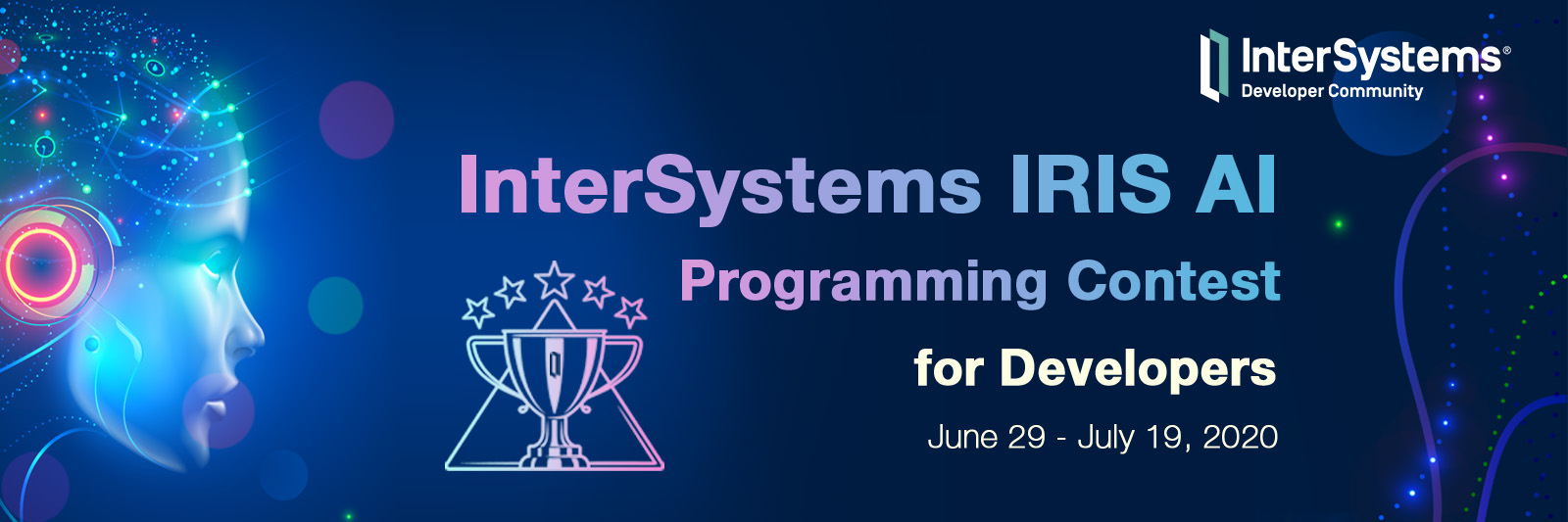
We are pleased to announce the next competition in creating open-source solutions using InterSystems IRIS Data Platform!

Please welcome the third InterSystems IRIS Online Programming Contest for Developers!

And the topic for this contest is InterSystems IRIS Native API.

The contest will last three weeks: May 18 – June 7, 2020


28
1 2155
Article Janne Korhonen · Jun 4, 2020 5m read

A lot of developers like to work with Studio and have been looking into source code version control such as GIT or into enabling modern development workflows like CICD or DevOps processes.

This article describe an elementary solution to get you started in CICD and DevOps, even if you are not yet ready to move to Atelier or forth coming VS Code approach which enable client side source code version control.

Step 1: Setting up version control with Studio and GIT

While Atelier and VS Code enable client side source code control with ecosystem of IDE plugins Studio offers server side hooks (code that

0
0 1078
Article Renato Banzai · Jun 3, 2020 4m read

picture

Creating a Chatbot with IRIS and Python

In this article I'm going to show how to integrate the InterSystems IRIS Database with Python to serve a Machine Learning Model of Natural Language Processing (NLP).

Why Python?

With a large adoption and use in the world, Python have a great community and a lot of accelerators | libraries to deploy any kind of application. If you are curious (https://www.python.org/about/apps/).

Iris Globals

As I start to learn about ^globals they became familiar to use as a fast way to ingest data in a out-of-box data model.

0
1 1263
Article Yuri Marx · Jun 3, 2020 5m read

SAP offers a broad support to OData in all your products. So, OData can be an excellent option to exchange data between SAP and InterSystems IRIS.

  1. Follow the instructions in the article https://community.intersystems.com/post/odata-and-intersystems-iris to expose your IRIS data as REST OData services.
  2. To consume InterSystems IRIS data from SAP using OData, follow these steps (credits to the next steps of this tutorial: https://sapyard.com/sapui5-for-abapers-consuming-odata-service-from-sapui5-application-crud-operations/) :
  3. Create a new SAPUI5 application by the name crud_demo.
  4. Create a
0
3 791
Article Sergey Mikhailenko · Jun 2, 2020 8m read

When you first start working with InterSystems IRIS, it’s a common practice to install a system with only a minimum level of security. You have to enter passwords fewer times and this makes it easier to work with development services and web applications when you're first getting acquainted. And, sometimes, minimal security is more convenient for deploying a developed project or solution. And yet there comes a moment when you need to move your project out of development, into an Internet environment that’s very likely hostile, and it needs to be tested with the maximum security settings (that is, completely locked down) before being deployed to production. And that’s what we’ll discuss in this article. For more complete coverage of DBMS security issues in InterSystems Caché, Ensemble, and IRIS, you may want to read my other article, Recommendations on installing the InterSystems Caché DBMS for a production environment. The security system in InterSystems IRIS is based on the concept of applying different security settings for different categories: users, roles, services, resources, privileges, and applications. Users can be assigned roles. Users and roles can have privileges on resources — databases, services, and applications — with varying read, write, and use rights. Users and roles can also have SQL privileges on the SQL tables located in databases.

2
3 1180
InterSystems Official Luca Ravazzolo · May 28, 2020

Preview releases are now available for the first version (v1.0) of InterSystems System Alerting and Monitoring (InterSystems SAM for short).
  
InterSystems SAM v1.0 provides a modern monitoring solution for InterSystems IRIS-based products. It allows high-level views of clusters and single-node drilled down metrics-visualization together with alerts notifications.  This first version provides visualization for more than one hundred InterSystems IRIS kernel metrics, and users can extend the default-supplied Grafana template to their liking.
 
V1.0 is meant to be a simple and intuitive baseline. Please help us make it great by trying it and sending us feedback!

SAM can display information from InterSystems-based instance starting with version 2019.4
 
SAM is only available in container format. You will need the SAM Manager container plus a small set of additional open-source components (Prometheus and Grafana) that are added automatically by the composition file.

SAM components and the SAM Manager Community Edition are available from

If you are traveling or prefer a voice-based  Q&A description on what SAM is, here is a podcast we have prepared for you: 

2
2 862
Article Renato Banzai · Jun 1, 2020 4m read

Making a Chart using Intersystems IRIS + Python

How to use the IRIS Native API in Python to access globals and plot some charts.

Why Python?

With a large adoption and use in the world, Python have a great community and a lot of accelerators | libraries to deploy any kind of application. If you are curious (https://www.python.org/about/apps/)

Why COVID-19 Data

As the pandemy evolves in the world a lot of information are being spreaded so I decided to create an application to audit those information.

1
0 527
Article Sean Connelly · Sep 10, 2019 18m read

In this article, we will explore the development of an IRIS client for consuming RESTful API services that have been developed to the OData API standard.

We will be exploring a number of built-in IRIS libraries for making HTTP requests, reading and writing to JSON payloads, and seeing how we can use them in combination to build a generic client adaptor for OData. We will also explore the new JSON adapter for deserializing JSON into persistent objects.

Working with RESTful APIs
REST is a set of engineering principles that were forged from the work on standardizing the world wide web.

3
3 1262
Article alex kosinets · Feb 24, 2020 2m read

In MX any global can be displayed on a sheet in the form of a table.

We will look at the simplest example (work only with  CACHE-2014+ or IRIS)

Upgrade or install  MX.

Start mx.xlsb  and connect to your namespase with vmx-routines.

After opening first sheet, click button  []   ##class(SYS.Stats.Dashboard).Sample()

Then press button [design-mode]   (top of screen ).

You will see something like this in the top four lines:

M-Formulas works in cells in the process of opening this sheet,  step by step :

  • - go to the namespace %SYS    ( zn “%SYS” )
  • - set dashboard=##class(SYS.Stats.Dashboard).Sample()
  • -
5
0 653