Hey Developers,
Join us as we share lessons learned from standing up the initial InterSystems cloud offerings. We'll cover the challenges of standing up a SaaS and how to meet them:
⏯ Running InterSystems IRIS Workloads in the Cloud: Lessons Learned

InterSystems IRIS is a Complete Data Platform
InterSystems IRIS gives you everything you need to capture, share, understand, and act upon your organization’s most valuable asset – your data.
As a complete platform, InterSystems IRIS eliminates the need to integrate multiple development technologies. Applications require less code, fewer system resources, and less maintenance.
Hey Developers,
Join us as we share lessons learned from standing up the initial InterSystems cloud offerings. We'll cover the challenges of standing up a SaaS and how to meet them:
⏯ Running InterSystems IRIS Workloads in the Cloud: Lessons Learned
Hi Developers!
This is yet another short post that is intended to simplify developers' life. Now we'll talk about how to make GitHub run unit tests with every push to the repository by adding just one file to the repo. For free. On Github Cloud. Sounds great, isn't it?
It is possible and very easy to do. Credit goes to @Dmitry Maslennikov (and his repo), ZPM Package Manager, and GitHub Actions. Let's see how this all works!

There is a popular package "WebTerminal". It is excellent in most situations.
Except:
One of the crucial business dimensions is the dimension “Where”. It is necessary to know where a customer was born or where he lives. Where will the order be delivered? Where have there been more sales, and where can we sell more? Where are our stores located? From Where is the customer accessing our e-commerce? These and other principal questions use the “Where” dimension. Today the best service to provide geographic accuracy and quality for these data is Google Maps. Taking advantage of the Python support of the new IRIS (2021.2+), we can use the Geocoder library (https://geocoder.
Hi Community,
We're pleased to invite you to the upcoming webinar in Spanish called "SAM: Monitoring InterSystems IRIS with Grafana and Prometheus".
Date & Time: June 15, 4:00 PM CEST
Speaker: @Pierre-Yves Duquesnoy, Sales Engineer, InterSystems Iberia
How do I use ANSI escape codes to produce green text in InterSystems IRIS terminal?
Is it possible train an IntegratedML model on docker build or docker up?
Hi All,
I am looking for a reporting tool (Analytics purpose) which can be built using cache object script/MUMPS. Basically my requirement is to find a tool where I can implement cache code to report data for my application.
I am unaware of DeepSee and how it works. Please assist for the same.
Hey Developers,
Create a relational schema from your FHIR repository for building analytics and decision support:
You have read about OAuth2 / OpenID Connect but you don't know how to use it? Have you ever needed to implement Single Sign-On (SSO) or secure web services based on tokens? Did you have to add authentication / authorization to your web applications or services and you didn't know how to start?
What about a step by step example where you can set up an authorization server, a client and a resource server? Here you can find an example where you will configure InterSystems IRIS instances to act as each one of these OAuth2 roles.
I want to embed the DTL editor in a third party web application.
If I open up the DTL editor then the full management portal banner is displayed.
http://localhost:52773/csp/healthshare/user/EnsPortal.DTLEditor.zen?DT=Foo.NewDTL1.dtl
If I open the same DTL in studio then I get just the editor, the banner is not displayed.
The DTLEditor page has the property studioMode that controls the banner display, but its not obvious how this is set.
Q. Is there a way to control that property without extending and shimming the page?
Q. Could there be a URL parameter or header that controls that value?
Q.
Hello IRIS Community,
InterSystems Certification is developing a certification exam for IRIS system administrators and, if you match the exam candidate description given below, we would like you to beta test the exam. The exam will be available for beta testing on June 20-23, 2022 at InterSystems Global Summit 2022, but only for Summit registrants (visit this page to learn more about Certification at GS22) . Beta testing will open for all other interested beta testers on July 18, 2022. However, interested beta testers should sign up now by emailing certification@intersystems.
Free certification exam attempt for all registered attendees of Global Summit 2022!
InterSystems is proud to offer free InterSystems Certification exam attempts ($150 value) to all registered attendees of InterSystems Global Summit 2022. The free exam attempt will be made available for any of the 7 live-proctored sessions during the Summit.
Hey Community,
Check out the latest video on InterSystems Developers YouTube channel:
⏯ Drinking Our Own Champagne: InterSystems AppServices' Move from Zen Reports to InterSystems Reports
Colleagues, hello!
In this article, I will tell you how we reduced the report generation time from 28 minutes to 1 minute. Let me tell you how we achieved this.
I hope that if necessary you will be able to reproduce the same results for yourself. Useful links will be inside this post, so read to the end.
Let's start.
We are reporting for a company using Adaptive Analytics and InterSystems Reports Server. Previously, this report was generated in the form of screenshots from DeepSee. In general, it was not bad, but it took a lot of time and did not look very readable.
We need to send some coordinates to a spaceship through a laser beam. To do that we have to encode it, and beam it out into space. Your mission is to implement the encoder with a compression standard. As usual shortest solution wins.
You will receive a string of comma-separated integers and you will return a new string of comma-separated integers and sequence descriptors.
Hey Community,
Meet the new video on InterSystems Developers YouTube channel:
Do you have cases using datadog to monitor intersystems products?
So it appears that this feature is still missing in 2022.1 (https://docs.intersystems.com/iris20221/csp/docbook/DocBook.UI.Page.cls…).
Does anyone have any thoughts or ideas on how to create Namespace Package Mappings on deployment in a 'neat' way during automated deployment?
I really like the ability to use merge cpf on deployment of our servers, but this one missing action is kind of holding me back. Appreciate if anyone else has encountered this and how they approached it.
Cheers.
This package offers a utility to export an XLarge Global into a JSON object file and to show
or import it again. In a previous example, this all was processed in memory. But if this is a
large Global you may either experience <MAXSTRING> or an <STORE> error
if the generated JSON structure exceeds available memory.
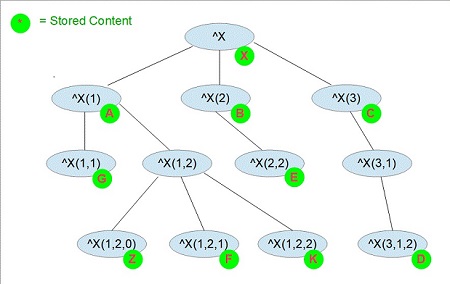
Academic refers to the structure created.
Continuing on the journey of implementing %UnitTest, @Timothy Leavitt's Test Coverage package, and automated testing with Jenkins.
My question today: why do we utilize a unit test root directory?
I've been defining packages and classes to write unit tests as I've been developing and I run the tests on the command line or using a routine file that is setup as a debug target which has been working great. I use DebugRunTestCase() to do this (so the classes aren't deleted).
Prospects, Customers, and Employees can now download IRIS and IRIS for Health both Community and Enterprise editions on https://evaluation.intersystems.com
This will allow for new features not yet released to be tested by prospective customers and current customers to sample the latest and greatest that is in the works.
Hi
I have a few Zen pages, one of which is implementation of
Class GMECC.DocmanConnect.Pages.downloadGPNotOnHub Extends (%ZEN.Component.page, %CSP.StreamServer)
{
    ClassMethod GetId()
    {
        Quit $Get(%request.Data("filepath",1))
    }

    ClassMethod OnPreHTTP() As %Boolean
    {
        set filepath = %request.Get("filepath")

        set tFs=##class(%Stream.FileCharacter).%New()
set tFs.This is a simple fhir client in python to practice with fhir resources and CRUD requests to a fhir server.
Note that for the most part auto-completion is activated, that's the main reason to use fhir.resources.
In various tests I used both and found no real reason to prefer the one or the other.
Eventually I missed some limits. At least I didn't hit any.
What is the general opinion?
Where to use the one or the other?
I ran into an interesting ObjectScript use case today with a general solution that I wanted to share.
I have a JSON array (specifically, in my case, an array of issues from Jira) that I want to aggregate over a few fields - say, category, priority, and issue type. I then want to flatten the aggregates into a simple list with the total for each of the groups.
The Data Platforms team is very pleased to announce the 2021.2 release of InterSystems IRIS Data Platform, InterSystems IRIS for Health and HealthShare Health Connect, which are now Generally Available (GA) to our customers and partners.
InterSystems IRIS Data Platform 2021.2 makes it even easier to develop, deploy and manage augmented applications and business processes that bridge data and application silos.
Hey Developers,
In the second part, you will learn how to build a FHIR Application with OAuth 2.0 and OKTA:
About a year ago I wrote some articles about the installation of the HAPI FHIRserver on a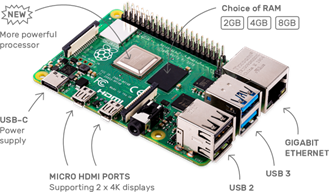 Raspberry Pi. At that time, I only knew the basics of the FHIR standard, little about the technology behind FHIR-servers and not much more about the Raspberry. By trying, failing, giving up and trying again I learned a lot.
Support is helping you troubleshoot a report. They want to reproduce a problem in their local system. Too bad they can't run your report, because the JDBC data source connection will fail. Or... is there a way?