#Best Practices

37 Followers · 307 Posts

Best Practices recommendations on how to develop, test, deploy and manage solutions on InterSystems Data Platforms better. 

InterSystems staff + admins Hide everywhere
Hidden post for admin
Article Luis Angel Pérez Ramos · Oct 16, 2023 10m read

We resume our series of articles on the FHIR Adapter tool available to HealthShare HealthConnect and InterSystems IRIS users.

In the previous articles we have presented the small application on which we set up our workshop and showed the architecture deployed in our IRIS instance after installing the FHIR Adapter. In today's article we will see an example of how we can perform one of the most common CRUD (Create - Read - Update - Delete) operations, the reading operation, and we will do it by recovering a Resource.

What is a Resource?

3
5 665
Article Luis Angel Pérez Ramos · Oct 11, 2023 3m read

We return with our example of using the FHIR Adapter, in this article we are going to review how we can configure it in our IRIS instances and what the result of the installation is.

The steps taken to configure the project are the same as indicated in the official documentation, you can review them directly here. Well, let's get to work!

Installation

1
1 524
Article Luis Angel Pérez Ramos · Oct 10, 2023 3m read

Surely you have all heard about FHIR as the panacea and solution to all interoperability and compatibility problems between systems. Right here we can see one of his classic defenders holding a FHIR resource in his hand and enjoying it immensely:

But for the rest of us mortals we are going to make a small introduction.

What is FHIR?

3
5 875
Article Lorenzo Scalese · Nov 10, 2023 13m read

Hi, developers!

Currently, I'm working on a project that requires highly dynamic event management. In the context of the Java programming language, my first instinct should be to opt for the "Observer Pattern", which is an approach to managing interactions between objects by establishing a notification mechanism. It allows multiple observers to react to changes in the state of a subject autonomously, promoting code flexibility and modularity. If you are not familiar with this design pattern, check out Wikipedia to find more information about it.


While it's natural and commonly used in certain programming languages as Java and C++, in ObjectScript, it's quite a different story.

3
5 979
InterSystems Official Andreas Dieckow · Jan 18, 2024 2m read

For your convenience InterSystems is posting the typical install steps for the operating systems that are supported with InterSystems IRIS.

For Microsoft Windows, please consult the InterSystems product documentation.

The IRIS installer will detect if a web server is installed on the same machine, which gives you the option to automatically have the web server configured.

All Apache installations will require sudo (recommended) or root permission to install the web server. This requirement supports recommended best practices. 

4
1 1094
Article Heloisa Paiva · Sep 22, 2022 4m read

Here you'll find a simple program that uses Python in an IRIS environment and another simple program that uses ObjectScript in a Python environment. Also, I'd like to share a few of the troubles I went trough while learning to implement this.

Python in IRIS environment

Let's say, for example, you're in an IRIS environment and you want to solve a problem that you find easy, or more efficient with Python.

You can simply change the environment: create your method as any other, and in the end of it's name and specifications, you add [ Language = python ]:

9
5 2404
Article sween · Oct 20, 2023 6m read

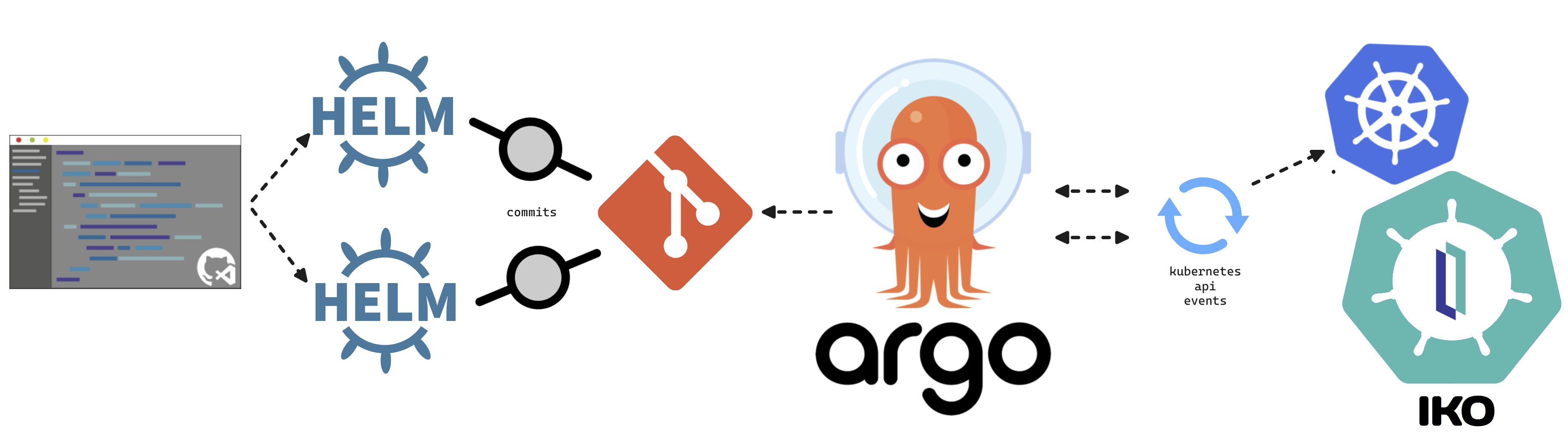
This article will cover turning over control of provisioning the InterSystems Kubernetes Operator, and starting your journey managing your own "Cloud" of InterSystems Solutions through Git Ops practices. This deployment pattern is also the fulfillment path for the PID^TOO||| FHIR Breathing Identity Resolution Engine.

Git Ops

3
1 878
Article Lorenzo Scalese · Aug 16, 2023 11m read

Hi developers!

Today I would like to address a subject that has given me a hard time. I am sure this must have been the case for quite a number of you already (so-called “the bottleneck”). Since this is a broad topic, this article will only focus on identifying incoming HTTP requests that could be causing slowness issues. I will also provide you with a small tool I have developed to help identify them.

Our software is becoming more and more complex, processing a large number of requests from different sources, be it front-end or third-party back-end applications. To ensure optimal performance, it is essential to have a logging system capable of taking a few key measurements, such as the response time, the number of global references and the number of lines of code executed for each HTTP response. As part of my work, I get involved in the development of EMR software as well as incident analysis.  Since user load comes mostly from HTTP requests (REST API or CSP application), the need to have this type of measurement when generalized slowness issues occur has become obvious.

5
9 1447
Article Anton Umnikov · Dec 4, 2020 7m read

IRIS External Table is an InterSystems Community Open Source Project, that allows you to use files, stored in the local file system and cloud object storage such as AWS S3 as SQL Tables. IRIS External Table

It can be found on Github https://github.com/intersystems-community/IRIS-ExternalTable Open Exchange https://openexchange.intersystems.com/package/IRIS-External-Table and is included in InterSystems Package Manager ZPM.

To instal External Table from GitHub use:

4
2 1306
Article Evgeny Shvarov · Sep 3, 2023 5m read

While starting the development with IRIS we have a distribution kit or in case of Docker we are pulling the docker image and then often we need to initialize it and setup the development environment. We might need to create databases, namespaces, turn on/off some services, create resources. We often need to import code and data into IRIS instance and run some custom code to init the solution.

And there plenty of templates on Open Exchange where we suggest how to init REST, Interoperability, Analytics, Fullstack and many other templates with ObjectScript. What if we want to use only Python to setup the development environment for Embedded Python project with IRIS?

So, the recent release of Embedded Python template is the pure python boilerplate that could be a starting point for developers that build python projects with no need to use and learn ObjectScript. This article expresses how this template could be used to initialize IRIS. Here we go!

1
2 788
Article Tomoko Furuzono · Jun 1, 2023 1m read

InterSystems FAQ rubric

You can set the maximum size of the IRISTemp database at IRIS startup by setting a configuration parameter called MaxIRISTempSizeAtStart.

After setting, the system will truncate IRISTemp to the set value (MB) at the next IRIS startup. If the current size is less than the specified MaxIRISTempSizeAtStart, no truncation will occur. Also, if 0 is specified, truncation will not be performed, so the size will start without changing. (Default) Settings are made from the menu below.

1
0 755
InterSystems Official Mark Hanson · Feb 27, 2023 2m read

I wanted to provide a heads up of an improvement in how we generate and call method code in IRIS 2023.1.

A class in IRIS is composed of two main runtime components:

  1. Class Descriptor - A highly optimized list of methods, properties, class parameters that make up the class along with attributes associated with each of these e.g. public/private setting.
  2. ObjectScript code - A set of routines that contain the ObjectScript code to be executed when a method is called.
10
3 1015
Article Zhong Li · Feb 15, 2023 11m read

A "big" or "small" ask for ChatGPT?


I tried OpenAI GPT's coding model a couple of weeks ago, to see whether it can do e.g. some message transformations between healthcare protocols. It surely "can", to a seemingly fair degree. 
It has been nearly 3 weeks, and it's a long, long time for ChatGPT, so I am wondering how quickly it grows up by now, and whether it could do some of integration engineer jobs for us, e.g. can it create an InterSystems COS DTL tool to turn the HL7 into FHIR message? 

Immediately I got some quick answers, in less than one minute or two.


Test

7
1 2829
Article Alex Woodhead · Jun 12, 2023 3m read

This article is a simple quick starter (what I did was) with SqlDatabaseChain.

Hope this ignites some interest.

Many thanks to:

sqlalchemy-iris author @Dmitry Maslennikov

Your project made this possible today.

The article script uses openai API so caution not to share table information and records externally, that you didn't intend to.

A local model could be plugged in , instead if needed.

Creating a new virtual environment

7
3 3674
Article Iryna Mykhailova · Mar 31, 2023 3m read

Saw the other day an article with the usage of the %ZEN package when working with JSON and decided to write an article describing a more modern approach. At some recent point, there was a big switch from using %ZEN.Auxiliary.* to dedicated JSON classes. This allowed to work with JSONs more organically.

Thus, at this point there are basically 3 main classes to work with JSON:

  • %Library.DynamicObject - provides a simple and efficient way to encapsulate and work with standard JSON documents. Also, there is a possibility instead of writing the usual code for creating an instance of a class like
set obj = ##class(%Library.DynamicObject).%New()

it is possible to use the following syntax

set obj = {}
  • %Library.DynamicArray - provides a simple yet efficient way to encapsulate and work with standard JSON  arrays. With arrays you can use the same approach as with objects, meaning that yu can either create an instance of the class
set array = ##class(%DynamicArray).%New()

or you can do it by using brackets []

set array = []
  • %JSON.Adaptor is a means for mapping ObjectScript objects (registered, serial or persistent) to JSON text or dynamic entities.
5
2 1974
Article Rizmaan Marikar · Mar 20, 2023 8m read

Introduction

Data analytics is a crucial aspect of business decision-making in today's fast-paced world. Organizations rely heavily on data analysis to make informed decisions and stay ahead of the competition. In this article, we will explore how data analytics can be performed using Pandas and Intersystems Embedded Python. We will discuss the basics of Pandas, the benefits of using Intersystems Embedded Python, and how they can be used together to perform efficient data analytics.

7
8 1677
Article Muhammad Waseem · Nov 29, 2021 3m read

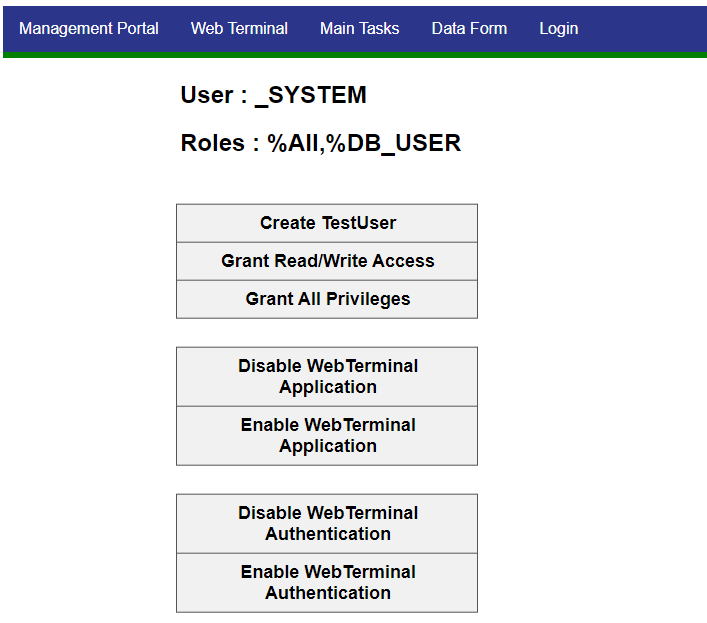
In this article I will explain how to Authenticate, Authorize and Audit by code by using CSP Web Application along with Enabling /Disabling and Authenticate/Unauthenticate any Web Application.

Application Layout
 

5
3 1582
Article Alex Woodhead · Jun 13, 2023 3m read

Yet another example of applying LangChain to give some inspiration for new community Grand Prix contest.

I was initially looking to build a chain to achieve dynamic search of html of documentation site, but in the end it was simpler to borg the static PDFs instead.

Create new virtual environment

mkdir chainpdf

cd chainpdf

python -m venv .

scripts\activate 

pip install openai
pip install langchain
pip install wget
pip install lancedb
pip install tiktoken
pip install pypdf

set OPENAI_API_KEY=[ Your OpenAI Key ]

python

Prepare the docs

4
2 1399
Article Eduard Lebedyuk · May 10, 2018 9m read

In this series of articles, I'd like to present and discuss several possible approaches toward software development with InterSystems technologies and GitLab. I will cover such topics as:

  • Git 101
  • Git flow (development process)
  • GitLab installation
  • GitLab Workflow
  • Continuous Delivery
  • GitLab installation and configuration
  • GitLab CI/CD
  • Why containers?
  • Containers infrastructure
  • CD using containers

In the first article, we covered Git basics, why a high-level understanding of Git concepts is important for modern software development, and how Git can be used to develop software.

In the second article, we covered GitLab Workflow - a complete software life cycle process and Continuous Delivery.

In the third article, we covered GitLab installation and configuration and connecting your environments to GitLab

In the fourth article, we wrote a CD configuration.

In the fifth article, we talked about containers and how (and why) they can be used.

In the sixth article let's discuss main components you'll need to run a continuous delivery pipeline with containers and how they all work together.

In this article, we'll build Continuous Delivery configuration discussed in the previous articles.

10
4 2862
Article Iryna Mykhailova · Aug 2, 2022 8m read

Before we start talking about databases and different data models that exist, first we'd better talk about what a database is and how to use it.

A database is an organized collection of data stored and accessed electronically. It is used to store and retrieve structured, semi-structured, or raw data which is often related to a theme or activity.

At the heart of every database lies at least one model used to describe its data. And depending on the model it is based on, a database may have slightly different characteristics and store different types of data.

To write, retrieve, modify, sort, transform or print the information from the database, a software called Database Management System (DBMS) is used.

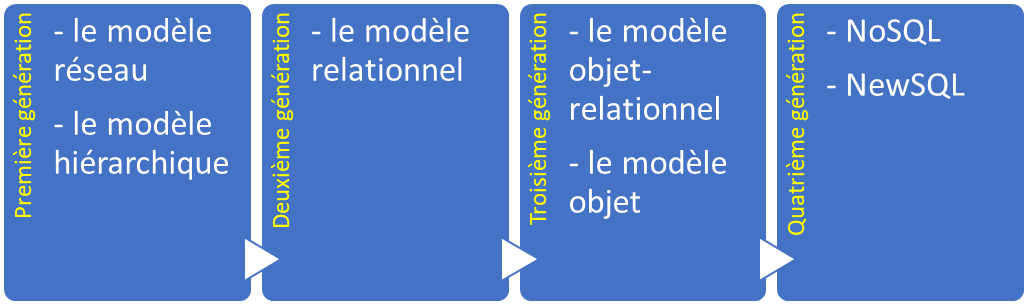
The size, capacity, and performance of databases and their respective DBMS have increased by several orders of magnitude. It has been made possible by technological advances in various areas, such as processors, computer memory, computer storage, and computer networks. In general, the development of database technology can be divided into four generations based on the data models or structure: navigational, relational, object and post-relational.

5
4 1967
Article Mark Bolinsky · Jan 4, 2022 3m read

Overview

We often run into connectivity problems with HealthShare (HS) deployments in Microsoft Azure that have multiple HealthShare components (instances or namespaces) installed on the same VM, especially when needing to communicate to other HS components while using the Azure Load Balancer (ILB) to provide mirror VIP functionality.  Details on how and why a load balancer is used with database mirroring can be found this community article.

1
1 1006
Article sween · Jul 5, 2022 4m read
        

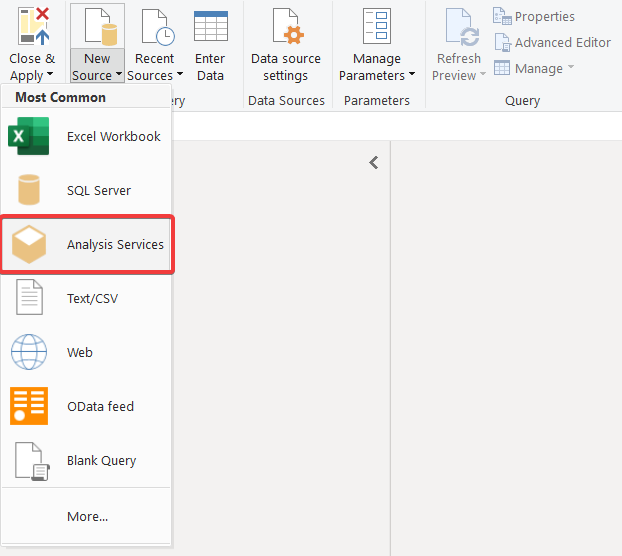
How to include IRIS Data into your Google Big Query Data Warehouse and in your Data Studio data explorations.  In this article we will be using Google Cloud Dataflow to connect to our InterSystems Cloud SQL Service  and build a job to persist the results of an IRIS query in Big Query on an interval. 

If you were lucky enough to get access to Cloud SQL at Global Summit 2022 as mentioned in "InterSystems IRIS: What's New, What's Next", it makes the example a snap, but you can pull this off with any publicly or vpc accessible listener you have provisioned instead.

Prerequisites

3
0 1194