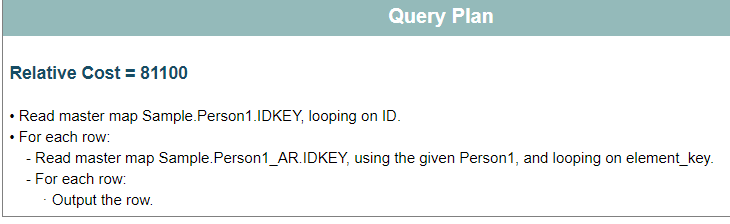
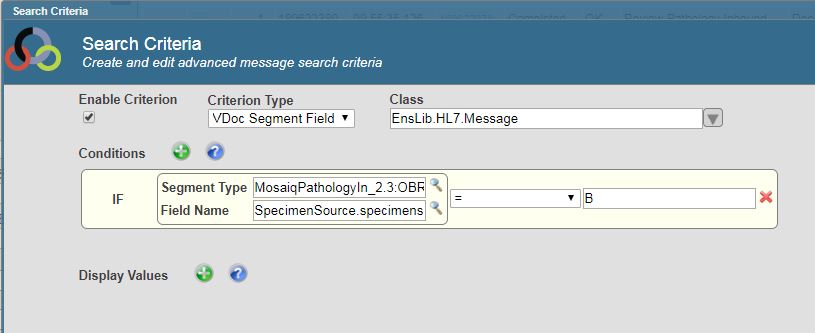
I am experimenting with Relationships, both Parent to Child and One to Many.
I have done some SQL look-ups and have searched through the documentation, however not in a lot detail, but wonder if there are more and better ways to access both sides of Relationships through SQL?
https://www.youtube.com/embed/N9QnVx_GLvk [This is an embedded link, but you cannot view embedded content directly on the site because you have declined the cookies necessary to access it. To view embedded content, you would need to accept all cookies in your Cookies Settings]
InterSystems IRIS 2020.1 brings a broad set of improved and new capabilities to help build important applications. In addition to the many significant performance improvements accrued through 2019.1 and 2020.1, we are introducing one of our biggest changes in recent SQL history: the Universal Query Cache. This article provides more context on its impact to SQL-based applications at a technical level.
I have a code written in cache sql and trying to understand it, below is the code , can anyone help me understand what does that mean
ex - !! dosage_unit !!
SELECT (CASE WHEN (order_description IS NULL OR (order_description='')) THEN '' ELSE (order_description) END) !! (CASE WHEN (dosage IS NULL OR dosage_unit IS NULL OR (dosage='') OR (dosage_unit='')) THEN '' ELSE (', ' !! dosage !! ' ' !! dosage_unit !!
Is there a way to query the database structure? In SSMS there are queries for finding tables with a column with a certain name (using LIKE). And there is the redgate tool SQL Search. But I'm not sure how to go about looking for columns that have say a value of 'PATID' and returning all tables that match. Does anyone know?
Where can i get the latest odbc providers from SQL Server 2012/2016?
I see some posts on line to an ftp site out there but I am unsuccessful at getting access to it. I have a version loaded on my server but get errors when querying cache'.
"[Cache ODBC][State : 22005][Native Code 22005]"
Any help would be appreciated.
the one we have might be version 2014.01.05851 64 bit (would that make sense?)
Let's say I start with a date range of '1-5-2019' to '5-25-2019' that occurs on one row. I'd like to ultimately have this show as 5 rows in Crystal Reports as shown below
Result
1-5-2019 1-31-2019
2-1-2019 2-28-2019
3-1-2019 3-31-2019
4-1-2019 4-30-2019
5-1-2019 5-25-2019
I found a result that worked in T-SQL, but I'm not sure how to translate it to Cache SQL. The T-SQL code is
In T-SQL, I can create a recursive CTE to create a subquery or a view that will hold a whole lot of numbers. Is there a way to do this in Cache SQL? I'd like the numbers from 0 to 10000 if possible.
This error is sometimes seen while viewing a listing in InterSystems IRIS Business Intelligence: ERROR #5540: SQLCODE: -99 Message: User <USERNAME> is not privileged for the operation (4)
As the error suggests, this is due to a permission error. To figure out which permissions are missing/needed, we can take a look at the SQL query that is generated. We will use a query from SAMPLES as an example.
I have a code block in a BPL. I have the below SQL and code. All variables have been declared and set. When I run the SQL, if there are no values returned, I get 100 for the value of SQLCODE when I perform the FETCH, which is correct. If values are returned, I get a -400 error when I perform the first FETCH. I've investigated, but cannot find the reason for a -400 error. Hoping someone out here understands this and knows what's wrong.
In Episode 4 of Data Points, we welcome @Benjamin De Boe to the pod to discuss some of the things you can do to optimize your SQL queries in InterSystems IRIS. We've all heard — either from ourselves or from others — the "this runs too slowly" complaint. I thought Benjamin did a great job walking through many of the things within IRIS you can look at with your queries to see what can be improved.
https://5e18edf067eb59-03854285.castos.com/player/153376 [This is an embedded link, but you cannot view embedded content directly on the site because you have declined the cookies necessary to access it. To view embedded content, you would need to accept all cookies in your Cookies Settings]
https://www.youtube.com/embed/ASO_OG1xxgc [This is an embedded link, but you cannot view embedded content directly on the site because you have declined the cookies necessary to access it. To view embedded content, you would need to accept all cookies in your Cookies Settings]
HI I am using below code to retrieve the last inserted ID of the table. It works when we do not set any custom column as IDKey. If we define any column as
IDKey below code does not return any IDKey. I know when i am defining any column as IDKey its not auto generated , but whats the best way to get the ID column value
Class Queries in InterSystems IRIS (and Cache, Ensemble, HealthShare) is a useful tool that separates SQL queries from Object Script code. Basically, it works like this: suppose that you want to use the same SQL query with different arguments in several different places.In this case you can avoid code duplication by declaring the query body as a class query and then calling this query by name.
I'm using Cache SQL and want the ability to choose a specific index.
I've boiled the problem down to one table and simplified the query down to
SELECT * FROM Registration.PatResp WHERE SchedApptNum=8450022
SchedApptNum is indexed, but instead of using that column, "Show Plan" indicates that it's looping through the entire Registration.PatResp table on Id (the primary key for the table).
we're planning some work on our SQL Query Plan functionality for a future release of InterSystems IRIS and are interested to hear how you're using them today, or what'd keep you from using them. Rather than try and fit everything in a rigid survey, I thought a simple thread on our beloved DC might also reveal some use patterns that we support or could do a better job on.
I am trying to get a list of all settings for all the config items of a given production using SQL . When I run the following sql as a dynamic query I am unable to access the setting names and values. Settings is a list of Ens.Config.Setting
A quick question regarding to SQL Query Plan: Why these two requests have different plans, in particularly, why second request needs temp file? To me, temp file is a bad thing which should be avoided, right?
select * from Test.Log where cdate = 1
select * from Test.Log where cdate > 1
Plan for 1:
Read index map Test.Log.cdateIndex, using the given %SQLUPPER(cdate), and looping on ID. For each row: Read master map Test.Log.IDKEY, using the given idkey value. Output the row.