Hi!
While i am trying to write a data i am getting a error as "<PROPERTY DOES NOT EXIST>zFile+15^User.zKQRest.1 *value,%Collection.ListOfObj" but there are values stored in it. How can i break it write it separately.

InterSystems Caché is a multi-model DBMS and application server. See more details here.
Hi!
While i am trying to write a data i am getting a error as "<PROPERTY DOES NOT EXIST>zFile+15^User.zKQRest.1 *value,%Collection.ListOfObj" but there are values stored in it. How can i break it write it separately.
Hi,
I am new to Cache' MV but have extensive experience with other Pick flavors especially Unidata.
I need to determine the impact of adding several indexes to a large file with over 51,000,000 records.
On other systems, I could use FILE.STAT, ANALYZE.FILE and shell to the OS to determine how large the index file was.
None of those seem to be available in Cache' MV. Shelling to the OS just tells me the size of CACHE.DAT.
What is the best way to determine what the disk impact would be if I added an index (CREATE-INDEX) to a file?
TIA,
Steve
Hello,
I have a DB server (ser-app-db) where cache is installed as server.
I have a Web server (ser-app-w) where cache is installed as web server and configured as CSP gateway.
I followed the configuration guide (https://docs.intersystems.com/latest/csp/docbook/DocBook.UI.Page.cls?KE…) and ser-app-w perfectly display the CSP and CLS pages.
But that's not working for my REST service, for exemple with the REST sample:
http://ser-app-db/csp/samples/docserver/request(GET): work and show the request
http://ser-app-w/csp/samples/docserver/request(GET): return a 404.
Hi
1. Is it possible do define an index like that :
create index UIX on MyTable (Column1) where Column1 is not null
2. What happens if we add an index on a property that is NOT required, meanning that not all records will be indexed because we do not allow null subscripts ?
Good day,
I need to find out if it is possible somehow to receive actual linux TIMESTAMP for example with $NOW() or other functions.
I was trying to recalculate it with $NOW() function, but without success. I would like to simulate Redis TIME command in COS.
My tryings:
USER > set time = $NOW()

USER > w (($PIECE(time,",",1)*86399) + $PIECE(time,",",2))
5573319043.403186
But in Redis it is:
> time
On web page: http://try.redis.io/
type "time" + enter. And it will results as short documentation says: https://redis.io/commands/time
And this behavior I would like to implement in COS.
I have a list of %Library.ArrayOfObjects . Each of list elements has some properties. I have to sort list by one of its objects properties. Is there a predefined method to doing that? (quicksort maybe?)
I have a tablePane. TablePane can have one, or two, or three parameters. It depends on some conditions.
At first I add all three parameters to tablePane.
set p1 = ##class(%ZEN.Auxiliary.parameter).%New()
set p1 .id = ..id1
do table.parameters.Insert(p1 )
do %page.%AddComponent(p1 )
set p2 = ##class(%ZEN.Auxiliary.parameter).%New()
set p2 .id = ..id2
do table.parameters.Insert(p2 )
do %page.%AddComponent(p2 )
set p3 = ##class(%ZEN.Auxiliary.parameter).%New()
set p3 .id = ..id3
do table.parameters.Insert(p3 )
do %page.%AddComponent(p3 )
I understand this is a rather broad topic (and at times involves religious sentiments) yet I would like to look at it from the Caché perspective:
Hi, I am trying to understand the transformational methods.
I have created a small class with the only property of List as %List, see below.
Class LastName.Demo2 Extends %Persistent
{
Property List As %List;
}
Then I entered the following commands in the Terminal
Set Oref=##class(LastName.Demo2).%New()
FOR I=1:1:5 S $LI(List,I)="Value="_I
Set Oref.List=List
WRITE Oref.ListLogicalToDisplay(Oref.List)
^
<METHOD DOES NOT EXIST> *ListLogicalToDisplay,LastName.Demo2
zw Oref
Oref=<OBJECT REFERENCE>[2@LastName.
The data type %Char or %Library.Char
The description says it is a fixed length character field.
How do I set the fixed length?
Or by just setting %Char to something, does that automatically define its length?
Are the parameters MINLEN, MAXLEN involved? Or are these the way I set the fixed length?
Any help with this?
In a previous exercise, I was able to show the power of Caché.
A medium-designed set of interdependent tables with some GB of data.
URLs cross reference over some million pages resulting in ~3 billion records
Competition was between
Criteria were Speed + Storage consumption
I composed a customized loader fed over a "raw" TCP connection
Mapping the "objects" into the final table by directly writing to Global Storage.
Hi,
I use cache 5.0 and access cache through OpenVMS.
The disk-space under a particular namespace has grown up in size due to cache.dat. How to recreate cache.dat to bring up more space back on disk?
Hi Everybody
Question , I need to define a user that will be limited to only to one namespace.
I defined the start up namespace in the user's definition , but it doesn't limit the user.
Any advice would be appreciated.
Thank you Simcha
Hi, folks!
There is an interesting discussion in the neighboring topic which raises a question for me: is there any reason to have %Status as a return value for COS method?
Hello All,
While extracting the huge amount of data in the cache through the Zen page, file extraction timing is greater than session time out. How to increase the session timing in Zen/CSP gateway or If any other solution would be appreciated. Please advise.
Major difference between GOTO and do command?
I have a Caché server with external apache.
It has a hostname, i.e.: http://myserver.com
There is an index page, which is available over http://myserver.com/index.html (/ is a Caché CSP app)
How can I make index.html available from http://myserver.com?
Here's the relevant parts of my apache config:
<Directory />
    CSP On
    DirectoryIndex index.html
    Options FollowSymLinks
    AllowOverride All
    Require all granted
</Directory>
<Location />
    DirectoryIndex index.html
    Options FollowSymLinks
    AllowOverride All
    CSP On
    SetHandler csp-handler-sa
</Location>
DirectoryIndex index.html
AccessFileName .htaccess
Okay, so I ran into a rather odd bug. I have a remote test machine (tst-intersystems) running for which I accidently opened a lot of windows in my Studio (i.e. 500+). The result is that the studio runs out of memory and crashes. Now, every time I try to connect to this remote machine studio immediately attempts to open all windows effectively not allowing me to start studio anymore.
In this short article we talk about how to get Yape running in a docker container to avoid having to setup python on your machine.
It's been a while since the last article in this series, so let's recap quickly.
We talked about using matplotlib to create a basic graph. Afterwards we introduced dynamic graphs using bokeh. In the 3rd part we talked about generating heatmaps using monlbl data.
A common theme in the feedback I got over various channels was the difficulty setting up an environment to run any of these.
GIS stands for Geographic Information System.
and it's not a typical arena for Caché. But it's definitely an environment with high data volume.
You see 3 major areas
- Visual front end:
A mature area well covered by a bunch of commercial and open source products.
No need for Caché there.
- GIS mathematics:
JTS (Java Topology Suite) is fixed standard that covers all requirements and can be linked to Caché by the Java Gateway
or the C, C++ incarnation of this standard library using Caché Call Out Gateway.
So far no added value by Caché.
I don't know what a problem with my cache cube terminal, but cyrillic text is not displayed correctly.
I have some terminal program with cyrillic menus, dialogs and other text and all those items are displayed wrong (unknown symbols like on the image).
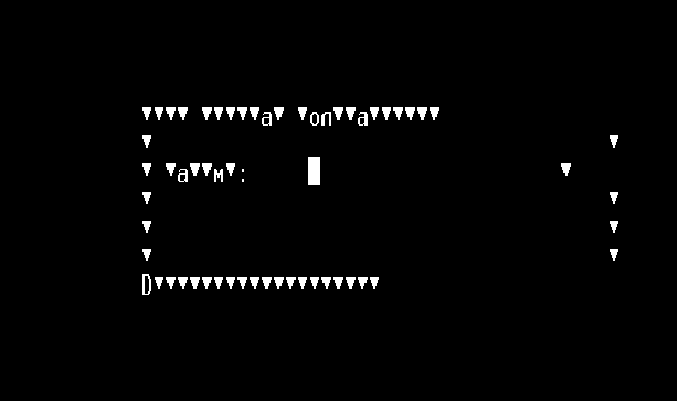
How can I solve this problem?
Hi,
I learning Cache Rest Services and I trying to implement it.
I learned get method in rest services.
I need to know How to get raw data (like json, xml, text....etc.) when we post the rest services?
Thank you
Hi, colleagues!
Consider you need to put some (less than 1GB) data to an indexed array and do some data manipulations and calculations with it.
Should I prefer global or local for it?
Is there any general rule when local is faster than global and vice-versa?
In reviewing the documentation found here, it states that there is an Attributes property. Since this is an array, I was wondering how I would go about traversing through the array to review what attributes are available on the file.
I am running a ZBREAK trace on a legacy FDBMS application that uses arrays but rather than displaying the array value contents, I am seeing logs similar to the following.
Trace: ZBREAK SET LINE=Array Val at BIOPWR+6^BIOPWR
My ZBREAK trace settings are as follows:
ZBREAK /TRACE:ON:"/somedir/trace1.log"
ZBREAK *LINE:"T"
The 'LINE' array has a single integer subscript and some string data. The subscript is sometimes calculated using arbitrary calculations such as S LINE(I-33)="BLAH BLAH BLAH" This makes the code very difficult to read and debug.
Hello.
I'm using device redirection to intercept incoming writes and need to figure a smart way to detect when to CLRF in order to prevent misleading outputs.
So basically, if the intercepted write ends with !, I need to know that and prevent my routine from writing ! as well.
Here's the source code for it:
ClassMethod Call(sourceControl As if $isobjectcontent
I bolded
Hi community,
I have some constants hardcoded in my class as parameter values, and those constants are referenced in many places in my module. Now the need has arisen to provide different value for those parameters depending on some context. Is it possible to create some sort of accessor method for the parameter (like it is possible for properties), or do I need to perform a thorough refactoring?
Thanks.
Jiri
How could I log out from Cache terminal (connected through csession) and back to the system shell?
Thanks.
Have very little XML experience and have been able to manually create output. Have a need to take data that I store in a M global (example: ^TML("HDATA", ) and out put it in CCDA XML format.
Are there any examples of M code using the XMLWriter to accomplish this?
Or can anyone provide some guidance
Any help would be greatly appreciated.
Hi,
How can I read the stack of another process?
I know about ^JOBEXAM, but I only know how to use through terminal, and I need to get a string, or at least do a method that returns me a string
For example:
I have process A and B
B monitors process A at each second.
B logs information about process A in a table
Informations about lock I get through %SYS.LockQuery and the process through %SYS.Process
How can I get stack of process A from process B to log in the table?
Cache 2015.2.1
Thanks