I am trying to upload using Upload manager functionality in Trakcare , but unable to do so without any guide or documentation.
If anyone can assist me through that would be greatly appreciated.
Thanks.
InterSystems Caché is a multi-model DBMS and application server. See more details here.
I am trying to upload using Upload manager functionality in Trakcare , but unable to do so without any guide or documentation.
If anyone can assist me through that would be greatly appreciated.
Thanks.
I have been trying to get to grips with the new dot Net Gateway used in IRIS as the import of the DLL to construct proxy classes is no longer supported in IRIS I have a third party DLL that when I try to instantiate throws an error complaining about the class not instantiated as it does not support parameterless constructor .I am using this new
set gateway = $system.external.getDotNetGateway()
do gateway.addToPath(myPath_"\DotNetGatewaySamples.Hello everyone
I have a question about the maximum number of active license users for CACHÉ.
When I run the command: Do $System.License.ShowCounts()
I get the following return:
1 Current active users
3 Maximum active users
0 CSP users currently active
1 Maximum active CSP users
0 CSP sessions currently in 'grace period'
1 Maximum CSP sessions in 'grace period'
I couldn't find it in the documentation, but I want to know if "3 Maximum active users" is the maximum number of users who have used the license since the period I installed the CACHÉ instance or since another period. Could you help me?
I have an old .NET 4.5 project, working with database InterSystems.Cache. The project is deployed on a Windows server. Data is retrieved using the InterSystems.Data.CacheClient.dll library.
But now I'm planning migration of the project to .NET 8 to container with linux centos.
How can I get data from InterSystems.Cache in this case?
As I understand it, InterSystems.Data.CacheClient.dll is only for the .NET framework.
The InterSystems.Data.IRISClient.dll library recommended for the more modern InterSystems.
Dear Fellow Cache Gurus: I would like to know if there is either any built-in Cache Date/Time function or an easy way to include a timezone abbreviation such as EST, PST, MST, etc... within the Cache Date/Time formats.
I read through the Cache Documentation but could not find anything to achieve this.
So if I do the following command: $ZDateTime($H,1,4,,,4,,,,,"InvalidDate"), then I get an output like this: 02/27/2025 11:10AM
But I am looking for the output to be formatted like this: 02/27/2025 11:10AM EST
Any feedback, suggestions, etc.
Hello,
So i want to use the INSERT OR UPDATE command so i can update a COUNTER for a given name:
INSERT OR UPDATE myTable
SET name='Omer', counter = counter + 1;
as you can see with the above code - if the row is non-existent then we get an error because COUNTER is NULL!
Hello community members!
I am trying to connect to Caché database from Azure data factory using ODBC connection. The aim is to read data from Caché and write it in Azure blob storage using copy activity. The ODBC connection is successful and i can see the Caché tables, but i'm facing an error while reading the table contents.
I'm getting the below error :
ERROR [HY000] [Cache ODBC][State : S1000][Native Code 400]
[SQLCODE: <-400>:<Es ist ein nicht behebbarer Fehler aufgetreten >]
[Cache Error: <<PROTECT>%0AmBk1^%sqlcq.SYA.cls691.
Hello!
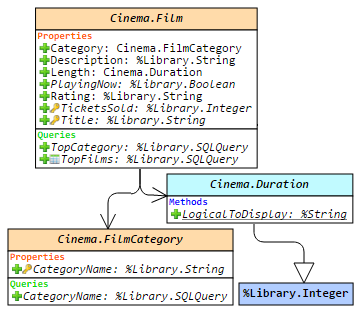
This article is a small overview of a tool that helps to understand classes and their structure inside the InterSystems products: from IRIS to Caché, Ensemble, HealthShare.
In short, it visualizes a class or an entire package, shows the relations between classes and provides all the possible information to developers and team leads without making them go to Studio and examine the code there.
If you are learning InterSystems products, reviewing projects a lot or just interested in something new in InterSystems Technology solutions — you are more than welcome to read the overview of ObjectScript Class Explorer!
So the title says it all:
What causes a broker RESPONSE to have Transfer-Encoding:chunked?
sometimes the response seems to not have the "Transfer-Encoding:chunked" but sometimes it does, what may casue this behaviour?
Hello!
So my question is quite simple, Do the different data models of Intersystems all support the ACID properties?
I assume that for the SQL data model implementation it does, But does it also work for global (i.e the hierarchical data model)?
I searched the docs and the different articles, It seems for example that here its implied that the different data models of Intersystems DO indeed support the ACID properties and allow for safe insertion, deletion etc... in concurrent operations to the server that is.
Would love to get a clarification, Thx!
Hi Community,
I have a problem I am hoping someone can help with - I have created a front-end with HTML/CSS/JS in a CSP page in Iris Studio. I am trying to use objectscript on the back end to connect to a SQL Server Database (with valid credentials), and execute a stored procedure.
I have a fileList variable that is a stored as a comma separated string through a user input textBoxContainer.
Hi community,
I am having a hard time figuring out how to properly use %ZEN.Auxiliary.jsonProvider to serialize a %RegisteredObject to JSON. Would be anyone so kind to share some simple usage example?
Thanks
Jiri
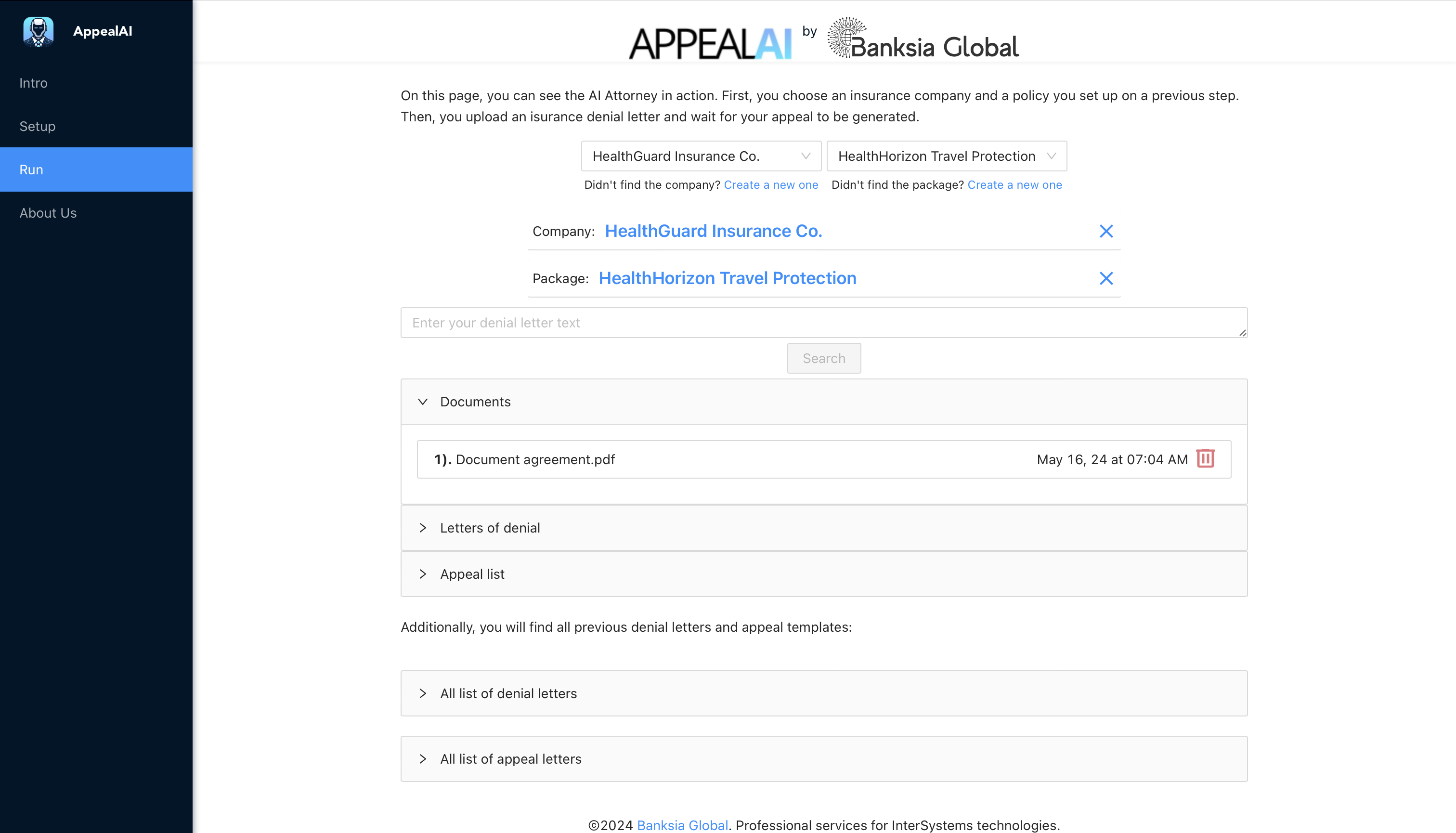
Hi all! Here I would like to share how we use vector search and GenAI with InterSystems technology. As an example, I'll describe BG-AppealAI project, which our company submitted to the InterSystems Vector Search, GenAI and ML Contest. BG-AppealAI application can write an appeal if you upload an insurance contract and the insurance company’s letter with a refusal to pay medical expenses. Of course, we are aware that at the moment AI has not reached such a level as to create ready-made legal documents.
Hi, this post was initially written for Caché. In June 2023, I finally updated it for IRIS. If you are revisiting the post since then, the only real change is substituting Caché for IRIS! I also updated the links for IRIS documentation and fixed a few typos and grammatical errors. Enjoy :)
In this post, I show strategies for backing up InterSystems IRIS using External Backup with examples of integrating with snapshot-based solutions. Most solutions I see today are deployed on Linux on VMware, so a lot of the post shows how solutions integrate VMware snapshot technology as examples.
We're looking for an experienced developer to join our team and help with the project on a part-time basis (20-30 hours a week). Required experience includes InterSystems Cache, PHP, and API. We're ready to start immediately if you're available. Fluency in English and the ability to work in the US time zone is preferred.
About Us:
Redline Coders, an IT consulting firm in California.
Position Details:
- Remote
- 20-30 hours a week
- Duration: 1-2 months
Hi all,
I have a passthru REST setup using EnsLib.HTTP.GenericService and EnsLib.HTTP.GenericOperation. Works well.
I am adding some logic to the Operation and for some scenarios I want to return an HTTP 40x response status code.
I create an httpResponse object within the Business Operation, but I can't figure out how to set the http response status code that is returned to my Posstman client that initiated the request. I set StatusCode=400, and StatusLine and ReasonPhrase properties - but when the ultimate requestor (Postman) receives the response back it is a 200 status code.
Hey everyone,
Might be a stupid question, but i was trying to set the ContentLength of the %response object in my website.
In different places (like the onPreHttp / onPostHttp etc) but none seems to work.
The reason behind it is to send a more accurate representation of the actual data I send, instead of having the overhead of the broker that adds more characters , I want the exact length of the response accounting only for the data that I actually returned.
Hey everyone.
As I have been working with IRIS (nee Caché) for some time now, I decided to take a look at how I manage things like functions and scripts that may not belong to a single namespace or environment, but should still have a home.
I have taken to creating a github repo where I can keep track of a single .cls of "general functions" that I can then drop into an environment when required.
| “At the request of the survivors, the names have been changed. Out of respect for the dead, the REST has been told exactly as it occurred.” |
Hello,
It's possible to set a value to a "variable" in SQL Cache?
Like in SQl Server or Oracle?
Thanks
I have a scenario where I send a GET request to a broker and receive a FHIR response. When I attempted to use the built-in InterSystems functions to convert this FHIR response into SDA, the transformation failed—likely because it is not a standard FHIR request.
How should I handle this situation? Is there a recommended approach to processing FHIR responses in this context?
Additionally, if I manage to convert the FHIR response into a request format, I noticed that the broker sends a Task resource.
I understand that InterSystems provides functions to facilitate transactions between FHIR and HL7 via the SDA segment. My question is:
What would be the best approach in this scenario?
Hi experts,
Please, I'd know how the best way to do freeze and thaw databases on windows.
I'll do freeze databases before snapshot and thaw after snapshot.
I think is necessary execute scripts. Please, do you know where can I found it?
Thank you.
In MySQL I have the following table:
CREATE TABLE `info` ( `created` int(11) );
And it is linked (via JDBC SQL Gateway) to Cache table mysql.info. `created` field stores unix timestamp. So when I execute this SQL in SMP:
SELECT created FROM mysql.info
I receive the following output (which is expected):
| created |
| 1435863691 |
| 1436300964 |
But I want to to display `created` field converted to ODBC timestamp format. To do that I call this SQL procedure
Class mysql.My usecase is sorting and removing duplicates and getting count from a file that has json messages as a individual rows.
I am currently planning to use pandas for this purpose as its really fast.
At the moment we're creating multiple BPLs are using a router (or another BPL) to direct to these based on a unique key modulo the amount of BPLs available, e.g. if we have 3 BPLs created.
Message key = 1 mod 3 + 1 -> BPL02
Message key = 2 mod 3 + 1 -> BPL03
Message key = 3 mod 3 + 1 -> BPL01
FIFO only matters in that each messages for each key is processed in order.
What we were considering doing is increasing the pool size to 3 and programmatically creating a BPL on each thread that processes messages that would be directed to it, rather than having to create multiple BPLs into the production.
Dear Community,
I am trying to convert a base64 encoded string to a pdf. I have tried a lot of possible ways, but never succeeded. I am able to decode the base64 using $System.Encryption.Base64Decode but I am not able to convert it and store this in a path.
Can anybody help me out here?
Thanks.
On Encounter container we want to map some data from Z segments is that possible? Presently the mapping from HL7to SDA3 is taking place from HL7 defines segments . is there a way to push the data from Z segment.
Host Variables are a rather common programming feature in many implementations of SQL.
A recent question in DC made me aware that in IRIS, Caché, Ensemble, ...
host variables just exist within embedded SQL
> You can supply host variables for Embedded SQL queries only. <
Related examples are included in the available Documentation
This is a description for a workaround if you don't / can't use embedded SQL.