So I installed Atelier, created my project, imported and compiled all my classes but now I need to import all my CSP files too but I can't find any instructions on how to do so. Just copying the files into [project]\CSp\csp is not working as they don't show up in the project tree.
Hi,
I have downloaded an evaluation copy of Cache and installed on a Windows 2016 R2 machine. I wanted to Configure different locations for DAT, WIJ, and Journal files but the installation process didn't give me such a "custom" option. I do see that the installation guide mentions the presence of such an option so I am wondering if this is a limitation of evaluation copies. Can someone please confirm?
Hi all,
Is there any bcrypt algorithm on HealthShare? We are trying to use it but ww couldn't find it.
Regards
Back in my COBOL days, there was a utility that would analyze running COBOL code and expose bottle necks and those modules that were inefficient or were executed multiple times. This was to help the programmer know where to concentrate streamlining efforts.
Is there any such utility for Caché Routines?
I am in the planning stages of making things more uniform in our routines and I would like to know what the easiest way would be to include an .inc at the beginning of each .mac routine. Has anyone written something that would open all routines and place something into the first row while leaving the rest of the routine unchanged? Thanks for any guidance you all may provide.
Points to remember before you start:
- It is not possible in a COS (Caché Object Script) job/process context to have multiple Named Pipes. It is a one Named Pipe per job/process limited line of communication.
- Named Pipes, in Caché, like most pipes on most operating systems are Unidirectional. That means you open them for either Read or Write, but not both.
Well I want to set the type of a piece in a global as a String, because when I use float numbers , the system parse them to numbers instead of use like strings and thats a little bit tricky with the sorts
Here is a code example:
ACB>s ^a("1.0012")=""// that is going to be stored as a number
ACB>s ^a("1.0011")="" // that is going to be stored as a number
ACB>s ^a("1.0010")="" // that is going to be stored as string
ACB>zw ^a
^a(1.0011)=""
^a(1.0012)=""
^a("1.0010")=""
I want to predefine the behaviour setting the type of this piece as String to solve this "behaviour"
thanks in advance
I want to override getter for a serial property as a whole, because getter code depends on a class in which a property is defined.
Let's say I have CS.Serial as a serial class:
Class CS.Serial Extends %SerialObject
{
Property Year As %Integer;

Property Month As %Integer;
}
And CS.Persistent as a persistent class:
Class CS.Persistent Extends %Persistent
{

Property data As CS.Serial [ SqlComputeCode = {set {*} = ##class(CS.Persistent).dataGetStatic()}, SqlComputed, Transient ];

/// data getter method in object context
Method dataGet() As CS.Serial
{
return .Hello guys,
I've got this piece of code which runs the method "WebMethod", that belongs to %SOAP.WebBase.cls.
It grabs the outcome from an internal webservice we have and after that, it writes into a file.
The thing is, when I browse the file contents, I realize that in the place where a special character should be, I see a question mark.
By querying the same webservice from a special soap tool called "SoapSonar" (I've been using this for years), the outcome shows up this special character (shows it properly).
So I wonder.
The class %Compiler.UDL.TextServices arrived in 2015.1, bringing us methods for exporting a class in UDL format (i.e. looking just like we're used to seeing it in Studio), and importing a UDL format definition back into a namespace. Some source control tools including our Deltanji are now able to use UDL format, resulting in diffs that are easier to understand.
Per the information at http://docs.intersystems.com/latest/csp/docbook/DocBook.UI.Page.cls?KEY… I am trying to use a call to $ZF("GETFILE") to obtain information about an OpenVMS file. But I get an <ILLEGAL VALUE> error.
For example:
w $zf("GETFILE",filename,"UIC")
reports:
My filename variable contains the full path and name of a file that I own. I hold the %All role in Cache.
This is 2012.1.5 on OpenVMS/IA64 V8.4
Any ideas what's going wrong?
The article makes an attempt to demonstrate that Atelier is not just repeating the functionality of Caché Studio on a new IDE platform (Eclipse) but goes far beyond. Due to my personal experience, and challenges in former projects I picked first XSLT Debugging. Is it an ordinary task? Not at all. Who is doing XSLT every day? Probably none of us. Than why XSLT Debugging? Simply because there are solutions in our product portfolio which are using XSLT inside and those solutions require customization. Customizing XSLT without some sort of toolkit is more than challenging. The examples of such solutions starts with HealthShare IHE message, CDA vs. SDA transformations, goes through ZEN Reports, and ends by HealthShare CDA document viewer. Is that enough reason to spend time reading the whole article through not just the teaser?
Most viewed
InterSystems Data Platforms and performance – VM Backups and Caché freeze/thaw scripts 266
Caché WebTerminal v4 Release 262
Top 20 Questions of the Year 2016 257
Command-line type routine editor? 147
Top 20 Articles of the Year 2016 143
Part I – Thoughts about package manager 118
Cache annotations mini-framework 117
Visualizing the data jungle -- Part I. Let's make a graph 105
Hi-
Im curious if there is any specific configuration that has to be done on an IIS web server to serve up RESTful web services.
I have a server that has IIS installed, with the CSP gateway. a second server that has Cache installed on it.
I have configured a web application using the Cache System Management Portal for the web services that has a dispatch class pointing to my dispatch class.
I have created an application mapping in my CSP Gateway Management Portal on the web server such that url's with /webservices prefix are routed to my cache server.
Hello experts,
Good afternoon. I am a new member here and was wondering if any of you can help me with creating my own instance of Healthshare with MPI. This will serve as a sandbox and a learning environment for me. What is the minimum requirement to have such an environment setup, meaning will I only need to setup HSBUS, HSREGISTRY(HUB), MPI, HSACCESS, and EDGE Gateway(s)? If so, how do I properly set them up without just installing an environment with ENSDEMO?
In the table/class HS_Registry.document there is a column/property named RepositoryUniqueId. There are about 14 unique values, which pretty much lines up with the number of our "Push" (Provide & Register) participants and thus unique document repositories. However, these values just look like OIDs. I've been searching for over an hour and I can't find anywhere that will provide me some context to these "Repository IDs".
Anyone have ideas or suggestions where I could find this info?
Hi,
Initially when setting up a cache instance one creates or imports the user/ resources roles etc .
After the Mirror has been activated you can add users, resources etc. But when trying to add new SQL Table privileges to a namespace where the databases are mirrored it seems that you are not able to , Getting error:
ERROR #5002: Cache error: <DIRECTORY>SQLUserPrivsExecute+13^%SYS.SQLSEC
SOURCE ELEMENT: %CSP.UI.Component.SQLTables (SQLTables)
How do you maintain these privileges?
Hello community,
I'm triing to use perl with Caché on CentOS 7.
- Caché is installed and working
- Reading doc for perl module
- Adding path of Caché/bin in PATH and LD_LIBRARY_PATH as suggested in doc
- Creating mMakefile (perl Makefile.PL)
- Success at compilation (make)
- Fail at test (make test). And return the following message:
Can't load 'blib/arch/auto/Intersys/PERLBIND/PERLBIND.so' for module Intersys::PERLBIND: libcbind.so: cannot open shared object file: No such file or directory at /usr/lib64/perl5/DynaLoader.pm line 190.
at test.pl line 10.
I'm having trouble creating a view in cache with query like:
SELECT column1, column2, column 3
FROM table
WHERE
(column1, columnn 2) IN (SELECT c1, c2 FROM table2 GROUP BY c1)
ORDER BY column1
I think the problem is in where clause, because it cannot take two columns .
the exact error: [SQLCODE: <-1>:<Invalid SQL statement>] [%msg: < ) expected, , found^ (column1,>]
Any idea on how to solve this?
Thank you.
I wanted to parse an EDI 837 X12 document to extract a value from CLM segments. We tried with the below DTL and did not get it working. Appreciate any ideas.
<assign value='source.{loop2000A().loop2000B().loop2300().CLM:ClaimSubmittersIdentifier}' property='target.ClaimInvoiceNo' action='set' />
</transform>
I'll be doing my first xml transform soon and I'm hoping to find a good graphical mapping tool to generate the XSLT. Does anyone have any recommendations? I've tried the demo of Altova MapForce and it's exactly what I want but it's super expensive. Working for a non-profit it would be nice if I could find a free or cheap solution.
Many mobile applications that enable users to get information about road fines and pay them, send notifications about newly added fines. This functionality can be efficiently implemented using push notifications sent to users’ devices.
Our application was not an exception. The server side is based on the Ensemble platform that offers integrated support of push notifications starting from version 2015.1.
Hello,
I am a new member here . Could you help me to resolve the problem?
While sending request to WebServer I'm getting error: ERROR #6235: Unexpected namespace for tag CardData :
<CardData xmlns="http://111.12.123.11/">
<IBAN xmlns="">-</IBAN>
<ACCOUNT_BALANCE xmlns="">0.00</ACCOUNT_BALANCE>
<AVAILABLE_AMOUNT xmlns="">0.00</AVAILABLE_AMOUNT>
<CREDIT_LIMIT xmlns="">0.00</CREDIT_LIMIT>
<MAXIMUM_INSTALMENT xmlns="">0.
I've already tryed
- writing in the sockect
- disconnect it after a predefined period of inactivity
I would like to know if there is another way to do it
Hello devs,
I'm facing an issue with one of my business services, which basically grabs a XML from a webservice (which in turn reads the data from the caché database) and does some processing afterwards. The XML content (which is formed of some of the table fields values) contains a special character: ‘ (left single quote)
Hi all!
I'm developing a mini-framework to implement annotations in Cache. I want to support two kind of annotations: metadata and method decorators. I've got stuck trying to implement the second one.
Metadata
With metadata annotations I can add metadata to any kind of target. A target can be a method/classmethod, parameter, property and class.
For example:
Class cache.TestClass Extends lib.Annotations
{

/// @Author(UserName = "me")
ClassMethod Test()
{
Write "Test!",!
}

}
Then, after compiling the class "cache.
Hi all,
We have a big problem with spanish accent and special characters using Data Transformation (HL7 Messages).
We have some DT to transform HL7 messages to other type (OUL^R22 To OML^O21) so it copys the PID segment to the new one, but if in the PatienName field has any special character, the transformation stops and it not continues with the transformation.
This is the message
MSH|^~\&|B11111111|000000000C|LAB|TSFLAB|20170117163714||OUL^R22|ID1||2.
Imagine that your .NET project uses the Caché DBMS and you need a fully-functional and reliable authorization system. Writing such a system from scratch would not make much sense, and you will clearly want to use something that already exists in .NET, e.g. ASP.NET Identity. By default, however, this framework supports only its native DBMS – MS SQL. Our task was to create an adaptor that would let us quickly and easily port Identity to the InterSystems Caché DBMS. This work resulted in creation of the ASP.NET Identity Caché Provider.
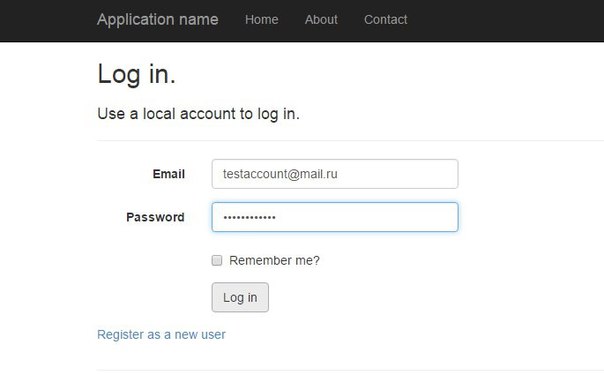
MSSQL is the default data provider for ASP.
Hello, I'm trying to debug web app in Atelier remotely.
In Studio I could use "Set as debug target" option for this purposes. The class launches with CSPDEBUG option in browser and everything goes fine. But I can't find how to do this in Atelier.
Can anyone help me?
Hi, All!
What is the calculated measure expression for the percentage of a member?
Say in Holefoods I want to see in a Cols Online sales in Revenue, All the revenue and % of Online sales for the Revenue?
I have the following:
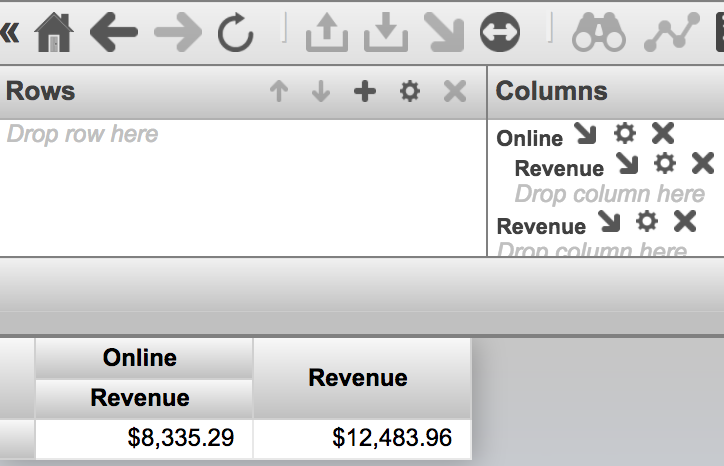
With expression:
SELECT NON EMPTY {NONEMPTYCROSSJOIN([Channel].[H1].[Channel Name].&[2],[Measures].[Amount Sold]),[Measures].[Amount Sold]} ON 0 FROM [HOLEFOODS]
How can I add the percentage of All in Revenue for Online channel?