Hi, Community!
If you need to help providers meet a payer's documentation requirements, see how the Documentation Templates and Rules (DTR) module of the InterSystems Payer Services ePrior Authorization solution can help:
.png)
InterSystems IRIS for Health™ is the world’s first and only data platform engineered specifically for the rapid development of healthcare applications to manage the world’s most critical data. It includes powerful out-of-the-box features: transaction processing and analytics, an extensible healthcare data model, FHIR-based solution development, support for healthcare interoperability standards, and more. All enabling developers to realize value and build breakthrough applications, fast. Learn more.
Hi, Community!
If you need to help providers meet a payer's documentation requirements, see how the Documentation Templates and Rules (DTR) module of the InterSystems Payer Services ePrior Authorization solution can help:
Hey Community,
We're happy to invite you to a LinkedIn Live session in Dutch
🎤 Data exchange in healthcare according to the FHIR standard with Python 🎤
Event details:
📅 Date: Thursday, November 27th
🕓 Time: 1:30-2:15 PM EST

Using embedded Python while building your InterSystems-based solution can add very powerful and deep capabilities to your toolbox.
I'd like to share one sample use-case I encountered - enabling a CDC (Change Data Capture) for a mongoDB Collection - capturing those changes, digesting them through an Interoperability flow, and eventually updating an EMR via a REST API.
.png)
Hi,
I'm using the iris for health community edition and I cannot seem to get the FHIR server configuration UI to show up. I was able to create a FHIR server programaticlly but none of the user interface features that the installation guide talks about are available. Once I was created the server I was able to see a Bulk FHIR Coordinator in the management portal, ut that's it. Are the UI features not available in the community edition or do they need to be enabled somehow?
This is the guide that I am using https://docs.intersystems.com/irisforhealth20251/csp/docbook/DocBook.UI.Page.cls?
Hey Intersystems Community!
I'm trying to get IRIS to serve static files, including security and redirect to login if no session is present.
This is the flow I am trying to accomplish:
For CSP applications this seems to work. I can open "http://localhost:52773/csp/sys/sec/%25CSP.UI.Portal.Applications.Web.zen?
I have a small web application developed on angular js hosted on IRIS using web application option from management portal.
I am looking out for a login page which can simply use Health Share authentication to get user login.
Simple CSP login page to come when application is launched .
I have a quite complex FHIR Implementation Guide (IG) which is based on several other FHIR IGs. It's likely the versions of IGs conflict with each other.
From what I understand, I would need to load in all the other FHIR IG's first?
I don't actually need FHIR profiles to be in our FHIR Repository - I'm just after terminology and the examples for our test system.
Is it possible to load a FHIR IG just as data? (I think I mean here, ignore the FHIR profiles and dependencies between them)
You may have noticed that to configure a mirror for InterSystems IRIS for Health™ and HealthShare® Health Connect there is a special requirement. I wanted to go through it step by step in this article.
This assumes you have already configured the second failover member and confirmed a successful failover member status in the mirror monitor:
.png)
Step 1: Enable HS_Services user (on backup and primary) .png)
Step 2: Switch to Namespace HSSYS and go to Interoperability > Configure > Credentials.
i am looking for a Class or Function to check if a Base64 document is valid ( will results into Full file after decoding or not ),
i was not able to find any predefined class in Objectscript ,
has anyone worked on something similar before ?
any advice will be welcomed
I would like to share with you a little trick to customize how messages are displayed in the Message Viewer. In particular, how you can display messages as JSON (instead of the default XML representation).
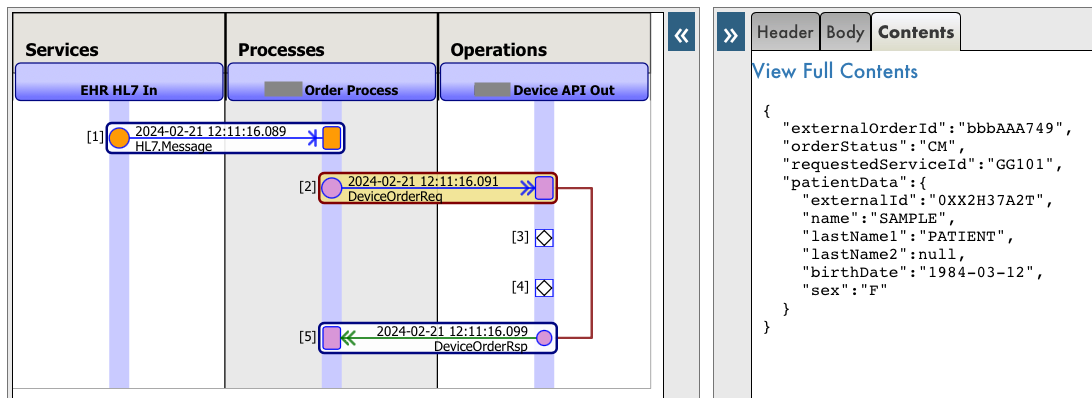
Messages are objects that are used to communicate interoperability productions components. In my example I have defined a message that later I serialize as JSON to send to an external API. This message is defined as a regular message and also as a %JSON.Adaptor so I can export / import directly to or from JSON.
Class interop.msg.DeviceOrderReq Extends (Ens.Request, %JSON.In this article, we will explore various approaches to extending and customizing the behavior of InterSystems IRIS (and IRIS Health) built-in interoperability message routers.
Message routers perform one of the core functions of Enterprise Application Integration (EAI) and are among the most frequently used business processes in interoperability productions.
Hello everyone! 👋
I have a question regarding roles and resources.
To give you some context: I have a user who has been assigned only the role %HS_UsageDashboard_Access.This allows them to access the dashboards correctly (by giving the direct URL). Then, if I try to access the Management Portal with this same user, I can log in with no access to any resources within it (as expected).
The point is that I would like to completely deny him access to the Management Portal, while allowing him to view only the dashboards, as expected from the %HS_UsageDashboard_Access role.
When using a EnsLib.RecordMap.Service.FileService business service, is there a way to tell which row number that is being read in? I want to read in a csv, but on the first record, trigger a truncate on the External SQL Table that it is being written to through JDBC.
Thanks
Scott
Following 2 local Webinars we had focused on VS Code ["Intro" and "Beyond Basics"; in Hebrew], I prepared for the participants some related links of relevant resources which we sent as a follow-up. Sharing them here as well for the benefit of the Community.
You are all of course welcome to add more useful resources.
When I started my journey with InterSystems IRIS, especially in Interoperability, one of the initial and common questions I had was: how can I run something on an interval or schedule? In this topic, I want to share two simple classes that address this issue. I'm surprised that some similar classes are not located somewhere in EnsLib. Or maybe I didn't search well? Anyway, this topic is not meant to be complex work, just a couple of snippets for beginners.
The Interoperability user interface now includes modernized user experiences for the DTL Editor and Production Configuration applications that are available for opt-in in all interoperability products. You can switch between the modernized and standard views. All other Interoperability screens remain in the Standard user interface. Please note that changes are limited to these two applications and we identify below the functionality that is currently available.
To try out the new screens prior to upgrading, you can download the 2025.
When exporting using the Export() method of the %Library.Global class, if the export format (fourth argument: OutputFormat) is set to 7, "Block format/Caché block format (%GOF)," mapped globals cannot be exported (only globals in the default global database of the namespace are exported). To export mapped globals in "Block format/Caché block format (%GOF)," specify the database directory to which you want to map them in the first parameter of %Library.Global.Export().
An example of execution is shown below.
Hi, Community!
Looking for an efficient way to allow providers to see whether prior authorization is required? See how the Coverage Requirements Discovery (CRD) module of the InterSystems Payer Services ePrior Authorization solution can help:
What is XML?
XML(eXtensible Markup Language) is a flexible, text-based, andplatform-independentformat used to store and transport data in a well-structured way that is both human- and machine-readable. XML permits users to define custom tags to describe the meaning and organization of their data. For example: <book><title>The Hitchhiker's Guide</title></book>.
An XML document is self-descriptive and structured as a hierarchical tree of elements. Every document has a single root element that encapsulates all other content.
InterSystems IRIS Adaptive Analytics version 2025.4.1 is now available from the InterSystems Software Distribution page. This release includes AtScale 2025.4.1 and is compatible with the existing Adaptive Analytics User-Defined Aggregate Function (UDAF) file - 2024.1. New features included in AtSCale's 2025 releases include:
For one of our customers I had to integrate with the AFAS imageconnector endpoint /imageconnector/{imageId}?format={format}. This endpoint returns in a json message with the image as a base64-encoded string property, in addition to the mimetype for the image:
/// Image Object
Class Mycustomer.Model.AfasGet.Image Extends (%SerialObject, %XML.Adaptor, %JSON.Adaptor)
{
/// file data (base64 encoded)
Property Filedata As %String(%JSONFIELDNAME = "filedata");

/// MimeType e.g.When we create a FHIR repository in IRIS, we have an endpoint to access information, create new resources, etc. But there are some resources in FHIR that probably we wont have in our repository, for example, Binary resource (this resource returns a document, like PDF for example).
I have created an example that when a Binary resource is requested, FHIR endpoint returns a response, like it exists in the repository.
First of all, we need a Namespace and a FHIR endpoint. After this, we need to configure an Interoperability production that will be connected to the FHIR endpoint.
IRIS offers a dedicated feature for storing and retrieving JSON documents using DocDB, without requiring a predefined schema.
Developers often need a quick and intuitive way to browse, create, and edit documents without switching between multiple tools or writing repetitive code. To solve this, I created iris-docdb-ui — a CSP-based open-source application that provides a clean, responsive interface for interacting with DocDB effortlessly.
Over time, while I was working with Interoperability on the IRIS Data Platform, I developed rules for organizing a project code into packages and classes. That is what is called a Naming Convention, usually. In this topic, I want to organize and share these rules. I hope it can be helpful for somebody.
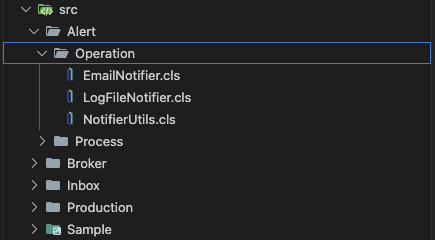
Disclaimer: This guide is a good fit for Interoperability projects. When you have integrations, data flows, when you use IRIS for ETL processes, etc. Overall, when your code is combined with Productions.
Hello,
I am currently facing the task of retrieving or sending HL7 messages from a web API. Since we only send HL7 messages via internal sockets, web APIs are relatively new to me.
The following is my plan for the new interface:
I have created a new custom business service that periodically sends requests to a business process. In this business process, the HTTP request (HTTP.GenericMessage) is then created from scratch. The special feature is the "Authorisation" header field, where a signature is inserted, which consists of a base64-encoded hash value.
In InterSystems IRIS 2024.3 and subsequent IRIS versions, the AutoML component is now delivered as a separate Python package that is installed after installation. Unfortunately, some recent versions of Python packages that AutoML relies on have introduced incompatibilities, and can cause failures when training models (TRAIN MODEL statement). If you see an error mentioning "TypeError" and the keyword argument "fit_params" or "sklearn_tags", read on for a quick fix.
Am also asking this question on the extension's GitHub page: Request textDocument/documentSymbol failed. Error: name must not be falsy · intersystems-community/vscode-objectscript · Discussion #1530 - but suspect more eyes will see it here, which might help gather additional information.
Tried to compile some legacy ObjectScript code via Import/Compile in VS Code using the vscode-objectscript extension. Getting an error, and the content of the file is left changed on the filesystem simply by being compiled.
We are trying to mark a hl7 nack as "completed" to ignore an error and not generate the alert.
We can remove from adding a managed alert or add another router in
When Nack of CR of
Date of birth in PID.7 must not be empty
We tried via this but i think it's only for an actual IRIS alert errror not the HL7 error code/description
E*Date of birth in PID.7 must not be empty=C,:?CR=C,:?R=RF,:?E=S,:~=S,:?A=C,:*=S,:I?=W,:T?=C