#Code Snippet

6 Followers · 302 Posts

Code snippet is a programming term for a small region of re-usable source code, machine code, or text.

Article Danny Wijnschenk · Nov 5, 2017 4m read

This is a series of programming challenges for beginners and experienced Caché programmers.

For an introduction : goto to article https://community.intersystems.com/post/advent-code-2016-day1-no-time-t…

The challenge of day 5 is to calculate a password of 8 characters by finding the MD5 hash of the input and an increasing integer index.
The password is constructed by taking the 6th character of the first 8 hashes that start with 5 zeroes (in hex representation).

1
0 526
Article Danny Wijnschenk · Nov 6, 2017 3m read

This is a series of programming challenges for beginners and experienced Caché programmers.

For an introduction : goto to article https://community.intersystems.com/post/advent-code-2016-day1-no-time-t…

In today's challenge, you have to repair the communication with Santa : messages are coming in, but jammed.
By using repetition code (see also https://en.wikipedia.org/wiki/Repetition_code), you can find out what's in the message : by sending the same message a number of times, you can calculate which characters are most frequent on each position and find the most likely message.

1
0 476
Article Danny Wijnschenk · Nov 8, 2017 3m read

This is a series of programming challenges for beginners and experienced Caché programmers.

For an introduction : go to article https://community.intersystems.com/post/advent-code-2016-day1-no-time-t…

The challenge of today has nothing to do with real two-factor authentication ! (sorry if you came to this article by searching the real thing)

For the complete explanation of the challenge, go to http://adventofcode.com/2016/day/8.

1
0 333
Article Danny Wijnschenk · Nov 7, 2017 5m read

This is a series of programming challenges for beginners and experienced Caché programmers.

For an introduction : goto to article https://community.intersystems.com/post/advent-code-2016-day1-no-time-t…

Today's challenge on http://adventofcode.com/2016/day/7 is about checking for valid IPv7 addresses with TLS support. (No, it has nothing to do with real ip addresses which are at most ipV6 or real TLS, but just a way to keep you busy coding & hacking!)

2
0 513
Article Danny Wijnschenk · Nov 3, 2017 4m read

This is a series of programming challenges for beginners and experienced Caché programmers.

For an introduction : goto to article https://community.intersystems.com/post/advent-code-2016-day1-no-time-t… or look at the http://adventofcode.com/ website.

In today's challenge, you have to find out how many 'valid' triangles you find on the walls of the Easter Bunny HQ.
(you can find the input on the adventofcode website : http://adventofcode.com/2016/day/3/input)

A sample of the input looks like this :

3
0 707
Article Danny Wijnschenk · Nov 2, 2017 4m read

Advent of Code is a series of programming challenges for beginners and experienced Caché programmers.

For an introduction : look  at article https://community.intersystems.com/post/advent-code-2016-day1-no-time-t…

In this challenge, you need to find a password using instructions to move on a keypad.
Instructions can be U(p), D(own), L(eft) and R(ight).

You start at button 5 on a keypad like

1 2 3
4 5 6
7 8 9

each line of instructions lead to one digit of the password.
Full description can be found at http://adventofcode.com/2016/day/2

0
0 427
Article Danny Wijnschenk · Nov 1, 2017 8m read

Advent of Code is a series of 25 small programming challenges, it's an ideal way for beginners to start learning a computer language, and for advanced people to sharpen their programming skills.

There are small and bigger puzzles, which you can solve typically in half an hour to a few hours. (Looking at the leaderboard, the top aces can do them in less than 10 minutes.)

Advent of Code is created by Eric Wastl, you can find all info on https://adventofcode.com/.

0
1 1442
Question Murillo Braga · Aug 31, 2017

Hello guys,

I was wondering whether there is another alternative to extracting a certain string out from a bigger one, rather than using the function $piece.

Maybe regular expressions? Another specific function?

Example:

Big string:

NAD+SLA+++TextIsHereNAD+SLA+++TextIsHere

String I want to extract:

TextIsHere

Function I'm already using:

w $piece("NAD+SLA+++TextIsHereNAD+SLA+++TextIsHere","NAD+SLA+++",2) > Will ouput TextIsHere
w $piece("NAD+SLA+++TextIsHereNAD+SLA+++TextIsHere","NAD+SLA+++",3) > Will ouput TextIsHere

Thanks!

3
0 845
Question Eduard Lebedyuk · May 24, 2017

I'm aware of two ways to get list of files in a dir:

set dir = "C:\temp\"
set rs = ##class(%File).FileSetFunc(dir, , , 1)
do rs.%Display()

and:

set dir = "C:\temp\"
set file=$ZSEARCH(dir_"*")
while file'="" {
   write !,file
   set file=$ZSEARCH("")
}

Yet they bot return only files and directories in a current directory, but not files in subdirectories.

I suppose I call one of these recursively, but maybe there's a better solution?

25
1 4265
Question Evgeny Shvarov · May 26, 2017

Hi!

I'm saving object instance using RestForms.

RESTFormsUI calls %Save() for me, which is great. But I want to set the property CreationDate with the current date for every new record being inserted.

So  object callback implementation seems as a reasonable option. I did the following:

Method %OnBeforeSave(insert as %Boolean) As %Status [ Private, ServerOnly = 1 ] 
{

 if insert s ..CreationDate=$H

 q $$$OK

}

And it works fine.

But Documentation says I'd better use %OnAddToSaveSet()

What are you using for the callbacks in similar cases?

15
0 1071
Article Sean Connelly · Mar 28, 2017 2m read

Inspired by the article "Declarative development in Caché" that's still trending  on the dev com. The OP explored a functional style of iterating over a collection. A comment today suggested "Caché would need syntax support for anonymous functions".

With Macros you can kind of get anonymous like syntax using dot notation.

This is not production code, but it does work. First the macros...

15
0 796
Article Orion Correa · Mar 14, 2017 2m read

A feature I recently used in working on ISC internal applications is the ability to send emails on behalf of someone. This is useful when generating system notifications from an application when you want some of them to show up as being from a specific person, perhaps posting comments on a work ticket.

In my case I was updating our facilities work order system for tracking requests. Normally all notification emails are sent from the same noreply email address. I wanted to change that so comments added from the original requester would show up as being from them and stand out. 

2
0 1101
Article John Murray · Mar 2, 2017 1m read

As more people join Developer Community, and with increasing efforts to promote code sharing, I'd like to draw fresh attention to this post I wrote a year ago. It spotlights a feature within the class compiler which is both useful and dangerous. When importing code (e.g. from an XML export of classes received from someone), it's worth considering the risks.

Even if that post doesn't seem relevant to you at the moment you may wish to note it for the future. A handy way of doing this is to click the star icon at the end of it.

1
0 343
Article Timur Safin · Feb 2, 2017 19m read
This is the second part of my long post about package managers in operating systems and language distributions. Now, hopefully, we have managed to convince you that convenient package manager and rich 3rd party code repository is one key factor in establishing of a vibrant and fast growing ecosystem. (Another possible reason for ecosystem success is the consistent language design, but it will be topic for another day.)

In this second part we plan to discuss the practical aspects of creating a package manager in general and their projection to the Caché database environment.

23
1 1483
Article Steve Wilson · Feb 3, 2017 3m read

Points to remember before you start: 

  1. It is not possible in a COS (Caché Object Script) job/process context to have multiple Named Pipes. It is a one Named Pipe per job/process limited line of communication. 
  1. Named Pipes, in Caché, like most pipes on most operating systems are Unidirectional. That means you open them for either Read or Write, but not both. 
0
0 881
Question Evgeny Shvarov · Jan 24, 2017

Hi, All!

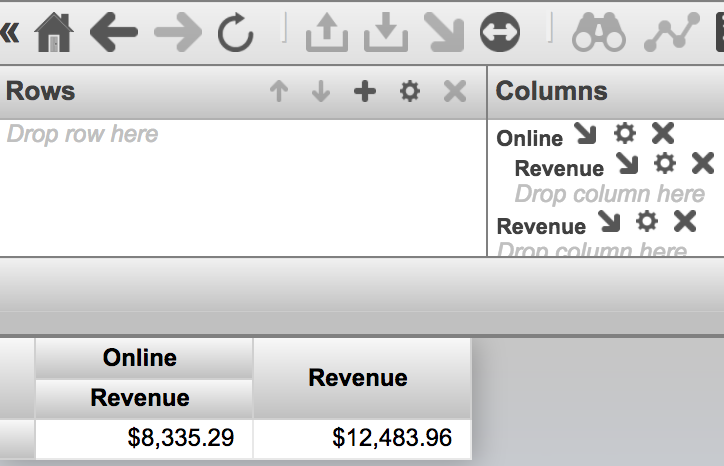
What is the calculated measure expression for the percentage of a member?

Say in Holefoods I want to see in a Cols Online sales in Revenue, All the revenue and % of Online sales for the Revenue?

I have the following:

With expression:

SELECT NON EMPTY {NONEMPTYCROSSJOIN([Channel].[H1].[Channel Name].&[2],[Measures].[Amount Sold]),[Measures].[Amount Sold]} ON 0 FROM [HOLEFOODS]

How can I add the percentage of All in Revenue for Online channel?

5
0 594
Question Evgeny Shvarov · Dec 18, 2016

Hi, community!

Consider you need to exclude substring(s) from a string.

I did it with the following snippet:

/// excludes all the substrings from the string
ClassMethod ExcludeSubstring(substr,str as %String) As %String

{

 while ($L(str,substr)>1) {

 set str=$Piece(str,substr)_$Piece(str,substr,2,*)

            }

 quit str

}

So, for example:

USER> set str=”ExcludemeGoodstringExcludemeExcludemeGoodstring” w ##class(User.Utils).ExcludeSubstring(“Excludeme”,str)

GoodstringGoodstring

Is this the optimal approach or I reinvented the wheel?

2
0 498
Question DQ Hu · Nov 7, 2016

Environment: Cache for Windows (x86-64) 2015.2.2 (Build 811U) Thu Mar 3 2016 12:55:48 EST [HealthShare Modules:Core:14.01.351 

When try the following to send back SOAP Fault, is the following correct way?

Set fault=##class(%SOAP.Fault).%New()
Set fault.faultcode=$$$FAULTServer
Set fault.faultstring="Processing Error"
Set fault.detail= "Error on server"
Do ..ReturnFault(fault)

Got the error 

ERROR #5659: Property '%ZHSLIB.Audit.LogParticipant::Log'
required
1
0 811
Article Sylvain Guilbaud · Oct 19, 2016 7m read

Context: 

mirrored configuration with one primary member and one async member (without failover/backup member)

Purpose:

replace the CACHE.DAT of a mirrored database on the primary member.

 Steps to follow:

  1. on the PRIMARY
    1. remove the database to replace from the mirror
    2. dismount the database
    3. copy the new database
    4. mount the database
    5. add the database to the mirror
    6. backup the database (external backup)
  2. on the ASYNC
    1. remove the database to replace from the mirror
    2. dismount the database
    3. restore the new database backup from the PRIMARY
    4. mount the database
    5. activate database
    6. catch up database
3
0 1081
Article Jose Ruperez · Oct 13, 2016 1m read

Here you have an easy way to write and execute COS code from your unix scripts. This way one does not need to write routines or even open Studio or Atelier. It can be an option for simple and small actions for instance things like installation tasks or compiling.

See sample bash script (compile.sh) to compile classes:

2
0 995