Would anyone recommend techniques on how to limit the amount of calls that external groups are making to our resources?
Recently we had an issue where one of our ODBC accounts maxed out the license to one of our DB servers (50 max).

InterSystems Caché is a multi-model DBMS and application server. See more details here.
Would anyone recommend techniques on how to limit the amount of calls that external groups are making to our resources?
Recently we had an issue where one of our ODBC accounts maxed out the license to one of our DB servers (50 max).
I have been tasked with creating a class that will handle error logging in a consistent manor for an application I am working on. The need is to have all variables in the calling method logged along with some other information.
The example given was zwrite which is exactly what I need, however, I somehow need to capture the output of ZW and put it into a database table. Any easy way to capture this data? I was able to dump ZW to a file, but that is not ideal.
Any help is appreciated!
Hello Global masters!
I developed Web with Spring framework (JAVA, Jdbc Cache) and I wrote SQL when I made it.
And Window program with VB6, Cache Object and VisM.
Is there a significant performance gap? SQL and Cache Object?
same function, same computer performance just different Java and VB6.
Thank you.
Minsu.
Hello Global masters.
I am junior developer about Intersystems cache in South Korea.
I want to develop process management program on server.
My code :
TESTPID(IP) ;
#include %syPidtab
Set Rset = ##class(%ResultSet).%New("%SYS.ProcessQuery:ListPids")
d Rset.Execute()
&sql(SELECT ClientIPAddress, Pid INTO :ClientIPAddress, :Pid
FROM %SYS.ProcessQuery
WHERE ClientIPAddress = :IP)
While Rset.Next()
{
i SQLCODE'=0 w !,"SQL Error "_SQLCODE continue ; 100 means process does not exist (halted)
I Rset.GetData(1) = Pid D
. w !,Rset.GetData(1)," ",ClientIPAddress," ",Pid
//Set rs=$SYSTEM.Process.Terminate(Pid)
//If rs'=1 {
// Write "Terminate Fialure "_" Pid "_Pid,!
//}
//Else {
// W "Sucess",!
// }
// }
}
d Rset.Close()
QInterSystems is pleased to announce the availability of these maintenance releases
·Caché and Ensemble 2017.1.3
·HealthShare Health Connect v15.03 for 2017.1.3
For Caché and Ensemble
·Oracle Solaris 10, 11 for SPARC-64 and Oracle Solaris 10, 11 for x86-64 platforms are now approved for release. They were not available for earlier 2017.1 releases.
·The full list of corrections can be found in the release notes
·The version number of the kits is 2017.1.3.317.0
HealthShare Health Connect v15.03 on core technology 2017.1.3.317.
Hi,
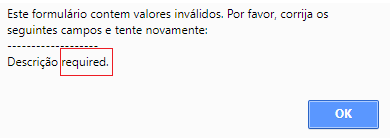
someone knows how to change the "required" to portuguese.
it's a property(Required) on persistence.
i want to change from "required" to "obrigatório"
I need to redirect user to a url, which is 5000+ characters long.
To do that I set:
set %response.Redirect = url
However, in the browser I receive this header:
LOCATION: <First 3972 characters of the 'url' variable>
In WriteHTTPHeader method of %CSP.Response, where the LOCATION header is
written:
After I added a buffer flush, after the above-mentioned line:
Then in browser I received full, correct value of a LOCATION header.
Is there a better solution?
It's a rest API, so maybe there's some callback method I can override to flush the output buffer? Set device mode? Change buffer size?
My new question regards connecting to the external database to insert the data. I have the following code:
#include %occInclude// winsurge6// insert winsurge data into cancer registry database
Compiling routine : winsurge6.MAC
ERROR:winsurge6.MAC(30) : SQLCODE=-30 : Table 'WINSURGE_RESULT_FACT' not found within schemas: CANREG,SQLUSER
Detected 1 errors during compilation in 0.026s.
I'm not sure what this error indicates. I've tried a few different things regarding the #SQLCompile Path=canreg and the
&sql(WINSURGE_RESULT_FACT
Hi, Community!
I have a problem with a table while move it from Cache to SQL Server by SSIS tool, the table was moved but there is an issue in one of the feild, it's bring only the first 2 digit and truncate the other. The datatype for this feild in the Cache is VARCHAR and the same thing in the SQL, I tried multiple datatype (char, number, intger, text.etc) and multiple tool to bring the table again (ESF, SQL Server 2014 Import and Export Data and FullConvert) and the same issue appear. The version of the Cache system is : Cache for UNIX (Oracle Solaris for SPARC-64 U2/M) 2012.
If your looking to develop a Node.JS to Caché library then you might want to consider using a pure TCP connection with a custom message transport protocol. This bypasses the native Caché connector libraries that can get stale with a new release.
Node.JS is very good at non blocking code development, so building a performant solution isn't that complex.
The idea behind this example is that we have a node HTTP server that maps HTTP requests to a Caché TCP connection.
I was following the Node.js: installation and connection test for use with Caché and was wondering how to populate a subscript with a value calculated by a built-in COS function eg. $HOROLOG without having to write wrappers for every built-in function or use temporary global storage. Any ideas?
During programmatic classes compilation performed by the code like this:
set status=$system.OBJ.Load(updaterFile,"cruk-d",,.resList)
strange messages appear in console log, e.g.
05/06/18-15:54:12:424 (308512) 0 oops: was expecting crc 0x21e96e85,5a4c8b2c for rtn (Update.Import.1) rbufnum-15523
...
05/06/18-16:17:45:305 (4224) 0 oops: was expecting crc 0x21e96e85,5a4c8b2c for rtn (Update.Import.1) rbufnum-15523
05/06/18-16:22:30:485 (4224) 0 oops: was expecting crc 0x21e96e85,5a4c8b2c for rtn (Update.Import.1) rbufnum-15523...(repeated 3 times)
If you have ever issued the command ccontrol help to discover what ccontrol is capable of, perhaps you noticed this section:
Syntax:
ccontrol default
Description:
Display the name of the default Cache instance,
if one has been designated.
I need to create a document with a root like this:
<?xml version="1.0" encoding="UTF-8"?>
<RCMR_IN200002FI01 xmlns="urn:hl7-org:v3" ITSVersion="XML_1.0">
...

</RCMR_IN200002FI01>
However, the CreateDocument in %XML.Document only allows namespace as an additional argument.
I did override this method, but trying to do something like
Do document.SetAttribute("ITSVersion",,"XML_1.0") only results an empty document with the <?xml> declation only.
-Pasi-
Question:
My journal files are growing rapidly - what could be the cause? How can I minimize the phenomena?
Any insights, news, alternatives or experience about sequence pattern querying like with Oracle's MATCH_RECOGNIZE, more declarative, less simple direct COS way? Both obvious solutions (shadowing data to oracle cloud or implementing MATCH_RECOGNIZE compiler in COS from scratch) seem big overkill.
Hi community.
I want to create a custom list inheriting %ListOfDatatypes in order to implement some methods like Map, Filter, ForEach, but I have some questions.
Just to mention, I have already read the topic about DeclarativeCOS.
When I define a property like following, caché uses %Collection.ListOfDT or %Collection.ListOfObj, as it's shown in the documentation
I have a lookup table and record batch Table I would like to do a count on the records stored in that batch by counting the number of records in that batch that have a certain key on the responseKey column. This column keys are stored in the look up table for comparison. So I would like to do a join sql pivot that will use my keys stored in the lookup as columns and count as values
so far I have managed to do this but this is not efficient I would like to fire that sql once not on every count
SELECT * FROM
(
SELECT tMatch.DataValue, Count(*)
FROM ResponseRMAP.Record bRecord
JOIN Match ON tMatch.TableName = 'Match' AND tMatch.KeyName = bRecord.ResponseCode
WHERE bRecord.%ParentBatch = 55

)
Hello all,
I'm attempting to create a pop-up box with "Yes" and "No" for the buttons. I currently have a JavaScript confirm box but it has "OK" and "Cancel" as the response buttons. I have read that JQuery is a way to do, but is there a possibility of doing this with CSP instead of JQuery?
Thanks
Hello ! I am still trying to get the sample email working on my computer. I am getting the below error. I have tried a number of things and researching it on the net. I am not sure what I am doing wrong.

Below is a sample class that I have been testing.
Class email.test Extends %Persistent
{
// set myval= ##class(Package.Class).Method(Args)
// set myval= ##class(email.test).XSendSimpleMessage("")
ClassMethod SendSimpleMessage(server As %Net.SMTP) As %List
{
Set server=##class(%Net.SMTP).%New()
Set server.smtpserver="Smtp.aol.
Hi WRC,
In a terminal session it is possible to ZLOAD a MAC or INT program and ZP to display it.
Please advise - Is there a similar way of doing this for a CLS?
Best,
Wil
Currently, we are receiving an alert that states, "Write Daemon still on pass 31". It's been that way for a few hours.
I was wondering if it is possible to identify what the WD has left to work on so that we can see how we can reduce this and possibly identify if there are issues with the way something is written.
Thanks in advance for any insight.
Hi,
I'm trying to export a global with this library %Library.Global with this call:
Do ##class(%Library.Global).Export(pstrNamespace, pstrGlobalName, pstrOutputPath,,,"-d")
When I call this method $ZERROR is setted to "<NOTOPEN>OpenDev+15^%Wprim"
Can someone tell me where is the problem on this?
Thanks a lot
Hi,
Is it possible to call a REST service from a business operation in Cache? Does anyone have a sample for me to take a look at.
Note:
I am new to Cache, just started learning:)
Sometimes, we need to copy part of the properties of an object into a different one.
The simplest thing would be to do the following:
Set obj1.FirstName = obj2.FirstName

Set obj1.SecondName = obj2.SecondName
What happens if the object contains a large number of properties? or we just want to extract an important group of data, and complement the information in another object?
Having the following classes:
Class Kurro.PersonalInfo Extends %Library.SerialObject
{
 /// Code of personal
 Property Code As %String;

 /// First name of personal
 Property FirstName As %String;

 /// Second name of personal
 Property SecondName As %String;

 /// Date of birthday of personal
 Property DateOfBirthday As %DateTime;

 /// Passport ID number
 Property PassportId As %String;

}


Class Kurro.NameInfo Extends %Library.SerialObject
{

 /// First name of personal
 Property FirstName As %String;

 /// Second name of personal
 Property SecondName As %String;

 /// Date of birthday of personal
 Property DateOfBirthday As %DateTime;

 /// Relationship
 Property Relationship As %String;

}
I am trying to create a list of id's which are of type integer. I have created a class like below and then I am trying to call the class from a BPL to first initialize the list. In the BPL, I have an assign action that is using set and a context variable setup to hold the list data. The property is using the class I have created, ##class(MSI.IN835.EOBList).%New(). I keep getting an error back saying the method does not exist. Why does it not like the %new method? I am new to cache object script, so if their is a better way to do this, I am open to that as well.
Class MSI.IN835.
Hi ,
Does anyone know how to dynamically set a variable, for example
set Counter = 1
set x_Counter ="test" in Cache Object script. I tried with EXECUTE XECUTE ("set x"_Counter "="_DIAGS_""), but it does not work.
Thanks
A function iterates global ^data(a,b,c) with $order using 3 nested for-loops. At certain point, for example with a=10, b=20, c=30, the function exits and later has to resume the iteration from the same point. What could be easiest way for it? My solution looks too ugly.
Hi! I have a local project written on Cache and Atelier on my PC. I need to move it to notebook. Tried to export globals, classes, MAC-programms and csp with frontend stuff, but after I created my apps on notebook and imported my set, it just didn't work. I think it's because I have some settings on Management Portal, so how can I export portal settings and what I should export to have my working apps on another computer?
Hi everyone!
I want to share four functions with you. I hope that you can use it at some time.
DNI: the initials of the type of national identity document, is composed of different series of numbers and letters. That proves the identity and personal data of the holder, as well as the Spanish nationality. Example: 94494452X
NIE: The NIE or foreigner identity number is a code for foreigners in Spain.
In this page you can generate examples of DNI or NIE https://generadordni.es/
The first function calculates the letter of a DNI number.