Hi all,
Is there any bcrypt algorithm on HealthShare? We are trying to use it but ww couldn't find it.
Regards
InterSystems Caché is a multi-model DBMS and application server. See more details here.
Hi all,
Is there any bcrypt algorithm on HealthShare? We are trying to use it but ww couldn't find it.
Regards
Back in my COBOL days, there was a utility that would analyze running COBOL code and expose bottle necks and those modules that were inefficient or were executed multiple times. This was to help the programmer know where to concentrate streamlining efforts.
Is there any such utility for Caché Routines?
I am in the planning stages of making things more uniform in our routines and I would like to know what the easiest way would be to include an .inc at the beginning of each .mac routine. Has anyone written something that would open all routines and place something into the first row while leaving the rest of the routine unchanged? Thanks for any guidance you all may provide.
Points to remember before you start:
Well I want to set the type of a piece in a global as a String, because when I use float numbers , the system parse them to numbers instead of use like strings and thats a little bit tricky with the sorts
Here is a code example:
ACB>s ^a("1.0012")=""// that is going to be stored as a number
ACB>s ^a("1.0011")="" // that is going to be stored as a number
ACB>s ^a("1.0010")="" // that is going to be stored as string
ACB>zw ^a
^a(1.0011)=""
^a(1.0012)=""
^a("1.0010")=""
I want to predefine the behaviour setting the type of this piece as String to solve this "behaviour"
thanks in advance
I want to override getter for a serial property as a whole, because getter code depends on a class in which a property is defined.
Let's say I have CS.Serial as a serial class:
Class CS.Serial Extends %SerialObject
{
Property Year As %Integer;
Property Month As %Integer;
}And CS.Persistent as a persistent class:
Class CS.Persistent Extends %Persistent
{
Property data As CS.Serial [ SqlComputeCode = {set {*} = ##class(CS.Persistent).dataGetStatic()}, SqlComputed, Transient ];
/// data getter method in object context
Method dataGet() As CS.Serial
{
return .The class %Compiler.UDL.TextServices arrived in 2015.1, bringing us methods for exporting a class in UDL format (i.e. looking just like we're used to seeing it in Studio), and importing a UDL format definition back into a namespace. Some source control tools including our Deltanji are now able to use UDL format, resulting in diffs that are easier to understand.
Per the information at http://docs.intersystems.com/latest/csp/docbook/DocBook.UI.Page.cls?KEY… I am trying to use a call to $ZF("GETFILE") to obtain information about an OpenVMS file. But I get an <ILLEGAL VALUE> error.
For example:
w $zf("GETFILE",filename,"UIC")
reports:
My filename variable contains the full path and name of a file that I own. I hold the %All role in Cache.
This is 2012.1.5 on OpenVMS/IA64 V8.4
Any ideas what's going wrong?
Hi-
Im curious if there is any specific configuration that has to be done on an IIS web server to serve up RESTful web services.
I have a server that has IIS installed, with the CSP gateway. a second server that has Cache installed on it.
I have configured a web application using the Cache System Management Portal for the web services that has a dispatch class pointing to my dispatch class.
I have created an application mapping in my CSP Gateway Management Portal on the web server such that url's with /webservices prefix are routed to my cache server.
Hi,
Initially when setting up a cache instance one creates or imports the user/ resources roles etc .
After the Mirror has been activated you can add users, resources etc. But when trying to add new SQL Table privileges to a namespace where the databases are mirrored it seems that you are not able to , Getting error:
ERROR #5002: Cache error: <DIRECTORY>SQLUserPrivsExecute+13^%SYS.SQLSEC
SOURCE ELEMENT: %CSP.UI.Component.SQLTables (SQLTables)
How do you maintain these privileges?
Hello community,
I'm triing to use perl with Caché on CentOS 7.
Can't load 'blib/arch/auto/Intersys/PERLBIND/PERLBIND.so' for module Intersys::PERLBIND: libcbind.so: cannot open shared object file: No such file or directory at /usr/lib64/perl5/DynaLoader.pm line 190.
at test.pl line 10.
I'm having trouble creating a view in cache with query like:
SELECT column1, column2, column 3
FROM table
WHERE
(column1, columnn 2) IN (SELECT c1, c2 FROM table2 GROUP BY c1)
ORDER BY column1
I think the problem is in where clause, because it cannot take two columns .
the exact error: [SQLCODE: <-1>:<Invalid SQL statement>] [%msg: < ) expected, , found^ (column1,>]
Any idea on how to solve this?
Thank you.
Hello,
I am a new member here . Could you help me to resolve the problem?
While sending request to WebServer I'm getting error: ERROR #6235: Unexpected namespace for tag CardData :
<CardData xmlns="http://111.12.123.11/">
<IBAN xmlns="">-</IBAN>
<ACCOUNT_BALANCE xmlns="">0.00</ACCOUNT_BALANCE>
<AVAILABLE_AMOUNT xmlns="">0.00</AVAILABLE_AMOUNT>
<CREDIT_LIMIT xmlns="">0.00</CREDIT_LIMIT>
<MAXIMUM_INSTALMENT xmlns="">0.
I've already tryed
- writing in the sockect
- disconnect it after a predefined period of inactivity
I would like to know if there is another way to do it
Hello devs,
I'm facing an issue with one of my business services, which basically grabs a XML from a webservice (which in turn reads the data from the caché database) and does some processing afterwards. The XML content (which is formed of some of the table fields values) contains a special character: ‘ (left single quote)
Hi all!
I'm developing a mini-framework to implement annotations in Cache. I want to support two kind of annotations: metadata and method decorators. I've got stuck trying to implement the second one.
With metadata annotations I can add metadata to any kind of target. A target can be a method/classmethod, parameter, property and class.
For example:
Class cache.TestClass Extends lib.Annotations
{
/// @Author(UserName = "me")
ClassMethod Test()
{
Write "Test!",!
}
}
Then, after compiling the class "cache.
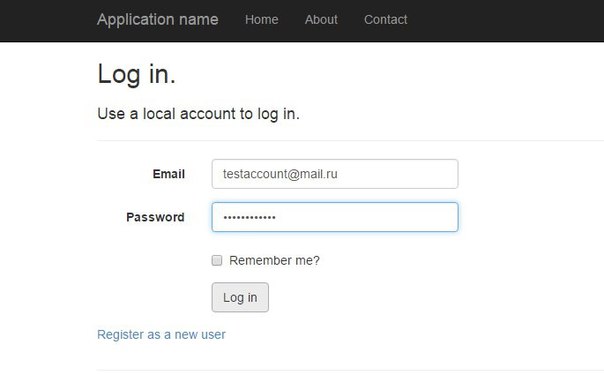
Imagine that your .NET project uses the Caché DBMS and you need a fully-functional and reliable authorization system. Writing such a system from scratch would not make much sense, and you will clearly want to use something that already exists in .NET, e.g. ASP.NET Identity. By default, however, this framework supports only its native DBMS – MS SQL. Our task was to create an adaptor that would let us quickly and easily port Identity to the InterSystems Caché DBMS. This work resulted in creation of the ASP.NET Identity Caché Provider.

MSSQL is the default data provider for ASP.
Hello,
I have a list of files on disk.
Each record is the fully qualified UNC path and filename.
I would like to send these files to the end users default printer as a document.
I have attempted to build a html page using document.write statements and print using printWindow.print(); command.
I think there must be a better way to send a series of files to the windows print spooler. I would welcome any and all input.
Hello, I've checked past posts and don't see the answer. Hope someone can help.
I'm working with our commercial version of VistA. Cache 2016.2.
I've connected to the instance and copied a few M routines to my local Atelier project. I edited a comment in the file and attempted to save/compile the routine back to the server.
I'm getting
Synchronization failed: Invalid header in /Encounter Interface/VFD.......
Is there something I'm missing? Thanks in advance.
Does anyone has any experiance importing data to Cache which contains special characts like ščž?
I have tried several options, but nothing really works. :)
thanks
Can someone direct me to where in the documentation we can find how consumption may be calculated for global storage?
| Caché Version | 2010.1 |
| Operating System | HP OpenVMS 8.4 |
EDIT: After receiving some responses, it seems I was unclear in my initial inquiry. I am looking to determine our rate of consumption of storage; however, I am having some difficulty in doing that.
While utilizing ^%GSIZE, which is used by the %GlobalEdit class, the results appeared odd. I have provided my results below, which illustrate the global structure on the left and the usage indicated by ^%GSIZE on the right.
NewBie's Corner Session 10 Routines and Studio
Welcome to NewBie's Corner, a weekly or biweekly post covering basic Caché Material.
InterSystems Caché provides a GUI (Graphical User Interface) based Integrated Development Environment (IDE) called Caché Studio. Developers can use Studio to create and maintain applications.
InterSystems has a new IDE called Atelier but that is for later.
A Routine is the name that Caché calls computer programs. A Routine consists of a number of lines of instructions to the computer; these instructions are called code.
InterSystems is pleased to announce that Caché and Ensemble 2016.1.3 are now available as maintenance releases.
For a complete list of the corrections in 2016.1.3, please review the release notes.
Caché and Ensemble 2016.1.3 are available on the same platforms as 2016.1.2. The complete set of supported platforms, including specific point releases and patches, is detailed in the Supported Platforms document.
The HealthShare team will announce availability of its products separately.
The build corresponding to this release is 2016.1.3.306.0
I realize that Cache Studio is the standard method to edit routines. However, some clients make it difficult to access their server that supports Studio. Is there an editor that can be run from the programmer prompt that allows simple WYSIWYG editing of routines? I know there is a %Routine class that you can use to do command-line editing, but I am looking for a full screen editor.
What was the standard in OpenVMS Cache before there was Cache Studio?
Thanks!
Bryan
I am a brank new cache developer. I am trying to create a new server, such as Samples, in the Studio and create a new namespace under the server, how do I do that?
I’ve a server that is running Windows Server 2003 R2 Enterprise Edition SP2 x86.
I just noted that you cannot allocate shared memory beyond 1.6GB.
Is this a known problem between Cache and this OS architecture, and has anyone configured it beyond this?
Cache gives the below errors (Version: Cache for Windows (x86-32) 2012.2.5 (Build 962_1) Wed Jun 11 2014 13:58:32 EDT).
11/01/16-08:33:06:750 (0) 2 Failed to allocate 2560MB shared memory: 2045MB global buffers, 384MB routine buffers
11/01/16-08:33:08:843 (0) 2 Failed to allocate 1934MB shared memory using large pages. Switching to small pages.
Short question: Why are (almost) all Java-Classes marked as deprecated? I never had any problems. And the docu for java-bindings are still (version 2016.2.1) not marked as deprecated. I ask, because in my case everything works and the writing of Unittests is easier than in Objectscript and i cannot find a note about the reason of the deprecation (at least in the classes i have checked).
Have you ever thought what could be a reason why some development environment (database, language) would eventually become popular? What part of this popularity could be explain as language quality? What by new and idioms approaches introduced by early language adopters? What is due to healthy ecosystem collaboration? What is due to some marketing genius?
I have a user with %All, and a user with %Admin_Task. The %All user can use SQL to view the %SYS_Task.HIstory table. The user with %Admin_Task does not have the privileges to see the same table.
What priv (or privs) is (or are) needed to view the %SYS_Task.History table? I just want to start with 'Select * from %SYS_Task.History'.
I've tried %Admin_Manage and %Admin_Operate. I must be close.
Thanks,
Laura
Take this online course to learn the foundations of the Caché ObjectScript language especially as it relates to use in creating variables and objects in Caché.