Major difference between GOTO and do command?
InterSystems Caché is a multi-model DBMS and application server. See more details here.
Major difference between GOTO and do command?
I have a Caché server with external apache.
It has a hostname, i.e.: http://myserver.com
There is an index page, which is available over http://myserver.com/index.html (/ is a Caché CSP app)
How can I make index.html available from http://myserver.com?
Here's the relevant parts of my apache config:
<Directory />
CSP On
DirectoryIndex index.html
Options FollowSymLinks
AllowOverride All
Require all granted
</Directory>
<Location />
DirectoryIndex index.Okay, so I ran into a rather odd bug. I have a remote test machine (tst-intersystems) running for which I accidently opened a lot of windows in my Studio (i.e. 500+). The result is that the studio runs out of memory and crashes. Now, every time I try to connect to this remote machine studio immediately attempts to open all windows effectively not allowing me to start studio anymore.
In this short article we talk about how to get Yape running in a docker container to avoid having to setup python on your machine.
It's been a while since the last article in this series, so let's recap quickly.
We talked about using matplotlib to create a basic graph. Afterwards we introduced dynamic graphs using bokeh. In the 3rd part we talked about generating heatmaps using monlbl data.
A common theme in the feedback I got over various channels was the difficulty setting up an environment to run any of these.
GIS stands for Geographic Information System.
and it's not a typical arena for Caché. But it's definitely an environment with high data volume.
You see 3 major areas
- Visual front end:
A mature area well covered by a bunch of commercial and open source products.
No need for Caché there.
- GIS mathematics:
JTS (Java Topology Suite) is fixed standard that covers all requirements and can be linked to Caché by the Java Gateway
or the C, C++ incarnation of this standard library using Caché Call Out Gateway.
So far no added value by Caché.
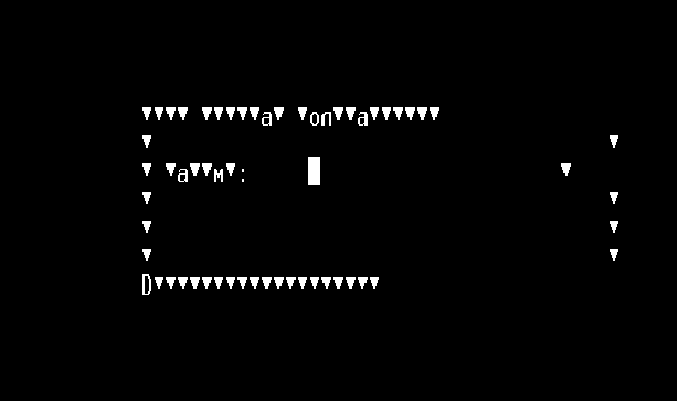
I don't know what a problem with my cache cube terminal, but cyrillic text is not displayed correctly.
I have some terminal program with cyrillic menus, dialogs and other text and all those items are displayed wrong (unknown symbols like on the image).

How can I solve this problem?
Hi,
I learning Cache Rest Services and I trying to implement it.
I learned get method in rest services.
I need to know How to get raw data (like json, xml, text....etc.) when we post the rest services?
Thank you
Hi, colleagues!
Consider you need to put some (less than 1GB) data to an indexed array and do some data manipulations and calculations with it.
Should I prefer global or local for it?
Is there any general rule when local is faster than global and vice-versa?
In reviewing the documentation found here, it states that there is an Attributes property. Since this is an array, I was wondering how I would go about traversing through the array to review what attributes are available on the file.
I am running a ZBREAK trace on a legacy FDBMS application that uses arrays but rather than displaying the array value contents, I am seeing logs similar to the following.
Trace: ZBREAK SET LINE=Array Val at BIOPWR+6^BIOPWR
My ZBREAK trace settings are as follows:
ZBREAK /TRACE:ON:"/somedir/trace1.log"
ZBREAK *LINE:"T"
The 'LINE' array has a single integer subscript and some string data. The subscript is sometimes calculated using arbitrary calculations such as S LINE(I-33)="BLAH BLAH BLAH" This makes the code very difficult to read and debug.
Hello.
I'm using device redirection to intercept incoming writes and need to figure a smart way to detect when to CLRF in order to prevent misleading outputs.
So basically, if the intercepted write ends with !, I need to know that and prevent my routine from writing ! as well.
Here's the source code for it:
ClassMethod Call( sourceControl As %Studio.Extension.Base, hookName As %String = "", parameters.
Hi community,
I have some constants hardcoded in my class as parameter values, and those constants are referenced in many places in my module. Now the need has arisen to provide different value for those parameters depending on some context. Is it possible to create some sort of accessor method for the parameter (like it is possible for properties), or do I need to perform a thorough refactoring?
Thanks.
Jiri
How could I log out from Cache terminal (connected through csession) and back to the system shell?
Thanks.
Have very little XML experience and have been able to manually create output. Have a need to take data that I store in a M global (example: ^TML("HDATA", ) and out put it in CCDA XML format.
Are there any examples of M code using the XMLWriter to accomplish this?
Or can anyone provide some guidance
Any help would be greatly appreciated.
Hi,
How can I read the stack of another process?
I know about ^JOBEXAM, but I only know how to use through terminal, and I need to get a string, or at least do a method that returns me a string
For example:
I have process A and B
B monitors process A at each second.
B logs information about process A in a table
Informations about lock I get through %SYS.LockQuery and the process through %SYS.Process
How can I get stack of process A from process B to log in the table?
Cache 2015.2.1
Thanks
Hi,
I'm trying to use WebSocket for my application. I am trying to get the example in this link (http://docs.intersystems.com/latest/csp/docbook/DocBook.UI.Page.cls?KEY…) to work. However, I keep getting the error "CSP application closed the connection before sending a complete response". Does anyone know why?
Good day,
I would like to know how to detect in Caché ObjectScript if data saved in string is number and furthermore, if it's type is integer.
I maybe found a solution:
set value = "44.2d3"
try{
set status = $INUMBER(value,"")
if ('$FIND(+value,".")){
w "your variable: '"_value_"' is number and integer"
}else{
w "variable is number but no integer"
}
}catch(e){
w "variable is not number"
}
But I don't know how to do it correctly or if there exist better solution in COS (or maybe my solution is incorrect).
Thanks in advance for answers.
Hi everyone,
I am trying to build an application based on real-time streaming data. A back-end program is continually writing to the Cache database, and then the data from the Cache database is retrieved through a REST API by a front-end program. The REST API is static -- it just gives the front-end all the data in the database at the time it was called.
Hi, I would like to read a row out of an external SQL table and reference the returned results directly from my cache class. I've set up a link table and a SQL gateway connection. but I'm not real sure how to use them in COS. Anyone have examples out there, or some assistance? Thank you.
Hello fellow developers,
I am currently in need of a way to serve files dynamically (sending specific replacements for when the requested file doesn't exist, possibly depending on other conditions such as passed parameters).
Hi, folks!
Suppose I have a CSP app, which provides some service.
And the code of my App knows the name of the CSP App in form: /myappname
How can I programmatically obtain the URL for CSP apps to send the full qualified link to the users(e.g. via email) of my app?
hi
I execute sql like this: select * from DHC_PatBillDetails where PBD_PBO_ParRef>='2046121'

error message:

but the sql: select * from DHC_PatBillDetails where PBD_PBO_ParRef='2046121' can be executed successfully
why?
If you read my previous post that introduced QEWD Micro-Services, you're hopefully eager to learn how to use them. So in this post I'll explain what you need to know in order to get started.
If you look in the QEWD repository, you'll find the folder:
https://github.com/robtweed/qewd/blob/master/example/jwt
In my earlier post on JSON Web Tokens (JWTs) and QEWD I used this example application to explain how to use JWTs. This example application also demonstrates how to set up a simple Micro-Service, in this case a service that handles user authentication.
I've written previous IDC articles about QEWD and how it provides a very high-performance, yet simple-to-use, way of integrating Node.js with Cache
After printing the output in .xls format,the output which i got after every entry blank space exist.Is there any error in .xls file or code error?
Haribabu, Vandhana 392 yes
Zast, Donna C 445 yes
Mast, EPrescribe Unique 598 yes
Qa,Donna Nurse 638 yes
Master,Dr. Mary 774 yes
Globals, these magic swords for storing data, have been around for a while, but not many people can use them efficiently or know about this super-weapon altogether.
If you use globals for tasks where they truly shine, the results may be amazing, either in terms of increased performance or dramatic simplification of the overall solution (1, 2).
Globals offer a special way of storing and processing data, which is completely different from SQL tables. They were first introduced in 1966 in the M(UMPS) programming language, which was initially used in medical databases. It is still used in the same way, but has also been adopted by some other industries where reliability and high performance are top priorities: finance, trading, etc.
Later M(UMPS) evolved into Caché ObjectScript (COS). COS was developed by InterSystems as a superset of M. The original language is still accepted by developers' community and alive in a few implementations. There are several signs of activity around the web: MUMPS Google group, Mumps User's group), effective ISO Standard, etc.
Modern global based DBMS supports transactions, journaling, replication, partitioning. It means that they can be used for building modern, reliable and fast distributed systems.
Globals do not restrict you to the boundaries of the relational model. They give you the freedom of creating data structures optimized for particular tasks. For many applications reasonable use of globals can be a real silver bullet offering speeds that developers of conventional relational applications can only dream of.
Globals as a method of storing data can be used in many modern programming languages, both high- and low-level. Therefore, this article will focus specifically on globals and not the language they once came from.
Hello.
I'm having difficulties trying to figure (if possible) how to create an URL that also matches query parameters.
I tried: <Route Url="/:namespace/test(\?id\=):id" Method="GET" Call="Test"/>
<Route Url="/:namespace/test?(id)=:id" Method="GET" Call="Test"/>
<Route Url="/:namespace/test?id=:id" Method="GET" Call="Test"/>
But none of these worked.
Is it possible when using %CSP.REST or am I restricted to using route parameters?
Thank you.
EDIT:
Forget about the "id" parameter name. It's a bad sample: normally id are by definition, able to be hierarchically included in the URI.
I am talking about Application Performance Management at global summit, and several people have asked what that means so it is time for a bit of an explanation.
APM or Application Performance Management (sometimes referred to as Application Performance Monitoring) has a very good (if complicated) explanation on Wikipedia but to me it just means looking at performance from the users’ point of view and the level of service provided to them.
Hi All, I tried to connect Crystal report with Cache 5.0 Its Show Crystal Report error as "The report you requested requires further information." How to resolve the issue in C#.
Hi everybody, We have written a convert from Punycode. This is reformed from javascript. Perhaps many non-English systems need to use this feature in domain name resolution. Anyone can use and change the code as needed.