Hello all,
Is using ASP.Net Core 2.0 with Cache Object Script possible? I have it successfully working with .Net 4.5 using the supplied .Net 4.5 Dll file by Intersystems. Is there an updated Dll file for .Net Core 2.0?
Thanks
InterSystems ObjectScript is a scripting language to operate with data using any data model of InterSystems Data Platform (Objects, Relational, Key-Value, Document, Globals) and to develop business logic for serverside applications on InterSystems Data Platform.
Hello all,
Is using ASP.Net Core 2.0 with Cache Object Script possible? I have it successfully working with .Net 4.5 using the supplied .Net 4.5 Dll file by Intersystems. Is there an updated Dll file for .Net Core 2.0?
Thanks
Hi all,
I am trying to use a %Status property on some of my Response classes. If the execution of a service goes wrong, I set the %Status property on Response with the value $$$ERROR($$$GeneralError, "pre-defined error message").
When I check the visual trace for this message and look for the %Status (property "status_code" on the image), it is displayed like this:
.png)
If I select to display the Body of the Response, I get the 'readable' form of %Status:
.png)
According to the documentation, this is expected as %Status properties are encoded in base64 during Projection to XML.
So my question is: Is it
Hello fellows, I need you wisdom.
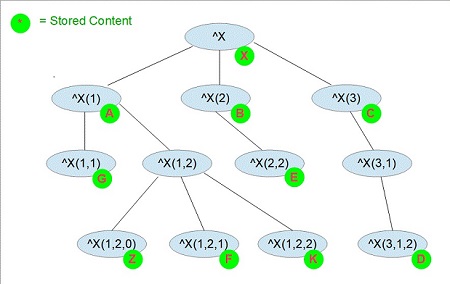
In my organization we code in ObjectScript and .int everyday. When I joined nobody knew barely nothing about classes and their use was almost only for storage definition purpose. During my self-learning in caché I discovered the object oriented programming and class developing was possible in caché and started to code in .cls . Being something self-taught, I may have some basic doubts I'd have missed in my documentation readings.
With this scenario in mind, it is common that we use the @ operator to use wildcards for storing same data structures in different
Hi
I'm using %XML.Writer to write XML files from a database source, and I see that it is not encoding carriage return or line feed as 
 and 
 respectively, and is instead leaving them unencode.
What can I do to have them encoded?
Andy
Is there a straightforward workflow in VS Code for moving a class from one namespace to another on the same server? With Caché/IRIS Studio, it was a (sort of) simple export/change namespace in file menu/import operation. But in VS Code it's not obvious (to me, at least).
I can add multiple namespaces to a workspace, but when using isfs:// paths I see only a "Download" option and no "Upload" or "Import/Compile." When I'm navigating the local file tree, I see Import options, but no way to select the namespace into which I want to import.
I've worked around this by creating the package name on
I will give you some additional information on my first embedded Python package.
it is written as a mix of python and ObjectScript to take the best of both worlds.
Hey Developers,
New video is already on InterSystems Developers YouTube channel:
Hi Folks,
I created a persistent class as below
Class myclass.DataBase Extends %Persistent
{
Property ID As %String;
Property Skill As list Of myclass.SerialTablelist;
}and Created another Serial class as
Class myclass.SerialTablelist Extends %SerialObject
{
Property PSkill As %String;
Property OSkill As %String;
}Now I will save the id as below
do rs.Prepare("Insert into myclass.DataBase(ID)VALUES(?)")
do rs.Execute(ID)
I am facing issue with the AS LIST OF
Could any one guide me how to save the Skill (PSkill ,OSkill ) using resultset (I am able to )
Hi all - we just released the first episode of Season 2 for our Data Points podcast by Learning Services. This episode features a conversation with @Bob Kuszewski about Embedded Python. If you're a Python developer, or if you're simply interested in the functionality, check it out! For more information, head over to https://datapoints.intersystems.com.
I'm trying to write a method that runs an OS command with $zf(-100,"/ASYNC") and then waits for it to finish before returning, but I can't figure out how to check if the child process (in $zchild) is still running. $System.Process.State($zchild) always returns "RUN" even once the child process is gone. Is there some better way to check this, short of running another OS-specific command and processing the output (which is just really annoying and unelegant)?
Hi, I am trying to work with visual studio with the extensions offered by InterSystems, but I can't find any option to work locally, is there any way to do it?
Hi,
I am using VSCode together with IRIS 2021.1.
When using Shift+Alt+F to reformat a class file, it pops up with the below message. When I select install formatter, it routes me to the extensions page, where it shows the extensions as being installed. Any advice will be appreciated.
Currently running Ensemble on Red Hat Enterprise Linux Server release 7.7
One of our clients is requesting files sent to their SFTP site be encrypted with their PGP public key and digitally signed with our PGP private key
We have created a custom class that includes the following command to encrypt the files
if (pAction = "Encrypt") {
// Find the Key ID from the Keyname
set tKeyId = ..GPGKeyLookup(pKeyName, ..#PUBLICKEYLUT)
set tCmdLine = "gpg --homedir "_pGPGhomedir_" --always-trust -r """_tKeyId_""" -o "_pOutFileName_" -e "_pInFileName
}
// Execute the command to generate the output file
write
For some years I missed being able to offer, to everybody interested in ObjectScript, a tutorial more or less complete, to start with ObjectScript. Something that could help more and make things easier to those new developers that come to our technology... something intermediate, halfway between the common "Hello World!", that doesn't really get you further, and the "Advanced Training", that is unaffordable because of lack of time,etc.
If there were something truly helpful not only as an introduction to the ecosystem, but as a starting point, as a boost, to really start to walk into ObjectScript and move forward by yourself... wouldn't that be awesome?
If you develop in IRIS you are confronted with two major phenomena:
Is there some generic way to output a %SQL.StatementResult to CSV?
Hi Developers
As you know it's very easy to publish a package to the Developers Community registry.
But how to test it before publishing? How to be sure that everything you introduced into module.xml is installed properly?
See the step-by-step instruction below!
Hey Developers,
Ready to participate in our annual December competition?
Join the Advent of Code 2021 with InterSystems and participate in our ObjectScript contest to win some $$$ prizes!

So I've been reviewing a lot of questions posted in the InterSystems community regarding NULL properties in JSON. I've also been reviewing the JSON documentation. None of these things have been able to help me so far.
1. We don't seem to have the %JSON.Adaptor class available for us to use in our system.
2. I'm not really confident enough to create JSON Type classes or backporting code, etc.
I created a dummy class and I need my JSON to look like this:
{
"notanumber":"28001",
"aboolean":true,
"anumber":12345,
"adecimal":1.2,
"adate":"01/01/2023",
"adate2":"01-01-2023",
"anull
Hi Devs!
Recently, I needed to create templates for newsletters.
I couldn't find any tools, so I decided to use the CSP (Caché Server Pages) to build the templates.
Let's figure out how to make a newsletter similar to Weekly OEX Digest.
.png)
Weekly OEX Digest
There are strict requirements for HTML email messages.
Basic requirements:
CSP is well suited for this task because it allows you to do the complete generation on the server-side and produce a
The XData (https://docs.intersystems.com/irislatest/csp/docbook/DocBook.UI.Page.cls?KEY=GOBJ_XDATA) is a powerful feature to set documentation and metadata information for classes and methods. The %CSP.REST class uses XDATA to mapping REST calls (https://docs.intersystems.com/irislatest/csp/docbook/DocBook.UI.Page.cls?KEY=GREST_csprest), so in this article you will see how to use XData into your apps as code, not only as documentation.
When you write XData comments/definitions, the IRIS store it into %Dictionary.ClassDefinition (for classes) %Dictionary.MethodDefinition (for methods).
Hi
I'm using a class which extends %XML.Adaptor adaptor and I want to create an XML file with multiple namespaces, like the following:
<soap:Envelope xmlns:xsi="http://www.w3.org/2001/XMLSchema-instance" xmlns:xsd="http://www.w3.org/2001/XMLSchema" xmlns:soap="http://schemas.xmlsoap.org/soap/envelope/"> </soap>
However, I don't see how to do this with the code I have. So far, I have
Class GMMHTIE.Docman.Messages.Request.RequestWrapper Extends (%Persistent, %XML.Adaptor){ Parameter XMLNAME = "soap:Envelope";
Parameter NAMESPACE = "http://www.w3.org/2001/XMLSchema-instance";
Parameter XMLWe have a couple of systems that send us a URL link to a PDF instead of base 64 encoding it in the HL7 message. Has anyone ever tired to take that URL, and retrieve the file off of the server to save it off somewhere?
Hey Developers,
Thanks to everyone for participating in the Advent of Code 2021and coding in InterSystems ObjectScript! We're pleased to introduce the winners and distribute all the prizes!
Big applause goes to these developers:
@Yuval Golan (w/ repo)
@Oliver Wilms (w/ repo)
We'd also like to reward another developer who conquered Embedded Python and made all 25 challenges on it. Please welcome:
@Robert Cemper (w/ repo)
Hi Developers,
New video is already on InterSystems Developers YouTube:
⏯ Embedded Python for ObjectScript Developers: Working with Python and ObjectScript Side-By-Side
Setting the Scene
I was editing the properties of a persistent ObjectScript class the other day and noticed that the storage definition wasn't updating to reflect my latest changes.
In this case, I deleted a property that was no longer needed from the class definition, saved, recompiled, and still saw it in the storage definition.
No problem, I thought. If the storage definition gets autogenerated on compile, I can just delete it and recompile the class. Sure enough, after doing this, I no longer saw the deleted property in the storage definition.
There, problem solved... right?
(cue wrong answer
I've found a couple of methods that will tell me whether a package is mapped from another database, but not which database. Is there such a method/routine?
I have an auditing class that defines some sqlComputed properties and can be extended by other persistent classes to enable auditing of its properties.
Class Audit.ModifiedTracker [ abstract ] {
/// Last time this record was saved
Property LastModifiedTime As %TimeStamp [ SqlComputeCode = {Set {*}=$zdt($zts,3)}, SqlComputed, SqlComputeOnChange = ("%%INSERT", "%%UPDATE") ];
/// User responsible for modifying record
Property LastModifiedUser As %String [ SqlComputeCode = {set {*} = ..GetModifiedUser()}, SqlComputed, SqlComputeOnChange = ("%%INSERT", "%%UPDATE") ];Now, I would like to
Hi folks!
I'm curious if it is possible to change the class method to another class?
I call a method of a system class to generate another class. But there is a bug/feature in a library class, so I need to tweak a bit the generated method, e.g. add additional parameter and change the line to "if" the parameter.
I hope to do this programmatically after class generation and change the code in a way I like.
What are the options?
Hey InterSystems Community,
I noticed something interesting in regards to business rule editing. Whenever you use the Management Portal or Studio to edit a business rule, the " characters gets escaped to a ".
.png)
Which results in the following code:
.png)
As long as you are not mixing development styles - as in, sticking to only the UI or only the code, it is not a problem.But as soon as you mix both, the escaping starts to hinder readability of the rules a bit.I noticed that this is not the case with other interoperability features, like data transformations.