Hey Community,
Enjoy the new video on InterSystems Developers YouTube:
⏯ Advancing Healthcare Interoperability - Strategy and Vision @ Ready 2025
InterSystems IRIS for Health™ is the world’s first and only data platform engineered specifically for the rapid development of healthcare applications to manage the world’s most critical data. It includes powerful out-of-the-box features: transaction processing and analytics, an extensible healthcare data model, FHIR-based solution development, support for healthcare interoperability standards, and more. All enabling developers to realize value and build breakthrough applications, fast. Learn more.
Hey Community,
Enjoy the new video on InterSystems Developers YouTube:
⏯ Advancing Healthcare Interoperability - Strategy and Vision @ Ready 2025
Iris Health dashboard images not loading after first install, getting 404 on /csp paths, is there any setup I am missing?, found this old community post: https://community.intersystems.com/post/debugging-why-management-portal… but the links are outdated, can anyone please guide me to proper documentation. Thanks in advance.
Screenshot attached:
I have a business service that actively reads data from a remote Postgres database. OnProcessInput opens a XDBC (actually JDBC) connection, executes an SQL query, fetches several thousand rows, iterates the resultset, and closes the connection. On each iteration I also need to update each source row in the remote database using PreparedStatement.
In other words, in every OnProcessInput call I have a long running SELECT statement and several thousands small UPDATE statements.
InterSystems IRIS is built on an architecture that separates the logical organization of data (namespaces) from its physical storage location (databases). Understanding this separation and the distinction between Namespaces and Databases is crucial for effective data management, security, and especially, high-performance data sharing.
In this article, I will discuss these foundational components and provide a practical guide on leveraging global mappings to share native data structures (globals) across different logical environments.
A database represents the physical reality of where the data is stored on the disk. First and foremost, it’s a file in a file system called IRIS.dat (e.g., <Install folder>\mgr\user\IRIS.DAT). The maximum size of this file is 32TB. It is the container for all the actual data and the code. Databases are managed by the IRIS kernel, which handles caching, journaling, and transaction logging at the physical file level.
When you install InterSystems IRIS DBMS, the following databases are installed automatically:

Sometimes it is more convenient, more efficient, and more secure, to limit FHIR Searches per pre-defined "Lists" of Resources.
Since v2025.1 we support several List-related features in our FHIR Server.
I will highlight these here, and provide some samples.
I have a Photo that is stored as an VARBINARY within MS SQL. I would like to Select the data into a EnsLib.SQL.Snapshot, is that possible? I would take it out of the Snapshot and send it to a %Stream so it can be written out to a file.
Hi Everyone!
We have an existing process (running in FIFO order), all business hosts having pool size=1.
Currently we are reading records from a file (one record at a time) then that record goes to business process for further processing and finally through the business operation. As of now we are using synchronous call in our existing code. Before processing the last record we are using hang of 50 seconds because we need to initiate a batch once the processing of last record is finished.
This process is taking too much time for a file having 0.1 million records (max records in a file).
Developing Custom Components for Integrations – In Person (Boston, MA) February 10-12, 2026
I was trying to see if we could connect to another Server, we use to execute external scripts using %Net.SSH.Session.
TESTCLIN>set sshSession = ##class(%Net.SSH.Session).%New()
TESTCLIN>set user = <omitted>
TESTCLIN>set host = <omitted>
TESTCLIN>set privateKey = "/nfs/data/ssh/<omitted>"
TESTCLIN>set publicKey = "/nfs/data/ssh/<omitted>.pub"
TESTCLIN>Set statusConnection = sshSession.Connect(host)
TESTCLIN>set statusAuth = sshSession.Defining my first REST API within InterSystems using iris-rest-Api-template as a basis and I am seeing if someone could provide me some guidance to see if I can make it work.
In some of my other posts, I have been trying to come up with a way for our Enterprise Application Development team which works with .Net to build Applications to make a REST call to our instance of InterSystems to query some of the Cache Tables we have defined.
Using the iris-rest-api-template, I have created the osuwmc.DataLookup.REST.Base.cls
Class osuwmc.DataLookup.REST.Base Extends %CSP.Hey everyone.
I have been taking a look at the External Language Server functionality to hook into some Dotnet functions, and I am hitting a bit of a wall.
Based on the example in the documentation here I can get the same result doing:
ENV>Set netGate = $System.external.getDotNetGateway()
ENV>Set netProxy=netGate.new("System.DateTime",0)
ENV>Write netProxy.Now,!
2025-12-31 14:37:58.6022705However, if I then try another system class, I get an error:
ENV>Set netGate = $System.external.getDotNetGateway()
ENV>Set netProxy=netGate.new("System.Convert",0)
ENV>Write netProxy.1. vscode extensions : intersystems.language-server-2.8.0@linux-arm64.vsix
2. api/atelier web application is enabled

3. vscode connect failed.

There is a Master Table within IRIS that I am populating from Epic but want to share it with our Enterprise Application Development Team (Web). As a test I was able to use _SYSTEM from postman to execute the following.
POST /api/atelier/v1/xxxx/action/query HTTP/1.1
Host: xxxxxxxx
Content-Type: application/json
Authorization: ••••••
Cookie: CSPSESSIONID-SP-443-UP-api-atelier-=00f0000000000AKyLjBfUvU$MpFD8UT8y$EoNKNw1ixZeXN4_Q; CSPWSERVERID=hzZAT5rb
Content-Length: 86
{"query": "SELECT * FROM osuwmc_Epic_Clarity.I am migrating from HealthShare 2015 to Health Connect 2025 as part of an infrastructure upgrade. We have several C# .NET Razor web apps that interact with HealthShare using the InterSystems.Data.CacheClient assembly, and the Cache Object Binding Wizard for .NET to build the C# proxy classes. This has worked flawlessly for about 6 years.
I am now switching to using the Native SDK with the InterSystems.Data.IRISClient assembly and using the C# IRISReference and IRISObject.
The demo is based on the raw class descriptions.
The data classes used are Address, Person, Employee, Company
For a more attractive demo, a JSONtoString method by ID was added.
Hi all, it's me again for sharing what I am studying recently.😓
Recently, I am studying how to setup OAuth2 authentication for the InterSystems FHIR repository. And I found the following articles are very good and easy to follow.😁
SMART on FHIR EHR Launch with IRIS for Health
For me, as a user who do not have much knowledge about OAuth2.0. I think it quite difficult to understand how to setup the whole OAuth2.0 environment before knowing how's it look like (what is it?
I have been struggling sometime with trying to take a FHIR Bundle Response, extract the "entry.resourceType", extract the MRN and Name from the Patient FHIR Response...
Going through learning.intersystems.com, it suggested that I try using fhirPathAPI to parse and search my response for certain values, however I am not sure my syntax is correct. Using the AI code, it suggested to set my tree = "Bundle.entry.resource.resourceType"
ClassMethod Transform(source As HS.FHIRServer.Interop.Response, target As osuwmc.Epic.FHIR.DataStructures.I was wondering if anyone had a way to automate creating the Query String for a FHIR Request?
Using HS.FHIRServer.Interop.Request in my development I have to specify the following...
.png)
I was wondering.... if my source had variable number of fields if there was a way to automate the build for the QueryString when doing a Patient Search?
I am trying to replicate a way to use FHIR as a way to query the EMR instead of using a MS SQL Stored Procedure that is populated via HL7 ADT to query.
Using a WSDL and the SOAP wizard I created a WebServiceClient, and Operation to send an encoded message to a Vendor. But the vendor is now sending back an HL7 in the SOAP response.
I tried updating the Operation to Extend EnsLib.HL7.Operation.ReplyStandard, but still use the EnsLib.SOAP.OutboundAdapter. When I did this it broke my Operation and would not compile with the following error...
ERROR #5478: Keyword signature error in osuwmc.Nutrition.HL7SoapOperation:Method:SendMessage, keyword 'method argument/s signature' must be 'EnsLib.HL7.Message,EnsLib.HL7.
I am looking for a way to capture Data Quality issues with the Source data that is populating HealthShare Provider Directory. 1 way is to use Managed Alerts, but since it could be multiple Providers and different messages it seems silly to alert on every message that has the error. Instead, I was thinking of using the Workflow Engine so it could populate a Worklist for someone to review and work.
Looking over the Demo.Workflow Engine example, I am not comprehending on how to send a task to the Workflow manager to populate the worklist from a DTL.
According to the Documentation EnsLib.Workflow.TaskRequest has the following fields...
I want to be able to capture the Source, Session ID, and any other Identifiers outside of the Error so it will show up on the Task List.
I am struggling how to build a csp template for me to be able to capture additional fields to send to the Workflow
I built a BP, that every time that a message is received from a BS, it executes
set isAuth=##class(%SYS.OAuth2.AccessToken).IsAuthorized("EpicFHIRPOC",,,.accessToken,.idtoken,.responseProperties,.error)
if 'isAuth {
set tSC=##class(%SYS.OAuth2.Authorization).GetAccessTokenClient("EpicFHIRPOC", "*",, .error)
set isAuth=##class(%SYS.OAuth2.AccessToken).IsAuthorized("EpicFHIRPOC",,,.accessToken,.idtoken,.responseProperties,.error)
}To save time, I was thinking of just creating a BS that goes out and gets the Authorization Token every hour.
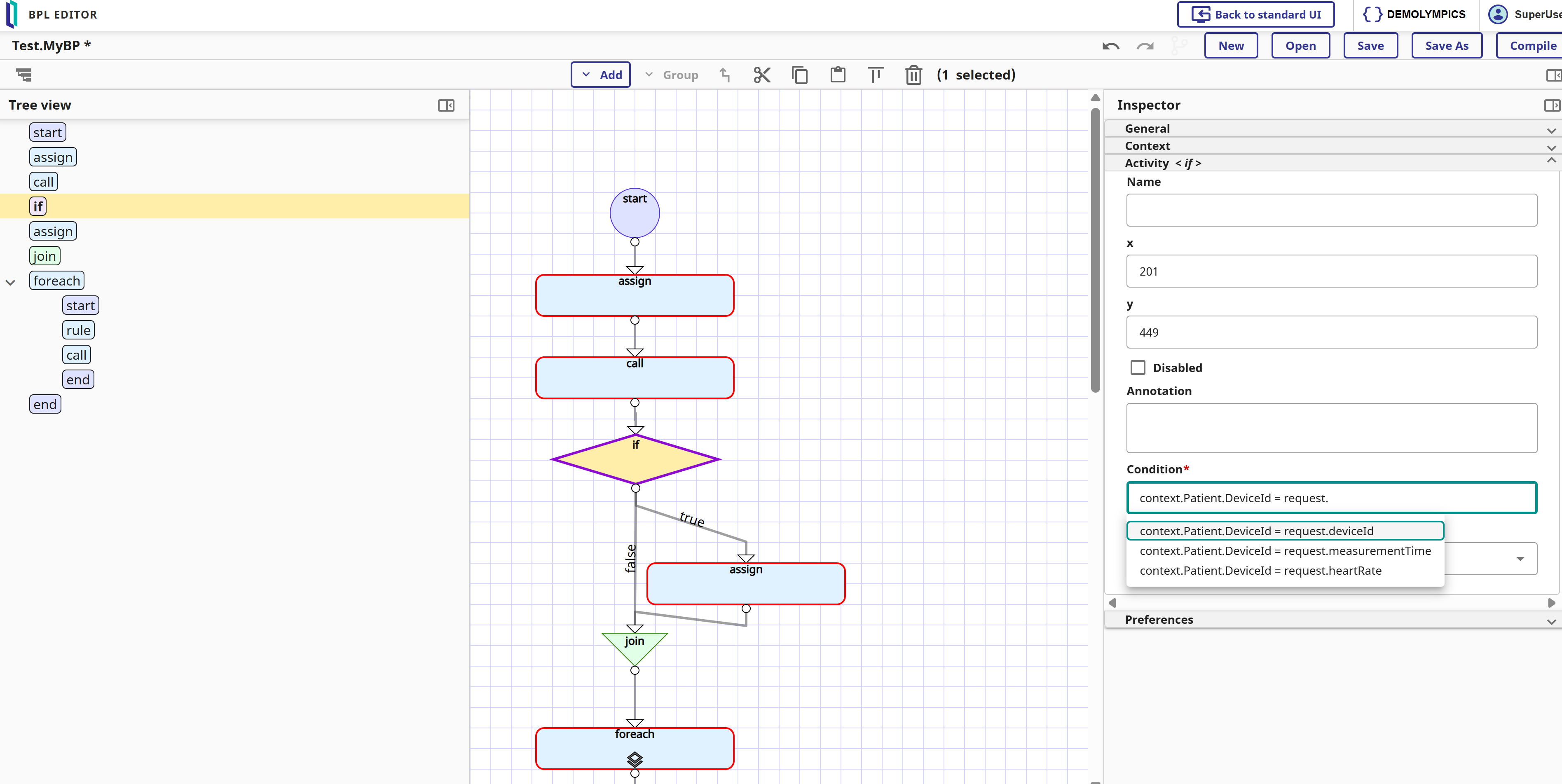
When working with InterSystems Interoperability (Iris / Health Connect / Ensemble), configuration data is often spread across many production items: services, processes, operations, adapters, and their settings.
A common operational or security need is to answer questions like:
The ObjectScript utility below solves exactly that problem by exporting selected configuration settings into a CSV file.
Here is what is currently used.
..CurrentDateTime("%Y%m%d%H%M%S")
The format is not the issue.
I need to make it our current time as it is five hours ahead.
How can I access the header property of either of these.
.png)
Or, if I can't do that, subtract five hours or the equivalent time in seconds.
example, if I receive 20201224161922, how can I make it 20201224111922?
Thanks,
Jonathan
Overview
Embedded Python is a game-changer for InterSystems IRIS, offering access to the vast Python ecosystem directly within the database. However, bridging the gap between ObjectScript and Python can sometimes feel like translating between two different worlds.
To make this transition seamless using embeddedpy-bridge.
This package is a developer-centric utility kit designed to provide high-level ObjectScript wrappers, familiar syntax, and robust error handling for Embedded Python.
As I am iterating through the FHIR JSON Response from a Patient Search, I am running into an issue where the extracted values are not being popualted into the Response object that I have created. If I do a $$$LOGINFO on them they will show up in the Object log, however if I try the following for example I get an error.
set target.MRN = identifier.value
|
Here is my Ens.DataTransform
Class osuwmc.Epic.FHIR.DTL.Hi developers!
There is a neat feature of ObjectScript classes - Query element, which allows you to write in a clear SQL (without any & or ()), pass parameters to it and call it from ObjectScript as do QueryNameFunc() or via Call SQLProcedureName via SQL, .e.g.
Query MyQuery(p as %String) as %SQLQuery [SQLProc]
{
SELECT * FROM MyTable
WHERE Name=:p
}All works fine, but when I tried to use the same for a DELETE statement see the following error:
SELECT expected, DELETE found ^ DECLARE Q1 CURSOR FOR DELETE
Is the Query element for SELECT only? What am I doing wrong? )
I am trying to centralize our FHIR queries into a single BP object that would send the FHIR query to the EMR, interpret the response into a %Persistent structure that could be sent back to the requestor. In theory it seemed like it would work but I am running into an issue..
"Warning on Message body 5@osuwmc.Epic.FHIR.DataStructures.PatientSearch.Record'
/ 229 because Status 'ERROR <Ens>ErrException: <PROPERTY DOES NOT EXIST>Transform+3 ^osuwmc.Scott.FHIR.DemoOutboundHL7Message.1 *DocType,osuwmc.Epic.FHIR.DataStructures.PatientSearch.Record -- logged as '-'
number - @'
InterSystems FAQ rubric
The default settings for Stay Connected and Pool Size for business hosts using the TCP adapter are as follows:
If a network problem causes a connection to a business host to be lost, the production side will be unable to detect this and will not accept new connections. In this situation, no event is recorded in the event log. If StayConnected is set to its default value (-1), connections will not time out, and you will need to restart the business host before it can accept new connections.
Hi,
Our production FHIR server is populated by several processes from several sources,
some of those sources send test data or wrong data (by mistake or as part of an integration test),
the data is consumed by our BI every 15 minutes.
when I mark a resource as test (using meta security) BI knows to update it on their system.
everything is fine up to here (except that there is test data in Prod)
my problem is that if someone send the same patient again it will recreate the patient without the security tag.
any thoughts?