Who hasn't been developing a beautiful example using a Docker IRIS image and had the image generation process fail in the Dockerfile because the license under which the image was created doesn't contain certain privileges?

In my case, what I was deploying in Docker is a small application that uses the Vector data type. With the Community version, this isn't a problem because it already includes Vector Search and vector storage. However, when I changed the IRIS image to a conventional IRIS (the latest-cd), I found that when I built the image, including the classes it had generated, it returned this error:

14 5
1 298
Contestant

A question that quickly arises when configuring IAM (aka Kong Gateway) is how many routes should be created to reach all the business objects in an IRIS API.

A common mistake is to create one route per business object, unnecessarily multiplying the number of routes.

Let's take the example of the Supply Chain Orchestrator Data Model API:

1 0
0 1

Why do these clauses affect SQL performance?

select ID from some_table where row_status in ('I','U') order by ID limit 5 - makes the query infinite
select top 10 ID from some_table where row_status in ('I','U') order by ID - the same
select ID from some_table where row_status in ('I','U') order by ID - is fast

Actually there are no rows in the table having row_status 'I' or 'U'.

I asked Gemini and it recommended me rewrite the query as

0 13
0 91

RabbitMQ is a message broker that allows producers (those who send a data message) and consumers (those who receive a data message) to establish asynchronous, real-time, and high-performance massive data flows. RabbitMQ supports AMQP (Advanced Message Queuing Protocol), an open standard application layer protocol.
The main reasons to employ RabbitMQ include the following:

  • You can improve the performance of the applications using an asynchronous approach.
  • It lets you decouple and reduce dependencies between services, microservices, and applications with the help of a data message mediator, meaning that there is no need for producers and consumers of exchanged data to know each other.
  • It allows the long-running processing of sent data (with the results) to be delivered after utilizing a response queue.
  • It helps you migrate from monolithic to microservices, where microservices exchange data via Rabbit in a decoupled and asynchronous way.
  • It offers reliability and resilience by making it possible for messages to be stored and forwarded. A message can be delivered multiple times until it is processed.
  • Message queueing is the key to scaling your application. As the workload increases, you will only have to add more workers to handle the queues faster.
  • It works well with data streaming applications.
  • It is beneficial for IoT applications.
  • It is a must for Bots’ communication.

6 2
3 270

What is JWT?

JWT (JSON Web Token) is an open standard (RFC 7519) that offers a lightweight, compact, and self-contained method for securely transmitting information between two parties. It is commonly used in web applications for authentication, authorization, and information exchange.

A JWT is typically composed of three parts:

1. JOSE (JSON Object Signing and Encryption) Header
2. Payload
3. Signature

13 4
9 528

I have a Postgres table which should be migrated to IRIS. The table has a computed column, like:

CREATE TABLE example_table (
    id VARCHAR(10) PRIMARY KEY,
    normalized_id VARCHAR(10) GENERATED ALWAYS AS (LPAD(id, 10, '0')) STORED
);

IRIS also has the LPAD function but I can't figure out how to achieve the same result using pure SQL DDL.

Tried this:

0 7
0 81

We are a group of interface analysts in a healthcare setting, running IRIS for Health 2024, having upgraded over time from an old ENSEMBLE environment. We have been working on a wish list of development goals, but are having trouble finding the correct, best practice method/path for getting to what we envision.

1 10
0 135

What is a FHIR Profile?

A FHIR profile is a collection of rules and constraints used to customize and refine a base Fast Healthcare Interoperability Resources (FHIR) resource. Profiling is a vital process that adapts the base FHIR resource standard to satisfy the unique requirements of a specific use case, geographic region, medical institution, or clinical workflow.

While the base FHIR specification provides generic, flexible definitions for resources (such as Patient, Observation, or Medication), profiles transform these generic resources into more precise ones. This ensures consistent and interoperable data exchange tailored for a particular community or implementation.

FHIR is designed to cover various healthcare scenarios globally. Profiles allow implementers to adapt this general platform without losing the benefits of standardization.

2 1
1 63

Hey Community,

Enjoy the new video on InterSystems Developers YouTube:

Advancing Healthcare Interoperability - Strategy and Vision @ Ready 2025

https://www.youtube.com/embed/_1mBIv-lGco
[This is an embedded link, but you cannot view embedded content directly on the site because you have declined the cookies necessary to access it. To view embedded content, you would need to accept all cookies in your Cookies Settings]

0 0
0 29
Question
· Dec 21, 2025
XDBC memory leaks

I have a business service that actively reads data from a remote Postgres database. OnProcessInput opens a XDBC (actually JDBC) connection, executes an SQL query, fetches several thousand rows, iterates the resultset, and closes the connection. On each iteration I also need to update each source row in the remote database using PreparedStatement.

In other words, in every OnProcessInput call I have a long running SELECT statement and several thousands small UPDATE statements.

The problems I'm facing are:

0 11
0 116

InterSystems IRIS is built on an architecture that separates the logical organization of data (namespaces) from its physical storage location (databases). Understanding this separation and the distinction between Namespaces and Databases is crucial for effective data management, security, and especially, high-performance data sharing.

In this article, I will discuss these foundational components and provide a practical guide on leveraging global mappings to share native data structures (globals) across different logical environments.

Databases: Physical Reality

A database represents the physical reality of where the data is stored on the disk. First and foremost, it’s a file in a file system called IRIS.dat (e.g., <Install folder>\mgr\user\IRIS.DAT). The maximum size of this file is 32TB. It is the container for all the actual data and the code. Databases are managed by the IRIS kernel, which handles caching, journaling, and transaction logging at the physical file level.

When you install InterSystems IRIS DBMS, the following databases are installed automatically:

4 0
2 63

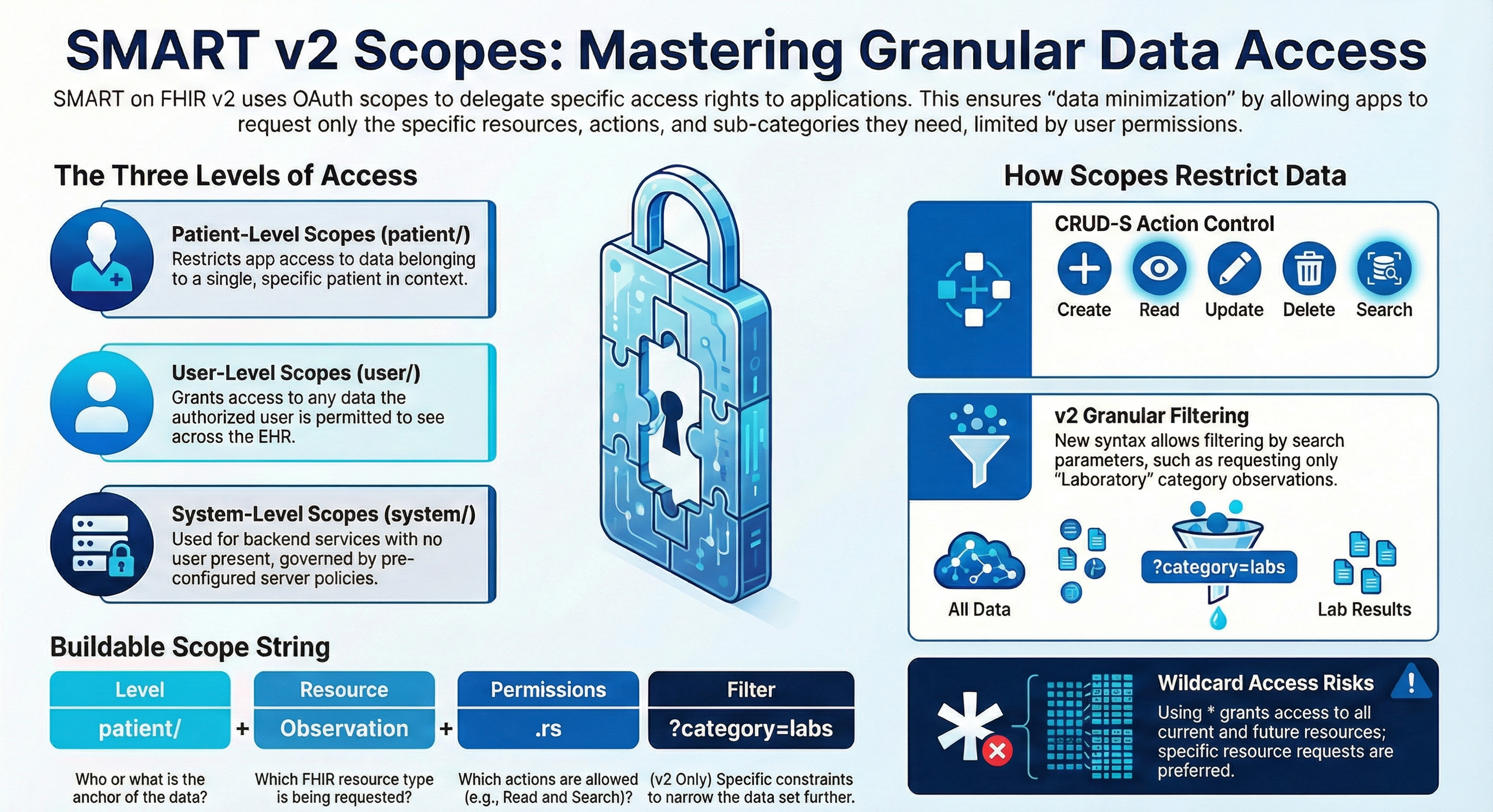
Sometimes it is more convenient, more efficient, and more secure, to limit FHIR Searches per pre-defined "Lists" of Resources.

Since v2025.1 we support several List-related features in our FHIR Server.

I will highlight these here, and provide some samples.

6 2
1 60

Hi Everyone!

We have an existing process (running in FIFO order), all business hosts having pool size=1.

Currently we are reading records from a file (one record at a time) then that record goes to business process for further processing and finally through the business operation. As of now we are using synchronous call in our existing code. Before processing the last record we are using hang of 50 seconds because we need to initiate a batch once the processing of last record is finished.

0 5
0 78