Hello everyone!
FINALLY!! The technical article contest in Spanish begins on Monday 🎉🎉
Hello everyone!
FINALLY!! The technical article contest in Spanish begins on Monday 🎉🎉
I currently have an issue with a failed connection in VSCode and need some help.
It doesn't work when using ports 80, 1972, and 7038.
Hi, Community!
Looking to modernize the way you build interoperability screens in InterSystems® products? Take a tour of some recent UI improvements.
Building Integrations: A New User Experience
<iframe allowfullscreen="" frameborder="0" height="360" src="https://www.youtube.com/embed/zupj1P7Plgo?utm_source=youtube&utm_medium=social&utm_campaign=zupj1P7Plgo" width="640"></iframe>
I need to run do $SYSTEM.OBJ.Load(<file from linux folder>,"ck") from a linux shell script.
How would I do that?
When AMD published the x86-64 standard in 1999, little did they know they were inventing what would become the de-facto architecture for server CPUs. But the CPUs of today aren’t the same as ones produced 20 years back – as they have extensions for everything from Advanced Vector Extensions (AVX) to Hardware-Assisted Virtualization (VT-d).
InterSystems would like to take better advantage of these new extensions in upcoming versions of InterSystems IRIS. While our compilers are smart enough to create optimized code for many situations, some optimizations can only be turned on by explicitly cutting off support for processors that do not have that instruction set. Additionally, we are finding it increasingly difficult to maintain older CPU models to test on.
Hi Community,
A huge thank you to everyone who participated in the Code Your Way to InterSystems READY 2025 challenge! We enjoyed watching your videos and checking out your projects. And now it's time to announce the winners!
%20(3).jpg)
Hey Community!
We're happy to share the next video in the "Code to Care" series on our InterSystems Developers YouTube:
⏯ How Project BEST Transforms FDA Adverse Event Reporting with FHIR
We are receiving an ORU message and the vendor is requesting that we append a new OBX segment at the end of the message and I wanted to reach out to see what options might be available.
So far, I tried the append action in the DTL editor with a single OBX-3 field but it seems to be appending to the field directly instead of creating a new OBX. I've started looking into if whether I could use a function but wanted to first check with the experts on the Discussion here in case there's an easier way to accomplish this. Thank you.
I am trying to replicate a REST call that I am able to make via a Postman call within a EnsLib.REST.GenericOperation.
It's been a while since I have messed around with trying to make external REST calls. When I execute my REST call, tSC is coming back with an error and I am trying to pinpoint why. I tried turning on ISCLOG = 5 but when calling the REST Operation from the Testing tool it is not logging anything to the ISC log.
Hi group,
I am trying to take the InterSystems HL7 Interface Specialist certificate test.
So is this an open book test? is there any Lab involved with vm? I did the search but I am not able to find such information.
I am trying to find out more information before I actually take the test.
Thank you
Hi,
I've been working on a very basic Interoperability production in my computer. I followed one of the examples in the courses and created a TEST.FileRouterRoutingRule, but when trying to edit this rule, it takes me to the Rule Editor Login Page, where I can't get in (Not even with the _SYSTEM credentials) - Is this functionality unavailable in the community edition?
It helps to remove special characters, such as non-utf-8 characters either control characters or unicode characters from text that is not printable or can't be parsed by downstream systems.
There is also $C(32) in this condition; sometimes NBSP appears in the text and it will not be recognized by TIE, but downstream it displays as "?".
In order to avoid the NBSP issue, the if condition is replaced with a space in order to prevent the error.
Unicode characters only Remove:
Here were going to take 3 laps of your time and demonstrate how I wired up my Racing SIM to IRIS for "As Real Time as It Gets" Metrics reporting. I missed the window for the contest, which happens quite often, but I still ended up 3rd I think in the demo race in the video below.
Below are the technical ingredients for this demonstration for a salad you can post on Instragram.
Epic had changed some of their logic on their Incoming Radiology Results which now require an Ordering Provider even though it is supposed to account for it within the Epic Interface settings.
I was wondering if we are using a custom schema if there was a way to default a value into OBR:16 if it was not valued without having to modify all the DTL's for these Results.
Is there a way to set this via the schema editor or in the background so we don't have to create/update DTL's or create a custom TCP Operation Class??
We have classes in a Production environment that are causing us some issues - example attached.
When we export them from the production environment the XML contains a snippet like the following:
<UDLText name="T"> <Content><![CDATA[ //Property any As list Of %XML.String(XMLNAME = "any", XMLPROJECTION = "ANY") [ SqlFieldName = _any ]; ]]></Content> </UDLText>
When imported and compiled into an Ensemble instance this class works as expected.
When viewed/edited in a development environment we run into issues - the presentation is similar with both Studio and VS Code.
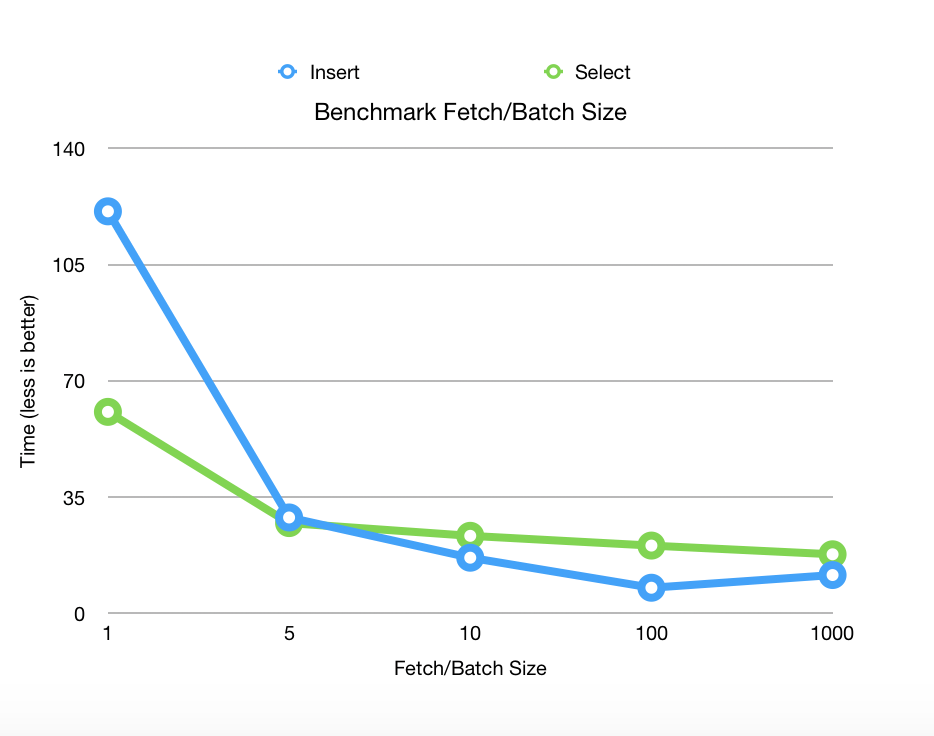
Would like to know if there is an alternative or better way to paginate through a dataset using dynamic SQL than what I am using below. The problem is that as the potential pool of data gets larger, this code slows down to the point of not being useable. In analyzing each line of code below, it appears the slow down is related to the initial rset.%Next() iteration. Is there anything available which does not require a subquery/%VID such as a simple LIMIT/OFFSET?
My code is similar to :
s sql=##class(%SQL.Statement).%New()
Hi Community!
We know that every developer has small side projects — apps where you experiment with new technologies, test ideas before implementing them in bigger solutions, or just build something fun for the sake of curiosity. But what if one of those projects could take you all the way to the InterSystems READY 2025?
We’re launching a unique opportunity: show us your passion, creativity, and love for IRIS, and win a free pass to the InterSystems READY + hotel accommodation!
The rules are simple: upload your fun IRIS-based side project to Open Exchange, and record a short inspirational video about why you should be the one to get the pass to THE event of the year and win!
Duration: April 21 - May 04, 2025
Prizes: hotel accommodation and free passes to the InterSystems READY 2025!
.jpg)
We have a machine that serves 4 instances of Cache on VMS systems, one of them is password protected and works fine as they all do. we decided we wanted something beefier and copied it to a server, well all but the one you have to login to works so 3 of the 4 do. and the odd part is I can no longer get to the management page from anywhere on any machine, http://localhost/csp/bin/Systems/Module.cxw I get a 404.8 error, I have tried adjusting security and same thing. and a server availability error.
Hello Community,
I have a queue that I need to traverse and perform operations on. To distribute the workload across multiple processes, I used a Work Queue Manager do process and I'm not expecting any status from it So, I skipped Sync / WaitForComplete in my implementation
Hi all,
I'm reviewing an older Cache routine and came across this line of code: from file ^ZDBKCRON
S $ZT="^%ETSDK"
Error trap
/home/oper/script/cache_db_backup -t # Daily CacheDB Backup
produced the following output:
<NOROUTINE> *%ETSDK
<ERRTRAP>
-----------
From what I understand, this is setting up an error trap, but I'm not entirely clear on how it works, especially in modern InterSystems IRIS environments.
Could someone please help explain:
I cloned @Yuri Marx's langchain-iris-tool repo and modified docker-compose yaml per this post:
https://community.intersystems.com/post/error-when-trying-langchain-iri…
Now I see this:
Hello everyone,
I am using a class that inherits from %RegisteredObject and %JSON.Adaptor to generate a JSON string from its instances.
However, one of the properties in my class is of type %Library.DynamicObject, as in the example:
Class Faces.Option Extends (%RegisteredObject, %JSON.Adaptor)
{
Property legend As %String;Property xAxis As %Library.DynamicObject;
}Hi devs!
Suppose I have an instance of a persistent class:
Set person = ##class(dc.Sample.Person).%OpenId(1)Class is an ancestor of %JSON.Adapter.
How can I convert it to dynamic object with the properties that person.%JSONExport() provides?
{"Name":"Elon Mask","Title":"Associate Accountant","Company":"InterSystems","Phone":"799-933-5569","DOB":"1926-12-11"}Couldn't find a right method.
Hey Community,
It's time for the new batch of #KeyQuestions from the previous month.

I have a Linux server that has multiple instances installed on it (according to my documentation).
What is the best command to show:
- what instance are installed?
- what instances are running?
I did run 'iris list' but it shows only one instance.
Can anyone please help me which function i can use to handle this error.
The Good Old Days
The %Library.DynamicObject class has been in IRIS since before it became IRIS. If you have been using it since the Cache days, you may want to brush up on some of its changes.
In Cache 2018, the %Get method only had one argument. It was the key to retrieving from the JSON, meaning that if your JSON object called myObj, it would look like the following:
Hi,
If I map all globals with (*) to a database1, then would like to map specific only some globals eg. MYGLOB* to be located in a different database2, which mapping will override the other, so would all globals that starts with MYGLOB* be placed in database1 or 2?
Thanks
If one of your packages on OEX receives a review you get notified by OEX only of YOUR own package.
The rating reflects the experience of the reviewer with the status found at the time of review.
It is kind of a snapshot and might have changed meanwhile.
Reviews by other members of the community are marked by * in the last column.
I also placed a bunch of Pull Requests on GitHub when I found a problem I could fix.
Some were accepted and merged, and some were just ignored.
So if you made a major change and expect a changed review just let me know.
!,