I need to obtain the records of the last 2 hours with format (HH:MM:SS), it only leaves me specifying the exact time
SQL is a standard language for storing, manipulating and retrieving data in relational databases.
SQL is a standard language for storing, manipulating and retrieving data in relational databases.
I need to obtain the records of the last 2 hours with format (HH:MM:SS), it only leaves me specifying the exact time
It is probably somewhere in the doc. So hard to search. Hope InterSystems going to AI on their community/support data.
How to see a meaningful value in management portal - sql explorer. For instance
Class MySetting Extends %Persistent{
Property Name As %String;
Class MyObj Extends %Persistent{
Property Setting As MySetting;
When browsing MyObj in management portal (just select * from MyObj - lazy to do a join), I will see 1,2.. values in the Setting column. I would like to see the Name. I do not want index MySetting with Name as primary as the name can change
Thank for your comment.
There is a Link Procedure Wizard option within the Management Portal (System > SQL >Wizards > Link Procedure) which I had reliability issues with so I decided to use this solution instead.
You need to query an external SQL database to use the response within a namespace. This guide is assuming that you already have a working stored procedure in SSMS although you could instead use a SQL block within the operation. Stored procedures in SSMS are preferred to maintain integrity, Embedded SQL can get very confusing if you have a complicated SQL statement.
I am currently adding a field to our Existing messaging from Epic, however there might be a possibility I need to back load data into the Ancillary system. While I have the previous messages that can be sent, they do not have this additional field that I am adding to the message.
I can do a lookup against Epic Clarity SQL Database; however, I don't want to throw a wrench into the workflow if the system cannot connect to the Epic Clarity SQL Database.
For example, I have two timestamp values ('2024-04-01 10:00:00', '2024-04-01 11:30:30'). I would like to find the difference between these two timestamps, and I need the result in hours:minutes:seconds (hh:mm:ss) format.
Expected Output: 01:30:30
Note: I need an SQL query command. I should not use ClassMethod, Function, or Stored Procedure.
Could anyone please provide me with an SQL query for my question?
I know that you can use Do $SYSTEM.SQL.Schema.ImportDDL() to insert sql files into IRIS however I was wondering if there is a way that I can upload .sqlite files into iris? I have about 20 .sqlite files that I need to get into my database. I tried using the ImportDDL method but it said "SKIPPING non-SQL SOURCE:"
Using VECTOR_COSINE() in SQL query to perform a text similarity search on existing embeddings in a %VECTOR column.
Code is below.
Commented out sql query returns this error: SQLCODE: -29 Field 'NEW_EMBEDDING_STR' not found in the applicable tables^ SELECT TOP ? maxID , activity , outcome FROMMain .AITest ORDER BY VECTOR_COSINE ( new_embedding_str ,
Sql query as written returns ERROR #5002: ObjectScript error: <PYTHON EXCEPTION> *<class 'OSError'>: isc_stdout_write: PyArg_ParseTuple failed!
Hi everyone.
This is a full example how to use a %ScrollableResultSet for results pagination using %DynamicQuery:SQL and build a JSON response including page details.
Feel free to use, share, comment or improve it.
How to query BLOB type data in MYSQL database through JDBC or ODBC
Need to make ODBC connection to fetch data from SQL Server to IRIS 2021.1. Once we are able to query the data from SQL server, need to Pass it in ensemble production
When I use Escape logic when inserting or updating Oracle Table I'm getting Max-Length exceeded error. With the original value the length is good but after I add Escape Logic, it causes value to be greater than max-length. The original value was "I visited O'Brien before heading out of town." and after added Escape logic it was "I visited O''Brien before heading out of town." Max-Length is 45.

INSERT INTO MyText
    (text)
VALUES
    ('I visited O''Brien before heading out of town.')
                 /\
             right here
Any ideas around this?
Hi, what is the easiest way to clear all the tables which store FHIR data? The most straitforward approach is to get a list of tables using the information_schema.tables view, then execute dynamic SQL with the "delete from" clause, but perhaps some helper class has already been written for this purpose?
Hello everyone,
I am looking for the syntax or the way to use a class created in the "BNA" Namespace (my application) from the %SYS Namespace.
Here is the context:
I have a "BNA" application contained in the "BNA" NS, this application provides a user creation functionality. This feature creates both the user in a table in the application and in the Iris system.
I created an initialization script for my database to be able to reset it at will, this script starts by emptying the database of this data, then initializes the basic data.
Hi VSCode users!
Just want to check with you, is this settings.json file ideal enough if I:
1. Want VSCode to connect to IRIS in docker?
2. Want to use VSCode SQL Tool?
The connection settings file:
{
    "files.associations": {

        "Dockerfile*": "dockerfile",
        "iris.script": "objectscript"
      },
    "objectscript.conn" :{
      "ns": "IRISAPP",
      "username":"_SYSTEM",
      "password": "SYS",
      "docker-compose": {
        "service": "iris",
        "internalPort": 52773
      }
    },
    "sqltools.connections": [
      {
        "namespace": "IRISAPP",
        "connectionMethod": "Server and Port",
        "showSystem": false,
        "previewLimit": 50,
        "server": "localhost",
        "port": 32770,
        "askForPassword": false,
        "driver": "InterSystems IRIS",
        "name": "objectscript-docker",
        "username": "_SYSTEM",
        "password": "SYS"
      }
    ]

}Hi All,
On February 8, 2024, we asked for input from the IRIS community regarding exam topics for our InterSystems IRIS Developer Professional exam. We will close the window for providing feedback on the exam topics on Friday, March 8, 2024. If you would like to have your say in what topics are covered on the exam, this is your last chance!
How can I access the survey?
There is an interesting new feature in the recently announced 2024.1 preview, JSON_TABLE. JSON_TABLE is one of a family of functions introduced by the 2016 version of the SQL Standard (ISO Standard, published in early 2017). It allows for JSON values to be mapped to columns and queried using SQL. JSON_TABLE is valid in the FROM clause of some SQL statements.
The syntax of JSON_TABLE is quite large, allowing for exceptional conditions where the provided JSON values don't match expectations, nested structures and so on.
The basic syntax is quite straightforward.
Need to fetch data from SQL server management studio to ensemble, using jdbc or ODBC.
Step by step solution would be highly appreciated.
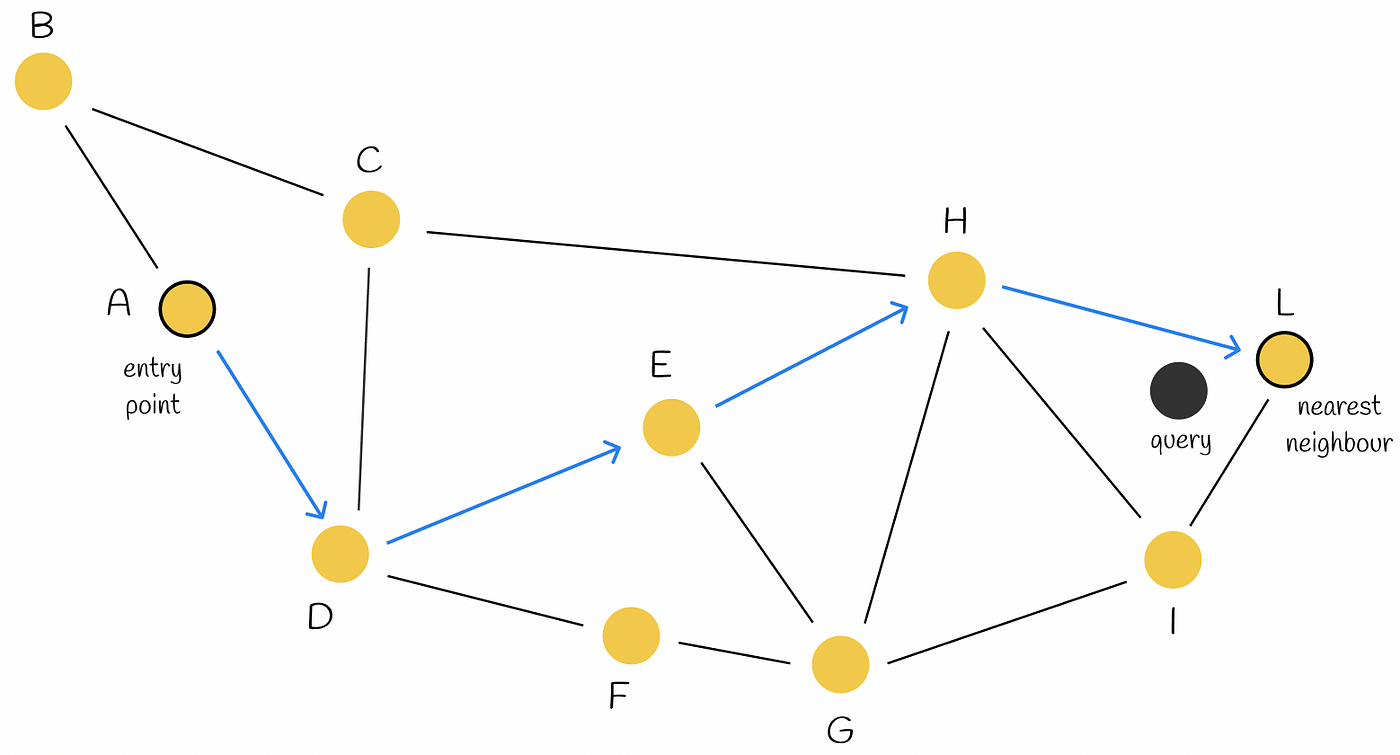
Nowadays so much noise around LLM, AI, and so on. Vector databases are kind of a part of it, and already many different realizations for the support in the world outside of IRIS.
Why Vector?
And many other reasons.
So, for this pyhon contest, I decided to try to implement this support. And unfortunately I did not manage to finish it in time, below I'll explain why.
Hello Everyone,
The Certification Team of InterSystems Learning Services is developing an InterSystems IRIS Developer Professional certification exam, and we are reaching out to our community for feedback that will help us evaluate and establish the contents of this exam.
Note: This exam will replace the current InterSystems IRIS Core Solutions Developer Specialist exam when it is released. Please note from the target role description below that the focus of the new exam will be more on developer best practices and a lot less on the ObjectScript programming language.
How do I provide my input?
Hello Community,
SQL language remains the most practical way to retrieve information stored in a database.
The JSON format is very often used in data exchange.
It is therefore common to seek to obtain data in JSON format from SQL queries.
Below you will find simple examples that can help you meet this need using ObjectScript and Python code.
ObjectScript : using Dynamic SQL with %SQL.Statement
In this article I will demonstrate the following :
Below is the primary and transformed HL7 2.
I am exporting data from Cache using the SQL export wizard. This is on a docker image of Cache hosted on a Linux server.
I select my database, schema, and table, make sure that all columns are being exported, check other settings, and then finish the export.
All server settings look correct and permissions are rwe on the directory. I have tried various directories, including a system level directory. I tried creating the file before I do the export in case there was an issue with creating the files, and I also made sure the created files had rwe permisisons.
Is it possible to authenticate an xDBC (ODBC/JDBC) connection to InterSystems IRIS via (a 3rd party) OAuth server?
For REST APIs this is possible, but could this be achieved with OAuth?
Out-of-the-box the ODBC/JDBC Drivers don't seem to have this option, but maybe some custom code could enable this? perhaps via Delegated Authentication and some OAuth classes customization, or some other way?
Has anyone done this already and can share how it was implemented, or someone with some guideline suggestions?
Tring to Performing following script in IRIS but do not know how to format Date. Normally, I would use TO_DATE or TO_TIMESTAMP in the actual queue statement below, but since I'm using Prepared Statements, I do not know how to format date in 'values' that is being used in the %Execute. It generates errors. I'm updating an Oracle Database via a SQL JDBC Gateway Connection. Does anyone know how to pass in Dates?
Wondering what version the Information.Schema schema was introduced, so that I can decide how to query the metadata for user defined tables.
Thank you!
I am trying to do a INSERT OR UPDATE SQL query, but the query always inserts new rows to table. Is it how I defined the table or am I mising something in the query?
table defines as,
Class AH.AHCOMMON.Tables.HospDepartmentData Extends %Persistent [ Language = objectscript ]
{
Property Tablespace As %Library.String(MAXLEN = 50) [ SqlColumnNumber = 2 ];
Property DepartmentId As %Library.String(MAXLEN = 50) [ SqlColumnNumber = 3 ];
Property TimezoneName As %Library.String(MAXLEN = 100) [ SqlColumnNumber = 4 ];
Property PatientDepartmentName As %Library.
Customer has a connection set up to connect to an ISC sftp server but it keeps failing the connection with:
ERROR <Ens>ErrOutConnectFailed: SFTP Connect failed for sftp.il.intersystems.com:22/NPPES/SSL='!SFTP'/PubKey=''/PrivKey=''
with error ERROR #7500: SSH Connect Error '-2146430933': SSH Error [8010102B]: Failed getting banner [FFFFFFFF8010102B] at Session.cpp:238,0
A manual connection can be made successfully and I have verified that the credentials are correct. The Connection Settings are:
SSL Configuration - !SFTP
UsePASV - checked
I'm not sure how to interpret the error.
Hey Developers,
Watch the latest video on InterSystems Developers YouTube:
Hi Community,
I am attempting to create a new table by executing a SELECT statement that involves joining multiple tables. However, I encountered an error during execution: '( expected, AS found^Combined AS.' I would also like to create a cube based on this SQL table. However, during the cube creation process, I am prompted to specify a source class, and I'm unsure which class to use as it requires an existing class. Could you please help me identify the issue with the table creation, and provide guidance on selecting the appropriate source class for the cube creation?
InterSystems is pleased to announce the General Availability of InterSystems IRIS Cloud SQL and InterSystems IRIS Cloud IntegratedML, two foundational services for developing cloud-native solutions powered by the proven, enterprise-class performance and reliability of InterSystems IRIS technology.
InterSystems IRIS Cloud SQL is a fully managed cloud service that brings the power of InterSystems IRIS relational database capabilities used by thousands of enterprise customers to a broad audience of application developers and data professionals.