In my previous HttpRequests, I have used Content-Type = application/json but I have a vendor that is requesting we send application/x-www-form-urlencoded. How would I go about formatting the Payload as x-www-form-urlencoded?
Thanks
InterSystems IRIS is a Complete Data Platform
InterSystems IRIS gives you everything you need to capture, share, understand, and act upon your organization’s most valuable asset – your data.
As a complete platform, InterSystems IRIS eliminates the need to integrate multiple development technologies. Applications require less code, fewer system resources, and less maintenance.
In my previous HttpRequests, I have used Content-Type = application/json but I have a vendor that is requesting we send application/x-www-form-urlencoded. How would I go about formatting the Payload as x-www-form-urlencoded?
Thanks
Hi everyone,
Does anyone know how to export projects via VSC?
I opened the project through the "InterSystems Tools" plugin (command is "Edit Code in Project") and I can correctly work on it.
However, when I try using the "ObjectScript" plugin to export the project (right click on the project -> "Export Project Contents")
.png)
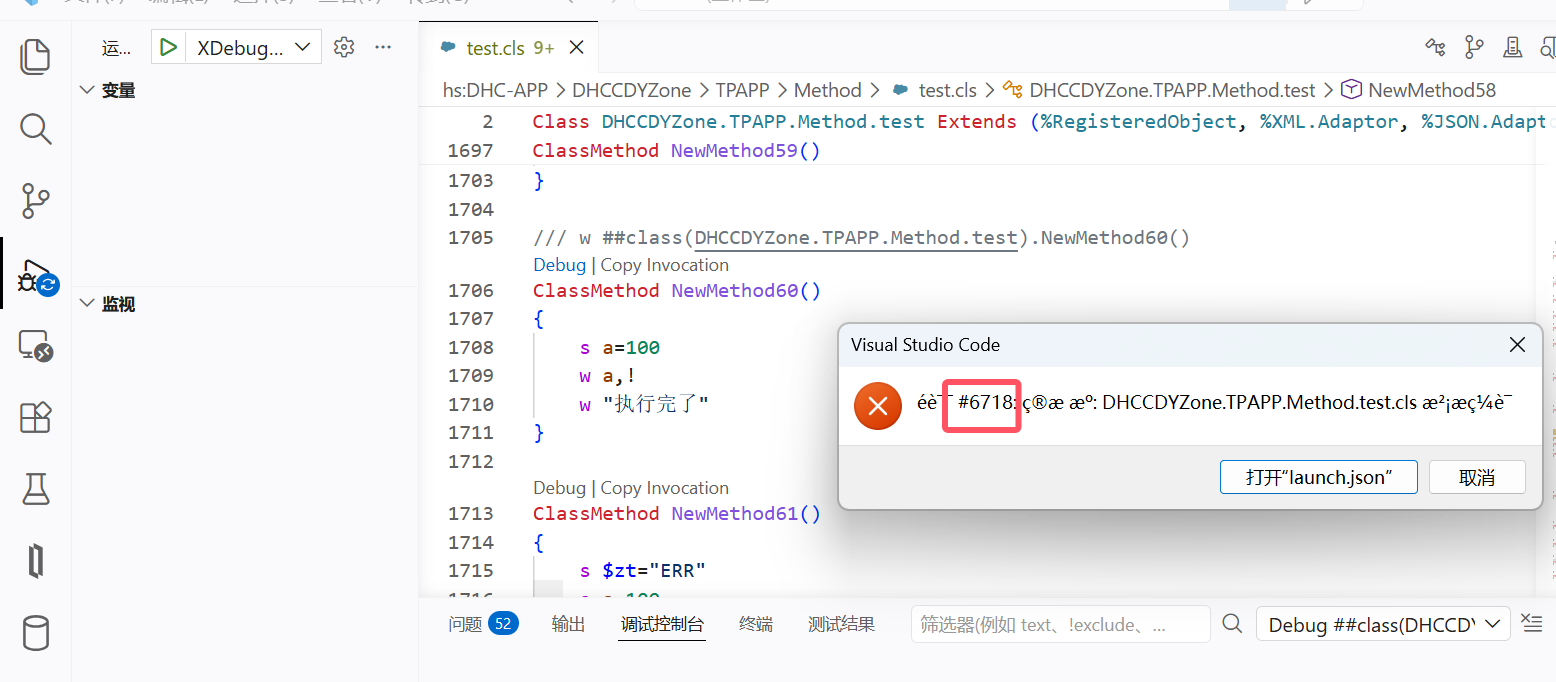
This message appears and it is not possible to export the project:
.png)
I've tried also to open a new window, then a folder and finally the project, but nothing changes.
This is an example of my workspace:
.png)
Anyone knows how to do it?
Thank you!
As applications grow, every database eventually hits scaling limits. Whether it's storage capacity, concurrent users, query throughput, or I/O bandwidth, single-server architectures have inherent constraints. This guide explains fundamental approaches to database scalability and shows how InterSystems IRIS implements these patterns to support enterprise-scale workloads.
We'll explore two complementary scaling strategies: horizontal scaling for user volume (distributing computational load) and sharding for data volume (partitioning datasets). Understanding the general principles behind these approaches will help you make informed decisions about when and how to scale your IRIS applications.
The examples in this guide use InterSystems IRIS in Docker containers.
IPM version 0.10.5 has been released on January 15, 2026. This new version contains a ton of improvements and bug fixes so be sure to check it out either directly from the GitHub page or from the Community Registry!
1-command only required for an entire IRIS instance for Data Science projects, and leveraging this to compare query methods' speed (Dynamic SQL, Pandas Query, and Globals).

Before joining InterSystems, I worked in a team of web developers as a data scientist. Most of my day-to-day work involved training and embedding ML models in Python-based backend applications through microservices, mainly built with the Django framework and using Postgres SQL for sourcing the data.
I wanted to try vibecoding a real backend + frontend setup on InterSystems IRIS, ideally using something realistic rather than a toy example. The goal was simple: take an existing, well-known persistent package in IRIS and quickly build a usable UI and API around it — letting AI handle as much of the boilerplate as possible. Here is the result of the experiments.
I've modified the class file, but messages still arrive as a single line (e.g., "H|.../rQ|.../rL") instead of separate lines in the ASTM service. The <ENQ>..<EOT> header looks correct, logs show no errors, and the service receives messages fine. Is there an Ensemble 2018.1 engine setting (like line terminator handling or TCP framing) to fix the line splitting?
Hello! In this article, I will be discussing database degrade, a type of data integrity issue one can face when using IRIS. First, I will be going over a review of the structure of IRIS databases. I'll then discuss how database degrade can manifest and common causes of degrade issues. I'll then conclude with general tips we give our customers about how to prevent or prepare for database degrade issues.
What exactly is a database? An IRIS database is a single file that consists of a fundamental unit called the "block".
Hello everybody,
I would like to export project contents using Visual Studio Code, as well as I do with InterSystems Studio.
However, while attempting the export through the InterSystems extension I get the following error:
- There are no folders in the current workspace that code can be exported to.
.png)
These are the step to reproduce my error:
.png)
Anyone can help me solving this issue?
Hey Community!
We're happy to share a new video from our InterSystems Developers YouTube:
⏯ Multi-threading an HL7 Interface and scaling beyond FIFO constraints @ Ready 2025
Who this guide is for.
This guide is intended for developers, solution architects, and DevOps engineers who want to deploy InterSystems IRIS Community Edition on Amazon Web Services (AWS). No prior AWS automation experience is required, but basic familiarity with EC2 and SSH is helpful.
What you will achieve.
After completing this guide, you will be able to:
Prerequisites
Before you begin, make sure you have:
Deployment overview
The deployment process consists of the following steps:
Hi Gang!
Did you know you can deploy InterSystems IRIS Community Edition on the cloud without paying for a license? You can try for free, and it could even come in handy if you want to show off that shiny new app you've created (maybe for the full stack competition..?)
In this article I will provide a complete walkthrough on how to deploy IRIS on Amazon Web Services (AWS), and will also add a follow up for deploying on Azure.
Now before I begin the walkthrough, I want to admit that I was terrified of using AWS the first time because I'd seen memes about how easy it is to rack up costs on AWS. So if you're thinking the same, I suggest you start by signing up to a Free Tier Account, which gives you $100 free credit to evaluate, and automatically shuts off to prevent charges. InterSystems IRIS Community Edition has a free license so if you pair the two, you can deploy without risk and completely for free. (Disclaimer: although I'm sure this is true, please do read the free account terms and make your own decisions 😅 )
Note, this article walks through deploying IRIS Community on AWS, however the same guide can be followed to deploy IRIS for Health Community Edition, or with Bring-your-own-licence editions of IRIS and IRIS for Health, to deploy a fully licensed, production version of IRIS on AWS.
Here at InterSystems, we often deal with massive datasets of structured data. It’s not uncommon to see customers with tables spanning >100 fields and >1 billion rows, each table totaling hundred of GB of data. Now imagine joining two or three of these tables together, with a schema that wasn’t optimized for this specific use case. Just for fun, let’s say you have 10 years worth of EMR data from 20 different hospitals across your state, and you’ve been tasked with finding….
Can the IRIS SQL engine be extended with custom optimization rules (e.g., prioritizing certain indices or join orders)? If not, is there a supported way to influence cost models?
Hi Community,
What is the correct syntax in a merge.cpf file to create a database with its associated resource ?
where can use sandbox in InterSystems IRIS Data Platform 2025.3
How many times have you had to receive or generate a JSON and wished you could work on it using DTLs without having to deal with DynamicObjects trying to remember the name of each field? Do you want to break down and make your giant JSON file more digestible?

In my case, never, but I thought that someone might find it useful to have a feature that captures your JSON and breaks it down into a series of ObjectScript classes that you can work with more easily and conveniently.
Well then...behold JSON2Class in all its glory!
Job Title: InterSystems Developer / Specialist (IRIS / HealthShare)
Location: New York City, NY (Hybrid / Remote)
Duration: Contract (2+ years)
Experience: Min. 8 Years
We are looking for an experienced InterSystems Developer / Specialist with expertise in InterSystems IRIS / HealthShare to support healthcare integration and interoperability initiatives. The ideal candidate should have hands-on experience in ObjectScript development, healthcare data standards, and integration protocols supporting EHR/HIE

Some concepts make perfect sense on paper, whereas others require you to get your hands dirty. Take driving, for example. You can memorize every component of the engine mechanics, but that does not mean you can actually drive.
You cannot truly grasp it until you are in the driver's seat, physically feeling the friction point of the clutch and the vibration of the road beneath. While some computing concepts are intuitive, Intelligent Agents are different. To understand them, you have to get in the driver's seat.
As mentioned in the previous article, it is possible to configure the way you wish your collections to be stored and queried in SQL.
.png)
To set this up, you will need to use the following field parameters and settings:
In InterSystems IRIS, when you compile a persistent class, you automatically get a SQL table. Sometimes, there are situations that require having a slightly (or not so slightly) different names/options in SQL compared to Object model. Here are some of the settings that you can change to make it happen.
They define the "Face" of your class when it appears as a table in the SQL catalog.
SqlTableName allows you to change the name of SQL table that holds objects from your class. This is especially useful, when your class name uses reserved SQL words in a name, e.g. Group.
A question that quickly arises when configuring IAM (aka Kong Gateway) is how many routes should be created to reach all the business objects in an IRIS API.
A common mistake is to create one route per business object, unnecessarily multiplying the number of routes.
This is the second part of an article pair where I walk you through:
As mentioned the goal is to give you a smooth “first run” experience.

If you already know Java (or .Net) and perhaps also have used other document databases (or looking for one), but you are new to the InterSystems world, this post should help you.
InterSystems IRIS Cloud Document is a fully managed document database that lets you store JSON documents and query them with familiar SQL syntax, delivered as a cloud service managed by InterSystems.
In this article pair I’ll walk you through:
The goal is to give you a smooth “first run” experience.

Hi folks!
Is there any way to know the text of the SQL queries executed against the IRIS server?
My case: I have an SQL class query with a few parameters and and some combination of values causes unexpected results.
It'd be great if I could just copy the query from some log of queries done vs my IRIS the server. Cannot find it easily, though. Any advice?
Modern platforms usually treat observability as three core signals:
OpenTelemetry (OTel) is the standard way to produce and ship all three signals.
We are hiring! 100% Remote W2 Contract | 3-6+ Months (numerous extensions likely)
Two Roles:
🔹InterSystems Engineer
🔹Epic Bridges Certified/InterSystems Engineer
Having solid experience with the below:
Hi folks!
How can we handle JSON boolean types in IRIS?
I'm having a UI sending me a JSON payload as:
{
"id": 1,
"strprop": "string",
"boolprop": true
}The class is
MyPackage.MyClass Extends (%Persistent, %JSON.Adaptor)
{
strprop as %String;
boolprop as %Boolean;
}And I'm trying to update an instance of a MyPackage.MyClass and I'm getting a datatype-related error, something like %JSONImportInternal+269...
How am I supposed to deal with booleans in JSON with IRIS and ObjectScript? Any best practice advices?
There are numerous excellent tools available for testing your REST APIs, especially when they are live. Postman, various web browser extensions, and even custom ObjectScript written with %Net.HttpRequest objects can get the job done. However, it is often difficult to test just the REST API without inadvertently involving the authentication scheme, the web application configuration, or even network connectivity. Those are a lot of hoops to jump through just to test the code within your dispatch class. The good news is that if we take our time to understand the inner workings of the %CSP.REST class, we will find an alternative option suited for testing only the contents of the dispatch class. We can set up the request and response objects to invoke the methods directly.
Hi, now I would like to continuous on the topic that we talk about previously
Using Postman for testing the OAuth2.0 of the InterSystems FHIR repository - Part1
.png)
Question 1: Where is my client_id and client_secret come form?
Short answer: Authentication Server.
If you don't have an Authentication Server, you may set up one as following
.png)
Provide the hostname (the host must support Https), at least 1 grand type (we choose client credential here), and SSL/TSL configuration
.png)
Input the scopes (here we input user/*.read and user/*.
Sometimes customers need a small IRIS instance to do something in the cloud and shut it down, or they need hundreds of containers (i.e. one per end user or one per interface) with small workloads. This exercise came about to see how small an IRIS instance could be. For this exercise we focused on what is the smallest amount of memory we can configure for an IRIS instance. Do you know all the parameters that affect the memory allocated by IRIS ?