Currently have an extension of the ..lookup function as a custom version of the lookup. Is there any easy way to get it to display it as a list of the lookup tables
ClassMethod LookupV3(table As %String = "",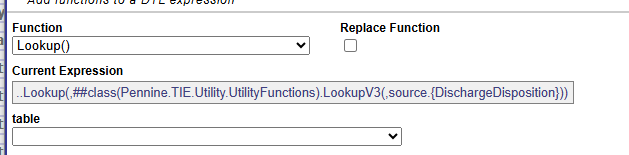
and the one i'm trying with
Currently have an extension of the ..lookup function as a custom version of the lookup. Is there any easy way to get it to display it as a list of the lookup tables
ClassMethod LookupV3(table As %String = "",
and the one i'm trying with
If you’re heading to READY 2026, make sure the Tech Exchange is on your list! It’s where things get a bit more interactive — demos, conversations, quick questions, and real-time answers from the people behind the tech 🚀
Stop by the Developer Ecosystems Booth👋
Learn how we support developers at every stage of their journey. Stop by to:

If you have ever dug through a large IRIS namespace looking for where a particular string, method call, or pattern was used, you know the pain: there was no built-in way to do a grep-style search across your server-side ObjectScript code from VS Code — at least not without jumping through some hoops.
That is what ObjectScript Search fixes.
Try it today with a simple install from the VS Code Marketplace. If you don't like it, uninstalling is just as easy. But I think you will like it — it is a huge quality-of-life improvement for anyone doing ObjectScript development in VS Code.
Working with files often starts off simple. open the file, read, and process. That approach works perfectly well, until the file happens to be an Excel file.
A Common Assumption
At first, an Excel file (.xlsx) looks like just another data file, rows, columns and values. nothing unusual. So it's natural to assume it can be read the same way as a .txt ot .csv file. But that's where things start to break.
Why Excel files behave differently
The key difference is how the data is stored:
-> .txt / .csv - plain text, line-by-line.
-> .
Hi Community,
Preparing for InterSystems Certification exams requires more than reading documentation. It calls for focused practice aligned with real exam objectives.If you are planning to validate your expertise in HL7, SQL, System Administration, or Development, structured preparation can make a significant difference.
The platform offers a large pool of practice questions mapped to certification domains, along with detailed answer explanations that point back to relevant documentation.
Hello,
I am receiving the following message structure on Ensemble from a lab machine, and it is still being processed. I am using the ASTM format with the EnsLib.EDI.ASTM.Service.TCPService service. I have reviewed multiple ASTM messages and verified the schema structure. Logs are not showing any error or TCP connection is not disconnecting. I am not able to understand why am I receiving this. Please let me know if any additional details are required.

Hi Community,
Enjoy the new video on InterSystems Developers YouTube:
⏯ Data on the Move - Securing InterSystems IRIS Connections with TLS @ Ready 2025
InterSystems is pleased to collaborate with the Harvard Health Systems Innovation Lab (HSIL) on the HSIL Hackathon 2026.
As part of this joint initiative, InterSystems will support participants with a dedicated challenge focused on building innovative healthcare applications using modern interoperability and AI technologies.
The HSIL Hackathon 2026 is a two-day innovation event focused on developing solutions that improve healthcare systems through the use of AI.
📅 Event dates: April 10–11, 2026
📍 Format: One hackathon taking place simultaneously in two hubs
👥 Participation: ~50 teams across both locations
🏆 Next step for winners: Venture Building Program
If you have long-running messages here's a simple code to catch them. You can also use Queue Wait Alert to get the same results, although this code will catch even a single active message with an empty queue. It also scans all namespaces with no production modification, so it can be used for debugging.
Include Ensemble

Class User.LongMessagesTask Extends %SYS.Task.Definition
{

Parameter TaskName = "Long running messages";

Property LongRunningMessageThreshold As %Integer(MINVAL = 1) [ InitialExpression = 60 ];

Method OnTask() As %Status
{
	set ts = $zdatetime($NOW(0),3,1)
	set ns = ""
	while 1 {
		// Iterate namespaces
		set ns = $o($$$EnsJobMonitorRoot(ns))
		quit:ns=""

		set job =""
		while 1 {
			// Iterate jobs
			set job = $o($$$EnsJobMonitorRoot(ns, job))
			quit:job=""

			// Get business host name
			set bh = $o($$$EnsJobMonitorRoot(ns,job,""))

			// Get the time of the last state change
			set lastActivity = $$$EnsJobMonitorRoot(ns,job,bh,"%LastActivity")

			// Get active message, if any - bh can be just idling
			set active = $d(^[ns]Ens.ActiveMessage(job),messageid) // From $$$EnsActiveMessage
			if active {
				set time = $system.SQL.Functions.DATEDIFF("s", lastActivity,  ts)
				if time > ..LongRunningMessageThreshold {
					set text = $$$FormatText("Long running message %1, in ns: %2, BH: %3, processing since %4, for %5 seconds", messageid, ns, bh, lastActivity, time)
					// For debug
					// write text, !
					do ##class(%SYS.System).WriteToConsoleLog(text)
				}
			}
		}
	}
	quit $$$OK
}

}RabbitMQ is a message broker that allows producers (those who send a data message) and consumers (those who receive a data message) to establish asynchronous, real-time, and high-performance massive data flows. RabbitMQ supports AMQP (Advanced Message Queuing Protocol), an open standard application layer protocol.
The main reasons to employ RabbitMQ include the following:
Hi everyone,
I need to connect to an SFTP server from InterSystems IRIS 2024, but the connection must go through a proxy.
I couldn’t find any built-in support for SFTP with proxy in IRIS/Ensemble.
What would be the recommended approach in this case?
is there any native or supported way to handle SFTP + proxy?
Any examples or best practices would be appreciated. Thanks!
v2026.1 was just released as GA, and one of the features I'm looking forward to using is the DTL Explainer feature.
This allows you to take a Data Transformation, and with a click of a button get a human-readable description of the transformation (which you can also use as the basis for the DTL Description).
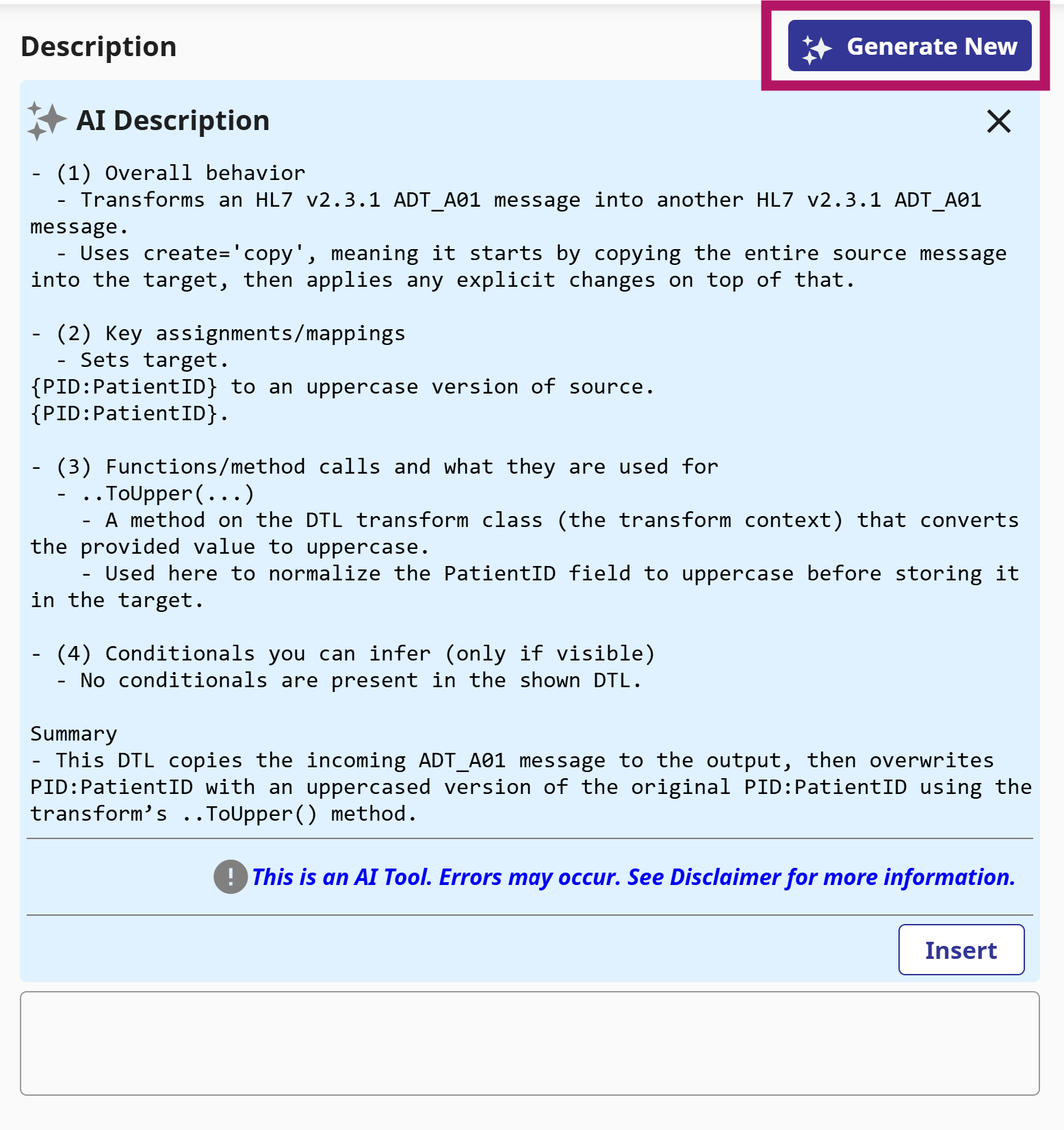
For complex DTLs, especially ones you didn't write yourself, or you did but a long time ago, this will allow you to get a clear quick understanding of what it's doing.
It’s no secret that the InterSystems Global Masters program is integrated with Developer Community, Open Exchange, and Ideas Portal. Whenever you contribute to any of these platforms, you automatically earn points and badges on Global Masters.
We’ve created a short guide to help you discover the best ways to earn points on Global Masters:
Please note that points are automatically awarded on the 4th day after you make a contribution on DC, OEX, or the Ideas Portal (activities made outside of the Global Masters platform).
Hi, Community!
Find out about the latest UX enhancements in version 2026.1 of InterSystems products!
Building Integrations: A New User Experience (v2026.1)
In this video, Product Manager @Aya Heshmat walks you through:
Hi Guys,
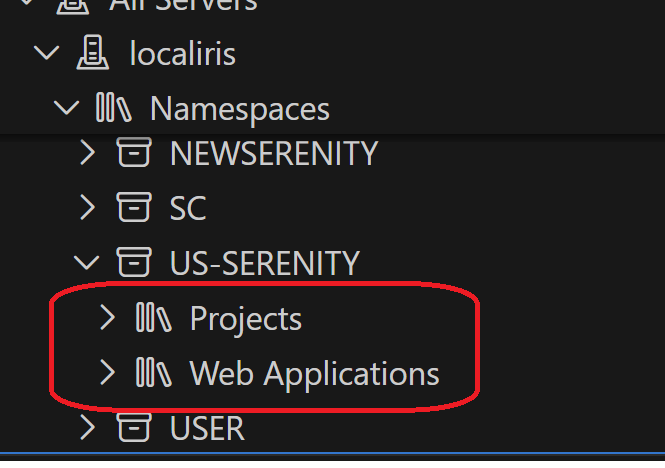
I've connected VS Code to my IRIS server and can see projects & web application option but not Classes tab, how can I add it, and with the old Studio we do have the Inspector tab where we can check properties, Storage, methods, are these available in VS code?
also does any changes or new classes created via VS code automatically reflected in my IRIS namespace ?
Thanks
The standard %Net.HttpRequest library in InterSystems IRIS is powerful and comprehensive, but it can be verbose for simple operations. Writing an HTTP request often requires several lines of code to instantiate the class, configure the server, the port, HTTPS, add headers, and finally send the request.
When testing in the terminal, this configuration quickly becomes too heavy, and usually ends up with the creation of temporary methods...
FastHTTP
The 2023.1.7 maintenance releases of InterSystems IRIS® data platform, InterSystems IRIS® for Health, and InterSystems Health Connect™ are now Generally Available (GA).
Please share your feedback through the Ideas Portal using the category Post-Release Feedback so we can build a better product together.
You can find the detailed change lists & upgrade checklists on these pages:
There are many EAPs available now. Check out this page and register to those you are interested.
IrisTest is a light weight, powerful, user-friendly tool designed to simplify unit test report generation. It includes an interactive shell and API to facilitate communication, allowing developers to easily manage and generate reports for their test runs in various formats. Whether you're debugging or creating detailed reports for analysis, IrisTest makes the process smooth and efficient!
Hi Community,
Enjoy the new video on InterSystems Developers YouTube:
⏯ Ahead of the Threats - The Future of Secure Systems @ Ready 2025
The Interoperability user interface project has continued from 2025.1 and has incorporated many of the items that you – our customers and partners – have suggested and observed. We are continuing to invest in feedback and updating this important user experience. In the latest release, 2026.1 for IRIS, IRIS for Health, Health Connect and Health Connect Cloud, the BPL Editor and Message Viewer/Visual Trace applications are now available for opt-in!
NOTE:
If you're building solutions on IRIS and want to use Git, that's great! Just use VSCode with a local git repo and push your changes out to the server - it's that easy.
But what if:
Hi Guys,
I get a Quit argument not allowed error in an if block how can I fix this?
I thought I knew how to return a Response from a Business Process back to the Source Config Name, but I guess not.
I am working on a Proof of Concept, that the Request Message Class would determine a "Route" within a Business Process to make a FHIR call (search, read) to our External FHIR repository, and return back the HS.FHIR.DTL.vR4.Model.Resource.xxxxxxx as a Response to the Source Config Name.
I have the FHIR part working, however now that I have the data in the form of HS.FHIR.DTL.vR4.Model.Resource.
So I would like to start a production with a service that has an SQL trigger for after and INSERT. Then I would like it to start a process. Could someone help me in the direction of a solution, please and thanks.
Hi Community,
We’re excited to introduce two new Global Masters milestone badges that recognize outstanding long-term contribution on the Developer Community.
These badges are part of the Global Masters program and reward members who reach major publishing and participation milestones on DC.
More badges and updates are coming soon - stay tuned 😊
 |
|
100,000 points |
|
|
60,000 points |
Keep publishing. Keep asking. Become a Legend. 🚀
Hello InterSystems Community,
I hope you're all doing well. I'm reaching out to ask if there's any way to enable a dark theme or dark mode for the HealthShare Management Portal.
I have a visual impairment (amblyopia/lazy eye) which means I'm nearly blind in one eye. Like many people with visual difficulties, I find that bright white backgrounds and interfaces cause significant eye strain and fatigue. This makes it challenging to work with the Management Portal for extended periods.
Hi Communtiy,
I am a begineer who is working and trying to understand Intersystems. I am developing an Ensemble interface which receives a XML message and converts it into HL7 format without using enslib.HL7 classes.
Requirement
Here's a practical example of how to import data from a CSV file into InterSystems CACHÉ using ObjectScript
Assuming your CSV file is simple (e.g., comma-separated, with headers), you can use %Stream.FileCharacter to read it line by line and parse the data.
ClassMethod ImportCSV(filePath As %String) As %Status {
    Set stream = ##class(%Stream.FileCharacter).%New()
    Set sc = stream.LinkToFile(filePath)
    If 'sc Quit sc
    While 'stream.AtEnd {
        Set line = stream.ReadLine()
        Set fields = $ListFromString(line, ",")
        // Example: Save to a persistent class
        Set obj = ##class(MyApp.Data).%New()
        Set obj.Name = $List(fields,1)
        Set obj.Age = $List(fields,2)
        Set obj.Email = $List(fields,3)
        Do obj.%Save()
    }
    Quit $$$OK
}SetUp:
I have created the following Task to kick off a Ens.BusinessService to execute a SQL query and process the results
Class OSU.Workday.TerminationsTask Extends %SYS.Task.Definition
{

Parameter TaskName As STRING = "OSU - Workday Termination Update";

Method OnTask() As %Status
{
    #Dim sc as %Status
    #Dim ex as %Exception.AbstractException

    set sc = $$$OK

    try{
        // create the service
        #Dim tService As OSU.DataSource.Workday.TermService
        Set tServiceConfigName = "OSU.DataSource.Workday.TermService"

        // Call BusinessService
        $$$ThrowOnError(##class(Ens.Director).CreateBusinessService(tServiceConfigName,.tService))
        $$$ThrowOnError(tService.Adapter.OnTask())
        set (tHint) = ""
    }catch ex{
        set tSC = ex.AsStatus()
    }
    quit tSC
}

ClassMethod TestTask()
{
	set tTask = ##class(OSU.Workday.TerminationsTask).%New()
	$$$ThrowOnError(tTask.OnTask())
}

/// Location and Revision of this file in Perforce (Auto-updating)
Parameter SrcVer = "$Id$";

}