Hi Developers!
Currently I have 2000+ lines in a class, and I think it's a lot already? What are the best practices?
if 10K lines OK? How do you cope with it? Please share?

InterSystems IRIS is a Complete Data Platform
InterSystems IRIS gives you everything you need to capture, share, understand, and act upon your organization’s most valuable asset – your data.
As a complete platform, InterSystems IRIS eliminates the need to integrate multiple development technologies. Applications require less code, fewer system resources, and less maintenance.
Hi Developers!
Currently I have 2000+ lines in a class, and I think it's a lot already? What are the best practices?
if 10K lines OK? How do you cope with it? Please share?

A question that quickly arises when configuring IAM (aka Kong Gateway) is how many routes should be created to reach all the business objects in an IRIS API.
A common mistake is to create one route per business object, unnecessarily multiplying the number of routes.
If you already know Java (or .Net) and perhaps also have used other document databases (or looking for one), but you are new to the InterSystems world, this post should help you.
InterSystems IRIS Cloud Document is a fully managed document database that lets you store JSON documents and query them with familiar SQL syntax, delivered as a cloud service managed by InterSystems.
In this article pair I’ll walk you through:
The goal is to give you a smooth “first run” experience.

Starting with InterSystems IRIS 2025.1, the way dependent cubes are handled in cube builds and cube synchronizes was changed.
This change may require modifying custom build/synchronize methods. If you are using the Cube Manager, these changes are already considered and handled, which means no action is needed.
Prior to this change, cubes were required to be built and synchronized in the proper order and account for any cube relationships/dependencies. With this change, dependent cubes are automatically updated as needed when using the %BuildCube or %SynchronizeCube APIs.
Hi everyone,
I was wondering if it is possible to use the InterSystems Server VSCode Extension to work in client side mode but importing locally the content of a project without having to choose the files manually.
It would be awesome to have all project-related assets synchronized in one go. Relying on InterSystems Projects (.prj files) would be convenient for several reasons:
Claude Code has a strong understanding of IRIS, but unexpected issues still occur.
The first issue is one that has already happened several times and is likely to continue occurring if not properly addressed.
In IRIS, the collation for string data (%String) is set to SQLUPPER by default. As a result, when data is retrieved via SQL, it may be returned in uppercase (for example, when sorting and aggregating with GROUP BY).
Hi developers!
In a method I need to return a result as a dynamic object aka JSON Object. And here is my logic:
Classmethod Planets() as %DynamicObject {

 set val1="Jupiter"
 set val2="Mars"
// this doesn't work! cannot compile
 return {"value1":val1, "value2":val2}

}
So I need to do the following:
Dynamic Entities (objects and arrays) in IRIS are incredibly useful in situations where you are having to transform JSON data into an Object Model for storage to the database, such as in REST API endpoints hosted within IRIS. This is because these dynamic objects and arrays can easily serve as a point of conversion from one data structure to the other.
Since I started using Claude Code, my motivation to create things has skyrocketed.
Previously, even if I wanted to build something, actually doing the coding felt like a hassle, so unless there was a very strong need, I rarely went as far as programming. But now, if I just jot down the specifications, Claude Code handles the rest automatically, resulting in a dramatic improvement in productivity.
I come from a generation native to ObjectScript, so I used to feel some hesitation when it came to switching to Python.
Recently, I replaced my old laptop with a new one and had to migrate all my data. I was looking for a guide but couldn’t find anything that explained in detail how to migrate server connections from InterSystems Studio and Visual Studio Code from one PC to another. Simply reinstalling the tools is not enough, and migrating all the connections manually seemed like a waste of time. In the end, I managed to solve the problem, and this article explains how.
Migrating Studio connections was the most challenging part.
Hello,
can someone confirm to me if image for docker deployment of IRIS are ready for production? Also what about Healtshare products?
Thank you.
Hello all,
I have a EnsLib.HTTP.GenericMessage inbound from a webhook with a GC stream.
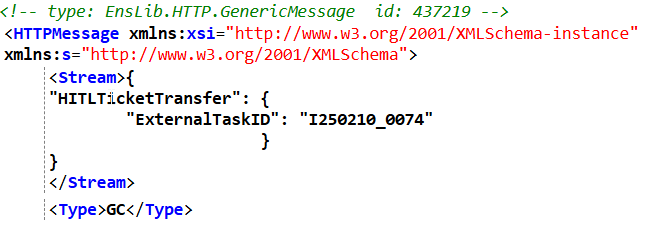
My router is defined as the following:
Modern platforms usually treat observability as three core signals:
OpenTelemetry (OTel) is the standard way to produce and ship all three signals.
I am trying to built a Task that kicks off a Workflow to pull data into HSPD, and when I try to test the Task
I keep getting TestTask+3^OSU.Workday.TerminationsTask.1 *%Exception.StatusException ERROR <Ens>ErrConfigDisabled: Configuration item 'OSU.DataSource.Workday.TermService' is disabled
But within the Namespace the OSU.DataSource.Workday.TermService shows enabled.
Here is my Task that I am using...
Class OSU.Workday.TerminationsTask Extends %SYS.Hi all,
I'm trying to learn Intersystems Iris. And I have a question.
How can I use left arrow key with if function. Also if it is possible, teach me that how can I make backspace to edit data?
P.S Sorry for bad English.
w $char(27)_"[2J"_$char(27)_"[H"
s var="12345abcde"
s curPos=$length(var)+1
w $char(27)_"[3;1H"_"First var= "_var
for {
read *key
#; Left Arrow Key
if key="?" {
}
#; Right Arrow Key
elseif key="?" {
}
#; Backspace
elseif key=8 {
}
elseif key=9 {
quit
}
}
w !,"Last var= ",var
Kind Regards,
Ikh
This time, it’s not really programming per se, but we are using React as a front-end development tool for IRIS. When using a web development framework—not limited to React—one key consideration is which CSS framework to use. Up until now, we’ve been using Bootstrap, which is the standard and the easiest to get started with.
However, while it’s easy to use, I felt that it offers limited flexibility for customization. That said, even if we were to switch to another CSS framework, learning it and rewriting everything from scratch would be a significant effort, so we left things as they were.
Is your source control treating your InterSystems IRIS environment like a simple collection of files? Most source control tools lack the native intelligence to handle InterSystems IRIS, which is why your code is treated as such.
Deltanji is different. It understands how code and other artifacts are stored within IRIS and can manage them directly. This eliminates the friction that other tools introduce to the process.
Join us for an InterSystems-hosted webinar to see how Deltanji provides an enterprise-grade source control solution that is tightly integrated with your IRIS environment.
We are working on Disk Consolidation and looking at Class/Globals that are rather large and not being cleaned up by the nightly Purge process. We have implemented DeleteHelper - A Class to Help with Deleting Referenced Persistent Classes | IDC on any Custom Data Classes, and Business Processes (BPL).
We have a bunch of Data Classes, BPL's, and Operations that connect to external MS SQL Server using JDBC to query or write data to using Stored Procedures and Queries. All that Query external tables are using EnsLib.SQL.Snapshot, and this is being written to ^Ens.AppData which is not cleaned up.
A Continuous Training (CT) pipeline formalises a Machine Learning (ML) model developed through data science experimentation, using the data available at a given point in time. It prepares the model for deployment while enabling autonomous updates as new data becomes available, along with robust performance monitoring, logging, and model registry capabilities for auditing purposes.
InterSystems IRIS already provides nearly all the components required to support such a pipeline. However, one key element is missing: a standardised tool for model registry.
Migrating from Oracle, MSSQL, or other purely relational database systems to a multimodel InterSystems IRIS is a strategic decision that requires careful planning and execution. While this transition offers significant benefits, including enhanced performance, scalability, and support for modern architectures, it also comes with challenges. In this article I will highlight some of the considerations connected to coding to ensure a successful migration. I will leave everything connected to an actual migration of structures and data outside the scope of this article.
.png)
First, when you're considering migrating to a different database system, you need to understand your business logic, whether it's on the side of the application (application server) or the database server. Basically, where do you have your SQL statements that you will need to potentially rewrite?
For software engineers and data architects evaluating data platforms for risk and compliance consolidation in financial services.
Financial institutions typically run separate applications for risk management and regulatory compliance, creating fragmented data landscapes that are difficult to query and expensive to maintain. InterSystems IRIS is a distributed HTAP data platform that allows organizations to consolidate these systems onto a single, unified data layer.
Hi All,
First I want give a Shout Out to @Theo Stolker and @Rupert.Young. Because they helped me with the solution.
When you're using the EnsLib.SQL.Snapshot as a Property in the Response Message to return Snapshot data (,e.g.: from Business Operation to Business Process,) the Snapshot data won't be cleaned with the Purge messages task/service.
{
Property SnapshotProp As EnsLib.SQL.Snapshot;
}
The data will be stuck in the global: ^Ens.AppData. You can find it with this query in System>Globals: ^Ens.AppData("EnsLib.SQL.
While starting with Intersystems IRIS or Cache, developers often encounter three core concepts: Dynamic Objects, Globals & Relational Table. Each has its role in building scalable and maintainable solutions. In this article, we'll walk through practical code examples, highlight best practices, and show how these concepts tie together.
1. Working with Dynamic Objects:
Dynamic objects (%DynamicObject and %DynamicArray) allow developers to manipulate JSON-like structures directly in Objectscript. They are especially useful for modern applications that need to parse, transform or generate JSON.
Hi folks!
Is there an easy setting, e.g., to merge.cpf so that it will disable the management portal on a deployed IRIS container?
The idea is to let only one of my particular web apps be available and everything else not even accessible on IRIS.
Why do we need this?
Lack of Compiled Context: AI tools only see source code; they don't know what the final compiled routine looks like.
Macro Hallucination: Because AI doesn't see our #include files or system macros, it often makes them up, wasting time during debugging.
The Documentation Gap: Deep logic optimization often requires understanding internal macros that aren't fully covered in public documentation.
Manual Overhead: Currently, the only way to fix this is to manually use the IRIS VS Code extension to find the "truth" in the routine.
Anyone up for a round of golf?
Are you fed up of making a machine write code for you? Do you miss thinking through problems yourself? Then you are in luck, this round, I propose adding the rule of no AI use. obviously its a game of honor with no prize, so I shan't be enforcing this, but you'll know...
Challenge:
Create a function which takes a string as a parameter, and returns the length of thelongest sequence of alternating consonants and vowels. The sequence is broken by having two vowels or two consonants in a row.
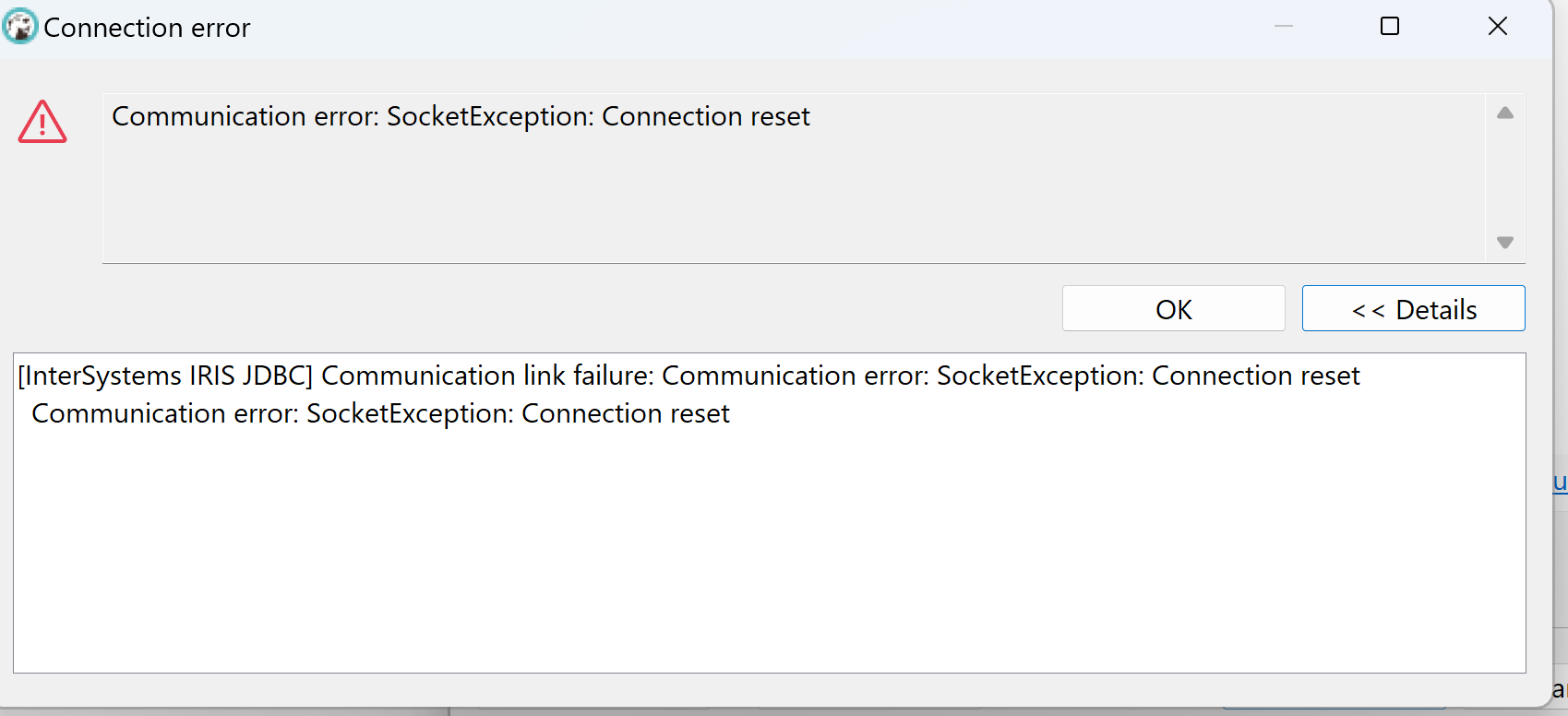
So I am running IRIS 2023.3 via a Docker container on Windows 11 and when I go to System Administration > Connectivity > SQL Gateway Connections, I am able to connect to the iris container via jdbc. However, when I go to JBeaver and try connecting to IRIS via JDBC I am unable to do so. I know that this is a local laptop issue because when someone else runs it on t heir mac it works fine.
I didn't know about ObjectScript until I started my new job. Objectscript isn't actually a young programming language. Compared to C++, Java and Python, the community isn't as active, but we're keen to make this place more vibrant, aren't we?
I've noticed that some of my colleagues are finding it tricky to get their heads around the class relationships in these huge projects. There aren't any easy-to-use modern class diagram tool for ObjectScript.
Related Work
I have tried relavant works:
- InterSystems class view:
1. https://github.
InterSystems IRIS 2026.1 is here, and it’s packed with powerful enhancements designed to help organizations scale their data management like never before. Whether you’re dealing with the operational aspects of managing massive datasets or looking to optimize storage costs, this release brings a host of features to simplify life with your data and meet the growing challenges of very large datasets.