Any plans for ODBC 3.8 support?
.NET Framework (pronounced dot net) is a software framework developed by Microsoft that runs primarily on Microsoft Windows.
.NET Framework (pronounced dot net) is a software framework developed by Microsoft that runs primarily on Microsoft Windows.
Any plans for ODBC 3.8 support?
One of the newest features of .Net core 10 with C# 14 is the file-based apps. This feature allows you to execute C# code in a simple .cs file without the need to create a solution, a project, or any of the related structure.
For example you can create a script.cs file using the notepad with the content:
Console.WriteLine(“This is a script in c#.”);Then in the command line or the terminal you execute the command:
dotnet run script.csThere is plenty of information about this new feature of .net 10.
trying importing classDefinition to Iris via LoadStream() fails with
Code is here; use any valid exported ClassDefinition as File to test that:
    public static void loadClassFromStream(this IRIS iris, string txt)
    {

        // IRISObject globalCharStr = IrisStreamExtensions.FromTxt(iris, text);
        var fp = @"C:\tmp\TestClass.xml";
        txt = File.ReadAllText(fp);

        var stream = new MemoryStream();
        var bytes = Encoding.Default.GetBytes(txt);
        stream.Write(bytes, 0, bytes.Length);
        stream.Flush();
        stream.Position = 0;

        var qspec = "/display=none /compile=0 /recursive=0 /relatedclasses=0 /subclasses=0";
        var errorlog = "";
        var loadedItems = "";

        var parameter = new object[]
        {
            stream,
            qspec,
            errorlog,
            loadedItems
        };

        try
        {
            iris.ClassMethodStatusCode("%SYSTEM.OBJ", "LoadStream", parameter);
        }
        catch (Exception e)
        {
            throw new IrisException("%SYSTEM.OBJ", "LoadStream", e);
        }

    }
Hey everyone.
I have been taking a look at the External Language Server functionality to hook into some Dotnet functions, and I am hitting a bit of a wall.
Based on the example in the documentation here I can get the same result doing:
ENV>Set$SystemHowever, if I then try another system class, I get an error:
ENV>(don't judge the method choice, I know it's not supposed to do anything except return what's being passed in. Just seemed like a safe choice)
It feels like I'm missing an obvious step here.
I am migrating from HealthShare 2015 to Health Connect 2025 as part of an infrastructure upgrade. We have several C# .NET Razor web apps that interact with HealthShare using the InterSystems.Data.CacheClient assembly, and the Cache Object Binding Wizard for .NET to build the C# proxy classes. This has worked flawlessly for about 6 years.
I am now switching to using the Native SDK with the InterSystems.Data.IRISClient assembly and using the C# IRISReference and IRISObject
Hi community!
I am excited to say that since the beginning of this year we have published many of the client SDKs for InterSystems IRIS, InterSystems IRIS for Health and Health Connect to the corresponding external repositories (Maven, NuGet, npm and PyPI).
We are happy to present the bonuses page for the applications submitted to the InterSystems .Net, Java, Python, and JavaScript Contest!
See the results below.

| Project |
XEP |
Native SDK |
PEX |
Java Persister |
ADONET & . |
Hi Developers!
Here are the technology bonuses for the InterSystems .Net, Java, Python, and JavaScript Contest that will give you extra points in the voting:
Hi Developers,
We are happy to announce the new InterSystems online programming contest:
🏆 InterSystems .Net, Java, Python, and JavaScript Contest 🏆
Duration: September 22 - October 12, 2025
Prize pool: $12,000
(2).jpg)
I'm following this guide as well as the sample.cs file and getting an error message on this linecache_connection.Connect();
The error is:Caught GlobalsException: lc_conn::connect_device returned Db_err: source: lc_conn::connect() message: lc_conn::connect: CacheSecureStart returned -15: <ACCESSDENIED>
I've tried many variations of Namespace + Username + Password and they all result in that error, even though I can connect to the namespace just fine using other means.
As an IT and cloud team manager with 18 years of experience with InterSystems technologies, I recently led our team in the transformation of our traditional on-premises ERP system to a cloud-based solution. We embarked on deploying InterSystems IRIS within a Kubernetes environment on AWS EKS, aiming to achieve a scalable, performant, and secure system. Central to this endeavor was the utilization of the AWS Application Load Balancer (ALB) as our ingress controller.
Hello,
I'm using the .Net C# IRIS client and trying to create a HS.Data.OIDMap object which contains a $LIST property (.IdentityTypes). I am able to create the object using the .NET client, however when trying to create and assign the list object I get a "List cannot contain of type IrisObject".
Documentation for HS.Data.OIDMap https://docs.intersystems.com/irisforhealth20243/csp/documatic/%25CSP.Documatic.cls?LIBRARY=HSSYS&PRIVATE=1&CLASSNAME=HS.Data.OIDMap
My question is two fold
I have been trying to get to grips with the new dot Net Gateway used in IRIS as the import of the DLL to construct proxy classes is no longer supported in IRIS I have a third party DLL that when I try to instantiate throws an error complaining about the class not instantiated as it does not support parameterless constructor .I am using this new
set$systemdoI have an old .NET 4.5 project, working with database InterSystems.Cache. The project is deployed on a Windows server. Data is retrieved using the InterSystems.Data.CacheClient.dll library.
But now I'm planning migration of the project to .NET 8 to container with linux centos.
How can I get data from InterSystems.Cache in this case?
As I understand it, InterSystems.Data.CacheClient.dll is only for the .NET framework.
The InterSystems.Data.IRISClient.dll library recommended for the more modern InterSystems.
I am a volunteer at a nonprofit that is attempting to connect to a product that uses InterSystems Cache (Clinisys LIMS). I have not used this database before, but I have used many others (MS-SQL, Oracle, etc.). I am hoping IRIS is compatible enough with Cache for this project.
I downloaded IRIS. I learned about Terminal [IRIS]. Using it I was able to create a new table, insert data, and retrieve it. I also used the Management Portal to query the new table. It also returned the data.
Next I attempted to connect with Visual Studio (MS VS 2022 Profesional). I downloaded the InterSystems.Data.
Hello My Friends,
I have a question how to use order by %DLIST, this is my code:
SELECT
$ListToString(%DLIST(DISTINCT MRDIA_ICDCode_DR->MRCID_Code),', ' ) ICDX,
$ListToString(%DLIST(DISTINCT (MRDIA_ICDCode_DR->MRCID_Desc || ' (' || MRDIA_DiagnosisType_DR->DTYP_Code || ')')),', ' ) Diagnose
FROM SQLUser.PA_Adm
LEFT JOIN SQLUser.PA_AdmInsurance ON (PAADM_RowID = INS_ParRef AND INS_Rank = 1)
LEFT JOIN SQLUser.PA_AdmPackage ON (PAADM_RowID = PACK_ParRef)
LEFT JOIN SQLUser.MR_Adm on MRADM_ADM_DR = PAADM_RowID
LEFT JOIN SQLUser.MR_Diagnos ON MRADM_RowId = MRDIA_MRADM_ParRef
LEFT JOIN SQLUser.
InterSystems IRIS provides a complete application development environment for building sophisticated data- and analytics-intensive applications that connect data and application silos. It is designed to work with all of the common development technologies in an open, standards-based fashion and supports both server-side and client-side programming.
InterSystems IRIS supports server-side application development with both Python and InterSystems ObjectScript. InterSystems IRIS also supports client-side development using many popular development technologies, including Java, C#/.NET, Node.
This is for IRIS For Health 2024.2.0
We are migrating away from the .NET Gateway and trying to use the python integration instead.
I followed the instructions to install IRIS
Then I installed python following the IRIS documentation indicating that python should be installed globally.
I set up the PythonRuntimeLibrary and PythonRuntimeLibraryVersion options under System->Configuration->Advanced memory settings and when I run the shell function, I get python:
USER>do ##class(%SYS.Python).Shell()
Python 3.12.6 (tags/v3.12.6:a4a2d2b, Sep 6 2024, 20:11:23) [MSC v.
Hello,
I'm working on building some .NET Scripts/CLI tools and starting to use the .NET external language server.
I've been able to connect using the .NET SDK, but trying to understand a little how to make a call that has a output parameter. I've read that you should use IRISReference, but haven't been able to get that to work. Here is what I'm trying to do
I'm trying to make a call to the %SYS.Namespace.ListAll() method but as you will note, the first param for the method is an output param (https://docs.intersystems.com/irisforhealthlatest/csp/documatic/%25CSP…?
We need one common method to persist data for all tables from C# rest api to InterSystems cache object script.
Hi,
We are developing a .NET6 application using Iris database. We would like to use ORM for easier code maintenance.
I saw a doc about Entity Framework: https://docs.intersystems.com/iris20231/csp/docbook/DocBook.UI.Page.cls?KEY=BNET_eframe, but even it's newest Iris version, the Entity Framework is very old .NET Framework (2013) and not supported by Microsoft anymore. Are there any plans to support Entity Framework Core?
I created a Dotnet api to connect with IRIS database to do some task.
"InterSystems.Data.IRISClient.dll" (NativeAPI) is used in dotnet api to connect IRIS.
I used following code in dotnet to open and close the IRIS connection.
Open Connection
---------------------------
IRISConnection iRISConnect = new IRISConnection();
IRISCommand command = new IRISCommand();
iRISConnect.ConnectionString = "Server=xxxx.com; Port=1972; Namespace=aaa; Password=yyyy; User ID=xxxxxx;";
IRIS NativeAPI = IRIS.CreateIRIS(iRISConnect);
iRISConnect.Open();
Connection Close
--------------------------
command.
Hi.
How can I pass a large string to classmethod params (e.g. large pictures) without getting MAXSTRING error?
Regards,
Matjaž
The new $system.external interface (aka "InterSystems External Servers") is used to call/integrate with external language code/libraries, it replace the old gateways (for example Java gateway) that required the import of proxy objects.
Note that the documentation for the old gateways has been removed from IRIS, so only the new $system.external interface is somewhat (i.e. insufficiently) documented.
Regarding the migration from old gateway to new $system.external interface the documentation says:
External servers use an enhanced and simplified form of the older Dynamic Object Gateway technology.
I'm converting a .NET gateway interface (call .NET code from IRIS) from the old "Caché style" that use imported proxy class to the new $system.external .NET gateway as documented in:
https://docs.intersystems.com/iris20221/csp/docbook/DocBook.UI.Page.cls…
For simple case it works and I'm fine, unfortunately I don't understand how to implement/access .NET arrays from IRIS and unfortunately the documentation has no info whatsoever on how to work with arrays.
What I'm looking for is how to implement the same code as described in the old .
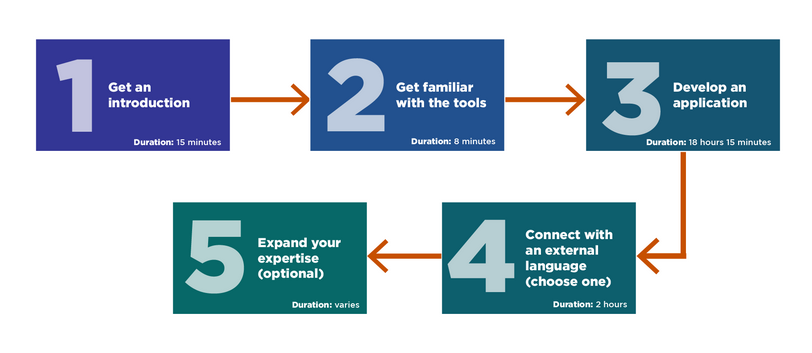
New to coding in InterSystems IRIS® data platform? Try this brand-new learning program to get the basics, and see how to develop an application with InterSystems ObjectScript alongside your language of choice: Java, .NET, Python, or Node.js.
Try a hands-on exercise in the language of your choice to get familiar with the multi-model architecture of InterSystems IRIS!
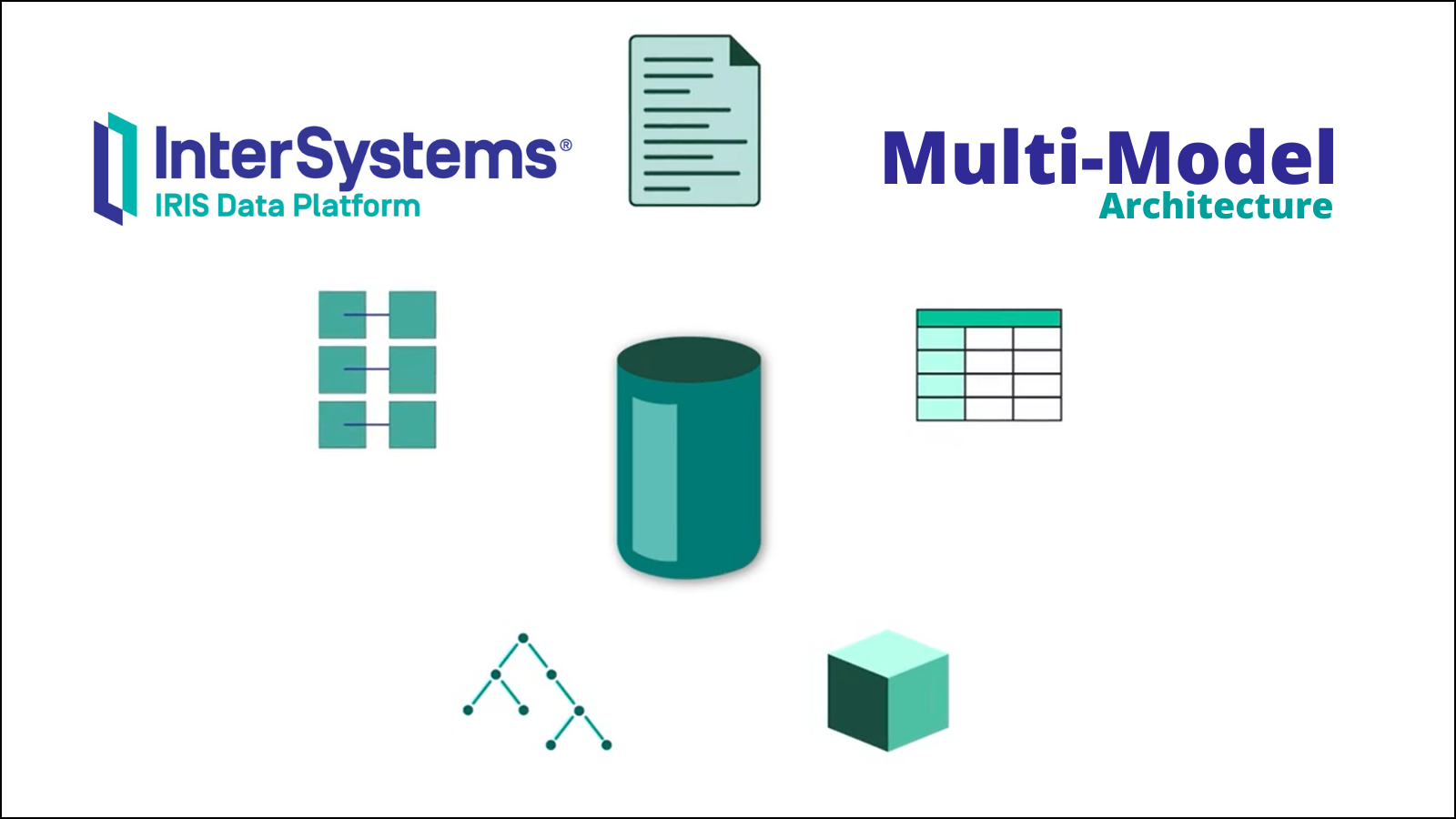
These recently updated exercises are available in ObjectScript, Python, Java, and .NET.
I'm at a loss with configuring the IRIS ODBC driver (v02.10) on my Amazon Linux machine, connecting to a REMOTE IRIS backend. It should be simplified by not requiring a DSN (the app uses a DSN-less connection and generates the connection string). I have
We are updating a C# module which creates consumes an OdbcConnection from System.Data.Odbc. This module used to create a DSN-less connection through the InterSystems Cache driver, and we are updating it to call the IRIS ODBC35 driver following migration of the target database.
hi!
I am going to develop a ASP .NET Core Application. In that Hos can use IRIS Entity Framework. I searched but I couldn’t find IRIS Entity Framework for .Net Core . Please kindly help me to overcome this issue.
thank you in advance