In v2026.2 (currently available as a Developer Preview), we are adding a feature that can help in a FHIR Endpoint SMART/OAuth authorization - more out-of-the-box flexibility in audience value validation.
In v2026.1 we introduced support for a more robust and real-life secure authorization for your FHIR endpoints.
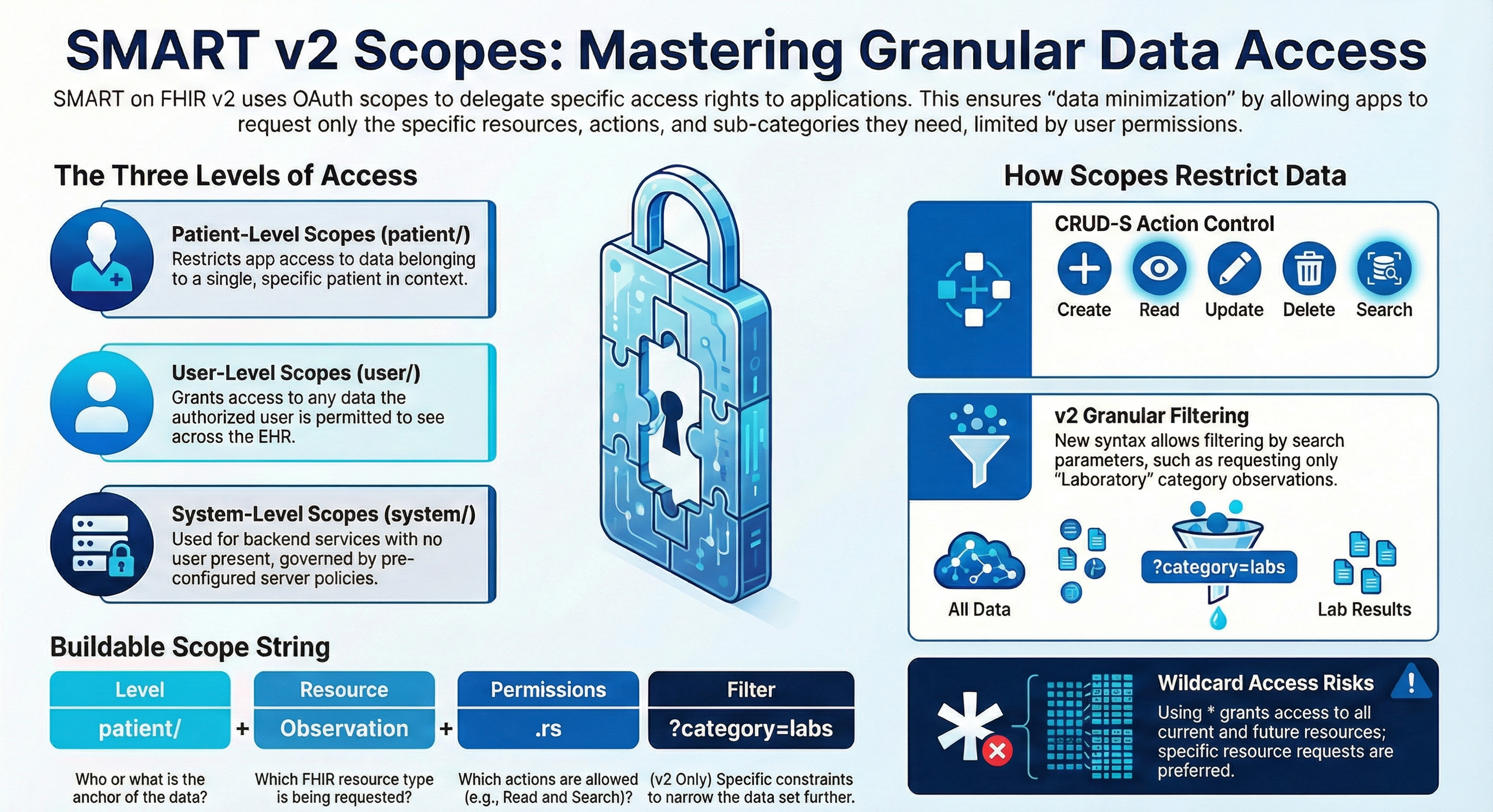
This is achieved by using SMART on FHIR v2 fine-grained scopes.

Focus - Not SMART in general, rather, the fine-grained scopes; Hands-on easy sample
A very important feature for HL7 FHIR has been introduced with the release of v2026.1 - the support for SMART on FHIR v2 fine-grained granular Scopes.
This enables you to be much stricter and more accurate in the access you provide to the data in your FHIR repository.
Part of this new support is to refuse requests that don't match the scopes, but an even more interesting ability is to filter the results according to the provided scopes.
This is the second part of an article pair where I walk you through:
- Part I - Intro and Quick Tour (the previous article)
- What is it?
- Spinning up an InterSystems IRIS Cloud Document deployment
- Taking a quick tour of the service via the service UI
- Part II - Sample (Dockerized) Java App (this article)
- Grabbing the connection details and TLS certificate
- Reviewing a simple Java sample that creates a collection, inserts documents, and queries them
- Setting up and running the Java (Dockerized) end‑to‑end sample
As mentioned the goal is to give you a smooth “first run” experience.

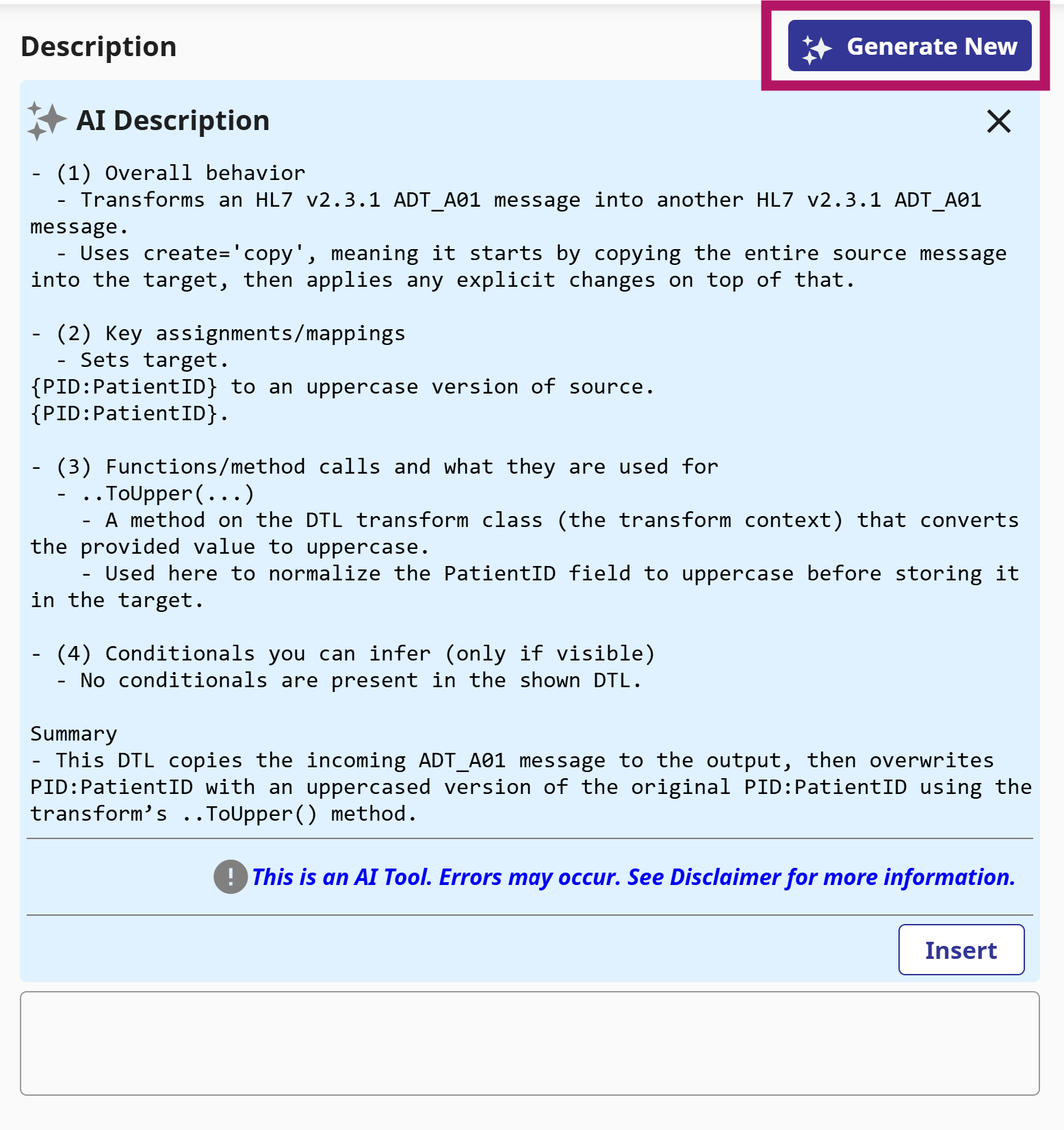
v2026.1 was just released as GA, and one of the features I'm looking forward to using is the DTL Explainer feature.
This allows you to take a Data Transformation, and with a click of a button get a human-readable description of the transformation (which you can also use as the basis for the DTL Description).
For complex DTLs, especially ones you didn't write yourself, or you did but a long time ago, this will allow you to get a clear quick understanding of what it's doing.
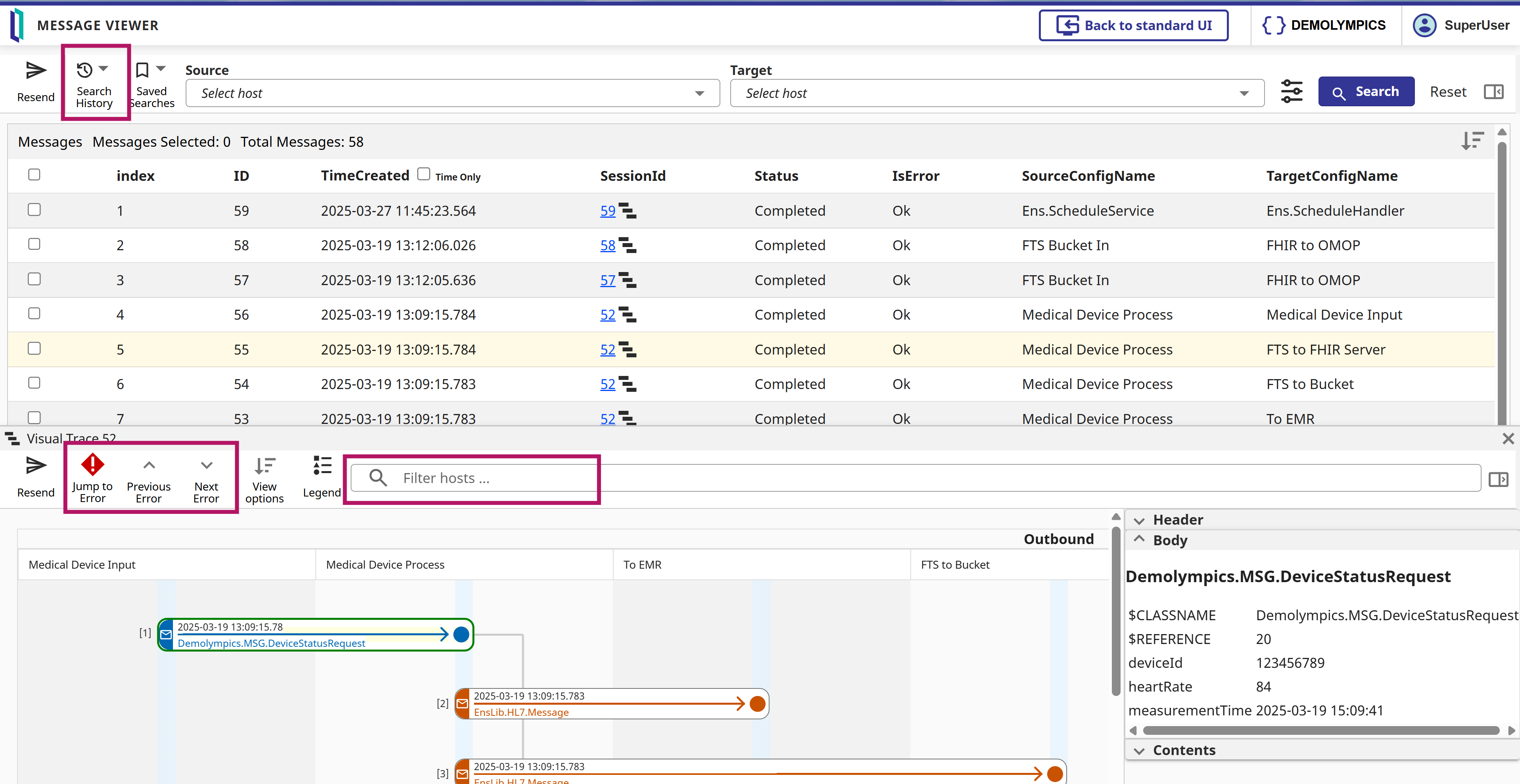
As part of the new Interoperability UI wave (see what was new in 2025.1, and 2025.3 by @Aya Heshmat), v2026.1 which is available already as a Developer Preview, and this could be a reason for you to give it a ride - will be shipping the new UI for the Message viewing and searching, including Visual Trace (and other UI goodies).
He's a quick teaser:

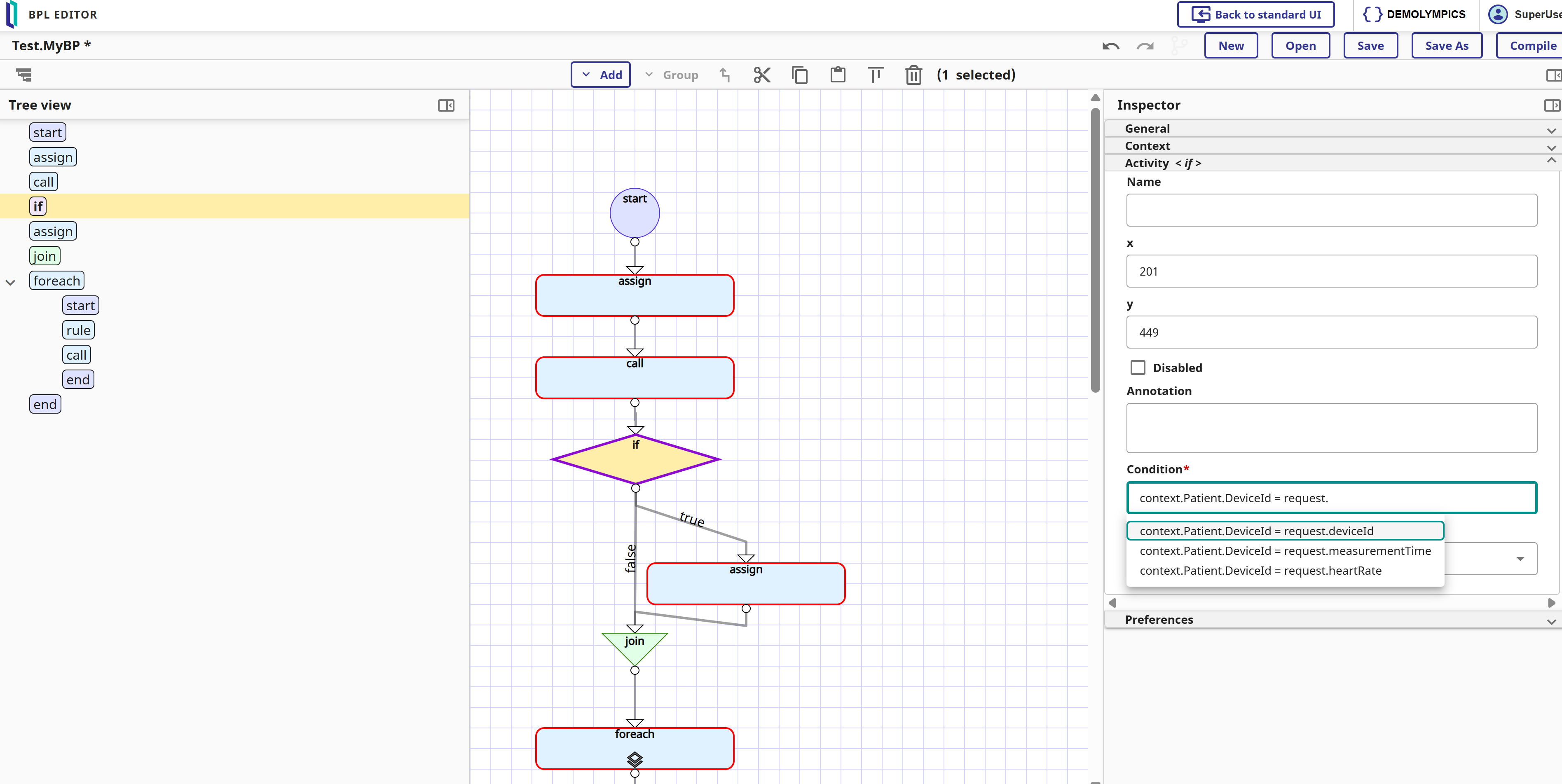
As part of the new Interoperability UI wave (see what was new in 2025.1, and 2025.3 by @Aya Heshmat), v2026.1 which is available already as a Developer Preview, and this could be a reason for you to give it a ride - will be shipping the new UI for the BPL editor (and other UI goodies).
He's a quick teaser:

If you already know Java (or .Net) and perhaps also have used other document databases (or looking for one), but you are new to the InterSystems world, this post should help you.
InterSystems IRIS Cloud Document is a fully managed document database that lets you store JSON documents and query them with familiar SQL syntax, delivered as a cloud service managed by InterSystems.
In this article pair I’ll walk you through:
- Part I - Intro and Quick Tour (this article)
- What is it?
- Spinning up an InterSystems IRIS Cloud Document deployment
- Taking a quick tour of the service via the service UI
- Part II - Sample (Dockerized) Java App (the next article)
- Grabbing the connection details and TLS certificate
- Reviewing a simple Java sample that creates a collection, inserts documents, and queries them
- Setting up and running the Java (Dockerized) end‑to‑end sample
The goal is to give you a smooth “first run” experience.

Sometimes it is more convenient, more efficient, and more secure, to limit FHIR Searches per pre-defined "Lists" of Resources.
Since v2025.1 we support several List-related features in our FHIR Server.
I will highlight these here, and provide some samples.
You send an HTTP request and get back an HTTP error but with an HTML error page which you didn't expect... what's happening?... 🤔
Specifically for example, perhaps you tried to READ a FHIR Resource (e.g. /Patient/123) and you get back a 404 error page, even though with other Patient IDs, you get back the Resource payload, so "the page" definitely does exist... why should you be getting a 404 error page? 🙄
Also in previous versions you could define your FHIR Server to accept requests via OAuth 2.0 (e.g. for a SMART on FHIR client) but nowadays with v2024.3, which was released a while ago, there is a new feature, that enables doing this more easily - the OAuth FHIR Client QuickStart.
.png)
Looking at my database I see I have a very big ^rINDEXSQL global? Why is that? 😬
In the Management Portal SQL page, under "SQL Statements" I see a 'Clean stale' button - what does this do? 🤔
In the list of Statements some have a 'Location' value and some don't? How is that? 🤨
#InterSystems Demo Games entry
⏯️ Being READY to Tackle Healthcare Enterprise Challenges in a Few Clicks
Managed Cloud Solutions to Help Streamline Your Health Services.
This demo showcases composing several InterSystems Managed Cloud Services to solve various use-cases.
The video is actually built of 6 short chapters (each ~2.5 minutes long) showing each part of the story, demoing a different service.
You can watch each "chapter" individually if you're interested in a specific service, but there is value in viewing the whole composition and observing the full flow.
- 0:00 Health Connect Cloud - Medical Device MQTT - HL7v2 for Hospital Operation Systems
- 2:29 FHIR Server & FHIR Transformation Service - HL7v2 to FHIR & Repository for Regulation & Exchange
- 5:21 FHIR SQL Builder - Providing standard relational access to FHIR data
- 7:22 "FHIR IntelliChat" (see note below) - Natural human language chat with FHIR Server
- 9:37 OMOP Solution - FHIR to OMOP transformation & OMOP database with OHDSI tools compliance
- 12:54 InterSystems Data Studio for Health - Creating a multi data/app sources fabric
[Note the "FHIR IntelliChat" part is not an actual formal InterSystems service, it is just a demonstration of a possibility (based on this solution by @José Pereira)]
Presenters:
🗣 @Tani Frankel, Sales Engineer Manager, InterSystems
🗣 @Keren Skubach, Senior Sales Engineer, InterSystems
🗣 @Ariel Glikman, Sales Engineer, InterSystems
In your Interoperability Production you could always have a Business Operation that is an HTTP client, that uses OAuth 2.0 for authentication, but you had to customize the Operation for this authentication methodology. Since v2024.3, which was lately released, there is a new capability, providing new settings, to handle this more easily.
Using embedded Python while building your InterSystems-based solution can add very powerful and deep capabilities to your toolbox.
I'd like to share one sample use-case I encountered - enabling a CDC (Change Data Capture) for a mongoDB Collection - capturing those changes, digesting them through an Interoperability flow, and eventually updating an EMR via a REST API.
.png)
Auditing is a critical capability ensuring the security of your server, and for quite a while ago we have included the ability to audit SQL statements run on the server.
With v2024.3 out already we're providing finer-grained options for defining these events to audit.
The ability to resend messages easily has always been a strong feature of our Interoperability capabilities.
With v2024.3 coming out soon (available already now as Developer Preview) out already we've made this even easier!
If you want to find out what exact version your Docker image is (and since the latest image tagging scheme you cannot just rely on the image tag; and assuming you don't want to actually run it just in order to find out) you can run this docker command:
The InterSystems IRIS for Health v2024.3 is already availableas a Developer Preview for some time, and I wanted to highlight new support related to FHIR Search that was introduced.
Based on a great sample and workshop built by @Luis Angel Pérez Ramos (see related articles and related Open Exchange app), which included a local InterSystems IRIS for Health container (and desired setup), this sample presented here, adapted the workshop for using the InterSystems Cloud FHIR Server, and it's related setup.

Following 2 local Webinars we had focused on VS Code ["Intro" and "Beyond Basics"; in Hebrew], I prepared for the participants some related links of relevant resources which we sent as a follow-up. Sharing them here as well for the benefit of the Community.
You are all of course welcome to add more useful resources.
Is it possible to authenticate an xDBC (ODBC/JDBC) connection to InterSystems IRIS via (a 3rd party) OAuth server?
For REST APIs this is possible, but could this be achieved with OAuth?
Out-of-the-box the ODBC/JDBC Drivers don't seem to have this option, but maybe some custom code could enable this? perhaps via Delegated Authentication and some OAuth classes customization, or some other way?
Has anyone done this already and can share how it was implemented, or someone with some guideline suggestions?
New in version 2023.3 (of InterSystems IRIS for Health) is a capability to perform FHIR profile-based validation.
(*)
In this article I'll provide a basic overview of this capability.
If FHIR is important to you, you should definitely try out this new feature, so read on.
Does anyone happen to have a sample Configuration (CPF) Merge file that includes Action parameters setting up authentication methods (e.g. Password, Kerberos) for certain Services and Web Applications (e.g. via the ModifyService or Modify/CreateApplication AutheEnabled property)?
Thanks!
When creating a PRA (Privileged Routine Application; which by the way is not relevant just for Routines but also for Classes/Methods), it is important to make sure you include a new $ROLES, before calling AddRoles(). For example:
new$ROLESThis way you ensure that indeed the added (elevated) roles "evaporate" for the User running this code, once the User is out of the scope of that routine/method.
[Thank you @Andreas Dieckow for validating this]
Dear Community Members,
Has someone built some kind of Adapter (or other related components) to interact with Couchbase?
Something sharable?
What connection method did you choose - for example REST API / .Net or Java SDK?
Thanks!
Some of you might not be aware of this "Known Issue/Limitation" when defining a BPL-based Business Process.
And those who are not might have encountered this (somewhat "unpleasant" error):
In Studio you could open a class directly via it's name, without having to traverse the package tree with multiple clicks until arriving at the desired class.
You would Ctrl + O or (File -> Open) and be able to simply type in the class name, for example:
.png)
You press Enter, and viola - the class is opened.
How do you achieve this in VSCode?
How would you like to be able to access the Web Terminal directly from your VSCode?
.png)
Another VSCode "Tips & Tricks" entry -
.png)
Do you want to see this option in VSCode?