Seeing results in SMP or Terminal
If you run the suggested queries from Terminal in SQL shell you see:.png)
Seeing results in SMP or Terminal
If you run the suggested queries from Terminal in SQL shell you see:
There is not just one class in this package: rcc.gstream.cls but also rcc.gstreamT.cls
While rcc.gstream works with direct access to the stream globals, the *T version uses
a Process Private Global (PPG) as Temporary storage.
using SELECT * FROM RCC.gstreamT WHERE RCC.useT('^jpgS')=1 and similar.
This might be an advantage for multiple access to the same stream in sequence,
The advantage is obvious: You have a personal snapshot in memory and no risk of
a conflict in access. This might be interesting if you work just on 1 specific stream.
In general Global Streams are data objects embedded in Classes / Tables.
Using and viewing them with SQL is normally a part of the access to the containing tables.
SO WHAT?
During debugging or searching for strange or unexpected behavior there could be the need to
get closer to the stored stream. No big problem with direct access to Globals with SMP or Terminal.
But with SQL you are lost.
So my tool provides dynamic access to Global Streams wherever you may need this
Special thanks to @Oliver Wilms for the inspiration for this tool.
If one of your packages on OEX receives a review you get notified by OEX only own YOUR package.
The rating reflects the experience of the reviewer with the status found at the time of review.
It is kind of a snapshot and might have changed meanwhile.
Reviews by other members of the community are marked by * in the last column.
I also placed a bunch of Pull Requests on Github when I found a problem I could fix.
Some were accepted and merged, and some were just ignored.
So if you did a major change and expect a changed review just let me know.
If one of your packages on OEX receives a review you get notified by OEX only own YOUR package.
The rating reflects the experience of the reviewer with the status found at the time of review.
It is kind of a snapshot and might have changed meanwhile.
Reviews by other members of the community are marked by * in the last column.
I also placed a bunch of Pull Requests on Github when I found a problem I could fix.
Some were accepted and merged, and some were just ignored.
So if you did a major change and expect a changed review just let me know.
If one of your packages on OEX receives a review you get notified by OEX only own YOUR package.
The rating reflects the experience of the reviewer with the status found at the time of review.
It is kind of a snapshot and might have changed meanwhile.
Reviews by other members of the community are marked by * in the last column.
I also placed a bunch of Pull Requests on Github when I found a problem I could fix.
Some were accepted and merged, and some were just ignored.
So if you did a major change and expect a changed review just let me know.
If one of your packages on OEX receives a review you get notified by OEX only own YOUR package.
The rating reflects the experience of the reviewer with the status found at the time of review.
It is kind of a snapshot and might have changed meanwhile.
Reviews by other members of the community are marked by * in the last column.
I also placed a bunch of Pull Requests on Github when I found a problem I could fix.
Some were accepted and merged, and some were just ignored.
So if you did a major change and expect a changed review just let me know.
If one of your packages on OEX receives a review you get notified by OEX only own YOUR package.
The rating reflects the experience of the reviewer with the status found at the time of review.
It is kind of a snapshot and might have changed meanwhile.
Reviews by other members of the community are marked by * in the last column.
I also placed a bunch of Pull Requests on Github when I found a problem I could fix.
Some were accepted and merged, and some were just ignored.
So if you did a major change and expect a changed review just let me know.
If one of your packages on OEX receives a review you get notified by OEX only own YOUR package.
The rating reflects the experience of the reviewer with the status found at the time of review.
It is kind of a snapshot and might have changed meanwhile.
Reviews by other members of the community are marked by * in the last column.
I also placed a bunch of Pull Requests on Github when I found a problem I could fix.
Some were accepted and merged, and some were just ignored.
So if you did a major change and expect a changed review just let me know.
If one of your packages on OEX receives a review you get notified by OEX only own YOUR package.
The rating reflects the experience of the reviewer with the status found at the time of review.
It is kind of a snapshot and might have changed meanwhile.
Reviews by other members of the community are marked by * in the last column.
I also placed a bunch of Pull Requests on Github when I found a problem I could fix.
Some were accepted and merged, and some were just ignored.
So if you did a major change and expect a changed review just let me know.
I produce my monthly Review Report on OEX packages now for 18 months.
These are a view figures and some comments:
If one of your packages on OEX receives a review you get notified by OEX only own YOUR package.
The rating reflects the experience of the reviewer with the status found at the time of review.
It is kind of a snapshot and might have changed meanwhile.
Reviews by other members of the community are marked by * in the last column.
I also placed a bunch of Pull Requests on Github when I found a problem I could fix.
Some were accepted and merged, and some were just ignored.
So if you did a major change and expect a changed review just let me know.
If one of your packages on OEX receives a review you get notified by OEX only own YOUR package.
The rating reflects the experience of the reviewer with the status found at the time of review.
It is kind of a snapshot and might have changed meanwhile.
Reviews by other members of the community are marked by * in the last column.
I also placed a bunch of Pull Requests on Github when I found a problem I could fix.
Some were accepted and merged, and some were just ignored.
So if you did a major change and expect a changed review just let me know.
I just met a personal challenge translating my article to French.
Tough I had to learn it at school and could read and understand
famous literature (Sartre, Molière, Mauriac, Proust, Saint-Exupéry, Anouilh, ...)
I missed the specific terms used with ISC technology.
Thanks to @Lorenzo Scalese my errors were corrected.
But no dictionary was able to answer.
Especially as English is gender-neutral the individual gender in other languages is just undefined.
QUESTION:
If one of your packages on OEX receives a review you get notified by OEX only own YOUR package.
The rating reflects the experience of the reviewer with the status found at the time of review.
It is kind of a snapshot and might have changed meanwhile.
Reviews by other members of the community are marked by * in the last column.
I also placed a bunch of Pull Requests on Github when I found a problem I could fix.
Some were accepted and merged, and some were just ignored.
So if you did a major change and expect a changed review just let me know.
My major interest is Working with Globals in Embedded Python.
So I checked the available official documentation.
#1 Introduction to Globals
an attempt of a generic description of what a global is. Pointing to
#2 A Closer Look at ObjectScript
But where is Embedded Python ?
Way down you see
3.1 Embedded Python Overview
3.1.1 Work with Globals
Great if you have never seen a Global before
Otherwise a shocking primitive example
3.2 Using Embedded Python
Last hope: >>> but there is just NOTHING visible.
This is more than just disappointing! Even IRIS Native API for Python is more detailed.
If one of your packages on OEX receives a review you get notified by OEX only own YOUR package.
The rating reflects the experience of the reviewer with the status found at the time of review.
It is kind of a snapshot and might have changed meanwhile.
Reviews by other members of the community are marked by * in the last column.
I also placed a bunch of Pull Requests on Github when I found a problem I could fix.
Some were accepted and merged, and some were just ignored.
So if you did a major change and expect a changed review just let me know.
There is a popular package "WebTerminal". It is excellent in most situations.
Except:
I'm sure you have met this situation:
Start the demo in Docker from IRIS console or in Webterminal
USER>do ##class(dc.rcc.Main).Menue()M:N Relationship is a recurring object of my interest for a long time.
So the subject turns up with me repeatedly.
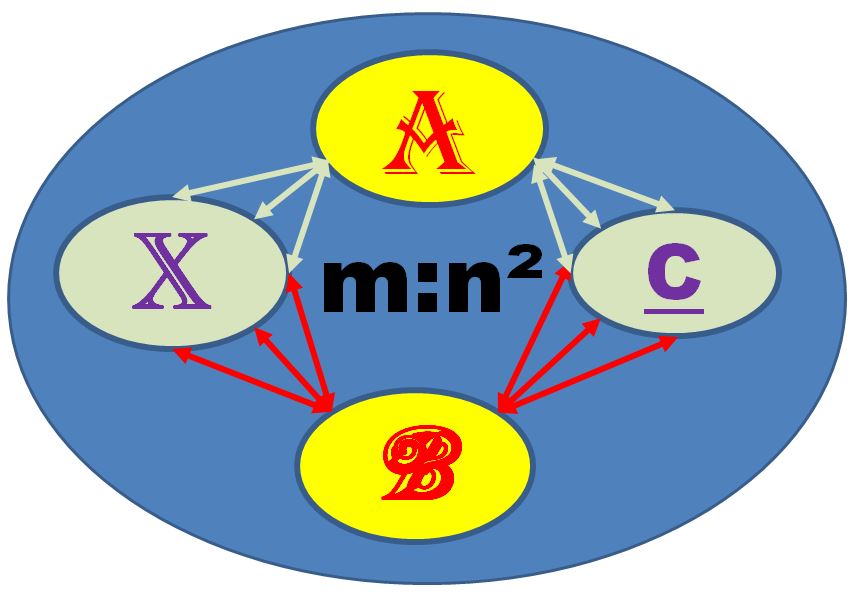
For this article, I found a nice example with TWO separate M:N relationships. Some M:N².
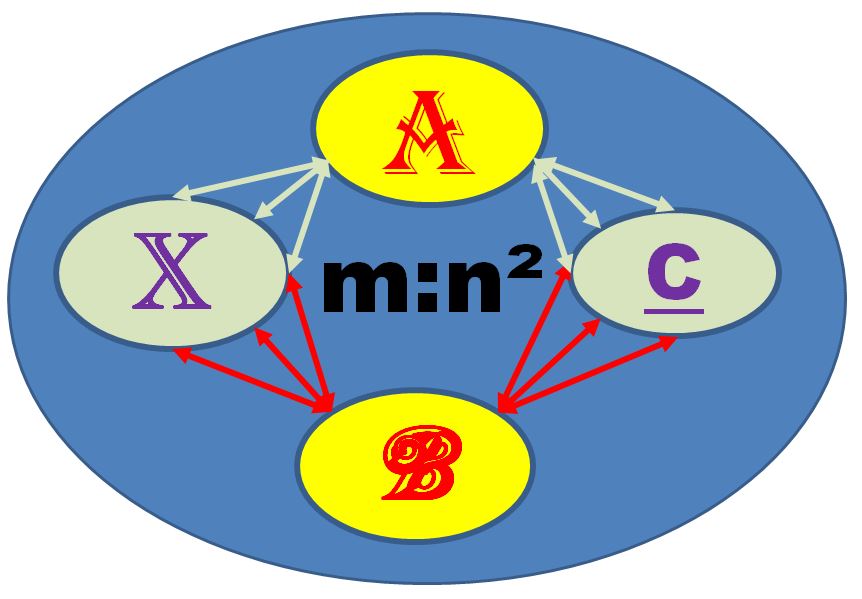
It is not pure fiction but taken from a closer view of OEX Contests that we run on a regular base.
If one of your packages on OEX receives a review you get notified by OEX only own YOUR package.
The rating reflects the experience of the reviewer with the status found at the time of review.
It is kind of a snapshot and might have changed meanwhile.
Reviews by other members of the community are marked by * in the last column.
I also placed a bunch of Pull Requests on Github when I found a problem I could fix.
Some were accepted and merged, and some were just ignored.
So if you did a major change and expect a changed review just let me know.
This package offers a utility to export an XLarge Global into a JSON object file and to show
or import it again. In a previous example, this all was processed in memory. But if this is a
large Global you may either experience <MAXSTRING> or an <STORE> error
if the generated JSON structure exceeds available memory.
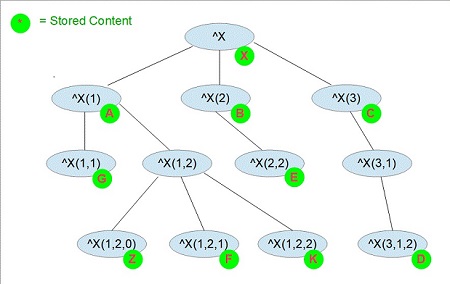
Academic refers to the structure created.
I have a rather simplistic JSON Object of this structure:
{"id":<someid>,"value":<some string>,"details":
 [{"id":<someid>,"value":<some string>,"details":
  [{"id":<someid>,"value":<some string>,"details":
The depth and number of depth elements are variable.
It's a finger snip to work it down with %DynamicObject.
BUT:
The object I try to handle has a size of 78 MByte in a file.
%DynamicObject fails with <MAXSTRING> and
%Stream.DynamicCharacter fails with <STORE>.
My attempt with Python also failed by not enough memory
Are there any ideas on how to proceed ?
If one of your packages on OEX receives a review you get notified by OEX only own YOUR package.
The rating reflects the experience of the reviewer with the status found at the time of review.
It is kind of a snapshot and might have changed meanwhile.
So if you did a major change and expect a changed review just let me know.
Reviews by other members of the community are marked by * in the last column
| # | Package | Review | Stars | IPM | * |
|---|---|---|---|---|---|
| 1 | iris-python-dashboards | 6* super demo | 6.0 | ||
| 2 | appmsw-telestat | Nice application! | 5.0 | y | |
| 3 | crypto-iris | Complete and Clear ePy mixed |
This example demonstrates the difference you may experience when you write to
Gllobals directly from Embedded Python compared to native ObjectScript.
To make this demo useful I start 2 background jobs that simply write sequentially
to a dedicated global. A common control method signals for a synchronous start.
Similar a common stop & view interrupts data feeding.
That's the principle process:
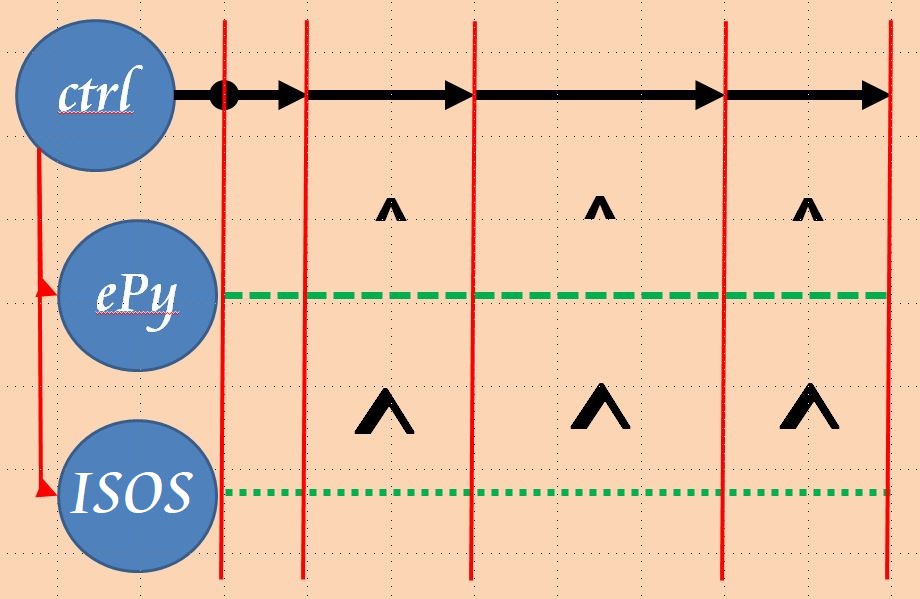
As 2 jobs run in parallel the probability of just using sequential blocks is reduced.
During the development of this demo, I detected that the JOB command has problems
with ClassMethods in Embedded Python.
It sounds strange though it's embarrassing.
I have a class with ClassMethods written in ISOS and Embedded Python.
The ClassMethods written in ISOS start in the Background as usual. No problems
But my
ClassMethod setPy() [ Language = python ]
{
import iris, datetime, time
- - -
Just fails the JOB command with (even 15 sec) timeout and $ZC=0
This is not funny
My actual workaround:
I created a ClassMethod in ISOS, that does an elegant JobStart
and this ClassMethod only runs the Embedded Python ClassMethod.
You may have seen my series of articles on GlobalToJSON closing with Embedded Python.
And to me, Embedded means inside a Class and not PEX or other external variants.
The first variants showed that ePy is not an ultimate requirement. ISOS/COS may do it as well.
Here I try to position ePy inside IRIS.
In my article I described the work using iris.gref .
As the official documetation is rather slim on the subject it was necessary to dig into it.
Using the power of Python I was able to detect what I needed but was hidden.
I decided to share this with you. pydoc did the magic.
If one of your packages on OEX receives a review you get notified by OEX only own YOUR package. The rating reflects the experience of the reviewer with the status found at the time of review. It is kind of a snapshot and might have changed meanwhile.
New with this edition:
Reviews by other members of the community are marked by * in the last column.