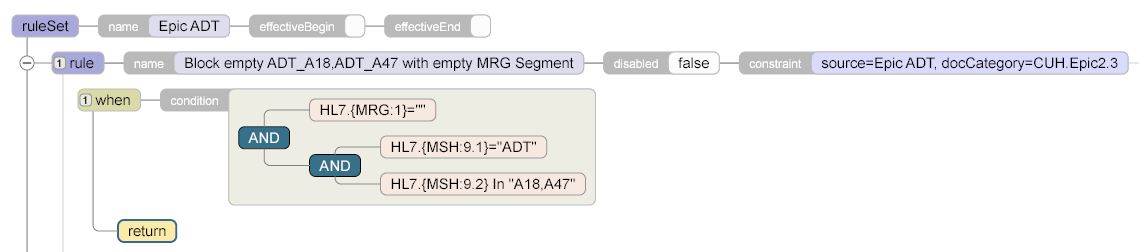
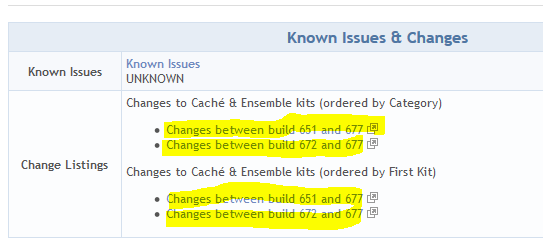
Here's a teaser screenshot showing how the unit tests of the IPM project don't yet cover a feature that apparently allows an IPM repository to override its sort order.
I am receiving a FHIR response bundle back with a resource of patient. Using fromDao, I attempted to take the stream and put it into FHIRModel.R4.Patient but it is not mapping correctly. When I attempt to take FHIRModel.R4.Patient and write it out using toString(), all I am seeing is the resource
{"resourceType":"Patient"}
so the response is not mapping correctly to FHIRModel.R4.Patient. How have others handled this? Do I need to translate it to an SDA since it does fit the model format?
WSDL for a CDC vendor was provided with a URL using a custom socket (non 443). Everything generated fine, but when making calls to their https:// URL that has their custom port in the URL - no response comes back. The assumption is, their server isn't even processing the request, as Postman does using the custom https://path.to.server:NNNN port in the URL.
We have officially released our InterSystems IRIS Developer Professional certification exam for beta testing. The beta test will be available until April 20, 2025. As a beta tester, you have the chance to earn the certification for free!
I inherited some legacy MUMPS / ObjectScript code. A code review identified an exclusive NEW and that is not allowed per our coding standards.
The original code contains:
RUN(CALL,DRVNAME) S $EC="" S ^TMP($J,"RMPV","DRVNAME")=DRVNAME N TMPFILE,OLDIO S OLDIO=$IO I $G(^TMP("RMPV","SILENT"),1) S IOP="NULL",%ZIS=0 D ^%ZIS I '$G(POP,1) U IO D INIT^@DRVNAME D ; scope variables .N (DUZ,CALL) ; Protect %response .S IOF="""""",IOM=80,U="^" .D @CALL U OLDIO Q
When implementing deferred response there was a problem initially with a few responses which meant we had blank jobs spawned somehow. How do you get rid. All the operation does is:
This milestone highlights the active participation and creativity of our Community. We appreciate all the contributions and support that drive the ongoing success of this portal!
InterSystems IRIS Adaptive Analytics version 2024.1.3 is now available from the InterSystems Software Distribution page. This release includes AtScale 2024.1.3, and an updated User Defined Aggregate Function (UDAF) file. This release includes and the following new modeling and BI capabilities:
first of all thank you for taking the time to read and answer this question.
Recently, since we have upgraded to HealtShare 2020, we experienced the fact that when opening in the Studio the Process (.bpl) and Transformation (.dtl) classes, it asks us to log in, i.e. username and password, almost every time we open a new Process or Transformation.
However, in previous versions, I think we had HealthShare 2016 or 2017 or 2018, and in it, you could log in from the Studio in Processes and Transformations, logging in 1 time only.
We reorganized the challenges under the "Challenge" tab - now all the challenges are sorted into channels (folders).We hope that will help new people navigate the hub and easier find the most relevant challenges. Home page remains the same. Check it out!
Have you read the September newsletter from InterSystems Learning Services? You'll find info about:
• The 2021 Virtual Summit Experience Labs • Developing database code in Python • InterSystems Security Basics: Now updated for InterSystems IRIS and InterSystems IRIS for Health® • New documentation content for upcoming releases, including features that are part of the 2021 Experience Labs
Plus upcoming virtual classroom courses! Read September's newsletter, and subscribe to receive it in your inbox!
InterSystems encourages the adoption of a flexible, practical approach to application development, rather than strict adherence to one of the prevalent development theories. This paper offers advice based upon our experience. However needs, attitudes, and styles vary; we recommend that each programmer choose the development approach that works best for them. Caché supports a wide range of development methodologies, not just those recommended here.
We are a group of interface analysts in a healthcare setting, running IRIS for Health 2024, having upgraded over time from an old ENSEMBLE environment. We have been working on a wish list of development goals, but are having trouble finding the correct, best practice method/path for getting to what we envision.
I'm excited to announce a major update to SQL Data Lens – a powerful database client and metadata explorer – that opens up new, free possibilities for the InterSystems community.
Hello, In short, I am trying to get the Content-Length of my response,
We have a CSP application, when we get a new request we begin to process it, throughout the app we WRITE to the response in different places, now when the response is about to be sent back to the client - we would like to know its Content-Length (in the RESPONSE HEADERS). So it comes down to two questions: 1. How can we access the Content-Length of our response?
Developers have Ensemble installed locally on their laptops - code will be developed locally then deployed to integration, test/UAT and ultimately production servers in due course.
One of the other applications we are developing around happens to utilise an Iris desktop client to a remote Iris server. We want to have the application available on the developers laptops alongside the local Ensemble instance.
After executing a task using RunNow() method of class %SYS.task i am not able to find suitable method for getting the status in %SYS.Task class. Please help how to get the task status throuhgh Python/IRISNAtive for Python combination