Article Alberto Fuentes · Feb 13 10m read

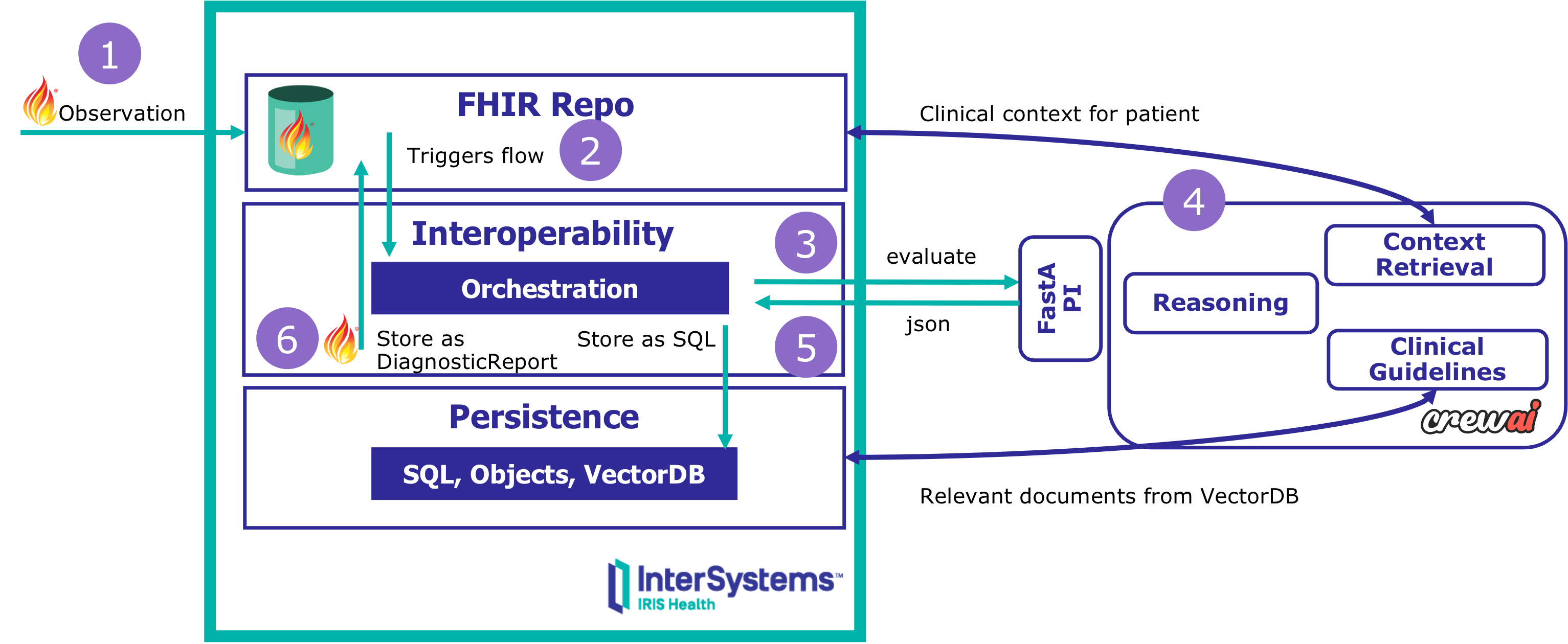
10:47 AM — Jose Garcia's creatinine test results arrive at the hospital FHIR server. 2.1 mg/dL — a 35% increase from last month.

What happens next?

  • Most systems: ❌ The result sits in a queue until a clinician reviews it manually — hours or days later.
  • This system: 👍 An AI agent evaluates the trend, consults clinical guidelines, and generates evidence-based recommendations — in seconds, automatically.

No chatbot. No manual prompts. No black-box reasoning.

This is event-driven clinical decision support with full explainability:
image

Triggered automatically by FHIR events ✅ Multi-agent reasoning (context, guidelines, recommendations) ✅ Complete audit trail in SQL (every decision, every evidence source) ✅ FHIR-native outputs (DiagnosticReport published to server)

Built with:

  • InterSystems IRIS for Health — Orchestration, FHIR, persistence, vector search
  • CrewAI — Multi-agent framework for structured reasoning

You'll learn: 🖋️ How to orchestrate agentic AI workflows within production-grade interoperability systems — and why explainability matters more than accuracy alone.
<iframe width="560" height="315" src="https://www.youtube.com/embed/43Vl7cU_uNY?si=o3NZ3AqPOdFkCn9w" title="YouTube video player" frameborder="0" allow="accelerometer; autoplay; clipboard-write; encrypted-media; gyroscope; picture-in-picture; web-share" referrerpolicy="strict-origin-when-cross-origin" allowfullscreen></iframe>
2
2 153
Article Alberto Fuentes · Sep 16, 2025 4m read

In the previous article, we saw how to build a customer service AI agent with smolagents and InterSystems IRIS, combining SQL, RAG with vector search, and interoperability.

In that case, we used cloud models (OpenAI) for the LLM and embeddings.

This time, we’ll take it one step further: running the same agent, but with local models thanks to Ollama.

0
5 203
Article Alberto Fuentes · Sep 1, 2025 7m read

Customer support questions span structured data (orders, products 🗃️), unstructured knowledge (docs/FAQs 📚), and live systems (shipping updates 🚚). In this post we’ll ship a compact AI agent that handles all three—using:

  • 🧠 Python + smolagents to orchestrate the agent’s “brain”
  • 🧰 InterSystems IRIS for SQL, Vector Search (RAG), and Interoperability (a mock shipping status API)
0
2 211
Announcement Alberto Fuentes · Aug 15, 2025

#InterSystems Demo Games entry


⏯️ MyVitals: Connecting Wearable Health Data to EHRs with InterSystems

MyVitals is a Personal Health Device Hub that bridges the gap between wearable health devices and clinical workflows. In this demo, we show how healthcare organizations can enroll patients, collect real-time data from personal devices via mobile apps, and seamlessly integrate that information into EHR systems using FHIR, HL7, and InterSystems technology. Built on IRIS for Health and FHIR repositories, MyVitals turns disconnected wearable data into actionable clinical insights—securely, efficiently, and at scale.

Presenters:
🗣 @Alberto Fuentes, Sales Engineer, InterSystems
🗣 @Pierre-Yves Duquesnoy, Senior Sales Engineer, InterSystems
🗣 @Luis Angel Pérez Ramos, Sales Engineer, InterSystems

0
2 112
Article Alberto Fuentes · Jan 24, 2025 8m read

In the world of APIs, REST is very extended. But what happens when you need more flexibility in your data-fetching strategies? For instance letting the client to choose what fields is going to receive. Enter GraphQL, a query language for your APIs that provides a flexible alternative to REST.

In this post, we will:

  • Compare REST and GraphQL.
  • Dive into the basics of GraphQL: Queries, Mutations, and HTTP.
  • Build a simple GraphQL server implementation using Graphene, SQLAlchemy, and Flask over data in InterSystems IRIS.
  • Explore how to deploy your GraphQL server as a WSGI application in IRIS.
3
1 529
Article Alberto Fuentes · Mar 4, 2024 2m read

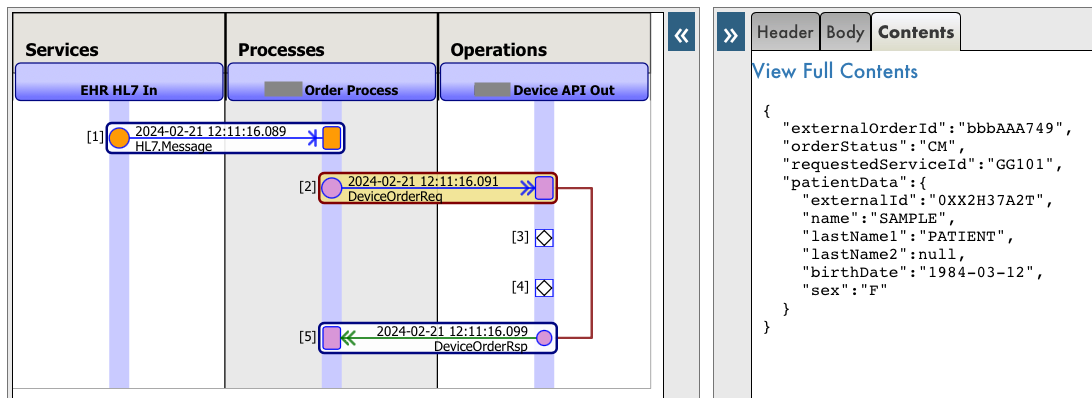
I would like to share with you a little trick to customize how messages are displayed in the Message Viewer. In particular, how you can display messages as JSON (instead of the default XML representation).

image

Messages are objects that are used to communicate interoperability productions components. In my example I have defined a message that later I serialize as JSON to send to an external API. This message is defined as a regular message and also as a %JSON.Adaptor so I can export / import directly to or from JSON.

Class interop.msg.DeviceOrderReq Extends (Ens.Request, %JSON.
3
6 641
Article Alberto Fuentes · Jan 29, 2024 12m read

We have a yummy dataset with recipes written by multiple Reddit users, however most of the information is free text as the title or description of a post. Let's find out how we can very easily load the dataset, extract some features and analyze it using features from OpenAI large language model within Embedded Python and the Langchain framework.

Loading the dataset

First things first, we need to load the dataset or can we just connect to it?

3
2 444
Article Alberto Fuentes · Feb 28, 2023 2m read

Hi all!

I'm sharing a tool for data ingestion that we have used in some projects.

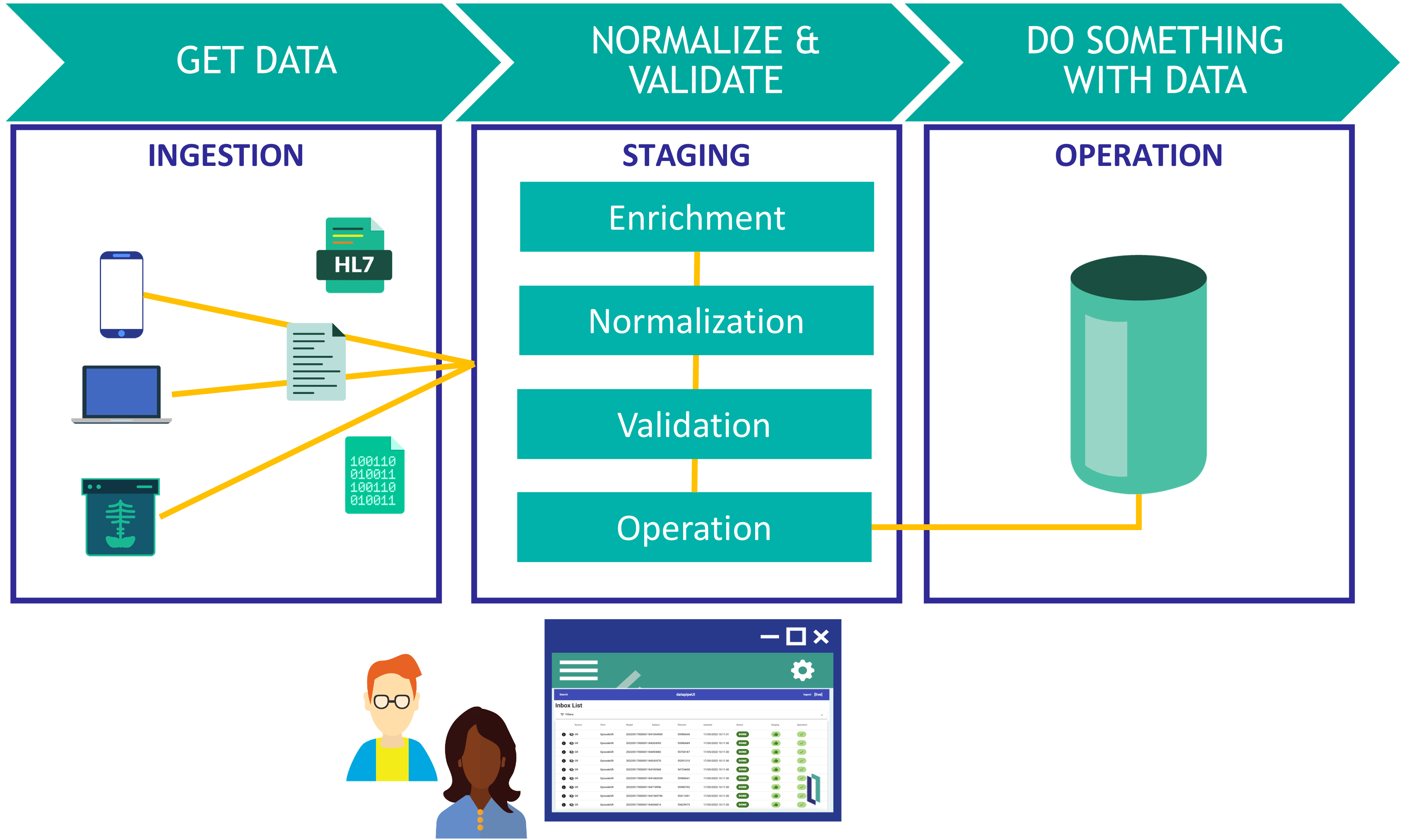
DataPipe is an interoperability framework for data ingestion in InterSystems IRIS in a flexible way. It allows you to receive data from external sources, normalize and validate the information and finally perform whatever operation you need with your data.

Model

In first place, you need to define a model. A model is simply a class that extends from DataPipe.

0
1 772
Article Alberto Fuentes · Feb 23, 2023 3m read

Hi all!

In a project we needed to define topics to publish messages and register different subscribers which will receive those messages asynchronously. We also needed it to be as simple as possible and that we could use it on InterSystems IRIS directly.

As an experiment, I'm sharing this iris-pubsub open exchange example.

Infrastructure

This is built on top of InterSystems IRIS interoperability features, it needs a running production.

The first time we need to define how many partitions we want to dedicate to handle messages. The more partitions you add, the more capacity to handle messages.

4
2 602
Article Alberto Fuentes · Sep 30, 2022 1m read

Hi developers!

Maybe you have to implement scenarios that don't require a FHIR repository, but forwarding FHIR requests, manage the responses and maybe run transformations or extract some values in between. Here you will find some examples that can be implemented using InterSystems IRIS For Health o HealthShare Health Connect.

In these examples I've used interoperability productions with FHIR Interoperability Adapter and HS.FHIRServer.Interop.Request messages.

First scenario build a FHIR requests from scratch (it could be from a file, or a SQL query) and then send it to an external FHIR service.

0
1 609
Article Alberto Fuentes · May 26, 2022 1m read

Hi developers! have you ever implemented a DICOM integration? Maybe you have searched for an example, or even a simulator. Here you can find a example that may be useful.

DICOM is a message standard widely used in healthcare for diagnostic images.You can use DICOM standard in interoperability productions using both IRIS For Health and Health Connect, here you can find the documentation.

On many occasions, when you are developing a DICOM integration it's really useful that you can run a simulator to play as some external system (e.g.

2
2 720
Article Alberto Fuentes · Apr 5, 2022 2m read

You have read about OAuth2 / OpenID Connect but you don't know how to use it? Have you ever needed to implement Single Sign-On (SSO) or secure web services based on tokens? Did you have to add authentication / authorization to your web applications or services and you didn't know how to start?

What about a step by step example where you can set up an authorization server, a client and a resource server? Here you can find an example where you will configure InterSystems IRIS instances to act as each one of these OAuth2 roles.

1
7 1516
Article Alberto Fuentes · Feb 24, 2021 1m read

Hi Developers!  Let me share with you some exercises from a workshop about developing interoperability components in Java using PEX (Production EXtension).

You will find slides and step by step exercises about:

  • Understanding simple PEX components coded in Java.
  • Making some changes on them.

All built using containers, so you don't need to build a local Java environment.

You can reach the repository here: https://openexchange.intersystems.com/package/workshop-pex

6
0 456
Article Alberto Fuentes · Feb 24, 2021 1m read

Hi Community!  Today I'd like to share with you a link to some exercises from a workshop about developing REST APIs and how to manage them using InterSystems API Manager.

It includes step by step exercises to:

  • Developing REST APIs from OpenAPI specifications.
  • Adding the created API in an interoperability production (optional).
  • Basic API management in InterSystems API Manager (service, route, auth, consumers, rate limiting, etc.).
  • Some other more complex scenarios in InterSystems API Manager like load balancing, or routing by header.

You will find it all here: https://openexchange.intersystems.

0
0 353
Article Alberto Fuentes · Feb 18, 2021 2m read

Hi Community! 

I'm sharing a little tool (REST service) to download interoperability messages from your browser.

You only need to:

  1. Create a web application in Management Portal (e.g. /downloadmsg) and set DispatchClass=Util.DownloadMsg.
  2. Call the tool using your browser passing the namespace and the message header id to download. http://localhost:52773/downloadmsg/ns/mydev/msgid/17441
/// 
/// Util to download messages given a message header id
/// 
/// Setup:
/// 1. Create a webapplication (e.g. /downloadmsg) and set DispatchClass=Util.DownloadMsg
/// 2.
0
0 517
Article Alberto Fuentes · Oct 23, 2019 2m read

Would you like to be sure your data transforms work as expected with a single command? And what about writing unit tests for your data transforms in a quick and simple way? 

When talking about interoperability, there are usually a lot of data transforms involved. Those data transforms are used to convert data between different systems or applications in your code, so they are running a very important job.

2
1 944
Article Alberto Fuentes · Feb 19, 2016 3m read

The attached file contains an example of code generation using ObjectGenerators which builds a very simple homemade RuleEngine. 

Code generation is an excellent way of increasing performance moving run-time calculations to compile-time.

We could generate code creating routines or implemeting methods using ObjectGenerators. In this example we are using ObjectGenerators.

Update: Rule Engine is now on GitHub https://github.

0
0 979
Article Alberto Fuentes · Feb 19, 2016 1m read

Attached code contains a very basic $system.WorkMgr example.

It uses several jobs (workers) to update different chunks of rows of a table.

Steps:

  • Creates a table with 100 records.
  • Split table  in chunks 
  • Initialize WorkMgr and queue chunks to workers.
    • Every worker simply sets its process number in the Job field of the processed row. 

In this case, I have tested the example in a 8-core laptop:

USER>do ##class(IAT.S04.WorkMgr.Simple).%DeleteExtent()
USER>do ##class(IAT.S04.WorkMgr.Simple).Populate(100)
USER>do ##class(IAT.S04.WorkMgr.Simple).
1
0 953
Article Alberto Fuentes · Feb 19, 2016 2m read

The attached file contains two $system.Event examples that processes work asynchronously using persistent queues:

Events_Simple

This is a very basic example that creates some worker processes and then enqueue messages to them using $system.Event.

; create shared resource, create worker jobs.USER>do ##class(IAT.S04.Event.Test).Setup(); enqueue some messages to workers and see what happensUSER>do ##class(IAT.S04.Event.Test).Run()Show log?
6
1 1345