Hi Community!
New video is already on InterSystems Developers YouTube Channel:
.png)
InterSystems IRIS for Health™ is the world’s first and only data platform engineered specifically for the rapid development of healthcare applications to manage the world’s most critical data. It includes powerful out-of-the-box features: transaction processing and analytics, an extensible healthcare data model, FHIR-based solution development, support for healthcare interoperability standards, and more. All enabling developers to realize value and build breakthrough applications, fast. Learn more.
Hi Community!
New video is already on InterSystems Developers YouTube Channel:
Has you may know, EnsDemo from Ensemble are not available anymore on IRIS.
This is a good thing, Iris is cloud oriented, it must be light, fast. Now the new way of sharing samples or modules is through git, continuous integration and OpenExchange.
But, in some cases you want to go back to your good old samples from EnsDemo to get inspiration or best practices.
Good news, there is a git for that :
How to use it ?
Clone this repository
git clone https://github.com/grongierisc/InstallEnsDemoLite.gitAnd run install.sh
sh install.InterSystems has corrected a memory leak in applications that pass by reference to a formal parameter that accepts a variable number of arguments.
This problem exists for:
If this defect occurs, the process partition will eventually be exhausted, resulting in a <STORE> error.
Hello,
I'm new to Iris for Health and I'm trying to get some experience using it. I've subscribed to the Intersystems Iris for Health software in AWS marketplace. I successfully spun up the EC2 instance with the default security group. The try-iris instance is healthy and successfully starts within EC2. I've also successfully changed the default password too.
However, I'm unable to authenticate into the management portal. The portal launches okay though I keep getting an access denied. I'm also unable to authenticate into a session from the EC2 instance.
The 2019.2 version of InterSystems IRIS for Health is now Generally Available!
Container images for IRIS for Health are available via the WRC's download site. The build number for these releases is 2019.2.0.107.0.
InterSystems IRIS for Health 2019.2 is the first CD (continuous delivery) release of IRIS for Health. It has many new capabilities including:
InterSystems has corrected a defect that can result in application data integrity issues following an abnormal shutdown.
This problem exists for:
The defect breaks the journal sync guarantee that all updates in the journal buffer have been written to the journal file. The failure is silent: it does not generate an error message and there is no entry about it in any log file.
The preview release of IRIS for Health 2019.2 is now available - give it a try!
Container images are available via the WRC's preview download site.
The build number for these releases is 2019.2.0.100.0.
InterSystems IRIS for Health 2019.2 is the first CD (continuous delivery) release of IRIS for Health. It has many new capabilities including:
Hi Everyone!
New session recording from Global Summit 2018 is available on InterSystems Developers YouTube Channel:
InterSystems Healthcare Showcase
Hi Community!
This is the update on what are the new applications submitted on OpenExchange in March 2019
New Applications
isc-tar published by @Dmitry Maslennikov
Compact files as TAR or Extract files from TAR files
Light weight EXCEL download v.1.0 published by @Robert Cemper
This is the working example of a light weight export to EXCEL based on data in SAMPLES namespace. Good old CSP is well equipped to produce HTML tables accepted from EXCEL as input. With modern Browsers you don't even need and tags. So the required code around your SQL result set is really slim. And you are free to add any formatting you need either by HTML or in SQL.
PythonGateway v.0.7 published by @Eduard Lebedyuk
Python Gateway for InterSystems Data Platforms.
Adopted Bitmaps v.1.0 published by @Robert Cemper
This is a running example of the Bitmap Adoption
WebSockets Tutorial v.1.0 published by @Lily Taub
A short tutorial on WebSockets in InterSystems IRIS 2018.1+ and Caché 2016.2+
Sync Data with DSTIME v.1.0.0 published by @Robert Cemper
Other Sync-Tools just work from Caché/IRIS to Caché/IRIS. Synchronizing your data to some external DB you requires some other solution. DSTIME can do it.
HL7 and SMS Interoperability Demo v.1.3 published by @Amir Samary
This demo shows how easy it is to integrate an Electronic Medical Record system that is sending HL7 messages with AWS.
We can load a CCDA xml document into SDA3 object.
Once parsing SDA3 object, how do we determine from which XPATH from CCDA the specific SDA3 elements were mapped to.
Is there any way?
The 2019.1 version of InterSystems IRIS for Health is now Generally Available!
Kits and container images are available via the WRC download site
The build number for these releases is 2019.1.0.510.0.
IRIS for Health 2019.1 provides the following new capabilities:
For a solo developer developing web applications what will be the best technology to use IRIS or Studio with cache database and containers for deployment
Breaking news!
InterSystems just announced the availability of the InterSystems IRIS for Health™ Data Platform across the Amazon Web Services, Google Cloud, and Microsoft Azure marketplaces.
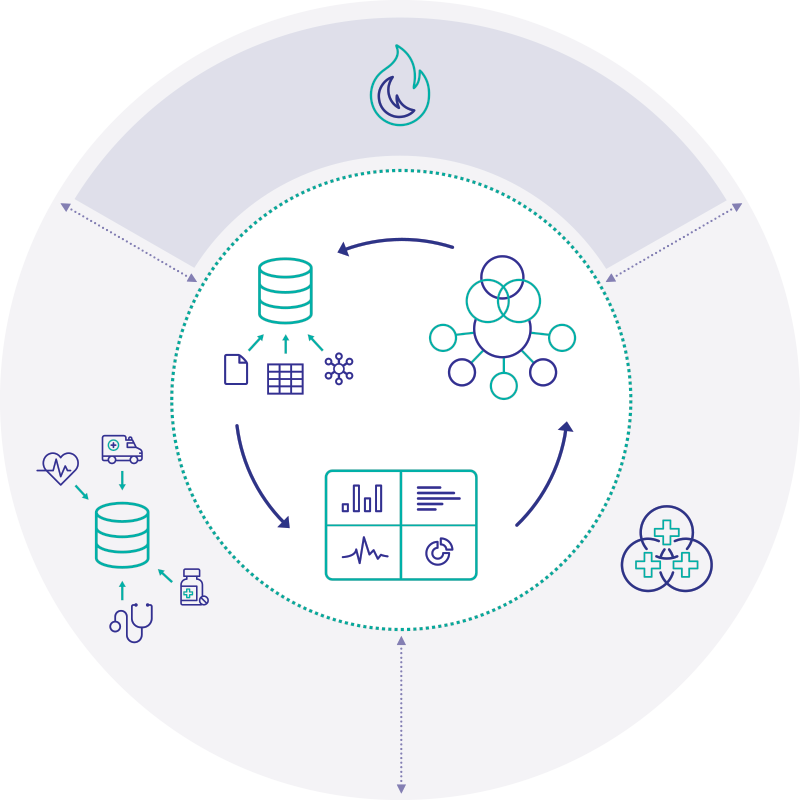
With access to InterSystems unified data platform on all three major cloud providers, developers and customers have flexibility to rapidly build and scale the digital applications driving the future of care on the platform of their choice.
To learn more please follow this link.
The preview release of InterSystems IRIS for Health 2019.1 is now available - try it out!
Kits and container images are available via WRC's preview download site.
InterSystems IRIS for Health 2019.1 is the second major version of InterSystems IRIS for Health. It has many new capabilities including:
Hi Community!
I'm pleased to announce that we've just launched the new product in the family of InterSystems Data Platforms:

IRIS for Health — is the world’s first and only data platform engineered specifically for healthcare. It empowers you to rapidly create and scale the industry’s next breakthrough applications.
In the last post we scheduled 24-hour collections of performance metrics using pButtons. In this post we are going to be looking at a few of the key metrics that are being collected and how they relate to the underlying system hardware. We will also start to explore the relationship between Caché (or any of the InterSystems Data Platforms) metrics and system metrics. And how you can use these metrics to understand the daily beat rate of your systems and diagnose performance problems.
This post will guide you through the process of sizing shared memory requirements for database applications running on InterSystems data platforms. It will cover key aspects such as global and routine buffers, gmheap, and locksize, providing you with a comprehensive understanding. Additionally, it will offer performance tips for configuring servers and virtualizing IRIS applications. Please note that when I refer to IRIS, I include all the data platforms (Ensemble, HealthShare, iKnow, Caché, and IRIS).
One of the great availability and scaling features of Caché is Enterprise Cache Protocol (ECP). With consideration during application development distributed processing using ECP allows a scale out architecture for Caché applications. Application processing can scale to very high rates from a single application server to the processing power of up to 255 application servers with no application changes.
ECP was used widely for many years in TrakCare deployments I was involved in. A decade ago a 'big' x86 server from one of the major vendors might only have a total of eight cores.
This is a list of all the posts in the Data Platforms’ capacity planning and performance series in order. Also a general list of my other posts. I will update as new posts in the series are added.
You will notice that I wrote some posts before IRIS was released and refer to Caché. I will revisit the posts over time, but in the meantime, Generally, the advice for configuration is the same for Caché and IRIS. Some command names may have changed; the most obvious example is that anywhere you see the
^pButtonscommand, you can replace it with^SystemPerformance.
++Update: August 2, 2018
This article provides a reference architecture as a sample for providing robust performing and highly available applications based on InterSystems Technologies that are applicable to Caché, Ensemble, HealthShare, TrakCare, and associated embedded technologies such as DeepSee, iKnow, Zen and Zen Mojo.
Azure has two different deployment models for creating and working with resources: Azure Classic and Azure Resource Manager. The information detailed in this article is based on the Azure Resource Manager model (ARM).