Hi Community!
We're happy to share the next video in the series dedicated to Gen AI on our InterSystems Developers YouTube:
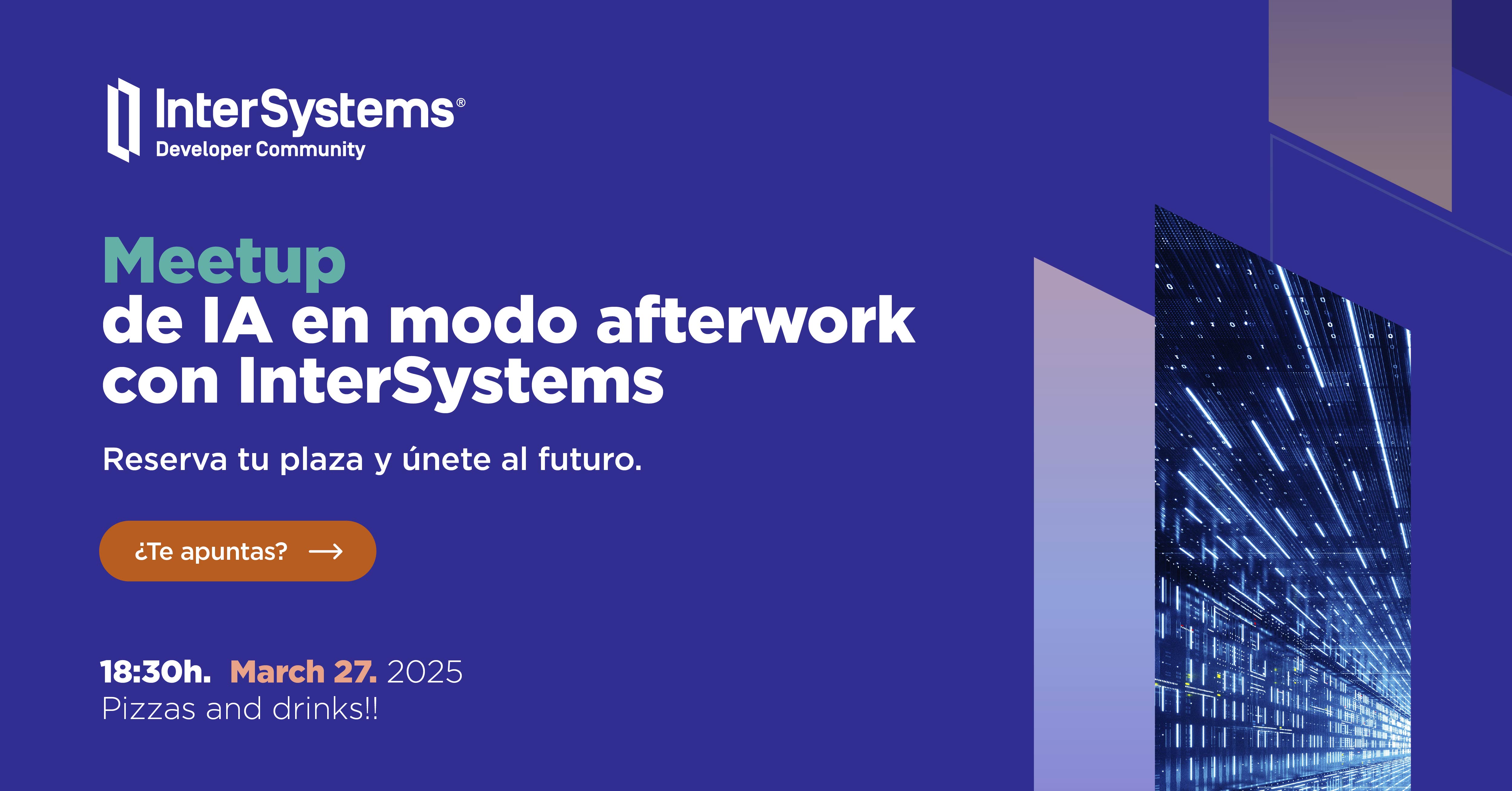
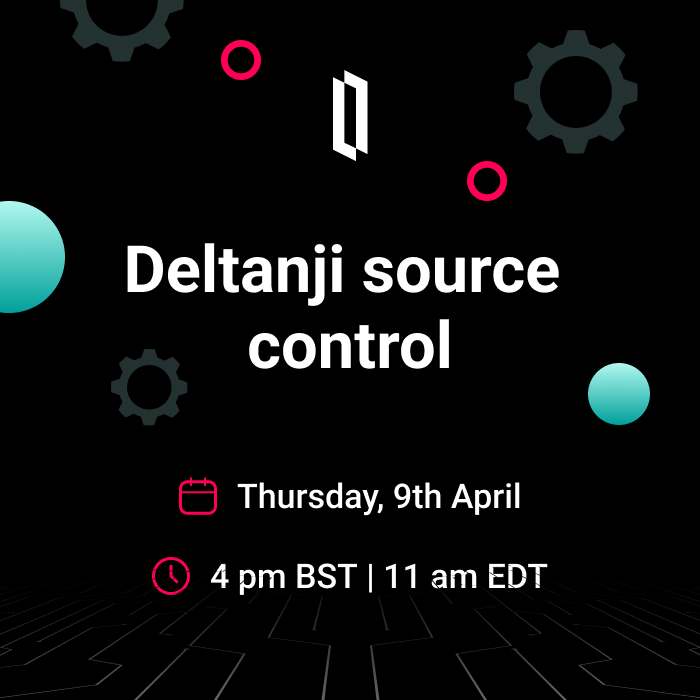
Hi Community!
We're happy to share the next video in the series dedicated to Gen AI on our InterSystems Developers YouTube:
Hello, I have a problem with a call and I would need some help.
When I call an API with the SendFormDataArray method of the EnsLib.HTTP.OutboundAdapter adapter, I pass it a %Net.HttpRequest object and I receive the following error:
ERROR #5002: ObjectScript error: <SUBSCRIPT>MatchSuffix+1^%Net.HttpRequest.1 ^%qPublicSuffix("")
I have correctly entered the url in my business operation and I pass it in the last parameter of the SendFormDataArray method. Do you have any idea, please?
From the previous article, we identified some issues when working with JSON in SQL.
IRIS offers a dedicated feature for handling JSON documents, called DocDB.
InterSystems IRIS® data platform DocDB is a facility for storing and retrieving database data. It is compatible with, but separate from, traditional SQL table and field (class and property) data storage and retrieval. It is based on JSON (JavaScript Object Notation) which provides support for web-based data exchange. InterSystems IRIS provides support for developing DocDB databases and applications in REST and in ObjectScript, as well as providing SQL support for creating or querying DocDB data.
By its nature, InterSystems IRIS Document Database is a schema-less data structure. That means that each document has its own structure, which may differ from other documents in the same database. This has several benefits when compared with SQL, which requires a pre-defined data structure.
The word “document” is used here as a specific industry-wide technical term, as a dynamic data storage structure. “Document”, as used in DocDB, should not be confused with a text document, or with documentation.
Let's explore how DocDB can help store JSON in the database and integrate it into projects that rely solely on xDBC protocols.
Positions for Application Engineers supporting the Department of Veterans Affairs.
Contact recruiter:
Lori Sutton
Program Manager, Talent Acquisition
Input Technology Solutions
(757) 271-4062
lsutton@inputtechnologysolutions.com
I'm trying to put this global into a readable list. any suggestions
The nested $bl's are giving me a problem.
SYSMGR("Task","TaskD",1046)=$lb("","",0,0,"","0","","Import data to PROG namespace OS.SarD",$lb("63735","1"),,,0,"","<ENDOFFILE>Import+30^PROG0","%SYS.Task.RunLegacyTask",0,"","","",0,"63735,40372","","63735,40320","ImportD","PROG2",,0,"","",0,0,,"",64117,"0 "_$lb($lb(5001,"<ENDOFFILE>Import+30^PROG0",,,,,,,,))/* ERROR #5001: <ENDOFFILE>Import+30^PROG0 */,1,"",5,"","",2,,,1,"123-123-123-ABCD-12345A789A","","SMITH1",$lb("ExecuteCode","q ; D Import^PROG0()"),3,0)
When removing a segment in DTL for hl7 using foreach the segment doesn't actually get removed and leaves a blank segment.
i.e.
MSH|^~\&|SendingSystem|ReceivingSystem|202301241000||ADT^A01|12345|P|2.4
EVN|S|202301241000
PID|1|MRN12345|1^^^^KEEP~2^^^^Remove~3^^^^Keep|M|19800101|
PD1|PatientAddress^Street^City^State^Zip
PV1|I|INPATIENT|BED123|DoctorID|202301241000|202301241000This blank segment to be removed
Hi.
This is my first post on this forum; I've tried to open an issue on the official repo , but it seems inactive from more than a year, so I can't receive an answer from there.
I would like to know if someone use that extension and know how to use it when working server-side on an IRIS server.
I have no problem when coding on a file saved locally.
Thanks in advance
USER>do$System.Python.Shell()
ERROR #5002: ObjectScript-Error: <OBJECT DISPATCH>Shell+16^%SYS.Python.1
*Failed to Load Python: Check documentation and messages.log,
Check CPF parameters:[PythonRuntimeLibrary,PythonRuntimeLibraryVersion],
Check sys.path setup in: $INSTANCE/lib/python/iris_site.py
02/03/25-18:27:39:497 (13156) 1 [Generic.Event] CPF settings (PythonRuntimeLibraryVersion) do not specify python correctly - Python can not be loaded 02/03/25-18:27:39:498 (13156) 1 [Generic.Event] CPF settings (PythonRuntimeLibrary) do not specify python correctly - Python can not be loaded
Dear Community,
I am trying to convert a base64 encoded string to a pdf. I have tried a lot of possible ways, but never succeeded. I am able to decode the base64 using $System.Encryption.Base64Decode but I am not able to convert it and store this in a path.
Can anybody help me out here?
Thanks.
Hi,
I found an issue while fetching records from FHIR DB, I am getting below error thou FHIR repository have the records with the corresponding id
{
"resourceType": "OperationOutcome",
"issue": [
{
"severity": "error",
"code": "not-found",
"diagnostics": "<HSFHIRErr>ResourceNotFound",
"details": {
"text": "No resource with type 'Appointment' and id '21'"
}
}
]
}
Hi, Community!
In the previous article, we introduced the Streamlit web framework, a powerful tool that enables data scientists and machine learning engineers to build interactive web applications with minimal effort. First, we explored how to install Streamlit and run a basic Streamlit app. Then, we incorporated some of Streamlit's basic commands, e.g., adding titles, headers, markdown, and displaying such multimedia as images, audio, and videos.
Later, we covered Streamlit widgets, which allow users to interact with the app through buttons, sliders, checkboxes, and more. Additionally, we examined how to display progress bars and status messages and organize the app with sidebars and containers. We also highlighted data visualization, using charts and Matplotlib figures to present data interactively.
In this article, we will cover the following topics:
.png)
Hi, Community!
In this article, I will introduce Python Streamlit Web Framework.
Below, you can find the topics we will cover:
So, let's start with the first topic.
Hi,
I have Objectscript routine stored in an external Linux file which I've called /my/home/DisplayDB.int
This file does not include any Class definitions and is simply a set a Object script routines. I think this is called INT objectscript
The file looks like this:
set db=##class(Config.Databases).DatabasesByServer("",.dbList)
for i=1:1:$LENGTH(dbList,",") {
set dbName= $PIECE(dbList,",",i)
write dbName,!
}How do I load and compile the Objectscript code?
Do $system.OBJ.Load("/my/home/DisplayDB.int", "ck")
How would I run the code?
do ^DisplayDB
Thanks in advance for any help
Is there a way to compile all of the *.int routines from a command line and get an output of any compile errors?
On Encounter container we want to map some data from Z segments is that possible? Presently the mapping from HL7to SDA3 is taking place from HL7 defines segments . is there a way to push the data from Z segment.
We can loop over segment group or repeatable segments with FOREACH in business rules. How can we loop over repeated fields within a segment in business rule?
Thank you
Hello All,
I need help Integrating the vendor-provided code into the current code to check if the data is an array and if it is, iterate through each item using a for each loop. Also, I need to hit every error handler code mentioned at the bottom along with the transform in both instances.
My Current Code:
/// Given a patient number in a JSON string format, this includes required transformations and makes use of
/// the MPI Query Handler to pull basic demographics from Epic.
Class CUH.Proc.DCIQGetPatient Extends Ens.BusinessProcessBPL [ ClassType = persistent, ProcedureBlock ]
{
Host Variables are a rather common programming feature in many implementations of SQL.
A recent question in DC made me aware that in IRIS, Caché, Ensemble, ...
host variables just exist within embedded SQL
> You can supply host variables for Embedded SQL queries only. <
Related examples are included in the available Documentation
This is a description for a workaround if you don't / can't use embedded SQL.
Import from DC-PT, @Edilson Eberle Carvalho
We have some *.mac routines and we need to preserve their source,
as these routines have intellectual authorship and can only be used per session
with the right to use (they cannot be viewed or edited).
The question: how to keep only the routine object in the IRIS namespace,
without interfering with its execution?
All pods are assigned a Quality of Service (QoS). These are 3 levels of priority pods are assigned within a node.
The levels are as following:
1) Guaranteed: High Priority
2) Burstable: Medium Priority
3) BestEffort: Low Priority
It is a way of telling the kubelet what your priorities are on a certain node if resources need to be reclaimed. This great GIF below by Anvesh Muppeda explains it.
Hello everyone,
I'm trying to get back into shape with IRIS. My current goal is to practice with ObjectScript and VS Code. I installed both on my Mac, and everything worked like a charm—perhaps that's why I'm still a big fan of Unix.
Hi everyone,
I am trying to create a listen server in Cache 2016 that can capture data from a specific port. Can someone guide me on how to set this up, including handling incoming connections and reading data from the port? Any advice or example code would be much appreciated!
Thanks in advance!
✓ 145 new posts published in January:
✓ 349 new members joined in January
✓ 14,427 posts published all time
✓ 15,012 members joined all time
I build a simple text string from an HL7 message in the DTL. What target message type and Business Operation should I use to write the text to a file?
Hi Community,
Enjoy the new video on InterSystems Developers YouTube:
⏯ Case Studies in InterSystems Supply Chain Orchestrator @ Global Summit 2024
I have VS Code with extensions connected to IRIS for Health. One top-level ObjectScript package is not displayed in the workspace for this namespace. This package exists in the namespace and is visible in SMP. If I create a new class with a different top-level package name (package that didn't previously exist) it will immediately appear in the workspace.
Is there any debug logging I can enable to look for errors or do any other troubleshooting?
Forgot to mention: the missing package is custom, not a system package.
In a containerized environment, you can manage your container time via the TZ variable or via the /etc/timezone and /etc/localtime directories:
environment:
- TZ=Europe/Parisvolumes:
- "/etc/timezone:/etc/timezone:ro"
- "/etc/localtime:/etc/localtime:ro"You can find complete examples here:
My main goal of this article was to prove the use of InterSystems IRIS for Health for REST FHIR interoperability between multiple applications. In this use case, some initiating application makes a REST call to IRIS for Health (which is merely a passthrough for REST calls) to retrieve FHIR data from an Oracle Health R4 FHIR repository. Ideally, it simplifies the syntax for calling the Oracle Health APIs.