Organizations around the world lose an estimated five percent of their annual revenues to fraud, according to a survey of Certified Fraud Examiners (CFEs) who investigated cases between January 2010 and December 2011. Applied to the estimated 2011 Gross World Product, this figure translates to a potential total fraud loss of more than $3.5 trillion (source: https://www.acfe.com/press-release.aspx?id=4294973129).
Can InterSystems IRIS support horizontal expansion? How many nodes can it support?
InterSystems has been widely used in medical and health fields. Which other industries have high market share?
What's the difference between InterSystems Trakcare and InterSystems Healthshare?
This article is a continuation of this post.
The purpose of this article is to explain how the Interoperability menu works for system integration.
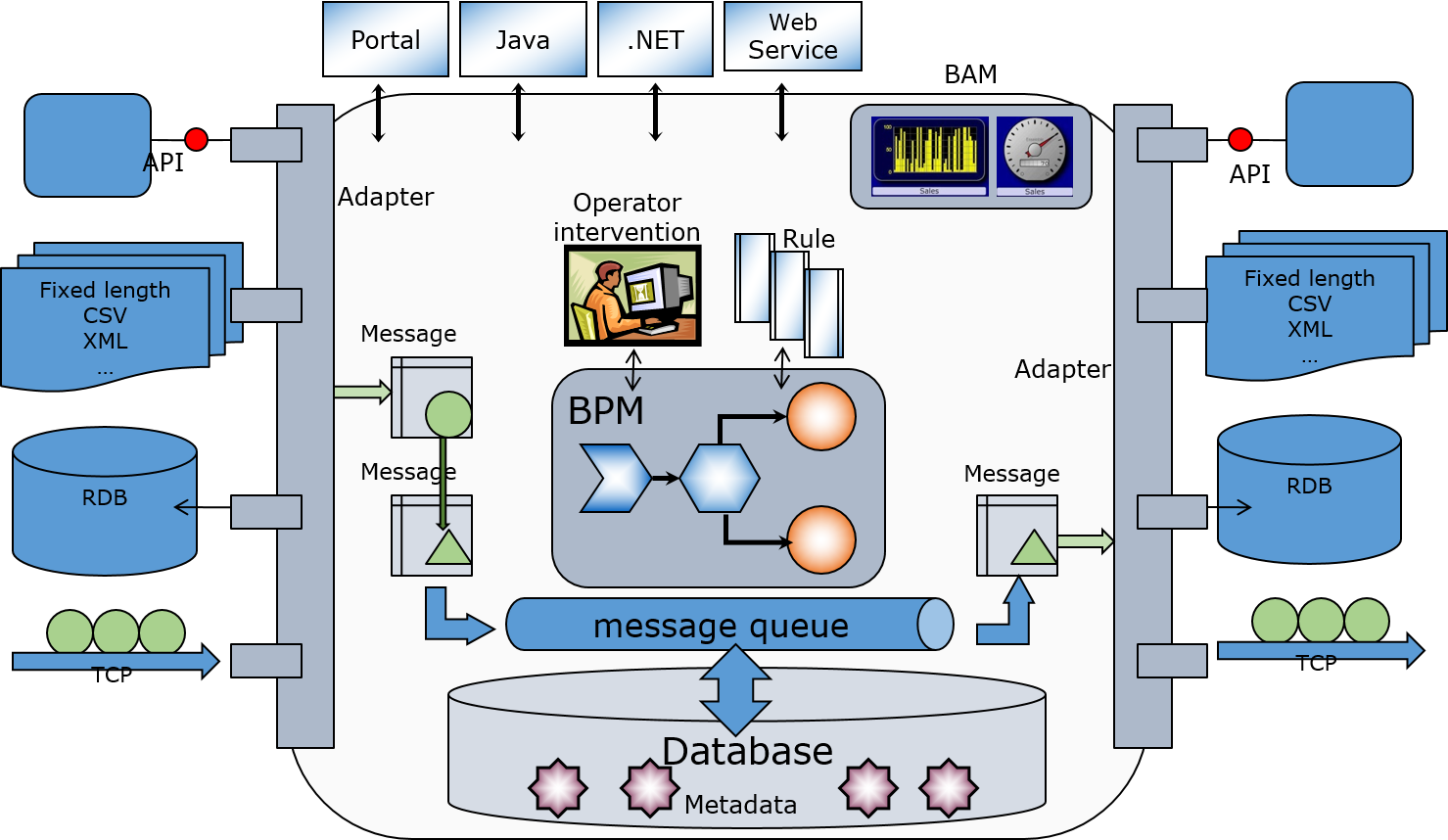
The left side of the figure is the window for accepting information sent from external systems.
There are various ways to receive information, such as monitoring the specified directory at regular intervals to read files, periodically querying the database, waiting for input, or directly calling and having it passed from applications in other systems.
This article is a continuation of this post.
In the previous article, how the Interoperability menu works for system integration was explained.
In this article, I would like to explain how to develop a system integration using the Interoperability menu.
To begin with, what kind of process do you want to create? While thinking about this, make the following content.
This article is a follow-up to this post.
In the previous article, [What is a Production?], we checked the production contents. We ran the sample code and checked the flowing messages' contents into the production on the Visual Trace page.
This article will review the concept and the definition of the messages used to send and receive data between components from the required development content for system integration.
- Production[ previous post ]
- Message
- Components
- Business Services
- Business Processes
- Business Operations
Before creating a message, let's review the case study.
This article is a continuation of this post.
In the previous article, we reviewed how to create and define messages used to send and receive data between components.
In this article, I will explain how to create a business operation from the component creation methods.
- Production
- Message(previous article)
- Components
- Business Services
- Business Processes
- Business Operations
We will quickly check the code by referring to the sample.。
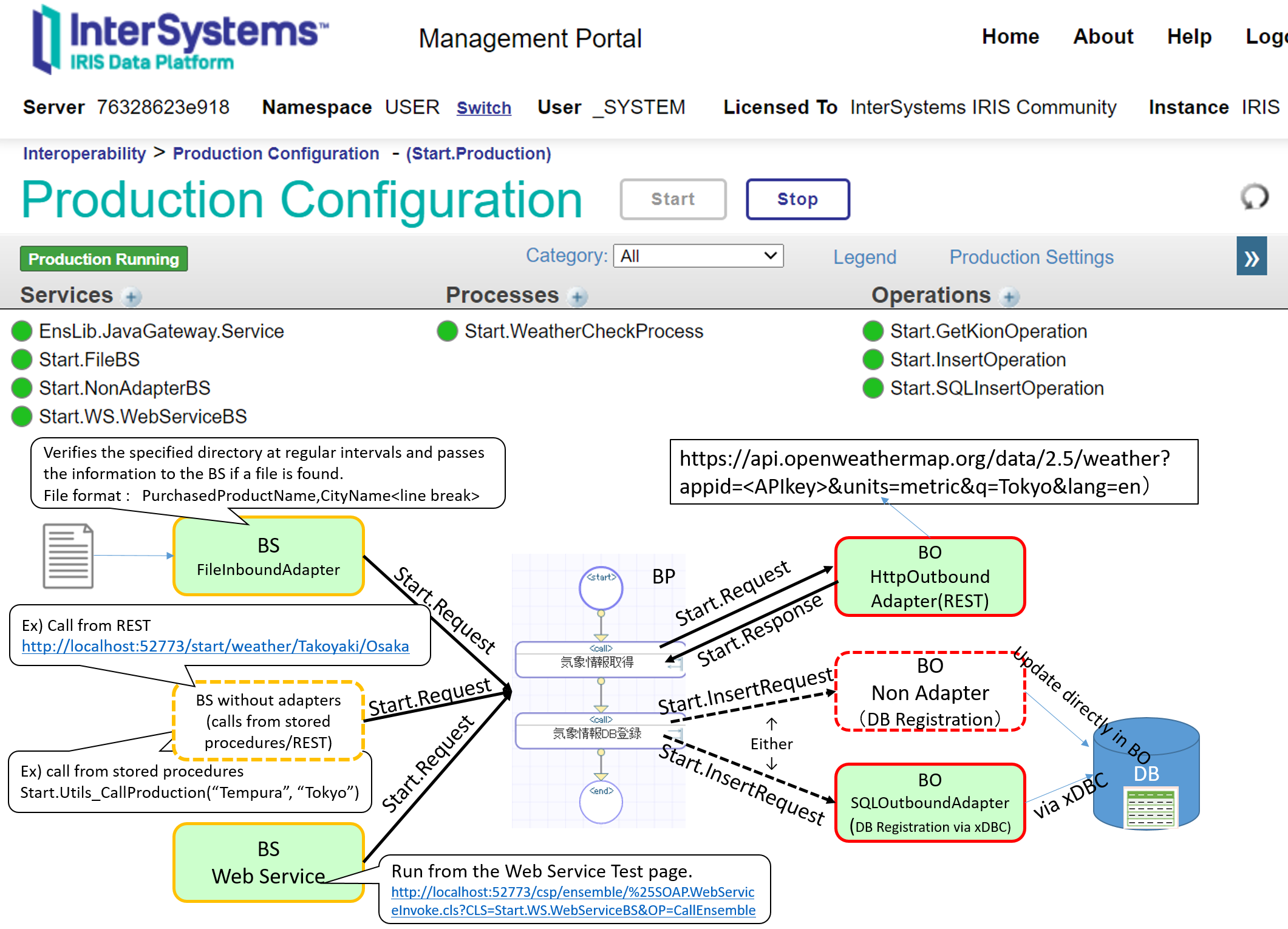
| Component Name | Role |
|---|---|
| Start.FileBS | A business service that uses file inbound adapter to read files placed in a specified directory at regular |
This article is a continuation of this post.
In the previous article, we discussed business operations' creation from the components required for system integration.
In this article, you will learn how to create a business process that calls the two business operations you have defined in the sequence order.
- Production
- Message
- Components
- Business Services
- Business Processes
- Business Operations (previous post)
The business process acts as the coordinator (command center) of the process.
This article is a continuation of this post.
In the previous article, we discussed the development of business processes, which are part of the components required for system integration and serve as a production coordinator.
This article will discuss creating a business service, which is the information input window for production.
- Production
- Message
- Components
- Business services
- Business processes(previous post)
- Business operation
And finally, the last component of “Let's Use Interoperability!
Accuracy rate is a measure of our prediction results, and it is a measure of how many of the predicted positive samples are actually positive.
The recall rate is for our original sample, and it shows how many positive examples in the sample were correctly predicted.
Accuracy = Predicted correctly/All
If we want to be able to retrieve as much content as possible, this is the pursuit of "recall ratio", namely A/(A+C), the bigger the better.
Hello, developers!
In this article, we will focus on OAuth2, a protocol that is increasingly being used in combination with FHIR to perform authorization.
In this part 1, we will start up the Docker container for IRIS for Health and Apache, configure the OAuth2 authorization server function on IRIS for Health, access it from the REST development tool Postman, and obtain an access token. Besides, in Part 2 and beyond, we will add FHIR repository functionality to IRIS for Health, add OAuth2 resource server configuration, and explain how to execute FHIR requests with access tokens from Postman.
I finished my participation in the Developing with InterSystems Objects and SQL with Joel Solon. The course is very nice and I will share with you some tips I got during this the training final day. Tips presented in the day 5:
- %SYSTEM package has general utiliy classes. Use $system.class.Help() to list the utilities. The main %SYSTEM classes are Encryption (industry encryption methods), OBJ to manage classes and objects, Security for security methods and SQL to use SQL language.
Hey Developers,
Enjoy watching the presentation of the IRIS-REST-API-DATABASEMANAGER app that allows you to create persistent Tables and Data in InterSystems Cache Database:
Hello,
Thanks for your time,
We would like to know if there is a recommended way to look for if a service has a port in use in each Instance's / Namespace's Production?
We ask because of currently if we need to look if a port is used, we check in Studio every Namespace (there are more than 5) and every Instance (there are four)
I and other developers want to know if do we need to ask permission for the creator to translate an article to portuguese? Sometimes we send a message requesting authorization, but we don't receive a answer, what we do?
Regards.
Hey Developers,
See how the InterSystems IRIS FHIR Server allows you to develop and deploy your FHIR applications on AWS without manual configuration and deployment:
⏯ Getting Started with the InterSystems IRIS FHIR Server on AWS
This is the first InterStstems programming contest that we participated in! Come check out and vote for us!
The overbooking management system combines the unique conditions of the hotel, such as room prices, order channels, customer needs (etc...). System uses machine learning algorithms (such as: KNN/ES-RNN...) to accurately predict the daily no-show and occupancy rate of the hotel, and further combines with the revenue equation to find the best largest room sales volume, which can significantly increase the hotel marginal revenue.
Hey Developers,
This week is a voting week for the InterSystems Multi-Model Contest! So, it's time to give your vote to the best solutions built with InterSystems IRIS.
🔥 You decide: VOTING IS HERE 🔥
How to vote?
Getting this error when starting up Caché:
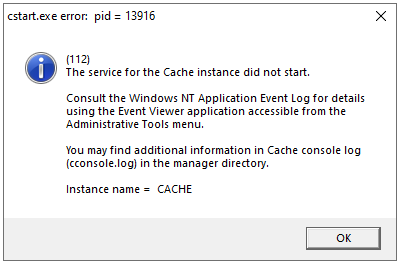
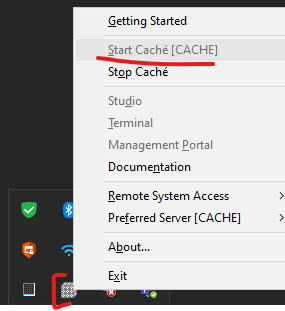
I've recently deleted several Caché namespaces to clear up space, turned Caché off, and then this started happening. Caché cube is grey, but only the start Caché option is unavailable.
Caché is still running, but just not completely:
The Windows Event Viewer application has the following error: .png)
There are also the following logs in the mgr/cconsole.log file. I can provide more if necessary.
03/03/21-14:18:23:206 (13360) 0 START: C:\InterSystems\Cache\mgr\journal\20210303.I have 2 instances of Cache, one of 2010 and the other 2016. On both I have created a SSL Configuration with same name.
When I connect to a SOAP Service Client from Cache 2010, I get the above error.
If I connect from Cache 2016, the connection get through.
How can get more details of the error in the Cache 2010 instance to be able to fix this issue.
I have enabled the SOAP Log and it does not give much of details.
Regards
Anil
There's been quite a bit of discussion lately in this forum on the tools available in IRIS for using both XML and JSON, and debate on cross-conversion between the two formats.
A week or so ago I posted details of a set of tutorials I'd put together on integrating the Node.js-based QEWD technology with IRIS, working over a network. As part of that set of tutorials, I've been detailing how to use the various multi-model capabilities of the build-in QEWD-JSdb abstraction of IRIS.
Just curious if anyone tried to use HTTP/2 in their Caché projects?
And InterSystems thoughts about adding support for this new version.
Hi Community,
Enjoy watching the new session recording from the InterSystems AI+ML Summit 2021:
Hi ,
I have a requirement to programmatically fetch and update a Business Process Setting . It's a custom property , added in extended class .
I am trying find a sample, but no luck.
Could any one help me ?
Hey Developers,
Here is a digest of the Developer Community videos on InterSystems Developers YouTube Channel in February 2021:
New Tool Available
Please see PerfTools IO Test Suite for a later version of the Random Read IO tool.
Purpose
This tool is used to generate random read Input/Output (IO) from within the database. The goal of this tool is to drive as many jobs as possible to achieve target IOPS and ensure acceptable disk response times are sustained. Results gathered from the IO tests will vary from configuration to configuration based on the IO sub-system. Before running these tests ensure corresponding operating system and storage level monitoring are configured to capture IO performance metrics for later analysis.
Hi Developers!
We had a set of technology bonuses for the InterSystems Grand Prix contest.
Good day, developers!
The "apptools-admin" project is not only a set of tools for the administrator, but a platform for the rapid creation of a prototype of any solution. For example, Photo Album, Music Player, and Personal Library all come together in a user-friendly treasure chest design.
Load http:// your-host:your-port/apptoolsrest/a/infochest
Change the path to your treasure files and start viewing, listening or reading from any convenient device: desktop, tablet or smartphone.

Hi folks!
Sometimes when we develop a mockup or PoC there is a need for a simple interface that will provide data in IRIS in JSON against SQL queries.
And recently I contributed a simple module that does exactly that:
accepts SQL string and returns the JSON.
How to install? Just call:
zpm "install sql-rest"If you install it in a namespace X it will setup a /sql endpoint to your system that will accept POST requests with SQL string and will return the result for you for the data available in the namespace X.
Hello all,
Is there any command or way to update the versionid on windows similar to the "iris update <instance> versionid=<version>" on linux?