What containers are and why they make sense with IRIS 2.1 Containers and images in a nutshell 2.2 Why containers are useful for developers 2.3 Why IRIS works well with Docker
Prerequisites
Installing the InterSystems IRIS image 4.1 Using Docker Hub 4.2 Pulling the image
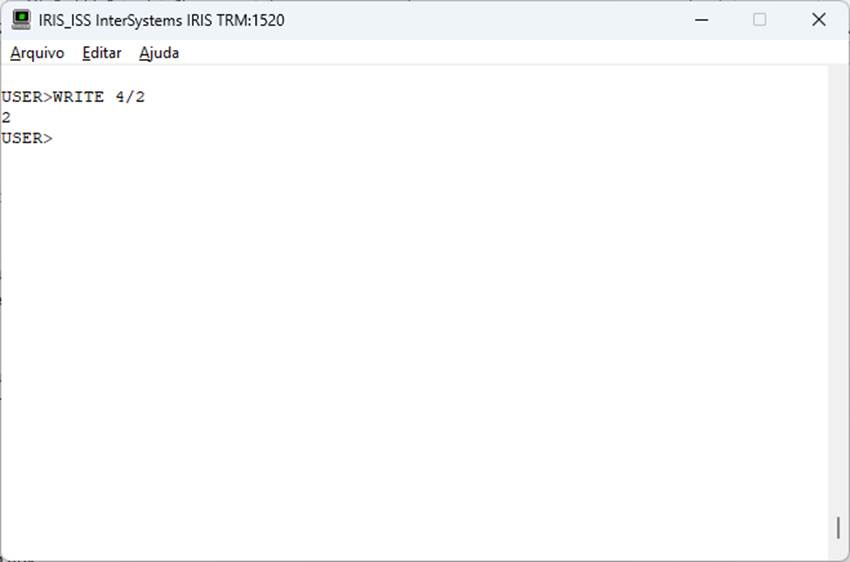
Running the InterSystems IRIS image 5.1 Starting an IRIS container 5.2 Checking container status 5.3 Executing code in the container terminal 5.4 Accessing the IRIS Management Portal 5.5 Connecting the container to VS Code 5.6 Stopping or removing the container 5.7 Setting a specific password with a bind mount 5.8 Using durable %SYS volumes 5.8.1 What gets stored with durable %SYS 5.8.2 How to enable durable %SYS
Using Docker Compose 6.1 Docker Compose example 6.2 Running Docker Compose
Using a Dockerfile to run custom source code 7.1 Dockerfile example 7.2 Docker Compose example 7.3 Understanding layers, image tagging and build vs. run time 7.4 Source code and init script 7.5 Building the image with Dockerfile 7.6 Running instructions in the containerized IRIS terminal
This article will introduce you to the concept of virtual environments in Python, which are essential for managing dependencies and isolating project from the OS.
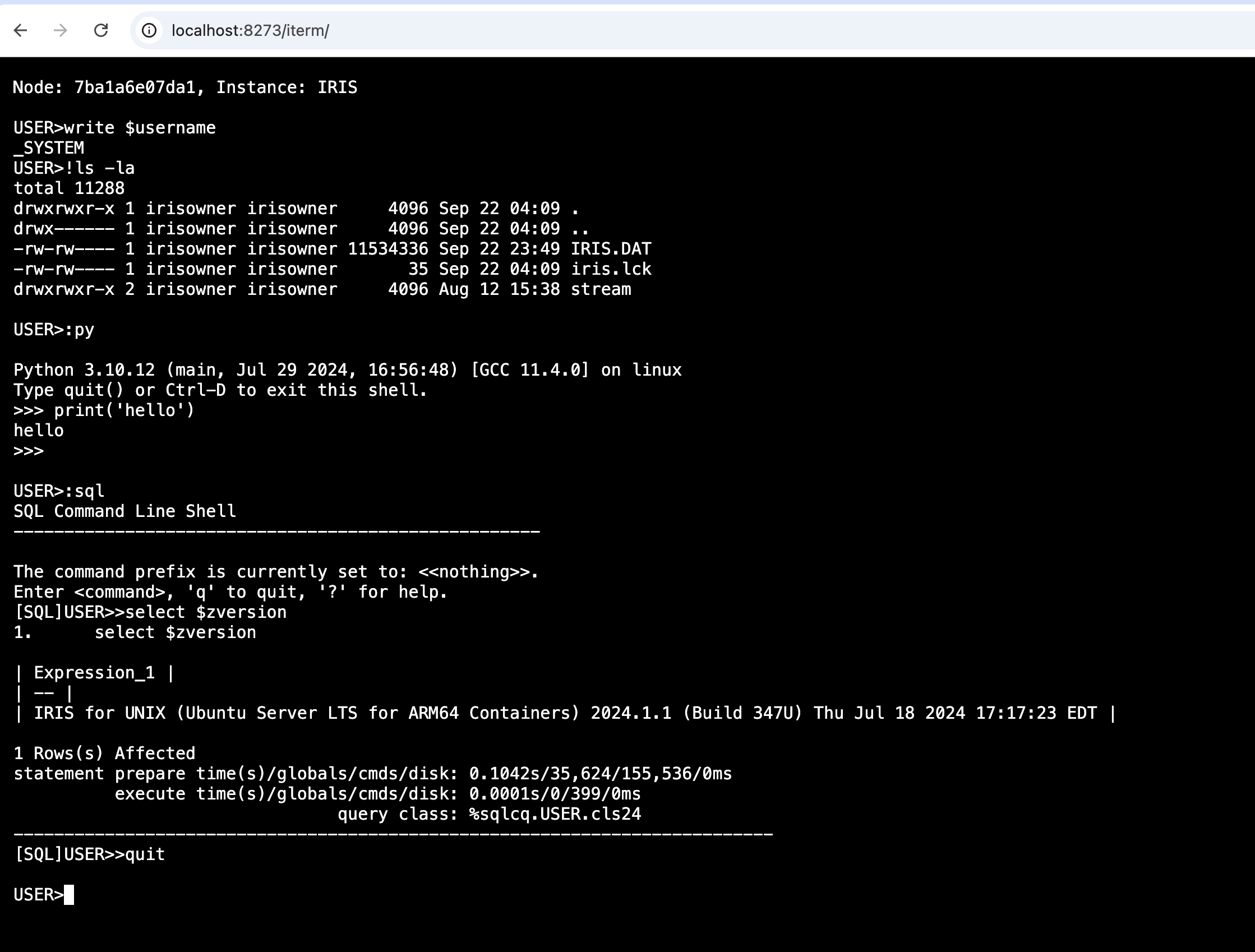
Are you curious about how to run Python scripts directly in your InterSystems IRIS or Caché terminal? 🤔 Good news it's easy! 😆 IRIS supports Embedded Python, allowing you to use Python interactively within its terminal environment.
How to access the Python Shell?
To launch the Python shell from the IRIS terminal, simply run the following command:
Hello Community I was running code in the terminal and attempted to interrupt its execution. During that process, I encountered an application error with a log entry dated 01/06/1841, the date seems unusual. Error <INTERRUPT>ErrST+6^%ETN occurred within %ETN itself. Detailed information cannot be logged.
I am currently monitoring our license use with a new rest-service I am implementing when I noticed my licenses on my instance being consumed and never released by Visual Studio Code.
Is there any way to permanently clear all the commands displayed in the line recall History. The :clear deletes all the commands in that particular process/recall buffer.
I am developing locally on my IRIS instance using VSCode and client-side editing approach. How can I automatically export a single .cls file/a whole package to a remote TEST/PREPROD server using a script or command line and recompile the unit remotely? Are there any more simple and straightforward ways than CI/CD explained in the series of articles by Eduard?