
The August Article Bounty on the Global Masters article caught my attention, and one of the proposed topics sounded quite interesting in regard to its future use in my teaching. So, here's what I'd like to tell my students about tables in IRIS and how they correlate with the object model.

First of all, InterSystems IRIS boasts a unified data model. This means that when you work with data, you are not locked into a single paradigm. The same data can be accessed and manipulated as a traditional SQL table, as a native object, or even as a multidimensional array (a global). It means that when you create an SQL table, IRIS automatically creates a corresponding object class. When you define an object class, IRIS automatically makes it available as an SQL table. The data itself is stored only once in IRIS's efficient multidimensional storage engine. The SQL engine and the object engine are simply different "lenses" to view and work with the same data.

First, let's look at the correlation between the relational model and the object model:

Relational Object
Table Class
Column Property
Row Object
Primary key Object Identifier

It's not always a 1:1 correlation, as you may have several tables represent one class, for example. But it's a general rule of thumb.

6 7
2 185
Article
· Dec 20, 2021 1m read
Holiday Reading: What Lies Beneath!

For those of you who might be new to IRIS, and even those who have used Cache or IRIS for some time but want to explore beyond its usually-assumed boundaries and practices, you might want to dive into this detailed exploration of the database engine that is at its heart, and discover just what you can really do with it, going way beyond what InterSystems have done with it for you.

10 5
4 541
Article
· Aug 2, 2022 8m read
Data models in InterSystems IRIS

Before we start talking about databases and different data models that exist, first we'd better talk about what a database is and how to use it.

A database is an organized collection of data stored and accessed electronically. It is used to store and retrieve structured, semi-structured, or raw data which is often related to a theme or activity.

At the heart of every database lies at least one model used to describe its data. And depending on the model it is based on, a database may have slightly different characteristics and store different types of data.

To write, retrieve, modify, sort, transform or print the information from the database, a software called Database Management System (DBMS) is used.

The size, capacity, and performance of databases and their respective DBMS have increased by several orders of magnitude. It has been made possible by technological advances in various areas, such as processors, computer memory, computer storage, and computer networks. In general, the development of database technology can be divided into four generations based on the data models or structure: navigational, relational, object and post-relational.
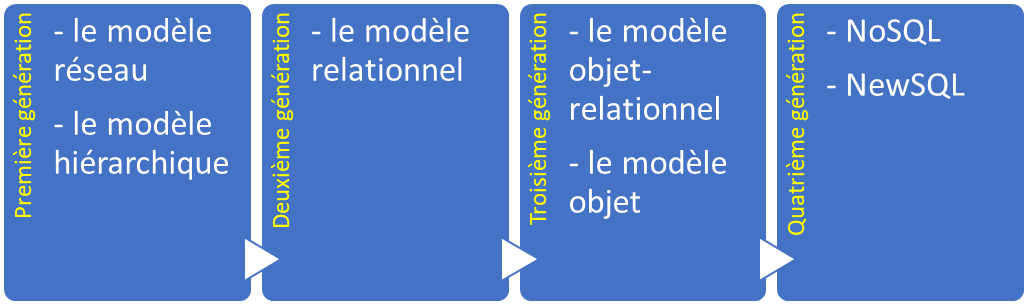
16 5
4 2K

Introduction

Not so long ago, I came across the idea of using Python Class Definition Syntax to create IRIS classes on the InterSystems Ideas Portal. It caught my attention since integrating as many syntaxes as possible gives visibility to InterSystems’s products for programmers with experience in many languages.

8 3
0 594

Making a blog using Python + IRIS Globals

Since I started to use internet (late 90's), I always had a CMS (content management system) present to make easier post
any information in a blog, social media or even an enterprise page. And later years putting all my code into github I
used to document it on a markdown file. Observing how easy could be persisting data into Intersystems IRIS with the
Native API I decided to make this application and force myself to forget a little of SQL and stay open to key-value database
model.

4 2
0 472
Article
· Feb 26, 2025 6m read
The Case for IRIS and JavaScript

Introduction

My guess is that most IRIS developers create their applications using its native ObjectScript language or, if using an external language, then most likely using either Java, Python or perhaps C++.

I suspect that only a minority have considered using JavaScript as their language of choice, which, if true, is a great shame, because, In my opinion and experience, JavaScript is the closest equivalent to ObjectScript in terms of its ability to integrate with the IRIS's underlying multi-dimensional database.

15 1
2 359

Are you familiar with SQL databases, but not familiar with IRIS? Then read on...

About a year ago I joined InterSystems, and that is how IRIS got on my radar. I've been using databases for over 40 years—much of that time for database vendors—and assumed IRIS would be largely the same as the other databases I knew. However I was surprised to find that IRIS is in several ways quite unlike other databases, often much better. With this, my first article in the Dev Community, I'll give a high-level overview of IRIS for people that are already familiar with the other databases such as Oracle, SQL Server, Snowflake, PostgeSQL, etc. I hope I can make things clearer and simpler for you and save you some time getting started.

9 1
1 335

For the benefit of those who want to use the Document Database (DocDB) capabilities within InterSystems IRIS, and specifically the REST API it provides, I put together a Postman Collection that provides samples for several basic calls.

For example:

1 0
0 898
Article
· Feb 2, 2021 12m read
A custom SQL index with Python features

Image search like Google's is a nice feature that wonder me - as almost anything related to image processing.

A few months ago, InterSystems released a preview for Python Embedded. As Python has a lot of libs for deal with image processing, I decided to start my own attemptive to play with a sort of image search - a much more modest version in deed :-)

4 0
0 440

In this article, I am demonstrating how to create a table column(formerly known as properties) with your custom datatype classes by using User defined DDL. Properties are the crucial member of the persistent class definition. Datatypes are essential to define types of values that are stored in a table column. In general, the datatype names of SQL different from Intersystems datatypes, such as VARCHAR = %String.

1 0
0 323