#Large Language Model (LLM)

1 Follower · 70 Posts

A large language model (LLM) is an artificial intelligence model designed to understand and generate human-like text based on vast amounts of training data.

Article Suprateem Banerjee · Jan 25 14m read

Ever since I started using IRIS, I have wondered if we could create agents on IRIS. It seemed obvious: we have an Interoperability GUI that can trace messages, we have an underlying object database that can store SQL, Vectors and even Base64 images. We currently have a Python SDK that allows us to interface with the platform using Python, but not particularly optimized for developing agentic workflows. This was my attempt to create a Python SDK that can leverage several parts of IRIS to support development of agentic systems.

1
0 41
Article Henry Pereira · Feb 4 11m read

cover

In Part 1, we laid the technical foundation of MAIS (Multi-Agent Interoperability Systems). We have successfully wired up the 'Brain', built a robust Adapter using LiteLLM, locked down our API keys with IRIS Credentials, and finally cracked the trick code on the Python interoperability puzzle.

However, right now our system is merely a raw pipe to an LLM. It processes text, but it lacks identity.

Today, in Part 2, we will define the Anatomy of an Agent We will move from simple API calls to structured Personas.

0
1 183
Article Mihoko Iijima · Jan 31 31m read

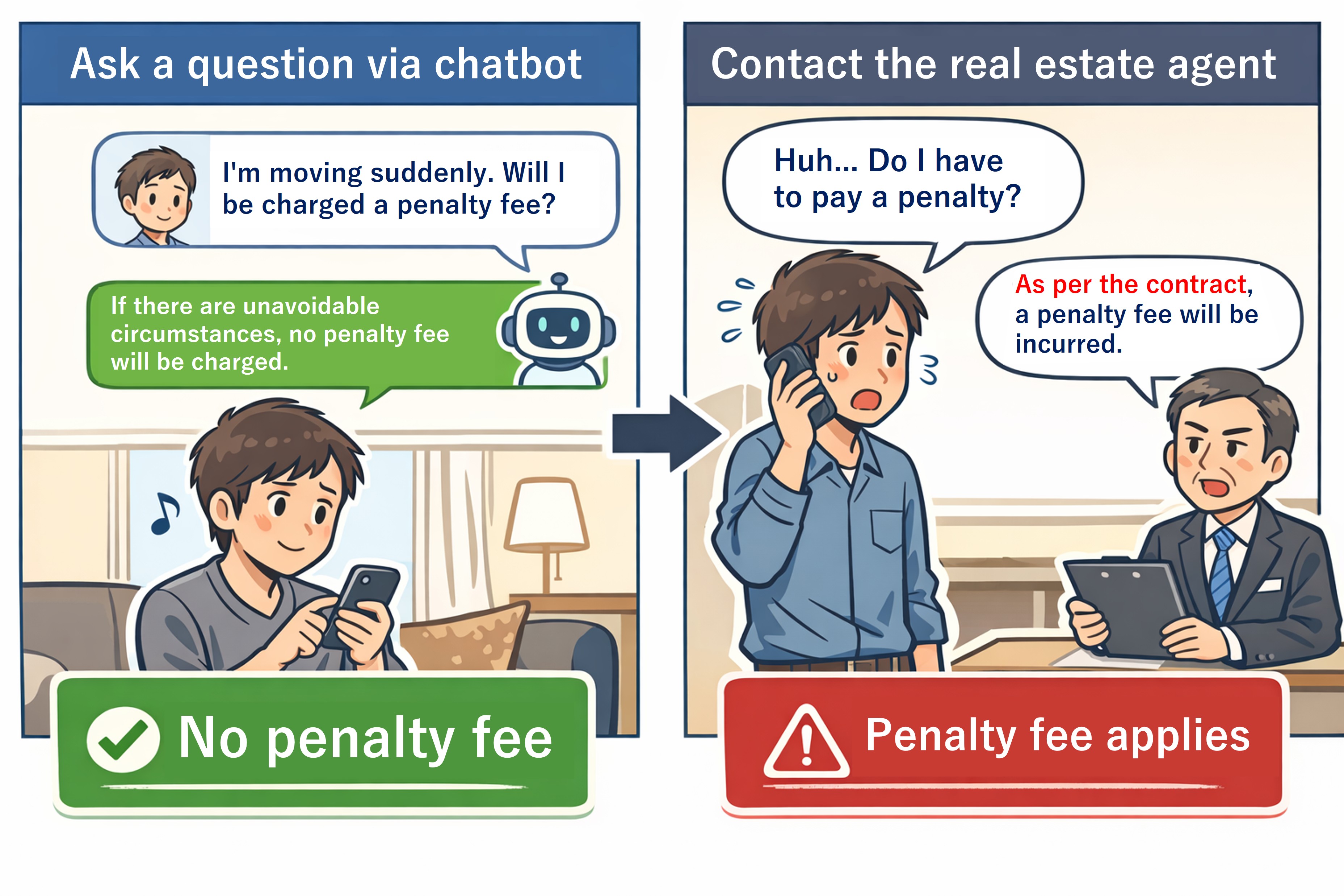
Vector search is a retrieval method that converts text, images, audio, and other data into numeric vectors using an AI model, and then searches for items that are semantically close. It enables “semantic similarity search” from free text, which is difficult with keyword search alone.

However, in real use, I encountered cases where results that are “close in meaning” but logically the opposite appeared near the top of the search results.

This is a serious issue in situations where affirmation vs. negation matters. If the system returns the wrong answer, the impact can be significant, so we cannot ignore this problem.

This article does not propose a new algorithm. I wrote it to share a practical way I found useful when semantic search fails due to negation.

0
1 43
Article André Dienes Friedrich · Dec 26, 2025 5m read

How to Build Applications with LangGraph: A Step-by-Step Guide

Tags: #LangGraph #LangChain #AI #Agents #Python #LLM #StateManagement #Workflows


Hi everyone, I want to tell you a little about LangGraph, a tool that I'm studying and developing.

Basically traditional AI applications often face challenges when dealing with complex workflows and dynamic states. LangGraph offers a robust solution, enabling the creation of stateful agents that can manage complex conversations, make context-based decisions, and execute sophisticated workflows.

0
2 165
Discussion Benjamin De Boe · Dec 4, 2025

Hi,

We're working on new capabilities to help you build Agents and AI applications faster with InterSystems IRIS. In order to better understand which entry points and development methodologies would help you most, we've created this brief survey: Building AI solutions with InterSystems IRIS. 

Filling it in should not take much more than 5 minutes, and your feedback on this exciting topic will help us fine tune our designs and prioritize the right features.

Thanks in advance!
benjamin
 

0
0 88
Article Pietro Di Leo · Oct 9, 2025 6m read

Introduction

In my previous article, I introduced the FHIR Data Explorer, a proof-of-concept application that connects InterSystems IRIS, Python, and Ollama to enable semantic search and visualization over healthcare data in FHIR format, a project currently participating in the InterSystems External Language Contest.

In this follow-up, we’ll see how I integrated Ollama for generating patient history summaries directly from structured FHIR data stored in IRIS, using lightweight local language models (LLMs) such as Llama 3.2:1B or Gemma 2:2B.

The goal was to build a completely local AI pipeline that can extract, format, and narrate patient histories while keeping data private and under full control.

All patient data used in this demo comes from FHIR bundles, which were parsed and loaded into IRIS via the IRIStool module. This approach makes it straightforward to query, transform, and vectorize healthcare data using familiar pandas operations in Python. If you’re curious about how I built this integration, check out my previous article Building a FHIR Vector Repository with InterSystems IRIS and Python through the IRIStool module.

Both IRIStool and FHIR Data Explorer are available on the InterSystems Open Exchange — and part of my contest submissions. If you find them useful, please consider voting for them!


0
2 122
Article Alberto Fuentes · Sep 16, 2025 4m read

In the previous article, we saw how to build a customer service AI agent with smolagents and InterSystems IRIS, combining SQL, RAG with vector search, and interoperability.

In that case, we used cloud models (OpenAI) for the LLM and embeddings.

This time, we’ll take it one step further: running the same agent, but with local models thanks to Ollama.

0
5 227
Article Alex Woodhead · Sep 13, 2025 4m read

Plug-N-Play on Pattern Match WorkBench

Article to announce pre-built pattern expressions are available from demo application.

AI deducing patterns require ten and more sample values to get warmed up.

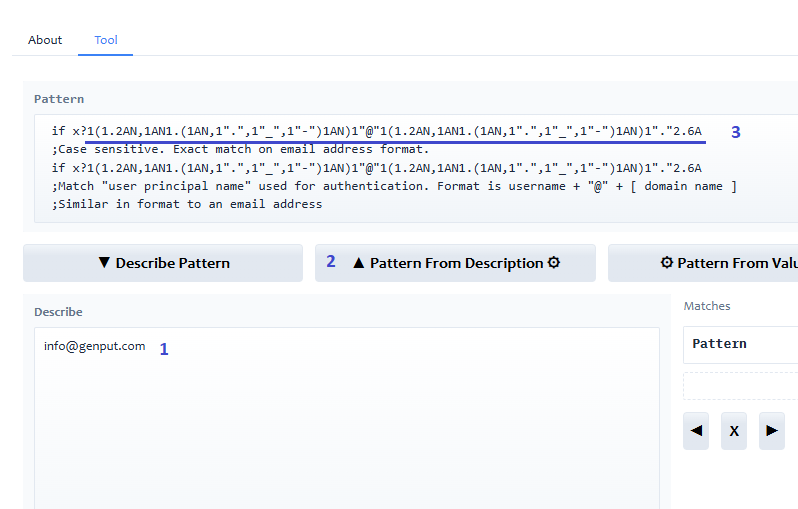
The entry of a single value for a pattern has therefore been repurposed for retrieving pre-built patterns.

Example: Email address

Paste an sample value for example an email address in description and press "Pattern from Description".

The sample is tested against available built-in patterns and any matching patterns and descriptions are displayed.

Patterns can also be retrieved by Keyword.

0
0 108
Article Alberto Fuentes · Sep 1, 2025 7m read

Customer support questions span structured data (orders, products 🗃️), unstructured knowledge (docs/FAQs 📚), and live systems (shipping updates 🚚). In this post we’ll ship a compact AI agent that handles all three—using:

  • 🧠 Python + smolagents to orchestrate the agent’s “brain”
  • 🧰 InterSystems IRIS for SQL, Vector Search (RAG), and Interoperability (a mock shipping status API)
0
2 235
Question Oliver Wilms · Apr 21, 2025

I am brand new to using AI. I downloaded some medical visit progress notes from my Patient Portal. I extracted text from PDF files. I found a YouTube video that showed how to extract metadata using an OpenAI query / prompt such as this one:

ollama-ai-iris/data/prompts/medical_progress_notes_prompt.txt at main · oliverwilms/ollama-ai-iris
 

I combined @Rodolfo Pscheidt Jr https://github.com/RodolfoPscheidtJr/ollama-ai-iris with some files from @Guillaume Rongier https://openexchange.intersystems.com/package/iris-rag-demo.

I attempted to run

python3 query_data.

1
0 193
Article Alex Woodhead · Jul 1, 2025 3m read

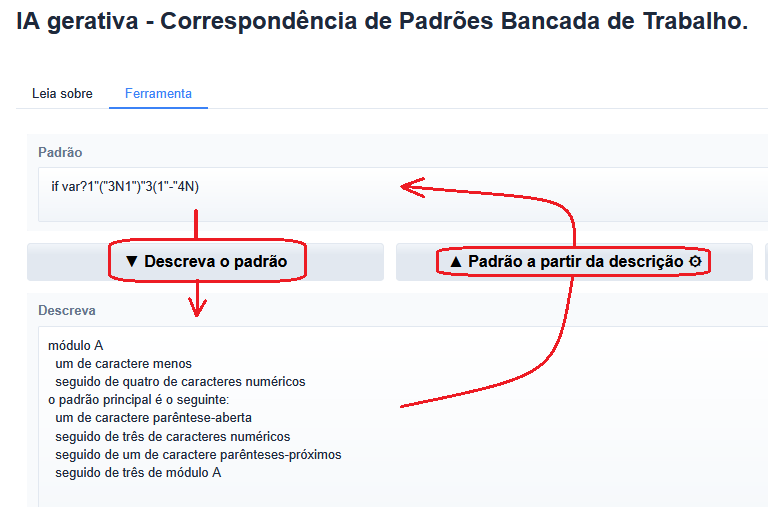
Thank you community for translating an earlier article into Portuguese.
Am returning the favor with a new release of Pattern Match Workbench demo app.

Added support for Portuguese.

The labels, buttons, feedback messages and help-text for user interface are updated.

Pattern Descriptions can be requested for the new language.

The single AI Model for transforming user prompt into Pattern match code was fully retrained.

Values to Pattern Code Model also retrained

The separate AI model for generating Pattern match code from a sample list of values has been retrained.

0
0 114
Question Oliver Wilms · Apr 27, 2025

I combined @Rodolfo Pscheidt https://github.com/RodolfoPscheidtJr/ollama-ai-iris with some files from @Guillaume Rongier https://openexchange.intersystems.com/package/iris-rag-demo.

My own project is https://github.com/oliverwilms/ollama-ai-iris

I can run load_data.py and it connects to IRIS (same container).

When I try to run query_data.py https://github.com/oliverwilms/ollama-ai-iris/blob/main/query_data.py , it cannot connect to ollama:

ConnectionError: Failed to connect to Ollama. Please check that Ollama is downloaded, running and accessible.

I wonder if I need to add in query_data.

3
0 163
Discussion Oliver Wilms · Apr 20, 2025

I read the article by @Rodolfo Pscheidt:

https://community.intersystems.com/post/ollama-ai-iris

I forked his app and copied selected files from @Guillaume Rongier iris-rag-demo to make it containerized:

oliverwilms/ollama-ai-iris
 

I ran load_data.py and I got this output:

irisowner@e10968e4da42:/irisdev/app$ python3 load_data.py
Document ID: cbfa2f20-6627-407b-bbad-31722d18ca13
modules.json: 100%|█████████████████████████████████████████████████████████████| 349/349 [00:00<00:00, 778kB/s]
config_sentence_transformers.

0
0 139
Discussion Alex Woodhead · Apr 10, 2025

Background

Embeddings is a new IRIS feature empowering the latest capability in AI semantic search.
This presents as a new kind of column on a table that holds vector data.
The embedding column supports search for another existing column of the same table.
As records are added or updated to the table, the supported column is passed through an AI model and the semantic signature is returned.
This signature information is stored as the vector for future search comparison.
Subsequently when search runs, a comparison of the stored signatures occurs without any further AI model processing overhead.

0
2 146
Article Muhammad Waseem · Apr 5, 2025 6m read

Hi Community,
Traditional keyword-based search struggles with nuanced, domain-specific queries. Vector search, however, leverages semantic understanding, enabling AI agents to retrieve and generate responses based on context—not just keywords.
This article provides a step-by-step guide to creating an Agentic AI RAG (Retrieval-Augmented Generation) application.

Implementation Steps:

  1. Create Agent Tools
    • Add Ingest functionality: Automatically ingests and index documents (e.g., InterSystems IRIS 2025.1 Release Notes).
    • Implement Vector Search Functionality
  2. Create Vector Search Agent
  3. Handoff to Triage (Main Agent)
  4. Run The Agent 
0
1 824