#Coding Guidelines

6 Followers · 56 Posts

Recommendations and best practices for writing code.

New
Article David Hockenbroch · Feb 18 7m read

In the previous article, we examined how we can use the %CSP.Request and %CSP.Response classes to test a REST API without having the API fully set up and accessible across a network with an authentication mechanism. In this article, we will build on that foundation to perform some simple unit testing of one of our REST API methods.

The unit testing framework requires a couple of setup steps before we can use it.First, we have to ensure that the unit testing portion of the management portal is enabled so we can review the results of our tests.
0
1 102
Article Keren Skubach · May 5, 2025 4m read

An extension “extends” or enhances a FHIR resource or a data element in a custom way. The extension can be added to the root of a resource, such as “Patient.ethnicity” in US Core profile, and they can be added to individual elements such as HumanName, Address or Identifier.

Did you know that you can also add an extension to a primitive data type?

Primitives usually store a single item and are the most basic element in FHIR. For example: "Keren", false, 1234, 12/08/2024 etc.

For example, the patient resources might look like this:

The gender, birthDateor family elements are primitive elements,

2
2 364
Article Andrew Sklyarov · Nov 8, 2025 4m read

When I started my journey with InterSystems IRIS, especially in Interoperability, one of the initial and common questions I had was: how can I run something on an interval or schedule? In this topic, I want to share two simple classes that address this issue. I'm surprised that some similar classes are not located somewhere in EnsLib. Or maybe I didn't search well? Anyway, this topic is not meant to be complex work, just a couple of snippets for beginners.

0
0 117
Article Andrew Sklyarov · Nov 2, 2025 7m read

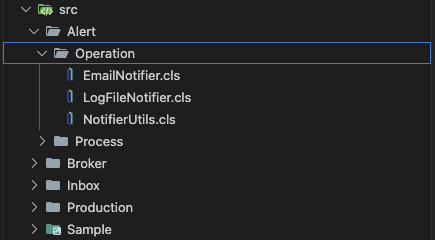
Over time, while I was working with Interoperability on the IRIS Data Platform, I developed rules for organizing a project code into packages and classes. That is what is called a Naming Convention, usually. In this topic, I want to organize and share these rules. I hope it can be helpful for somebody.


Disclaimer: This guide is a good fit for Interoperability projects.When you have integrations, data flows, when you use IRIS for ETL processes, etc.Overall, when your code is combined with Productions.

4
4 162
Question Justin Millette · Jun 23, 2025

I have a class with a projection that creates some persistent classes (chunks) and a non-persistent "Daemon" class that I want to have running in the background, doing some processing. The daemon needs to look at the "chunk" classes, and I want it to be simple to start the daemon -- I am currently calling the daemon's start method at the end of the CreateProjection method. When I do this, I get a <CLASS DOES NOT EXIST> error from the daemon when it tries to query against one of the chunk tables. But, if I add a "HANG 5" at the beginning of the daemon start method, this runs fine.

8
0 121
Article David Hockenbroch · Apr 22, 2025 7m read

The Good Old Days

The %Library.DynamicObject class has been in IRIS since before it became IRIS. If you have been using it since the Cache days, you may want to brush up on some of its changes.

In Cache 2018, the %Get method only had one argument. It was the key to retrieving from the JSON, meaning that if your JSON object called myObj, it would look like the following:

3
3 387