My guess is that the OP is working on a Caché system that supports the U2 language mode. Seeing the $ZVERSION string should tell us.
- Log in to post comments
My guess is that the OP is working on a Caché system that supports the U2 language mode. Seeing the $ZVERSION string should tell us.
The answers to this previous question of yours show indirection at work.
On all your questions, please remember to set the checkmark alongside an answer as a way of indicating that you accept it.
Ponnumani, have you yet discovered the Search facility in Developer Community?
Granted, DC's search powers aren't brilliant yet. But I reckon that if you had searched for 'angular' (no quotes) before you posted you'd have found the first of @Chris Stewart's series of articles as entry #3 in the search results.
In my opinion your method for ensuring the root node gets counted is already elegant, though perhaps worthy of a comment if you're writing it in a routine/method rather than issuing in at the command prompt.
It can be done, but since all the SAMPLES code targets Caché and none of it uses the Ensemble features, why would you?
The Ensemble equivalent of SAMPLES is ENSDEMO.
Shobha, presumably it wasn't deliberate that you seem to have posted this same question five times. Did you know that as the OP you can use the "Edit" tab, which contains an "Unpublish" button? That would let you remove the duplicates.
As I understand it, the SU variant of the software is what's installed when you download from this page:
http://www.intersystems.com/library/software-downloads/
And as your error message states, this variant is barred from using a cache.key file to unlock further features.
I think you'll need a different software kit. AFAIK you'll be able to "upgrade" your current SU installation in situ without losing anything (provided you've followed the rules about how to name any of your own code that you store in %SYS).
Those of us with support accounts can download software kits via WRC Direct. But assuming you don't have such an account yet, the InterSystems folk who provided you with the evaluation key are probably the best ones to ask about how to get hold of the software kit you need.
Thanks for this writeup Sean. I also recommend the following page containing a good summary:
https://isc.sans.edu/forums/diary/WannaCryWannaCrypt+Ransomware+Summary…
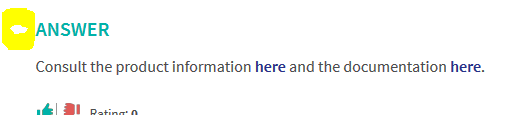
Ponnumani, if my reply above is sufficient for you please click the checkmark alongside its header. This marks the answer as accepted. Not sure which checkmark I mean? Below is an annotated screenshot:
Can you show us the code of your while loop, in case DC members can suggest performance improvements?
Per this article of mine, it's unwise to expose the value of %session.Key
Sean, I assume the </h1> tags are supposed to be </h2>
And if any of the ZWRITE output includes the string </pre> then all bets are off, right?
Have you considered implementing a Caché source code management tool such as Deltanji from George James Software, for whom I work? A Deltanji workflow can propagate code from one namespace to another, and can also propagate deletions. In other words, if you decommission a class in DEV, then propagate the now-decommissioned code object to TEST, the class will be deleted from TEST.
If you don't mind working a the global level, here's a way of enumerating the classes that are stored in the default code database of a namespace:
USER>s namespace="%SYS"
USER>s impliedNamespace="^"_##class(%SYS.Namespace).GetGlobalDest(namespace,"^oddDEF")

USER>w impliedNamespace
^^c:\intersystems\ens171\mgr\
USER>s className="" f s className=$o(^|impliedNamespace|oddDEF(className)) q:className="" w !,classNameThe page at https://download.intersystems.com/download/atelier.csp tells you how you can obtain the 1.1 beta provided you are using Atelier as an Eclipse plugin rather than as a standalone Eclipse-based application.
I don't know if the current 1.1 beta fixes this issue, nor if it will require a version of Caché greater that the current 2017.1 release in order to solve it (or indeed to work at all).
Please explain what you mean by "unchecked".
As for "mapped", the following may give you what you seek.
For classname, e.g. %Library.String, this expression will return true (1) if the class is mapped from a database that is not the default code database for the current namespace:
##class(%SYS.Namespace).GetGlobalDest(,"^oddDEF",classname)'=##class(%SYS.Namespace).GetGlobalDest(,"^oddDEF")
Interesting to see that $$$TEXT references $mvv(58). IIRC the $mvv function is related to Caché MultiValue.
BTW, your reference to %Session.Language probably needs to be %session.Language instead.
Interesting to see that $$$TEXT references $mvv(58). IIRC the $mvv function is related to Caché MultiValue.
BTW, your reference to %Session.Language probably needs to be %session.Language instead.
Since the release of Serenji 2.6 back in July 2016 there have so far been two maintenance releases. Full history is here.
The 2.6.2 release earlier this week includes the classes that permit low-level Ensemble debugging on the most recent Ensemble release, 2017.1.
Arpitha, you can mark Sergei's answer as accepted by clicking the checkmark alongside it above. For a hint, see my clip below:

Chris, I'm interested to know why you're not mirroring your code as well. What do you do to make sure that if the secondary takes over from the primary it'll be running exactly the same code as was running on the primary? Or don't you want it to do that?
Settings stored in the XData block of the production class (e.g. values entered through Portal) trump any System Default Settins values.
In Portal there's this button to get you to a page that may help you understand what's going on:
For a long time I've complained that the Portal UI makes it too easy to override a System Default Settings value (which is namespace-specific) with a value that gets stored in the production class (which you might migrate from one namespace to another). Add to this the fact that Portal ignores source control when altering the production class 
I'm not able to answer your question, but I think you'll have a better chance of finding someone who can do if you edit your post and tag it with Ensemble and HealthShare. Also worth mentioning that the "Developer Community" tag is primarily intended for feedback about the DC software itself.
Here's the base implementation of this method in %Library.GlobalIdentifier (2017.1 version):
 /// If a persistent class is GUIDENABLED then this method can be called to override the default GUID assignment.
/// This method accepts a guid value and returns the override value currently assigned. The return value will only
/// differ from the supplied value if the override is unsuccessful. It is only valid to call this method on a new object.
/// The guid value passed to this method is not validated. It is up to the user to make sure the guid is properly formed.
/// The guid assignment does not actually occur until the object is saved. If the object has already been assigned a GUID
/// or if the GUID override value has already been assigned to another object then the GUID override value will be discarded.
/// The check for GUID value uniqueness and a GUID value previously assigned is done only at the time the object is saved and is
/// not performed by this method.
Method %OverrideGuidAssignment(pGUID As %Library.CacheString) As %Library.CacheString
{
set i%"%%GUID" = pGUID
quit i%"%%GUID"
}
If I understand Alex correctly, he's calling this method in order to force a new instance of a GUIDENABLED class to have a specific GUID instead of getting one automatically assigned at save. He's not overriding the class in his own class definition.
I have highlighted in yellow some sentences in the comment that may be relevant.
I have also highlighted in pink the sentence Alex quoted, which is a bit unclear. By "return value" I think it means the GUID of the object instance after the save has subsequently been performed.
Steve, it may be worth you adding the "MultiValue Basic" tag to your question (which you can edit).
I haven't yet seen much MV traffic here on Developer Community. This lookup of posts with the "MultiValue Basic" tag currently only shows ones created by Community Manager. This Google Group has existed for several years, and I wonder if the folk there have yet heard about DC.
Where did you get this code from?