Nicole Aaron · Nov 12, 2018 go to post

This is still on the Atelier roadmap.

The way to track any internal InterSystems development request is to open up a WRC case. A Support advisor will be able to identify the ticket that development is working on and link it to the WRC case. From that point forward you will be able to see the status of the development request through the WRC Direct application.

Nicole Aaron · Oct 11, 2018 go to post

This is not possible at the moment. But it is something that has been requested by customers before, and it is on the Atelier development roadmap!

Nicole Aaron · Oct 2, 2018 go to post

Thanks, Suman. I dialed in with David and creating a new server connection with the same configuration info worked in his case as well.

We were able to capture an error in the Error Log every time we refreshed the broken Cache connection or cleared its cached data. So we have something to look at with development going forward to hopefully get it resolved this time around.

Nicole Aaron · Oct 2, 2018 go to post

I haven't seen this issue after an upgrade before. I would want to test the Cache server connection, check the Error Log, and open the Network Activities view while reproducing to see if any REST calls are made to the Cache server.

I'd suggest reaching out to InterSystems Support (by calling +1 617-621-0700 or emailing support@intersystems.com) so that someone can dial in to help debug.

Nicole Aaron · Sep 27, 2018 go to post

What version of Eclipse are you using? We've seen similar issues with Atelier 1.3.117 on versions of Eclipse besides Photon.

I would suggest that you start by installing a new Eclipse Photon client then install the Atelier plug-in.

Nicole Aaron · Sep 14, 2018 go to post

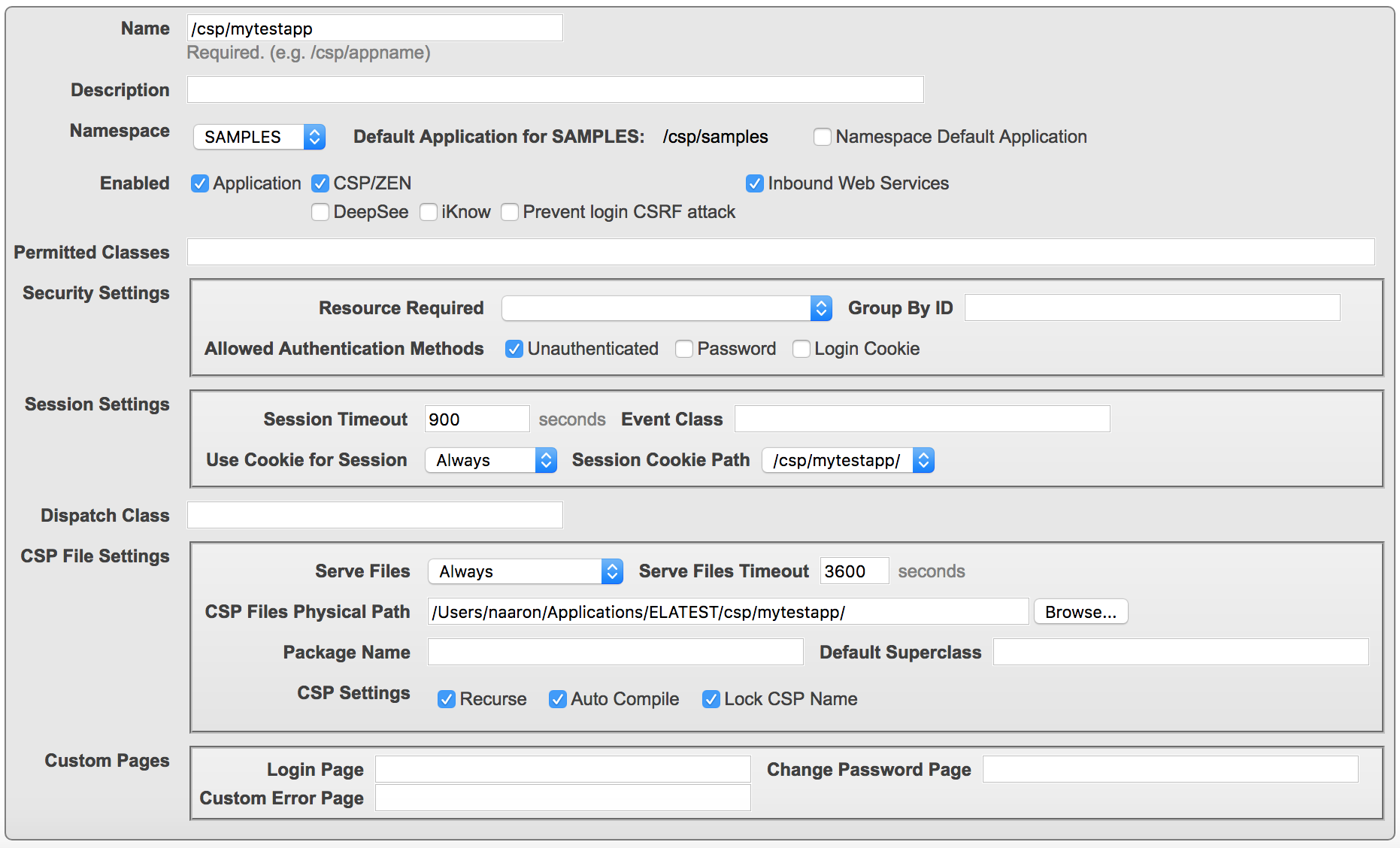
My best guess from the description here is that the CSP application was not created properly in the Atelier Project. Currently you cannot create a new CSP application at the Atelier Project level - you need to copy the CSP app from the server. For example:

1. Create a new web application in Caché:

2. In the Atelier Server Explorer, right-click that new CSP application and copy to an Atelier Project (you may need to refresh the server connection for the new application to show up):

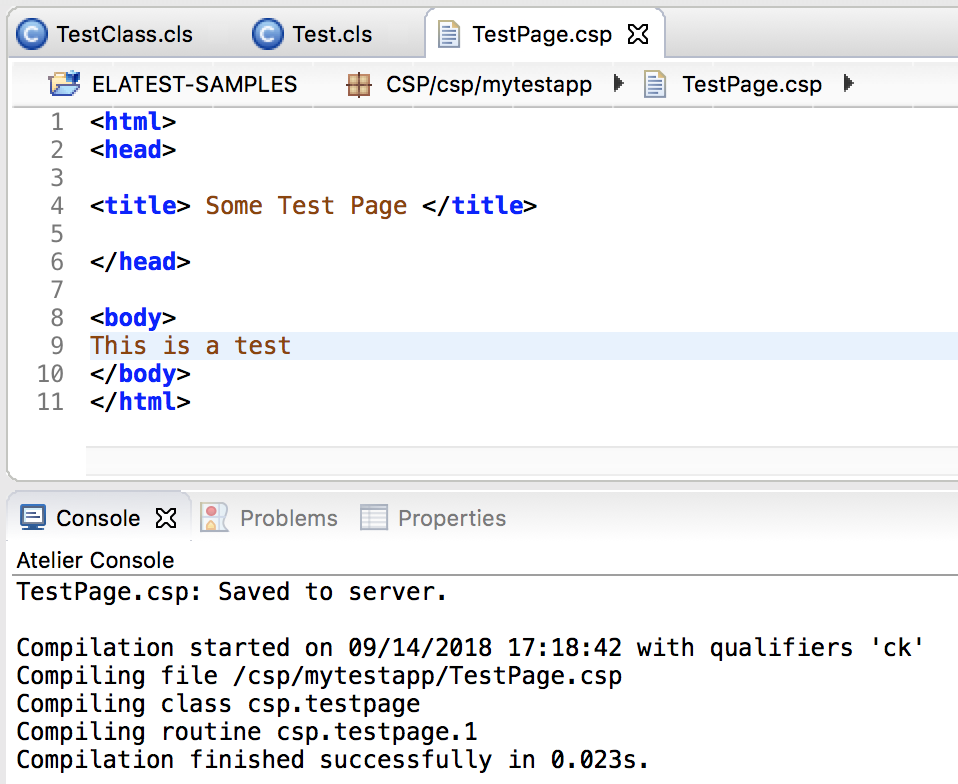
3. Create a new CSP page and select the newly copied CSP application:

4. The CSP page should compile as expected in the new web application:

If you would like someone to dial into your system and debug this with you, you can always contact InterSystems Support (by emailing support@intersystems.com or calling +1 617-621-0700).

Nicole Aaron · Aug 28, 2018 go to post

Development is aware of this issue. We do not have a timeline on when it will be fixed.

If you would like to track the progress of the development change, I would suggest opening up a WRC case (email support@intersystems.com or call +1 617-621-0700). A Support advisor will be able to link the relevant development change to the WRC case then you can keep track of it using the new UX in the WRC application.

Nicole Aaron · Aug 13, 2018 go to post

Good point - Password authentication should be enabled and Unauthenticated disabled. (Leaving Unauthenticated enabled will result in a different error when you test a server connection, Prohibited authentication method "Unauthenticated" detected.)

Nicole Aaron · Aug 10, 2018 go to post

Be sure that:

  1. The Caché/Ensemble/HealthShare/InterSystems IRIS instance that you are trying to connect to is version 2016.2+.
  2. Your web server (listening on the web port that you provide in the Server Connection Configuration dialog) is configured to handle requests starting with /api/atelier. The Atelier documentation explains how to do this for an IIS web server here, but the same principle applies to all web servers. Atelier makes REST requests to communicate with the server and those will start with /api/atelier instead of /csp like many other CSP requests.
  3. The /api/atelier web application is enabled at the Caché level. To do this:
    1. Launch the System Management Portal and select System Administration > Security > Applications > Web Applications
    2. Select the /api/atelier application
    3. Check the Enabled boxes for Application and CSP/ZEN and Save

If you are still having trouble I would suggest reaching out to InterSystems Support (email support@intersystems.com or call +1 617-621-0700).

Nicole Aaron · Aug 9, 2018 go to post

Looks like you've got this figured out, but I wanted to add another option - using the Local Terminal option in the plugin to connect to a Caché/Ensemble/HealthShare/InterSystems IRIS instance:

  1. After installing the Terminal plugin open the Terminal view (Window > Show View > Other > Terminal > Terminal)
  2. Select the "Open a Terminal" toolbar button  from the view
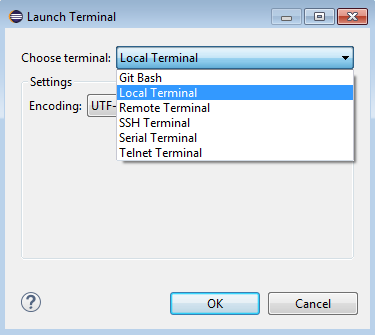
  3. Select "Local Terminal" from the "Choose terminal:" drop down menu                                                                                                                                                                    ​​​​​​​
  4. If csession isn't in your PATH, navigate to your instance's bin directory - example: cd C:\InterSystems\Cache\bin
  5. Launch a Caché terminal session - example: csession Cache
Nicole Aaron · Jul 24, 2018 go to post

Lucas - Thanks for looking into this and posting your findings here. You can get errors like this in Atelier for long-running compiles. The development team is aware of and looking into it.

Nicole Aaron · Jul 23, 2018 go to post

I do not think that Lucas has filed a WRC case to address this.

Lucas - If you figure this out on your own please post your solution here to let us know how you resolved it.

Pilar - Feel free to reach out to InterSystems Support to look into this further (email support@intersystems.com or call +1 617-621-0700).

Nicole Aaron · Jul 20, 2018 go to post

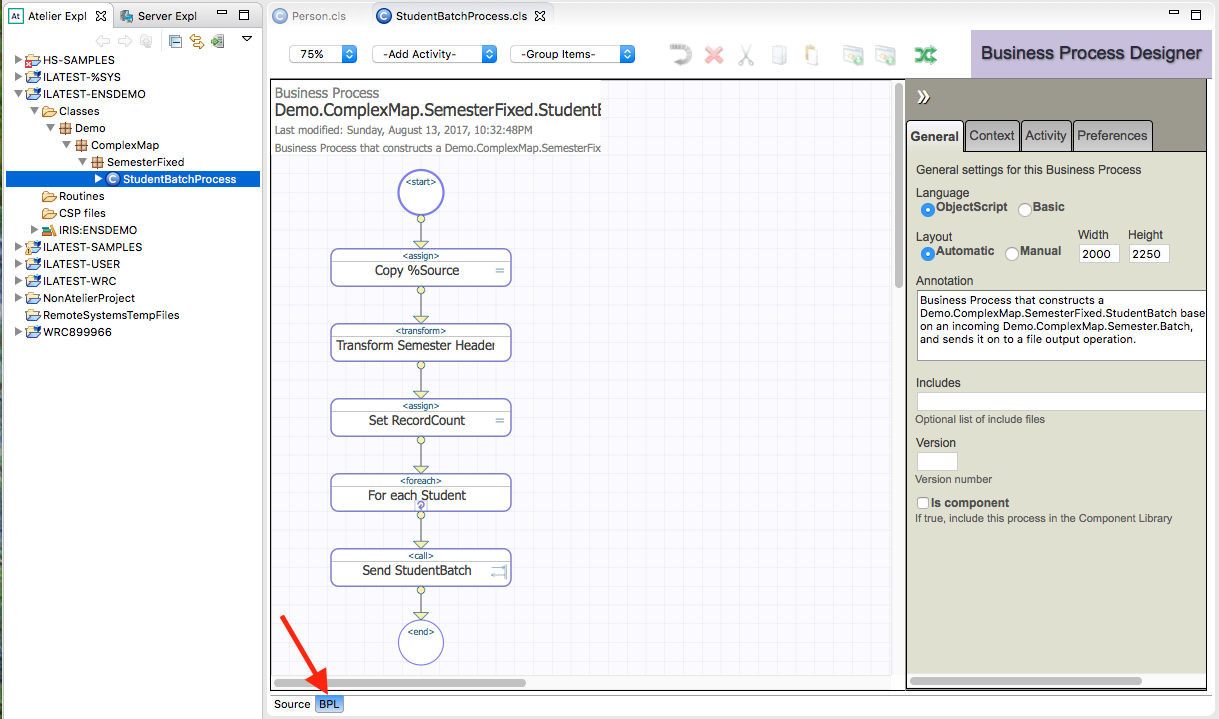
Starting with Atelier 1.2, there is a new tabbed editor for BPL/DTL. Open the class file from the Atelier or Server Explorer, which will display the class code by default. At the bottom of the editor there should be a tab for either BPL or DTL that you can click to display the graphical editor:

The "Open diagram editor" option should not be there in Atelier 1.2. I am guessing that you were trying to open the graphical editor by right-clicking the class and selecting Open With > Other > Atelier BPL Editor. But that is not the correct way to view the BPL/DTL graphical editors. 

If you are still having trouble I would suggest opening a WRC case with InterSystems Support (email support@intersystems.com or call +1 617-621-0700) so that an advisor can dial in with you and take a look.

Nicole Aaron · Jul 12, 2018 go to post

Using the -clearPersistedState flag at the command line when starting Eclipse should not make that setting permanent. Unfortunately if you can't find the setting in the .ini files, I'm not sure why else Eclipse would not be persisting your workspace setup.

Nicole Aaron · Jul 10, 2018 go to post

Understood, David. I'll add a note that to the dev request that this is a showstopper for many of your developers to help our team with prioritization. I'm glad to hear you're happy with the Atelier 1.2 improvements!

Nicole Aaron · Jul 10, 2018 go to post

There is an existing request with development to improve the usability of XData blocks in Atelier. I added a note to that request, linking to this DC post, asking to consider the auto spacing/indentation as well. The request for XData usability improvements has not yet been roadmapped.

Nicole Aaron · Jul 9, 2018 go to post

I've been working with Lucas S. on this in a WRC case. We believe that the source of the issue has to do with the encoding of the file, as compared to the file's contents and the encoding of the Eclipse workspace/Atelier Project/file in Atelier.

Copying this problem file into an Eclipse-only (non-Atelier) project does result in display issues until the file's encoding is changed within Eclipse. To change a file's encoding you can right-click the file in the Atelier or Project Explorer, click Properties and change the "Text file encoding" settings under the Resource section.

While there are workarounds*, you should be allowed to import these files into an Atelier project. The Atelier development team is reviewing this.

*Workarounds we've found in our investigation:

  • Run an iconv command on the file on disk to change its encoding
  • Change accented characters to their corresponding HTML entities, https://developer.mozilla.org/en-US/docs/Glossary/Entity
  • Manually copy the HTML file from the CSP physical files directory into the Atelier project directory on disk, then change the file's encoding within Eclipse to avoid display issues
Nicole Aaron · Jul 9, 2018 go to post

This should be working. I'm guessing we need some more specific information about your system to try and get at the root cause. I'd suggest filing a WRC case with InterSystems Support (by emailing support@intersystems.com or calling +1 617-621-0700) to dig into this.

Nicole Aaron · Jul 6, 2018 go to post

After upgrading to Atelier 1.2, did you run into the issue described in the DC post here? If so you may have Googled and found information about adding -clearPersistedState, or something similar, to one of the Eclipse configuration files. However if a setting like that is left around in the config file, it could result in Eclipse not persisting data across shutdowns since that setting will be read back in each time you start Eclipse back up.

Nicole Aaron · Jul 5, 2018 go to post

Note that this is technically row 8 in the zgetFile entry point of your generated .int code. Caché will generate/update a User.Read.1.int routine when you compile User.Read.cls, thus the ".1" in the error message.

In many cases, the class code and the generated int code will look the same and it won't matter. But to be sure you can always open the generated code in Atelier by right-clicking the class code in the Editor and selecting View Other Code.

Nicole Aaron · Jul 4, 2018 go to post

I can't think of any changes between Caché 2016.2 and 2017.2 that would cause that behavior. I'd suggest opening up a WRC case to investigate further (by emailing support@intersystems.com or calling +1 617-621-0700), since we will likely need more information about your instances.

Nicole Aaron · Jun 22, 2018 go to post

Francisco is completely correct. As a quick follow-up: Your Atelier Explorer view is a representation of the local copies of source code that you are working with. When you delete something from the Atelier (or Project) Explorer you are deleting that local copy, not the file from source.

If you want to delete from a server you need to use the Server Explorer, or go directly to your instance (or a source control repository if that's where your source code lives).

Nicole Aaron · Jun 21, 2018 go to post

You can always follow the instructions on the Atelier download page, intersystems.com/atelier. If you've already got Java 8+ and Eclipse installed, you can skip over to step 2. We're still working on getting the Eclipse Marketplace updated with the 1.2 release**, but you can follow the instructions under "Add one of the Atelier repositories to your Eclipse environment". This gives details about where to enter the repository URL that Michelle noted above.

**Update: The Eclipse Marketplace has been updated with the stable Atelier 1.2 release so you can follow either install/upgrade option listed on the download page.

Nicole Aaron · Jun 20, 2018 go to post

InterSystems does not provide a whole lot of recommendations on naming conventions in general. Whatever works/makes sense to you is often best. If you'd like to dive into the design aspects of your application, your InterSystems Sales team is going to be a great resource.

Nicole Aaron · Jun 19, 2018 go to post

There are no plans to implement an equivalent to the Studio SQL Storage GUI in Atelier. The use case for the SQL Storage editor is to maintain legacy applications. The development team's primary focus with Atelier is to support new/more modern development.

If your day-to-day work requires the use of the the Studio SQL Storage GUI, the InterSystems recommendation is that you continue to use Studio.

Nicole Aaron · Jun 19, 2018 go to post

Thanks for this question, I think it's one that a lot of Atelier users will have. In general we recommend storing each of the different projects that you are working on, or closely related pieces of those projects depending on their size, in their own Caché packages. That helps when you are using source control, as you can pull down just one or a few packages from source to work on in Atelier, rather than having to pull in an entire source code repository.

The main considerations with Atelier will be:

  1. You do not want to have too many files in a given Atelier Project, as this can cause performance problems. (Unfortunately I cannot put a number on this, since it really depends on the size and complexity of those files.) An Atelier Project can be thought of as containing a unit of work - maybe it's the set of files you need to edit to implement a particular new feature.
  2. To help with the potential performance problems I mentioned in #1, working sets will be your friend. This is an Eclipse concept - a working set groups together elements and allows you to restrict the resources that you are viewing. In turn that will limit the background processing done on files/projects not in an active working set. This is discussed in the Eclipse documentation here. There is also some information about that in the Atelier-specific docs here.

We'd love it if you could post more about your experiences, since this is something that effects many users. You can note that in a comment here, or preferably write up a new article and post it on the Developer Community as an example for other users!

Nicole Aaron · Jun 19, 2018 go to post

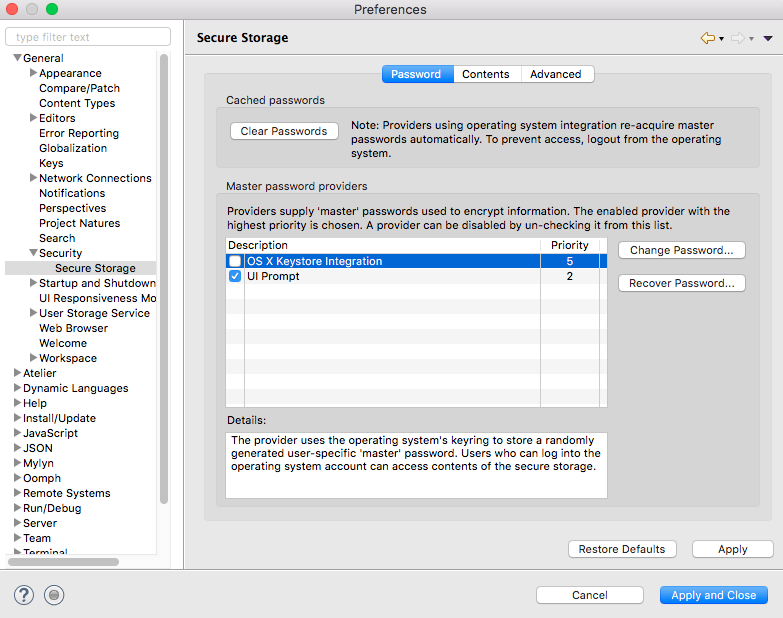
Another option would be to disable the OS-specific password provider for your secure storage. That way you will be asked for the master password each time Eclipse starts up.

You can do this from your Eclipse preferences by selecting General > Security > Secure Storage and unchecking the OS-specific option:

If the options laid out in this DC post do not meet your security standards you can feel free to reach out to Support. An advisor will be able to discuss your requirements in more depth and find you a solution that fits your needs.

Nicole Aaron · Jun 14, 2018 go to post

Atelier is an Eclipse plug-in, and is therefore should be compatible with platforms supported by Eclipse. Eclipse Oxygen's target environments can be found on the Eclipse website here.

Nicole Aaron · May 31, 2018 go to post

To second Fabian, this process can be made easier by making use of Atelier projects.

You can think of an Atelier project as a place to store a unit of work. An Atelier project will typically store all of the files directly related to a particular application, feature, etc. Each Atelier project is configured with a server connection and namespace where code can be compiled and run. You do not necessarily need to create a new project each time you launch Atelier or add something to source control.

There are a number of videos on the InterSystems Learning Services website on this topic (using Atelier with Git/source control). A few that I think will be the most useful:

You may also want to take a look at the Learning Services course catalog. You can filter this by videos related to Atelier. There are a lot of great introductory and more in-depth videos.